Material Guide for Grandmother and Granddaughter Necklaces
Discover the best metals, chain styles, and hypoallergenic options for grandmother and granddaughter necklaces to ensure lifelong wear.

The Metallurgy of Memory: Why Material Choice Matters
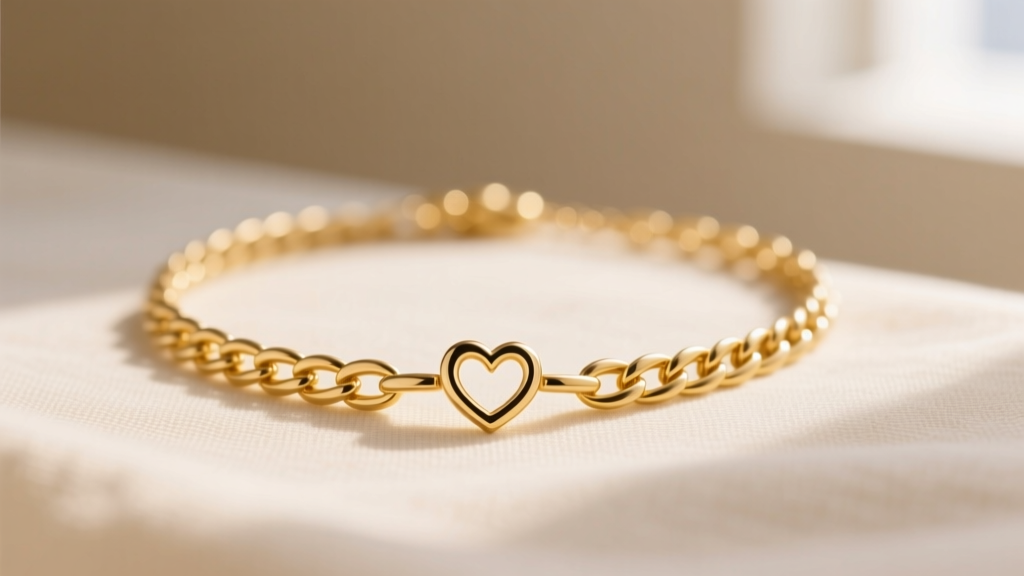
When selecting grandmother and granddaughter necklaces, you are not merely purchasing jewelry; you are commissioning a tangible heirloom designed to bridge generational gaps. The emotional weight of these pieces demands an equal level of metallurgical scrutiny. A necklace meant to be worn by an active toddler or teenager, while simultaneously matching the refined tastes and potentially sensitive skin of a grandmother, must satisfy a complex matrix of durability, hypoallergenic safety, and aesthetic longevity.
As of 2026, the jewelry market offers an unprecedented variety of alloys and finishes. However, the fundamental rules of metallurgy remain unchanged. The wrong material choice can lead to premature chain snapping, severe contact dermatitis, or rapid tarnishing that relegates a sentimental piece to the back of a drawer. This comprehensive guide dissects the material properties, structural engineering, and gemological considerations necessary to choose a necklace that will survive the journey from childhood to adulthood.
Hypoallergenic Imperatives: Protecting Sensitive Skin
The most critical point of failure in intergenerational jewelry is skin compatibility. Nickel allergy is one of the most common causes of allergic contact dermatitis, affecting an estimated 18% of the population in North America, according to the Mayo Clinic. Children and adolescents are particularly susceptible to developing new sensitivities, while older adults often experience thinning epidermal layers that make them more reactive to metal salts.
Many consumers mistakenly believe that "14k gold" is inherently hypoallergenic. This is a dangerous misconception. Pure 24k gold is too soft for daily wear, so it is alloyed with other metals to increase its Vickers hardness. In lower-karat white gold, nickel is frequently used as a whitening agent and hardener. Even some yellow and rose gold alloys contain trace amounts of nickel to improve casting flow. To guarantee safety for both grandmother and granddaughter, you must seek out nickel-free certifications or opt for specific alloy compositions:
- Palladium-White Gold: Uses palladium instead of nickel to achieve a white hue. It is inherently hypoallergenic and does not require rhodium plating.
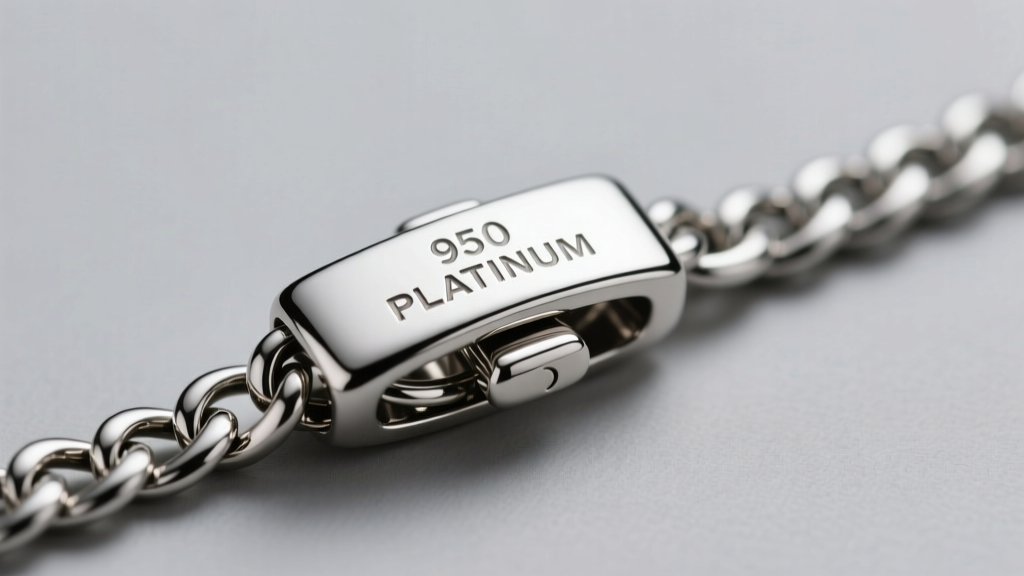
- 950 Platinum: Naturally white, incredibly dense, and biocompatible. It is the gold standard for sensitive skin.
- Niobium and Titanium: While less traditional for heirloom pendants, commercially pure titanium (Grade 2 or 4) is entirely inert and frequently recommended by the American Academy of Dermatology for severe metal allergies.
Precious Metals Compared: Heirloom Potential vs. Daily Wear
To select the ideal metal for grandmother and granddaughter necklaces, we must evaluate the intersection of tensile strength, scratch resistance, and maintenance requirements. Below is a detailed breakdown of the most common precious metals used in intergenerational pendants and chains.
14k and 18k Gold: The Traditional Standard
Gold remains the quintessential heirloom metal, but the karat weight drastically alters its physical properties. 18k gold (75% pure gold) offers a rich, saturated color but possesses a Vickers hardness of roughly 125, making it prone to scratching and deformation if the younger wearer is highly active. 14k gold (58.5% pure gold), with a Vickers hardness between 140 and 160 (depending on the alloy mix), provides superior resistance to the pulling, tugging, and snagging that frequently occurs with children's jewelry. For a necklace that must endure playgrounds and sports practices before becoming a refined adult accessory, 14k gold is the superior structural choice.
Platinum: The Ultimate Generational Anchor
Platinum (typically 95% pure, alloyed with ruthenium or iridium) is exceptionally dense and heavy. Unlike gold, which loses microscopic layers of metal when scratched, platinum merely displaces. The metal shifts, creating a soft patina over time that can be polished back to a mirror finish without compromising the chain's structural integrity. While the initial cost is significantly higher—often 2.5 to 3 times that of 14k gold—its unparalleled durability makes it the ultimate metal for a piece meant to last a century.
Sterling Silver (925): The Accessible Alternative
Sterling silver is an alloy of 92.5% silver and 7.5% copper. While highly accessible and beautiful, the copper content makes it highly susceptible to oxidation and tarnishing when exposed to sulfur in the air, sweat, and lotions. If you choose sterling silver for an intergenerational piece, ensure it features a high-quality rhodium or e-coat finish to delay tarnishing, and be prepared for a lifetime of periodic polishing.
Material Comparison Matrix
| Metal Alloy | Composition | Vickers Hardness (Approx) | Tarnish Resistance | Est. Price (18" 1.5mm Chain) | Heirloom Rating |
|---|---|---|---|---|---|
| 14k Yellow Gold | 58.5% Gold, Silver, Copper | 140 - 160 | Excellent | $350 - $550 | High |
| 18k Yellow Gold | 75% Gold, Silver, Copper | 115 - 125 | Excellent | $500 - $800 | High (with care) |
| 950 Platinum | 95% Platinum, 5% Ruthenium | 110 (Displaces, doesn't wear) | Superior | $1,200 - $1,800+ | Exceptional |
| Sterling Silver | 92.5% Silver, 7.5% Copper | 60 - 70 | Poor (Requires maintenance) | $40 - $90 | Moderate |
Chain Engineering: Selecting Links That Survive Generations
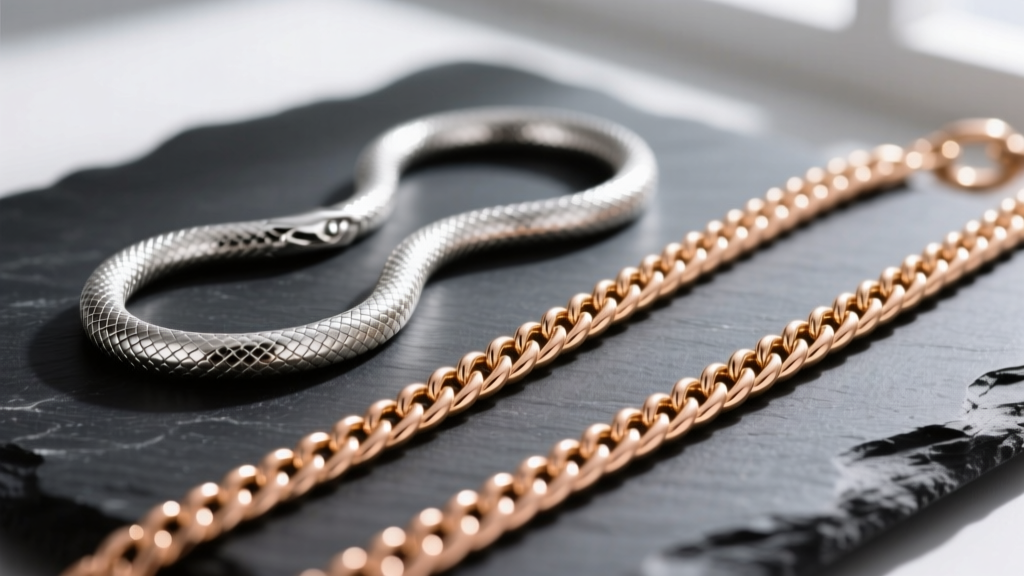
The pendant may carry the sentimental value, but the chain bears the physical load. A common failure mode in grandmother and granddaughter necklaces is the snapping of fragile chain links due to the unpredictable movements of young wearers. Avoid snake chains and herringbone chains at all costs. These styles are composed of tightly interlocked, flat links that easily kink when bent past their tolerance threshold. Once kinked, the structural integrity of the metal is permanently compromised, leading to inevitable breakage.
Instead, opt for structurally redundant chain styles:
- Wheat Chains: Composed of oval links woven in the same direction, creating a braided appearance. Wheat chains possess exceptional tensile strength and distribute pulling force evenly across multiple links.
- Rolo Chains: Featuring alternating thick, round links. The substantial wire gauge of a rolo chain resists crushing and pulling, making it highly resilient for daily wear.
- Cable Chains: The classic, uniform oval link. While elegant, ensure the wire gauge is at least 1.2mm to 1.5mm to prevent the links from pulling apart under stress.
Gemological Considerations: Birthstones and Mohs Hardness
Many intergenerational necklaces incorporate birthstones or engraved enamel. When selecting gemstones for a piece that will be worn daily by a younger person, you must consult the Gemological Institute of America (GIA) Mohs scale of mineral hardness. Dust and dirt contain quartz particles, which sit at a 7 on the Mohs scale. Any gemstone with a hardness below 7 will eventually become scratched and cloudy from simple daily environmental exposure.
Diamonds (10), Sapphires (9), and Rubies (9) are the only truly safe choices for daily-wear, multi-generational pendants. While Pearls (2.5), Opals (5.5-6.5), and Emeralds (7.5-8, but highly fractured) are traditional and beautiful, they are incredibly fragile. A toddler dropping an opal pendant on a hardwood floor, or a teenager accidentally spraying it with perfume, can cause irreversible cracking or chemical etching. If you wish to include softer stones, reserve them for special-occasion wear rather than daily heirloom pieces.
The Intergenerational Sizing & Clasp Strategy
A major logistical challenge with grandmother and granddaughter necklaces is the disparity in neck sizes, which will change dramatically as the younger wearer grows. A necklace that fits a 10-year-old granddaughter at 14 inches will become uncomfortably tight by the time she is 16. Conversely, a grandmother may prefer a 16-inch or 18-inch drop.
The engineering solution is the lobster clasp with an integrated extender chain. Avoid spring-ring clasps; their internal springs are prone to failure and are difficult for older adults with reduced manual dexterity or arthritis to operate. A high-quality, stamped 14k or platinum lobster clasp provides a secure grip and is easier to manipulate. Pair this with a 2-inch to 3-inch extender chain featuring a small, solid metal tag at the terminus. This allows the necklace to be adjusted from a choker length for a child to a standard princess length for an adult, ensuring the piece remains wearable through every stage of life.
Expert Insight: When commissioning a custom heirloom piece, always request that the jeweler use laser welding for the chain jump rings and pendant bails. Traditional soldering can leave microscopic weak points or use lower-karat solder alloys that introduce nickel or lead into an otherwise pure chain. Laser welding ensures a seamless, high-melt-point bond that mirrors the strength of the parent metal.
Final Verdict: Matching the Metal to the Milestone
Choosing the perfect material for grandmother and granddaughter necklaces requires balancing the romance of heirloom jewelry with the unforgiving physics of daily wear. For families seeking an accessible yet meaningful token, a heavy-gauge 14k yellow gold wheat chain with a solid, nickel-free pendant offers the best compromise of price, durability, and skin safety. For those investing in a definitive, once-in-a-lifetime legacy piece, 950 platinum remains the undisputed champion of generational endurance. By prioritizing metallurgical integrity, hypoallergenic purity, and structural chain design, you ensure that the necklace will not only carry your family's story but survive to tell it to the next generation.


