Material Science of Inexpensive Necklaces for Women
Discover the metallurgy behind inexpensive necklaces for women. Learn about PVD coating, base metals, and how to spot durable budget jewelry.

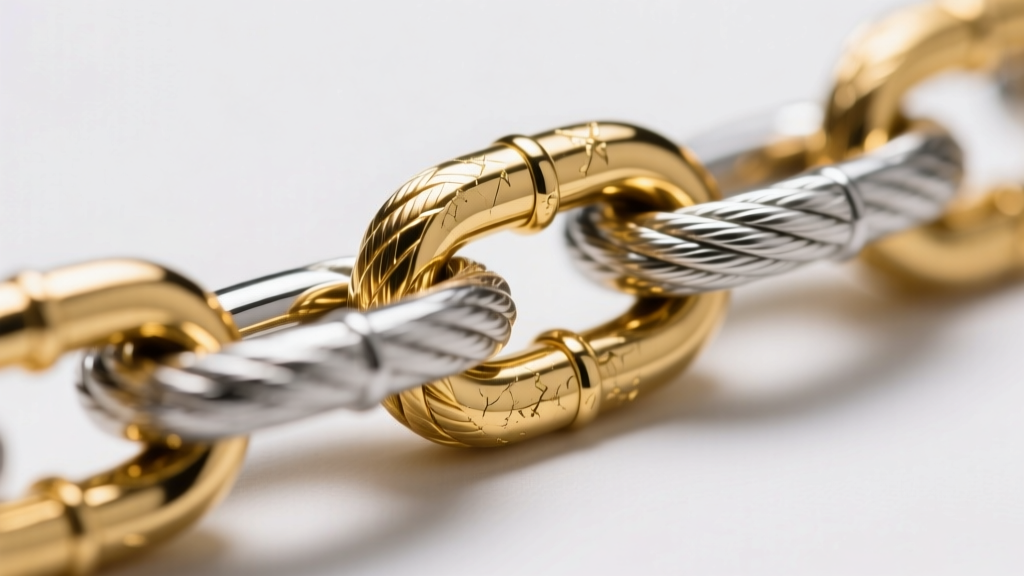
The Illusion of 'Demi-Fine': Decoding Budget Jewelry
The market for inexpensive necklaces for women has undergone a massive rebranding in recent years. Terms like 'waterproof,' 'tarnish-free,' and 'demi-fine' dominate social media marketing, yet these labels often obscure the actual metallurgical reality of the pieces. As a jewelry technical analyst, I frequently evaluate the structural integrity and material composition of budget-friendly necklaces. The truth is that price does not always dictate longevity; rather, it is the specific combination of base metals, surface treatments, and mechanical construction that determines whether a $25 necklace will last five years or five days.
In this deep dive, we strip away the marketing jargon and examine the exact material science that separates high-value budget jewelry from planned obsolescence. Whether you are sourcing for a boutique or shopping for your personal collection, understanding these technical specifications is critical for making informed purchasing decisions in 2026.
Base Metals: 316L Stainless Steel vs. Brass Alloys
The foundation of any necklace dictates its weight, porosity, and potential for allergic reactions. In the realm of inexpensive necklaces for women, manufacturers primarily rely on two base metals: 316L stainless steel and C26000 cartridge brass.
The 316L Surgical Steel Advantage
316L stainless steel is an austenitic alloy containing chromium, nickel, and molybdenum. The 'L' denotes low carbon, which prevents carbide precipitation during welding or casting, ensuring a highly stable crystalline structure. While it does contain nickel (typically 10-14%), the nickel is tightly bound within the alloy's crystal lattice. According to the European Chemicals Agency (ECHA) REACH guidelines, the nickel release rate from high-grade 316L steel is generally well below the strict limit of 0.5 µg/cm²/week, making it safe for the vast majority of wearers with mild sensitivities.
The Brass Dilemma and the 'Green Skin' Effect
Brass (an alloy of copper and zinc) is cheaper to cast and easier to polish than steel, making it a favorite for intricate pendant designs. However, brass is highly porous and reactive. When exposed to the lactic acid and salts in human sweat, the copper in the brass oxidizes, forming copper chloride—which manifests as the dreaded green residue on the skin. To prevent this, reputable manufacturers apply a barrier layer, such as a palladium or rhodium undercoat, before applying the final gold or silver finish. If an inexpensive brass necklace lacks this barrier layer, its lifespan is measured in weeks, not months.
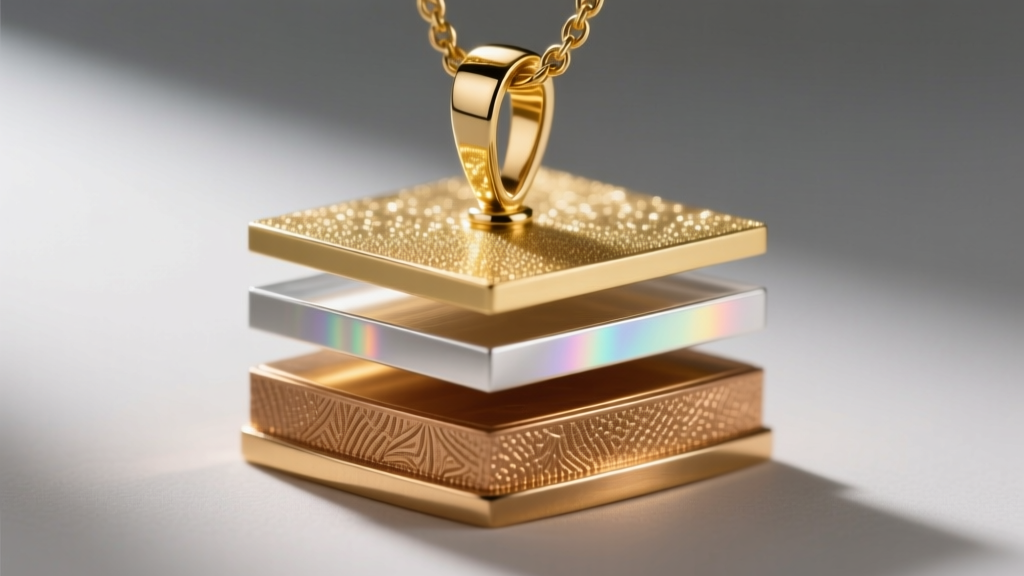
Surface Treatments: PVD Coating vs. Electroplating
The most significant technological leap in affordable jewelry is the widespread adoption of Physical Vapor Deposition (PVD). Understanding the difference between PVD and traditional electroplating is the key to evaluating the true cost-per-wear of inexpensive necklaces for women.
Physical Vapor Deposition (PVD)
PVD is a vacuum-based coating process where titanium nitride (TiN) or real gold is vaporized at the atomic level and bombarded onto the base metal. This creates a molecular bond rather than a mere surface adhesion. PVD coatings are exceptionally hard (often exceeding 2000 HV on the Vickers hardness scale), highly resistant to UV degradation, and completely impervious to water and sweat. A 0.1 to 0.3-micron PVD gold layer on 316L steel will routinely outlast a 1.0-micron traditional electroplated layer.
Traditional Electroplating
Electroplating uses an electrical current to reduce dissolved metal cations so that they form a coherent metal coating on an electrode. In budget jewelry, this often takes the form of 'flash plating'—a dangerously thin layer of gold (less than 0.05 microns) that wears off within a month of daily use. The Gemological Institute of America (GIA) maintains strict definitions for gold plating thickness, noting that true 'Heavy Gold Electroplate' (HGE) must be at least 2.5 microns thick—a standard rarely met in the sub-$50 market.
| Treatment Type | Average Thickness | Hardness (Vickers) | Water Resistance | Expected Lifespan (Daily Wear) |
|---|---|---|---|---|
| Flash Electroplating | < 0.05 µm | 100 - 150 HV | Poor | 1 - 3 Months |
| Standard Electroplating | 0.1 - 0.5 µm | 150 - 250 HV | Fair | 6 - 12 Months |
| PVD (TiN / Gold) | 0.1 - 0.3 µm | 2000+ HV | Excellent | 2 - 5+ Years |
| Gold Vermeil (on Silver) | ≥ 2.5 µm | 60 - 80 HV | Good | 1 - 3 Years |
Chain Construction and Clasp Mechanics
A necklace is only as strong as its weakest mechanical link. When evaluating inexpensive necklaces for women, buyers often fixate on the pendant while ignoring the chain and clasp, which are the most common points of catastrophic failure.
Link Soldering and Tensile Strength
In mass-produced budget chains, links are frequently stamped and interlocked without being soldered closed. This means that a simple snag on a sweater can apply enough lateral torque to pull the link open, resulting in a broken chain. High-quality budget manufacturers will laser-solder or torch-solder every individual link. While this increases production costs by a few cents per unit, it increases the tensile strength of a delicate 1mm cable chain from roughly 1.5 kg to over 4 kg.
The Clasp Failure Point
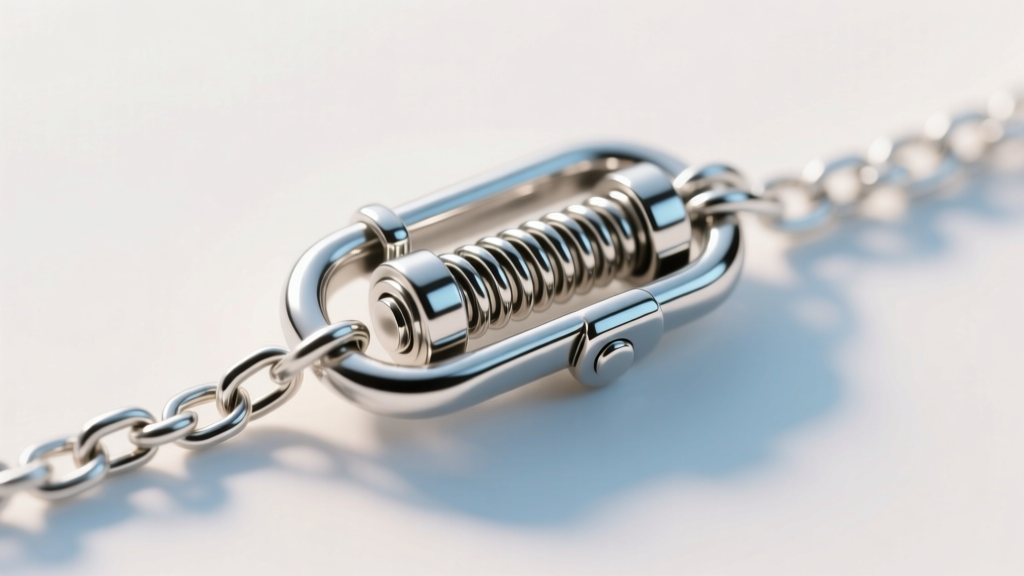
Spring ring clasps are ubiquitous in cheap jewelry due to their low manufacturing cost. However, the internal steel spring is prone to rusting when exposed to moisture, leading to a seized or perpetually open clasp. Furthermore, the tiny lever is difficult to manipulate. A stamped or cast lobster clasp, constructed entirely from 316L stainless steel or solid brass, eliminates the internal spring mechanism in favor of a solid tension arm, offering vastly superior longevity and ease of use.
A Buyer's Framework for Budget Necklaces
To navigate the saturated market of affordable jewelry, utilize this technical checklist before adding an item to your cart. This framework ensures you are investing in materials that offer genuine longevity rather than disposable fashion.
- Verify the Base Metal: Look for explicit mentions of '316L Stainless Steel' or 'Solid 925 Sterling Silver.' Avoid vague terms like 'gold-tone alloy' or 'mixed metals,' which usually indicate porous, unsealed zinc or brass.
- Demand PVD or Thickness Specs: If the piece is gold-colored steel, confirm it uses PVD coating. If it is silver-based, ensure it meets the 2.5-micron Vermeil standard. Brands that hide their plating thickness are usually utilizing flash plating.
- Inspect the Clasp and Jump Rings: Zoom in on product photos. Are the jump rings connecting the clasp to the chain soldered shut? Is it a lobster clasp or a cheap spring ring? These micro-details reveal the manufacturer's overall quality control standards.
- Check for E-Coat or Barrier Layers: If purchasing brass-based jewelry, search the product description for 'e-coating' or 'palladium barrier.' Without this, the copper will inevitably react with your skin's pH levels.
Expert Insight: The term 'hypoallergenic' is largely unregulated in the jewelry industry and holds no metallurgical weight. Always look for 'nickel-free' or 'nickel-compliant' certifications, and when in doubt, default to 316L stainless steel or high-purity titanium for sensitive skin.
Conclusion: Value Over Price
Finding high-quality, inexpensive necklaces for women is entirely possible in today's market, provided you know how to read between the marketing lines. By prioritizing 316L stainless steel bases, PVD surface treatments, and soldered mechanical components, you can build a collection of budget-friendly pieces that rival the durability of fine jewelry. The true cost of a necklace is not its initial price tag, but its cost-per-wear over its functional lifespan. Armed with these material science principles, you can confidently bypass the planned obsolescence of fast fashion and invest in accessories engineered to endure.


