Maui from Moana Necklace: Technical Guide to Fish Hook Pendants
An expert technical breakdown of the Maui from Moana necklace, covering hei matau symbolism, material grades, structural integrity, and chain pairing.

The Anatomy of the Hei Matau: Beyond the Disney Replica
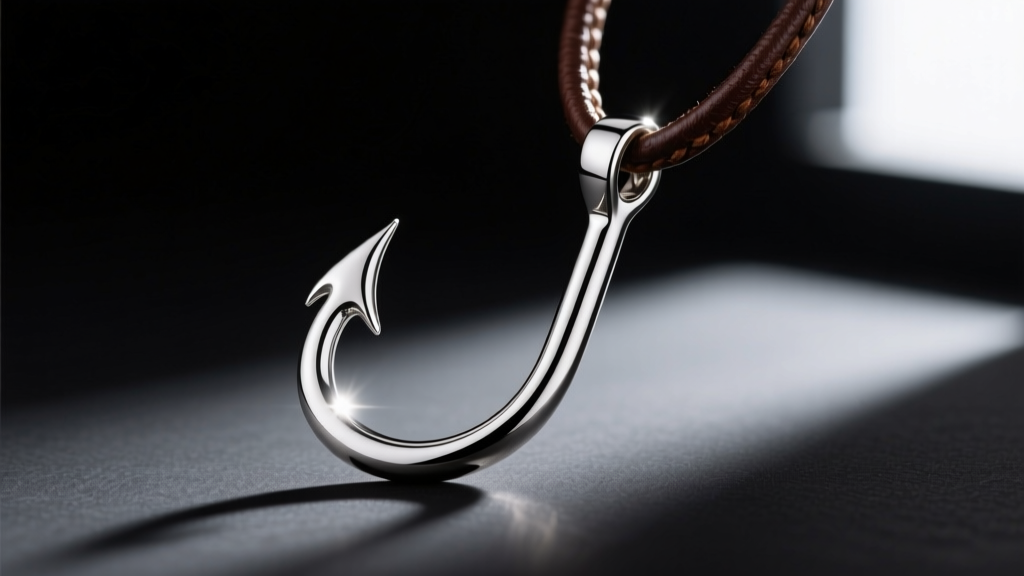
When consumers search for a Maui from Moana necklace, they are typically looking for a replica of the oversized fish hook pendant worn by the animated demigod. However, from a jewelry design and cultural perspective, this piece is rooted in the traditional Polynesian hei matau. According to the Maori Dictionary, the hei matau symbolizes prosperity, abundance, and safe passage over water. Understanding the anatomical structure of this pendant is critical for evaluating its durability and craftsmanship.
A structurally sound fish hook pendant consists of four primary zones:
- The Shank: The straight vertical body that bears the primary tensile load.
- The Bend (Curve): The J-shaped lower section. This is a natural stress concentrator where poor casting or carving will result in fatigue failure.
- The Barb and Point: The inward-facing tip. In wearable jewelry, this must be blunted to prevent lacerations or snagging on textiles.
- The Bail (Eye): The top loop where the chain or cord passes through. The transition between the shank and the bail is the most common failure point in mass-produced replicas.
Material Science: Bone vs. Resin vs. Metal Alloys
The market is flooded with cheap zinc-alloy (Zamak) toys that degrade rapidly when exposed to the chlorides and lactic acid in human sweat. For a piece meant for daily wear, you must evaluate the metallurgical or organic properties of the material.
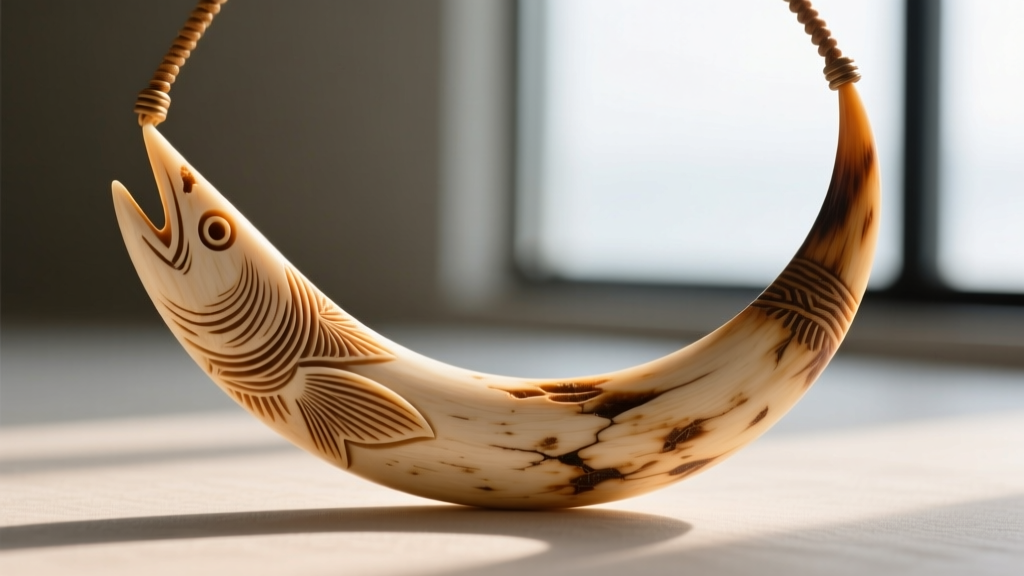
Carved Bone and Horn
Authentic Polynesian carvers traditionally use bovine bone. Bone is primarily composed of hydroxyapatite, giving it excellent compressive strength but making it brittle under sheer force. Uncarved, unsealed bone is highly porous and will absorb skin oils, leading to discoloration. High-quality bone pendants are polished to a 3000-grit finish and sealed with carnauba wax or beeswax to create a hydrophobic barrier.
Surgical Steel and Titanium Alloys
For metal iterations of the Maui from Moana necklace, 316L stainless steel is the baseline standard. The addition of molybdenum in 316L prevents pitting corrosion, making it ideal for wearers who swim in saltwater or chlorinated pools. For those with nickel sensitivities or a preference for ultra-lightweight jewelry, Grade 5 Titanium (Ti-6Al-4V) is the superior choice. As noted in the GIA Gem Encyclopedia regarding jewelry metals, titanium offers a higher strength-to-weight ratio than steel, ensuring the pendant won't pull uncomfortably on the cervical spine during active wear.
Structural Integrity: The Vulnerability of the Hook Curve
The most critical engineering flaw in poorly manufactured fish hook pendants is a sharp inner radius at the bend. In metallurgy, sharp internal corners act as stress concentrators. If the pendant is snagged, the kinetic energy transfers directly to this corner, causing micro-fractures in cast metals or snapping brittle alloys entirely.
When inspecting a metal Maui pendant, run your fingernail along the inner curve of the hook. It should feature a smooth, radiused transition (ideally a 2mm to 3mm radius) rather than a harsh 90-degree internal angle. Furthermore, the shank thickness should never be less than 3.5mm for adult-sized pendants to prevent plastic deformation (bending) if subjected to lateral force.
Chain and Cord Pairing: Tensile Strength and Aesthetics
The visual weight of a Maui fish hook demands a suspension system capable of supporting 50 to 150 grams of material without stretching or fraying. Pairing the wrong cord with a heavy metal pendant is a common point of failure.
| Suspension Type | Material Composition | Tensile Strength | Water Resistance | Best Use Case |
|---|---|---|---|---|
| Braided Leather (3mm) | Genuine cowhide, waxed | ~45 lbs | Poor (degrades in water) | Casual wear, bone pendants |
| Waxed Cotton Cord (2mm) | Cotton fibers, beeswax coating | ~30 lbs | Moderate | Traditional Polynesian styling |
| 316L Rope Chain (4mm) | Marine-grade stainless steel | ~120 lbs | Excellent | Heavy metal pendants, daily wear |
| Titanium Box Chain (3mm) | Grade 23 Titanium | ~90 lbs | Excellent | Hypoallergenic needs, modern look |
Expert Tip: If you are threading a leather cord through a carved bone or metal bail, friction will eventually saw through the organic fibers. Always line the bail of the pendant with a smooth, soldered sterling silver or titanium jump ring (grommet) to protect the cord from abrasive wear.
Sizing and Proportions: Matching the Pendant to the Wearer
The Maui from Moana necklace is inherently a statement piece, but wearing a pendant that is disproportionate to your frame can look costumey rather than stylish. Use the following dimensional guidelines to select the correct size based on the wearer's morphology:
The 30mm - 40mm Range (Subtle / Youth)
Best suited for children, teenagers, or adult women seeking a minimalist nod to the Moana aesthetic. At this scale, the pendant sits neatly in the suprasternal notch (the hollow at the base of the throat) when paired with a 16-inch or 18-inch chain.
The 45mm - 55mm Range (Standard Adult Male)
This is the optimal size for the average adult male (5'8" to 6'0"). A 50mm pendant provides enough visual mass to anchor a simple t-shirt or henley without overwhelming the chest. It should be suspended on a 22-inch to 24-inch cord, allowing the hook to rest comfortably on the upper sternum.
The 60mm+ Range (Cosplay / Streetwear Statement)
Pendants exceeding 60mm are direct replicas of the animated character's proportions. These are heavy, often exceeding 100 grams, and require a thick 5mm+ rope chain or heavy braided cord to prevent neck strain. This size is strictly for bold streetwear styling or accurate cosplay.
Cultural Respect and Authentic Sourcing
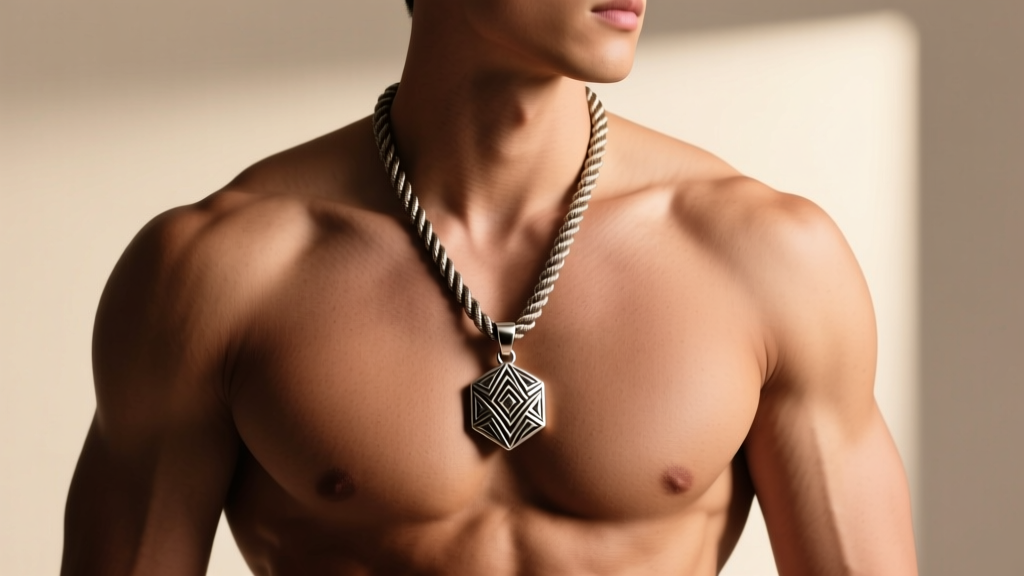
While Disney holds the copyright to the specific stylized hook seen in the film, the hei matau is a sacred cultural artifact. Mass-produced, licensed merchandise is often manufactured in overseas factories with zero cultural oversight, utilizing toxic lead-soldered alloys or environmentally damaging resins. For buyers seeking genuine craftsmanship, look for independent Polynesian artisans based in New Zealand, Hawaii, or Fiji. According to Britannica's overview of Oceania Art, traditional carving is a generational practice; purchasing directly from indigenous carvers ensures you are acquiring a piece with structural integrity, ethical sourcing, and genuine cultural mana (spiritual power).
Conclusion: Investing in Quality Craftsmanship
The Maui from Moana necklace transcends its animated origins to serve as a modern talisman of strength and navigation. By prioritizing marine-grade metals or properly sealed organic materials, verifying the structural radius of the hook's bend, and pairing the pendant with a high-tensile suspension cord, you can ensure your fish hook necklace survives the rigors of daily wear while honoring its Polynesian roots.


