The Necklace By Guy De Maupassant PDF: A Diamond Gifting Guide
Discover how to avoid literary tragedy when gifting diamonds. Our guide pairs Maupassant's classic tale with modern necklace buying advice.

The Literary Lesson: Why Authenticity Matters in Jewelry Gifting
Every year, thousands of students and literature enthusiasts search for the necklace by guy de maupassant pdf to study the tragic 1884 short story 'La Parure.' The tale follows Mathilde Loisel, a woman who borrows what she believes to be a priceless diamond necklace, loses it, and spends a decade in grueling poverty to replace it with a genuine 36,000-franc diamond piece—only to discover the original was mere paste (costume jewelry). While modern jewelry buyers are unlikely to face such extreme ruin, Maupassant’s masterpiece remains the ultimate cautionary tale about authenticity, perceived value, and the perils of unverified gemstones.
As we navigate the luxury market in 2026, the line between natural diamonds, lab-grown diamonds, and high-end simulants has never been blurrier. Whether you are shopping for a milestone anniversary or a graduation gift, understanding exactly what you are purchasing is paramount. This guide translates the harsh lessons of classic French literature into a modern, actionable framework for gifting diamond necklaces and pendants, ensuring your gesture of love is backed by genuine quality and verifiable authenticity.
Simulants vs. Lab-Grown vs. Natural: Avoiding the 'Paste' Trap
Mathilde Loisel’s downfall was rooted in her inability to distinguish between a diamond and a simulant. Today, the market offers three distinct categories of clear gemstones, each with vastly different price points, durability metrics, and optical properties. According to the Federal Trade Commission (FTC) Jewelry Guides, sellers must clearly disclose whether a stone is natural, laboratory-created, or a simulant. Here is how to tell them apart when selecting a pendant:
- Cubic Zirconia (CZ) & Moissanite (Simulants): CZ has a Mohs hardness of 8-8.5 and a refractive index (RI) of 2.15. It scratches easily and loses its polish within a year of daily wear. Moissanite is much harder (9.25 on the Mohs scale) and possesses an RI of 2.65, giving it a 'disco-ball' fire that easily distinguishes it from a real diamond. A 1-carat moissanite solitaire pendant costs between $300 and $600.
- Lab-Grown Diamonds: Chemically, physically, and optically identical to mined diamonds. They score a 10 on the Mohs scale and share the exact 2.42 RI of natural stones. As of 2026, a high-quality (G color, VS2 clarity) 1-carat lab-grown diamond pendant retails for approximately $600 to $1,000. They are real diamonds, just grown in a CVD or HPHT reactor.
- Natural Mined Diamonds: Formed deep within the Earth's mantle over billions of years. They carry the traditional prestige and rarity premium. A comparable 1-carat G/VS2 natural diamond solitaire pendant will cost between $5,500 and $7,500.
Gifting Rule: Never gift a simulant without explicit disclosure. If your budget dictates a simulant, frame it as a 'travel-safe' or 'everyday' piece rather than presenting it as a diamond.
Occasion Matching: The Modern Gifting Matrix
Just as the Loisels were invited to a high-society ball, modern gifting requires matching the necklace style to the specific occasion and the recipient's lifestyle. A heavy, dramatic piece is inappropriate for a corporate graduation, just as a delicate chain falls flat for a 25th anniversary. Use the matrix below to align your purchase with the event.
| Occasion | Recommended Style | Carat Weight / Size | Metal & Setting | Estimated Budget (Natural) |
|---|---|---|---|---|
| High School / College Graduation | Delicate Solitaire Pendant | 0.15ct - 0.25ct | 14k White Gold, Bezel Set | $800 - $1,500 |
| Valentine's Day / Dating Milestone | Heart or Infinity Motif | 0.30ct - 0.50ct (Total) | 18k Rose Gold, Prong Set | $1,500 - $3,000 |
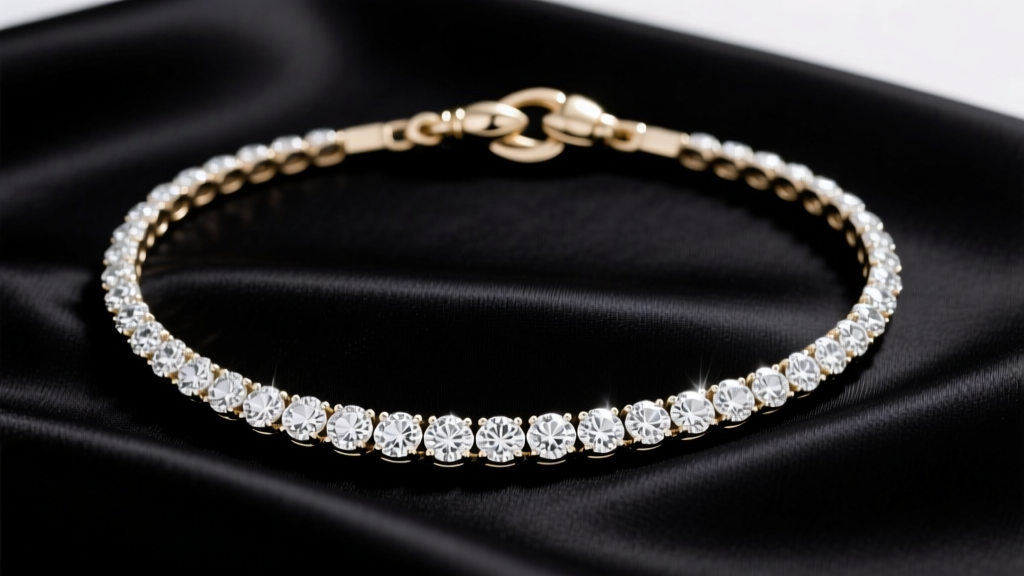
| 5th or 10th Wedding Anniversary | Classic Diamond Tennis Necklace | 3.00ct - 5.00ct (Total) | Platinum, 4-Prong Shared | $12,000 - $25,000 |
| Push Present / New Baby | Initial or Birthstone Halo Pendant | 0.50ct Center + 0.20ct Halo | 18k Yellow Gold, Pave Halo | $3,500 - $5,500 |
The Bezel vs. Prong Debate for Active Recipients
If the recipient is highly active, works in healthcare, or frequently wears knitwear, avoid traditional prong settings. Prongs can snag on fabrics and bend over time, risking stone loss. A bezel setting, where a continuous rim of metal surrounds the diamond's girdle, offers superior protection and a sleek, modern aesthetic. While a bezel setting can make a diamond appear slightly smaller by hiding its edges, the trade-off in security and snag-free wearability is invaluable for daily-wear pendants.
Chain Mechanics: Gauge, Tensile Strength, and Clasp Security
A pendant is only as secure as the chain that holds it. In Maupassant’s story, the loss of the necklace was the catalyst for ruin. In reality, chain breakage is the leading cause of lost jewelry. When selecting a chain for a diamond pendant, you must consider the gauge (thickness) and the link structure.
Recommended Chain Profiles for Pendants
- Cable Chain (0.8mm - 1.0mm): The classic, minimalist choice. Ideal for lightweight pendants (under 0.50ct). However, the uniform oval links can stretch and weaken if pulled.
- Wheat / Spiga Chain (1.2mm - 1.5mm): Composed of woven, figure-eight links that distribute weight evenly. This is the gold standard for medium to heavy pendants (0.75ct to 2.00ct) due to its high tensile strength and resistance to kinking.
- Box Chain (1.0mm - 1.5mm): Features square, interlocking links. While visually striking and highly reflective, box chains are notoriously difficult to repair if kinked or crushed. Avoid them for heavy pendants.
Clasp Engineering: Don't Skimp on the Hardware
The clasp is the most critical failure point on any necklace. Spring ring clasps are inexpensive and common on mass-market jewelry, but their internal springs fail frequently, and they are difficult to operate with one hand. Always upgrade to a lobster claw clasp for pendants valued over $1,000. For heavy tennis necklaces or multi-carat pendants, insist on a box clasp with a figure-eight safety latch, which provides redundant mechanical security.
The Antidote to Tragedy: GIA Certification and Appraisals
Had Mathilde Loisel consulted a certified gemologist before attempting to replace her borrowed necklace, she would have immediately recognized the paste original and saved herself ten years of misery. In the modern era, the antidote to such tragedy is rigorous, independent certification.
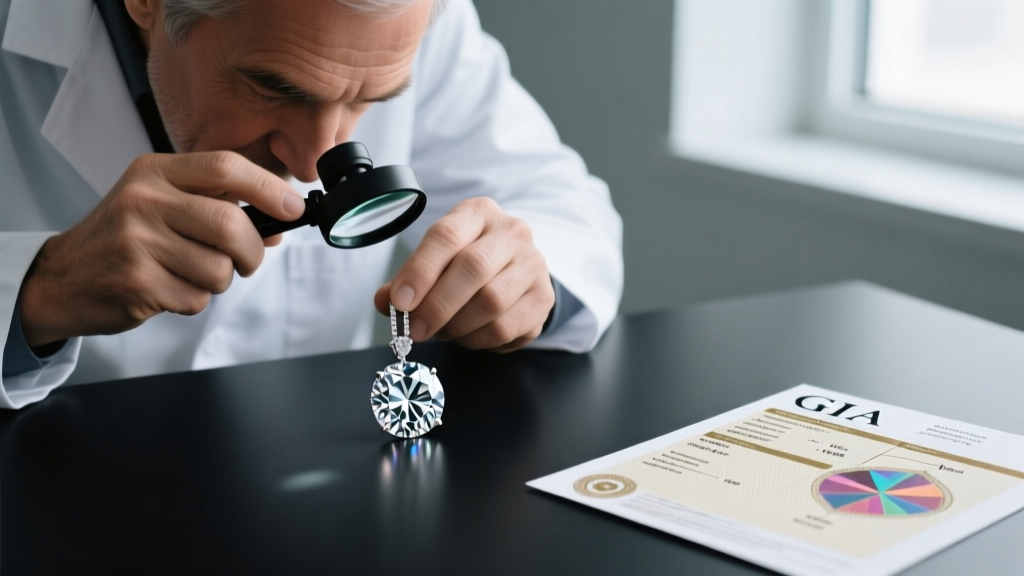
When purchasing a natural or lab-grown diamond pendant featuring a center stone of 0.50 carats or larger, always demand a grading report from a top-tier, independent laboratory. The Gemological Institute of America (GIA) remains the global benchmark for natural diamonds, while the IGI (International Gemological Institute) is highly regarded for lab-grown stones. These reports laser-inscribe the diamond's girdle with a unique identification number, linking the physical stone to its digital dossier.
'A certificate is not an appraisal. A grading report details the exact 4Cs (Cut, Color, Clarity, Carat) and proportions of the stone, while an insurance appraisal assigns a replacement monetary value for your specific policy. You need both for high-value gifts.'
Final Gifting Advice
Gifting a diamond necklace is a profound gesture that transcends fleeting trends. By understanding the material science of gemstones, matching the style to the occasion, prioritizing structural chain integrity, and demanding independent certification, you ensure your gift is both beautiful and authentic. Let the tragedy of 'The Necklace' remain confined to the pages of a PDF, while your own gifting story becomes a lifelong celebration of verified elegance and enduring love.


