The Theme of the Necklace by Guy de Maupassant: Authenticity Guide
Explore the theme of the necklace by Guy de Maupassant through a modern jewelry buying guide on authenticity, lab-grown diamonds, and avoiding fakes.

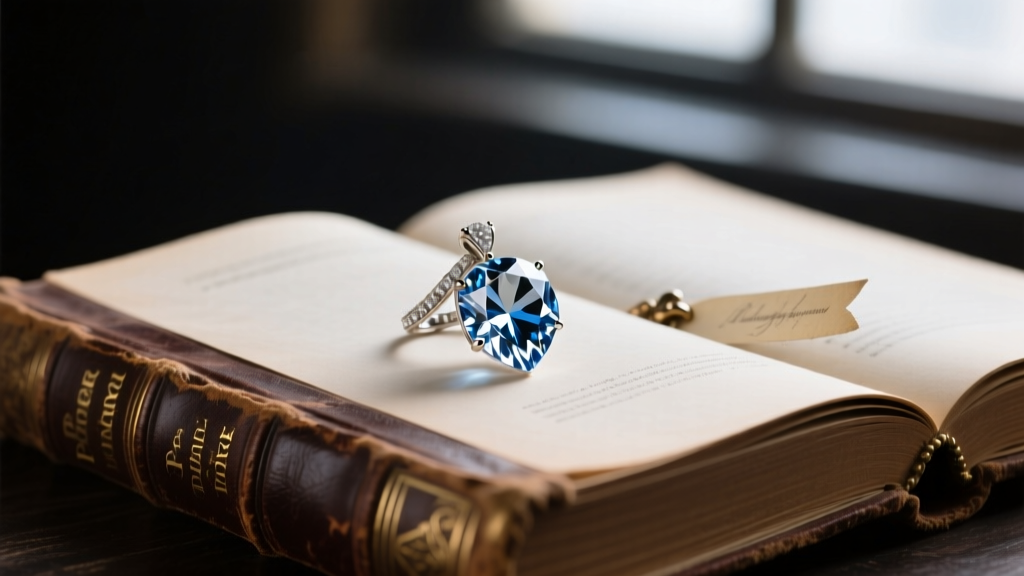
When students and scholars search for 'the theme of the necklace by guy de maupassant', they are typically looking for literary analysis regarding vanity, the illusion of wealth, and the cruel irony of fate. In the classic 1884 short story La Parure (The Necklace), Mathilde Loisel borrows what she believes to be a magnificent diamond necklace, loses it, and spends ten years in grueling poverty to replace it—only to discover the original was made of worthless paste (costume jewelry). However, from the perspective of a modern gemologist and jewelry buyer, the true tragedy of Mathilde Loisel was not merely her vanity; it was her profound lack of gemological literacy. She could not distinguish between high-end simulants and natural diamonds.
As we navigate the luxury jewelry market in 2026, the line between natural diamonds, lab-grown alternatives, and advanced simulants has never been thinner. The 'Mathilde Loisel Trap'—paying exorbitant prices for perceived status without understanding the material reality of the piece—is more relevant than ever. This buying guide bridges literary cautionary tales with hard gemological science, teaching you exactly what to look for when purchasing a diamond pendant or necklace.
The Mathilde Loisel Trap: Deception and the Illusion of Wealth
In Maupassant’s era, 'paste' jewelry referred to leaded glass cut to mimic the brilliance of diamonds. Today, the market offers vastly superior alternatives that can easily fool the untrained eye. The core theme of the necklace by Guy de Maupassant revolves around the danger of valuing the appearance of wealth over authenticity. In modern jewelry buying, this translates to consumers being overcharged for misrepresented stones or falling victim to synthetic stones sold as natural.
To avoid this, a modern buyer must shift their focus from the mere 'sparkle' of a pendant to its verifiable gemological properties. Understanding the physical and optical characteristics of your necklace's center stone is the ultimate protection against deception, whether you are buying a vintage estate piece or a brand-new solitaire pendant.
Paste vs. Natural: A 2026 Gemological Breakdown
Before making a significant investment in a diamond necklace, you must understand the hierarchy of diamond simulants and alternatives. According to the Gemological Institute of America (GIA), a diamond simulant is any material that visually resembles a diamond but possesses entirely different chemical and physical properties. Lab-grown diamonds, conversely, share the exact same carbon crystal structure as natural diamonds but are created in controlled environments.
| Material | Mohs Hardness | Refractive Index (Brilliance) | 2026 Avg. Price (1 Carat) | Best Application |
|---|---|---|---|---|
| Natural Diamond | 10 | 2.42 | $3,500 - $6,500 | Generational heirlooms, investment |
| Lab-Grown Diamond (CVD/HPHT) | 10 | 2.42 | $600 - $1,200 | Everyday luxury, ethical buyers |
| Moissanite | 9.25 | 2.65 - 2.69 | $300 - $500 | Maximum sparkle, budget-conscious |
| Cubic Zirconia (CZ) | 8.0 - 8.5 | 2.15 | $15 - $30 | Travel jewelry, temporary wear |
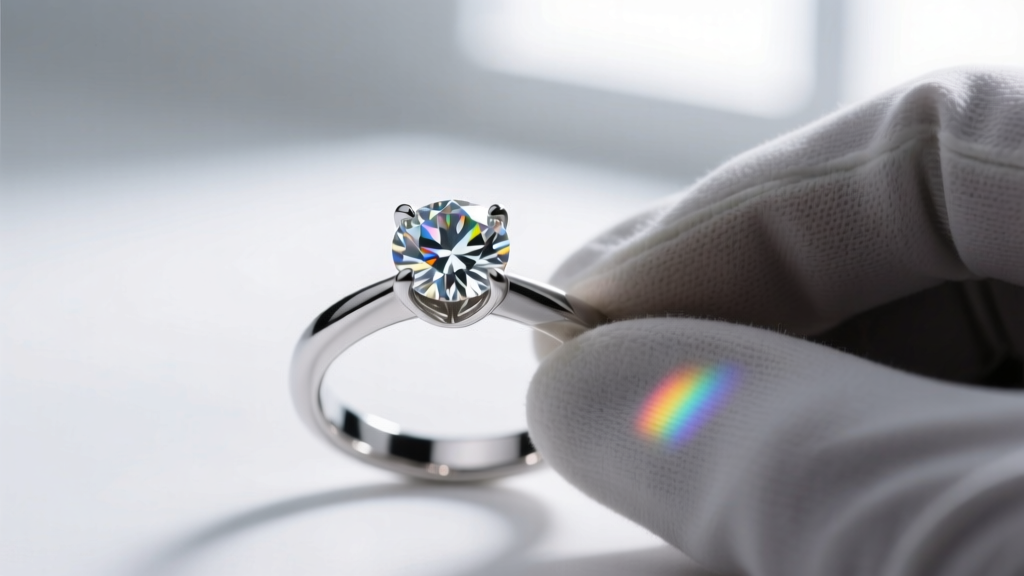
Notice that Moissanite actually has a higher refractive index than a diamond, meaning it exhibits more 'fire' (rainbow-colored light dispersion). A novice buyer might see this intense rainbow sparkle and assume it is a high-quality diamond, when in fact, a natural diamond's brilliance is characterized more by white light return and scintillation. Mathilde Loisel was blinded by the sheer flash of the paste necklace; modern buyers must look past the fire and examine the stone's inclusions, girdle thickness, and facet junctions.
How to Verify Authenticity and Avoid the 'Fake' Disaster
If you are purchasing a high-value diamond pendant, visual inspection is not enough. You must employ rigorous verification methods to ensure you are not paying natural diamond prices for a lab-grown stone or a simulant.
1. Inspect the Hallmarks and Prong Settings
High-quality natural diamonds are almost never set in base metals or low-karat gold. Examine the bail (the loop that connects the pendant to the chain) and the gallery (the underside of the setting) for hallmarks. Look for stamps like 14K, 18K, 585, 750, or PT950 (Platinum). Furthermore, examine the prongs. Natural diamonds require precise, durable prong work—typically platinum or white gold—because of the stone's value. If the prongs are thin, uneven, or show signs of rapid wear, the stone is likely a simulant like CZ, which is often set in mass-produced, lower-quality mountings.
2. Thermal and Electrical Conductivity Testing
The classic 'fog test' (breathing on the stone to see if the fog dissipates instantly) is a fun parlor trick, but it is not scientifically reliable for high-stakes purchases. Diamonds are exceptional thermal conductors. However, because Moissanite is also thermally conductive, standard diamond testers will give a false positive for Moissanite. In 2026, you must use a multi-tester that checks both thermal and electrical conductivity. Moissanite is electrically conductive, whereas natural and lab-grown diamonds are generally not. This dual-testing is the only way to separate a $5,000 natural diamond from a $400 Moissanite pendant on the spot.
3. Demand a Grading Report
Never purchase a natural diamond pendant over $1,500 without a verifiable grading report from a top-tier laboratory such as the GIA or AGS. The report number is often laser-inscribed on the stone's girdle. You can verify this inscription under a 10x jeweler's loupe and cross-reference it with the laboratory's digital database.
The Anatomy of a Pendant: Beyond the Center Stone
A necklace is only as strong as its weakest component. The theme of the necklace by Guy de Maupassant also serves as a reminder to look at the entire picture, not just the flashy centerpiece. When evaluating a diamond pendant, pay close attention to the chain and the clasp.
- The Chain: For pendants weighing over 2 carats, avoid delicate chains like standard cable or thin box chains. Opt for a 1.5mm to 2.0mm Franco, Wheat, or Rope chain. These structures distribute weight evenly and resist kinking, which can lead to structural failure and the loss of your pendant.
- The Clasp: Spring-ring clasps are notoriously fragile and prone to breaking under the weight of a heavy pendant. Always upgrade to a lobster clasp or, for high-value pieces, a locking parrot clasp or a box clasp with a figure-eight safety catch.
- The Bail: Ensure the bail is lined with a durable metal. If a diamond pendant has a plain gold bail, the friction of the chain rubbing against it over years of wear will eventually saw through the metal. A platinum-lined or reinforced bail is a hallmark of a well-constructed piece.
Buying with Intention: Ethical Luxury and Financial Reality
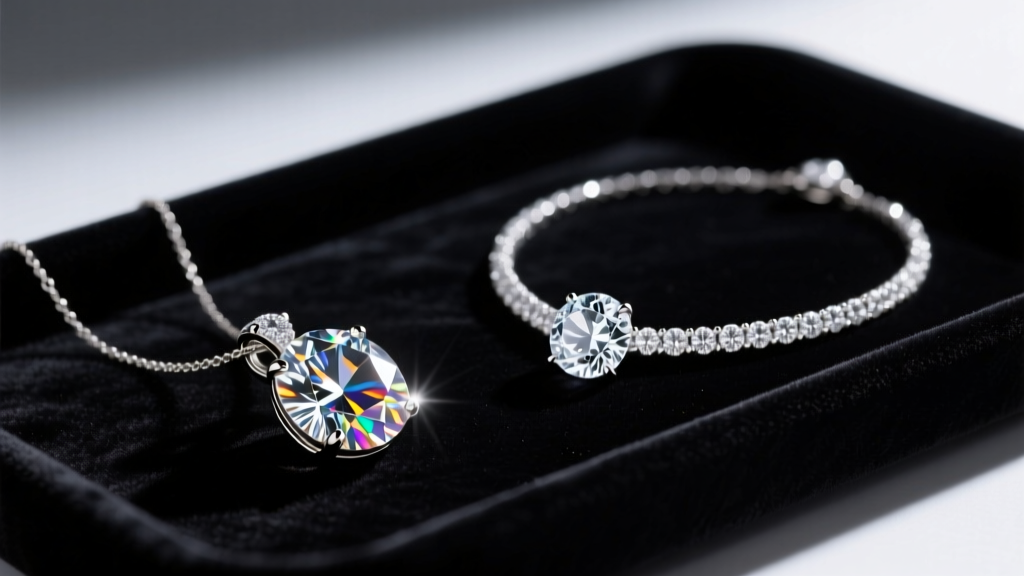
There is a profound difference between deception and intentional alternative buying. The Federal Trade Commission (FTC) Jewelry Guides strictly mandate that sellers must clearly disclose if a stone is lab-grown or a simulant. It is entirely acceptable—and often financially brilliant—to purchase a lab-grown diamond or a high-quality Moissanite pendant, provided you are paying the correct market price and the seller is transparent.
The modern interpretation of Maupassant's cautionary tale is not that you should avoid luxury or beautiful things. Rather, it is a warning against the illusion of value. Buying a $500 lab-grown diamond pendant because you appreciate its optical beauty and ethical sourcing is a triumph of modern consumerism. Buying that same pendant for $4,000 because the seller allowed you to believe it was mined from the earth is a modern tragedy.
Final Takeaways for the Modern Necklace Buyer
To ensure your next necklace purchase is a joy rather than a decade-long financial burden, adhere to these core principles:
- Educate your eye: Learn the difference between the white brilliance of a diamond and the rainbow fire of Moissanite.
- Verify the metal: Ensure the setting matches the value of the stone; platinum and 18K gold are the standards for fine natural diamonds.
- Test electrically: Use multi-testers to rule out Moissanite when purchasing natural diamonds.
- Embrace transparency: If you choose lab-grown or simulants, do so proudly and intentionally, paying the fair 2026 market rate.
By understanding both the literary history and the gemological science of diamond jewelry, you protect yourself from the devastating irony that befell Mathilde Loisel. True luxury lies not in the deception of others, but in the authenticity of your choices and the verifiable quality of the pieces you wear.


