The Seal of Solomon Necklace: A Budget & Value Assessment
Discover the true value of a Seal of Solomon necklace. We break down material costs, pricing tiers, and how to avoid overpaying for talismanic jewelry.

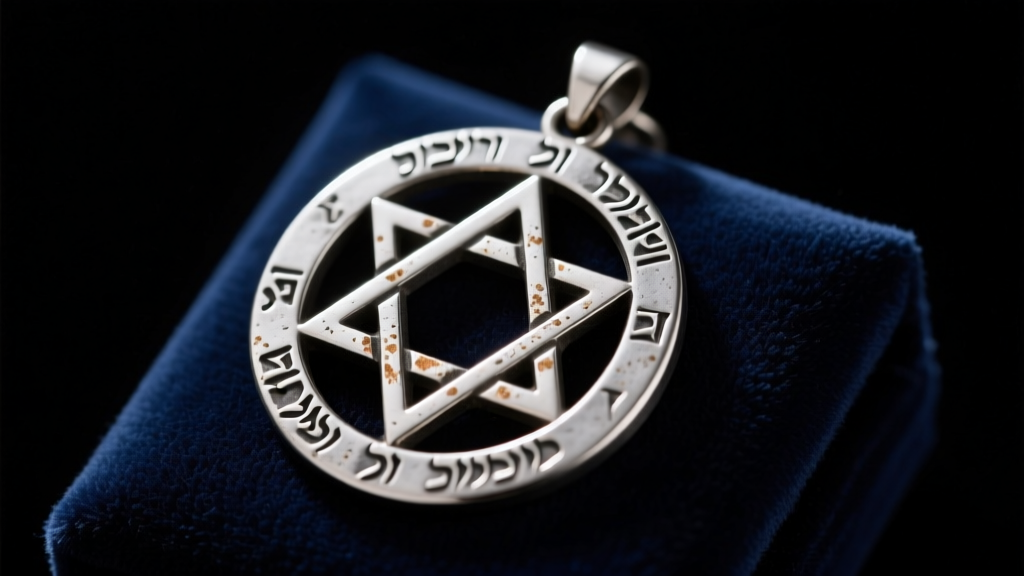
The Seal of Solomon necklace has transcended its ancient origins as a mystical signet to become a highly sought-after piece of talismanic and historical jewelry. However, the modern market is heavily saturated with mass-produced replicas, misleading material claims, and inflated 'mystical' markups. For the discerning collector or daily wearer, understanding the true budget and value assessment of a seal of solomon necklace is critical to avoid overpaying for subpar craftsmanship.
Unlike the traditional Magen David (Star of David), which is typically a flat, overlapping hexagram, the historical Seal of Solomon is often depicted as an interlaced, three-dimensional hexagram or a signet-style pendant featuring Aramaic script, planetary symbols, and intricate geometric borders. This distinction in design complexity directly impacts the manufacturing cost and, consequently, the retail value. In this comprehensive guide, we break down the metallurgy, manufacturing methods, and pricing tiers to help you determine what a Seal of Solomon necklace is actually worth in today's market.
Decoding the Materials: What Are You Actually Paying For?
The foundational value of any talismanic pendant lies in its metallurgical composition. The price disparity between a $20 pendant and a $800 pendant is rarely just about brand markup; it is rooted in the raw material grades and their inherent longevity.
1. Base Metals: Brass, Bronze, and Zinc Alloys ($15 - $45)
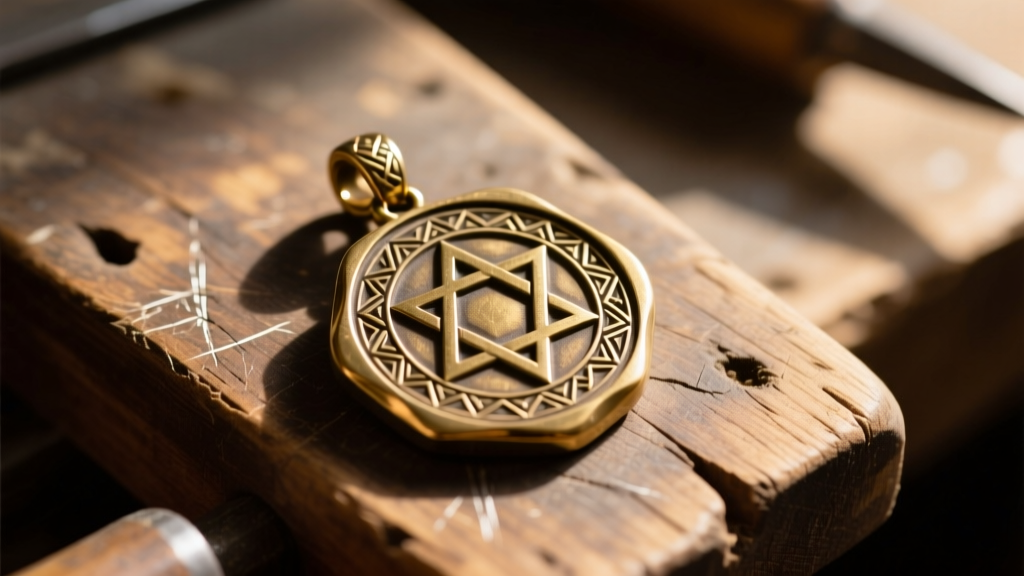
Historically, many ancient amulets were cast in bronze or brass. Today, you will find countless Seal of Solomon pendants made from zinc alloys (often marketed as 'Tibetan Silver' or 'Antique Bronze'). While these are budget-friendly, they possess a critical failure mode: high copper content reacting with lactic acid in human sweat, resulting in verdigris (green skin) and rapid structural degradation. A brass pendant is only a good value if it is explicitly sealed with a jeweler's lacquer or if you are purchasing it as a historically accurate, albeit high-maintenance, reproduction.
2. Sterling Silver (925) ($60 - $180)
Sterling silver (92.5% pure silver, 7.5% copper) represents the undisputed sweet spot for value and durability in talismanic jewelry. It provides the necessary weight and cool touch associated with fine amulets while resisting the severe corrosion seen in base metals. When assessing a silver Seal of Solomon necklace, look for the '925' stamp. Be wary of pieces labeled simply 'Silver' or 'Tibetan Silver,' as these are almost always nickel or zinc alloys with a microscopic silver flash plating that will wear off within weeks of daily friction.
3. Gold Vermeil vs. Standard Plating ($80 - $250)
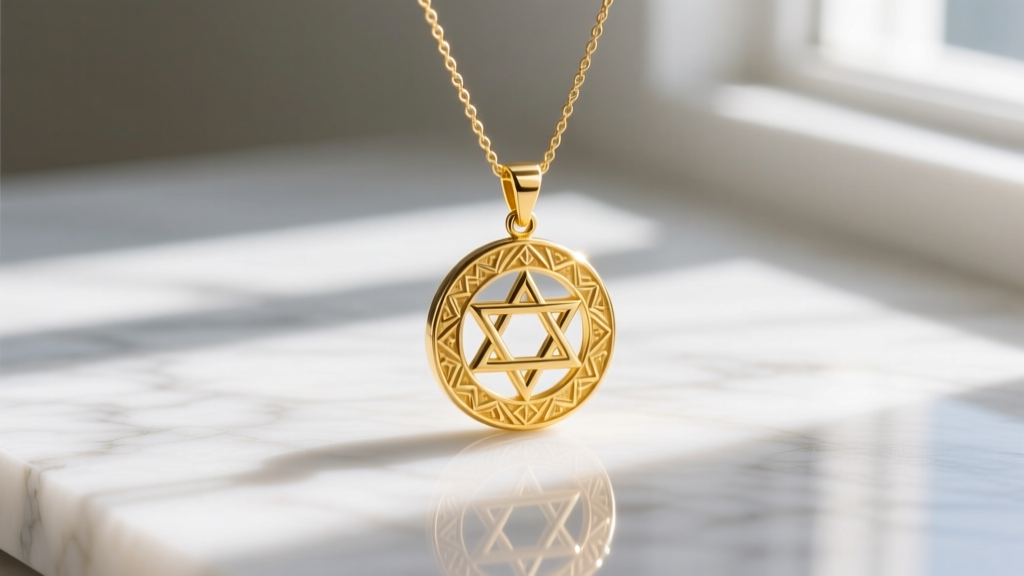
Gold-toned Seal of Solomon necklaces are incredibly popular, but the terminology is frequently manipulated. According to the Federal Trade Commission's Jewelry Guides, true 'Vermeil' must consist of a sterling silver base coated with at least 10-karat gold that is a minimum of 2.5 microns thick. Standard 'gold plated' jewelry often uses a brass base with a mere 0.5-micron flash of gold. If a retailer is charging over $100 for a gold Seal of Solomon pendant, you must verify it is true Vermeil; otherwise, you are paying a premium for a temporary finish that will expose the base metal within months.
4. Solid 14k and 18k Gold ($450 - $2,500+)
For heirloom-grade pieces, solid gold is the ultimate standard. As noted by the Gemological Institute of America (GIA), 14k gold (58.5% pure gold) offers superior tensile strength for intricate interlaced hexagram designs, making it highly resistant to bending or snapping at the bail. 18k gold (75% pure) offers a richer, deeper yellow hue but is slightly softer. The value here is intrinsic; you are paying for the melt weight of the gold plus the artisan's labor.
Manufacturing Methods: Cast vs. Stamped vs. Hand-Engraved
The way your pendant is brought into existence dictates its level of detail and its price point. A budget assessment must factor in the labor intensity of the manufacturing method.
- Die-Striking / Stamping: Used for high-volume, low-cost production. A machine stamps a flat sheet of metal. This method cannot produce the interlaced, 3D 'woven' look of a traditional Seal of Solomon. If a pendant is perfectly flat with shallow, uniform lines, it is stamped and should cost under $40.
- Lost-Wax Casting: The industry standard for mid-tier to high-end jewelry. A wax model is carved (often via 3D CAD), encased in plaster, burned out, and filled with molten metal. This allows for deep undercuts, interlaced geometric lines, and crisp pseudo-Hebrew lettering. Expect to pay $80 to $300 for a well-finished cast piece.
- Hand-Engraving and Chasing: The pinnacle of value. A master engraver uses steel burins to carve the Aramaic script and geometric borders directly into the metal. This creates sharp, V-shaped grooves that catch the light brilliantly, unlike the U-shaped, slightly rounded edges of a cast piece. Hand-engraved Seal of Solomon pendants are bespoke and typically start at $500, scaling up based on the artisan's hourly rate.
The Pricing Matrix: Budget vs. Value Tiers
To help you benchmark the market, we have compiled a structured assessment of what you should expect to pay based on material and manufacturing quality. Use this matrix to evaluate whether a retailer's asking price is justified.
| Market Tier | Material Composition | Manufacturing Method | Fair Price Range | Longevity & Value Verdict |
|---|---|---|---|---|
| Fast Fashion / Tourist | Zinc Alloy / Brass | Die-Cast / Stamped | $12 - $35 | Poor. High risk of skin irritation and finish loss. Buy only for temporary costume wear. |
| Mid-Tier Artisan | 925 Sterling Silver | Lost-Wax Cast | $65 - $160 | Excellent. The best balance of historical weight, durability, and intricate 3D detail. |
| Premium Vermeil | 925 Silver + 2.5μ 18k Gold | Lost-Wax Cast & Polished | $120 - $280 | Very Good. Requires careful maintenance to preserve the gold layer over the silver base. |
| Fine Heirloom | Solid 14k or 18k Gold | Cast or Hand-Finished | $600 - $2,500+ | Superior. Intrinsic melt value combined with generational durability and zero tarnish. |
Red Flags: How to Avoid Overpaying for Talismanic Jewelry
The esoteric and historical nature of the Seal of Solomon makes it a prime target for predatory marketing. When conducting your value assessment, watch out for these common traps:
The 'Mystical Markup' Trap: Many online boutiques sell mass-produced, CAD-cast brass pendants for $150 or more, justifying the price by claiming the item has been 'ritually charged,' 'cleansed under a full moon,' or 'forged using ancient alchemical secrets.' From a purely metallurgical and jewelry-making standpoint, you are overpaying for a $15 factory item. True value lies in the physical craftsmanship and material grade, not unquantifiable marketing narratives.
Another major red flag is the misrepresentation of HGE (Heavy Gold Electroplate). Some sellers market HGE Seal of Solomon necklaces as 'solid gold alternatives.' HGE is simply a thicker layer of plating over a base metal like brass or steel. It holds no intrinsic melt value and cannot be resized or easily repaired by a jeweler if the bail breaks. Never pay solid gold or vermeil prices for HGE.
Chain Selection: The Hidden Cost of the Complete Necklace
A budget assessment of a Seal of Solomon necklace is incomplete without evaluating the chain. A heavy, intricately cast solid silver or gold pendant requires a chain with adequate tensile strength. Pairing a $400 solid gold interlaced hexagram pendant with a hollow, 0.8mm rope chain is a structural liability; the chain will inevitably snap under the pendant's dynamic weight.
Actionable Advice: For pendants weighing between 5 and 15 grams, opt for a solid cable, curb, or wheat chain with a wire gauge of at least 1.2mm to 1.8mm. Ensure the clasp is a sturdy lobster claw rather than a fragile spring-ring. When budgeting, allocate at least 20% to 30% of your total spend toward a high-quality, appropriately gauged chain to protect your investment.
Final Verdict: Where is the Sweet Spot?
For the vast majority of buyers seeking a seal of solomon necklace that balances historical gravitas, daily wearability, and financial prudence, 925 Sterling Silver produced via lost-wax casting is the ultimate sweet spot. It allows for the deep, interlaced 3D geometry that defines the true Seal, avoids the skin-reactivity issues of base metals, and generally falls into the highly reasonable $80 to $150 range. By focusing your budget on material integrity and manufacturing precision rather than esoteric marketing or temporary gold plating, you secure a piece of talismanic jewelry that will genuinely stand the test of time.
For further reading on historical jewelry authentication and metal grading, consult educational resources like Lang Antiques University to deepen your understanding of antique and vintage metalwork standards.


