Mayan Necklace Materials: Jade, Obsidian & Gold Properties Guide
Compare jadeite, obsidian, and gold properties for your Mayan necklace. Expert guide on Mohs hardness, durability, and authentication.

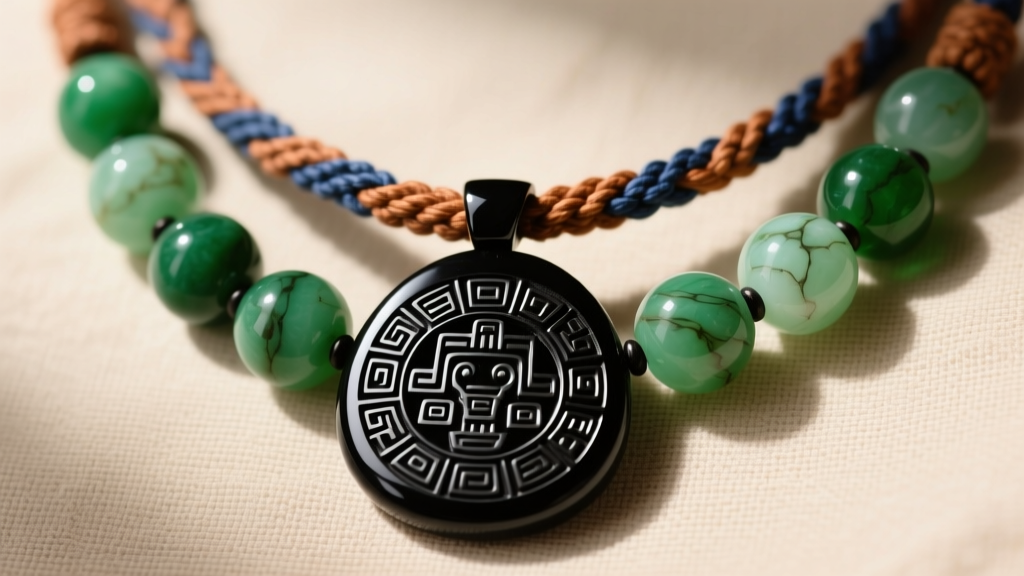
The Evolution of Mayan Necklace Materials
When collectors and jewelry enthusiasts seek out a genuine or inspired Mayan necklace, they are engaging with a material legacy that spans millennia. Pre-Columbian Mesoamerican artisans did not have access to modern metallurgy or synthetic polymers; instead, they relied on a highly specific palette of organic and mineralogical materials. Understanding the physical properties of these materials is not just an exercise in historical appreciation—it is critical for modern wearability, maintenance, and authentication.
In 2026, the market for Mayan-inspired and authentic antiquity necklaces is bifurcated. On one side, museum-grade antiquities feature ancient jadeite, shell, and bone. On the other, contemporary jewelers reinterpret Mayan motifs using modern alloys and ethically sourced volcanic glass. To make an informed acquisition, one must look past the aesthetic and evaluate the mineral hardness, specific gravity, and structural vulnerabilities of the components.
Deep Dive: Jadeite vs. Nephrite in Mayan Jewelry
The term 'jade' is a commercial umbrella that covers two distinct silicate minerals: jadeite and nephrite. The Mayans exclusively prized jadeite, specifically the rich, emerald-green varieties sourced from the Motagua fault line in Guatemala. Nephrite, while historically significant in East Asia, was virtually absent in Mesoamerican trade networks.
From a gemological standpoint, jadeite (a pyroxene) and nephrite (an amphibole) behave very differently under stress. According to the Gemological Institute of America (GIA), jadeite possesses a Mohs hardness of 6.5 to 7, making it slightly harder and more scratch-resistant than nephrite (6.0 to 6.5). However, hardness is only one metric of durability. Toughness—the ability to resist breaking or chipping—is where jade truly excels.
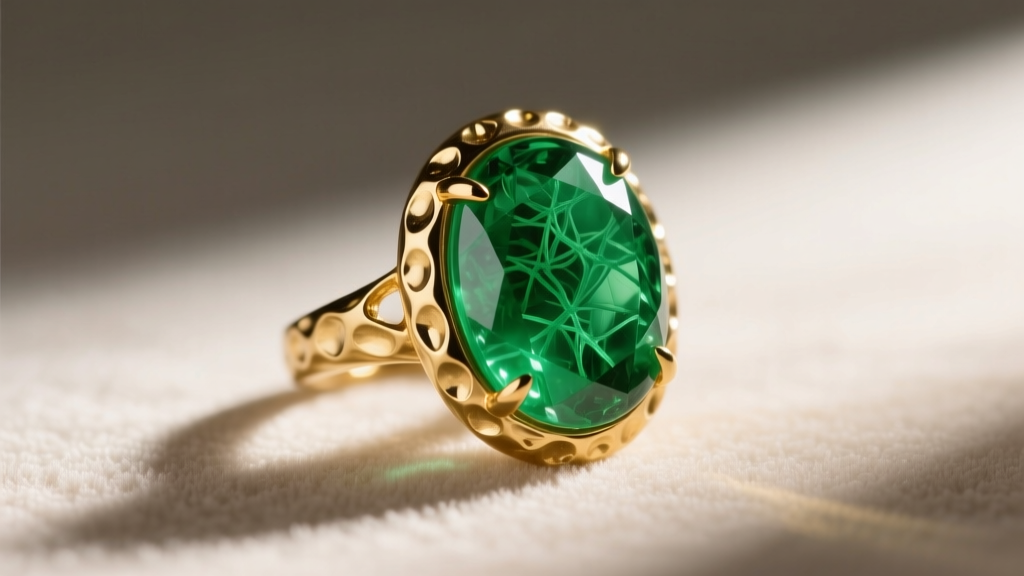
Crystal Structure and Toughness
Jadeite's legendary toughness comes from its granular, interlocking crystal structure. Unlike faceted gems like diamonds or topaz, which have distinct cleavage planes that can split if struck at the right angle, jadeite lacks true cleavage. This means a Mayan jadeite bead or carved pendant can survive impacts that would shatter other gemstones. However, the polish on jadeite can be dulled by prolonged exposure to harsh chemicals or ultrasonic cleaners, which can degrade the wax or polymer resins often used to enhance the stone's luster.
- Specific Gravity (SG): Jadeite ranges from 3.30 to 3.38. It should feel noticeably heavy for its size.
- Refractive Index (RI): Approximately 1.66 (point reading).
- Care Protocol: Clean only with warm water, mild soap, and a soft brush. Avoid steam and ultrasonic cleaners.
Obsidian and Volcanic Glass: Fragility and Edge Retention
Obsidian was a cornerstone of Mayan material culture, utilized for everything from sacrificial blades to intricate necklace pendants carved into the likenesses of deities. Geologically, obsidian is not a true mineral; it is a naturally occurring amorphous volcanic glass composed primarily of silicon dioxide (SiO2).
The GIA's obsidian profile notes that it has a Mohs hardness of 5.0 to 5.5. This makes it highly susceptible to scratching from everyday environmental dust, which contains quartz (Mohs 7). More importantly, obsidian exhibits a conchoidal fracture. Because it lacks a crystalline structure, it breaks in smooth, sweeping curves with razor-sharp edges. While this property allowed Mayan artisans to knap incredibly sharp tools, it makes an obsidian pendant highly vulnerable to chipping if dropped on a hard tile floor or struck against a metal clasp.
Expert Insight: If you are wearing an antique obsidian Mayan necklace, always store it in a separate, soft-lined compartment. The friction from adjacent metal beads or harder gemstones will permanently scratch the glass surface over time.
Modern Metallurgy: Gold, Silver, and Titanium Alloys
Historically, the Mayans utilized tumbaga, an alloy of gold and copper that was often treated with acid to dissolve the surface copper, leaving a pure, gleaming gold exterior (a process known as depletion gilding). Today, modern Mayan-inspired necklaces rely on standardized karat gold, sterling silver, and advanced aerospace metals.
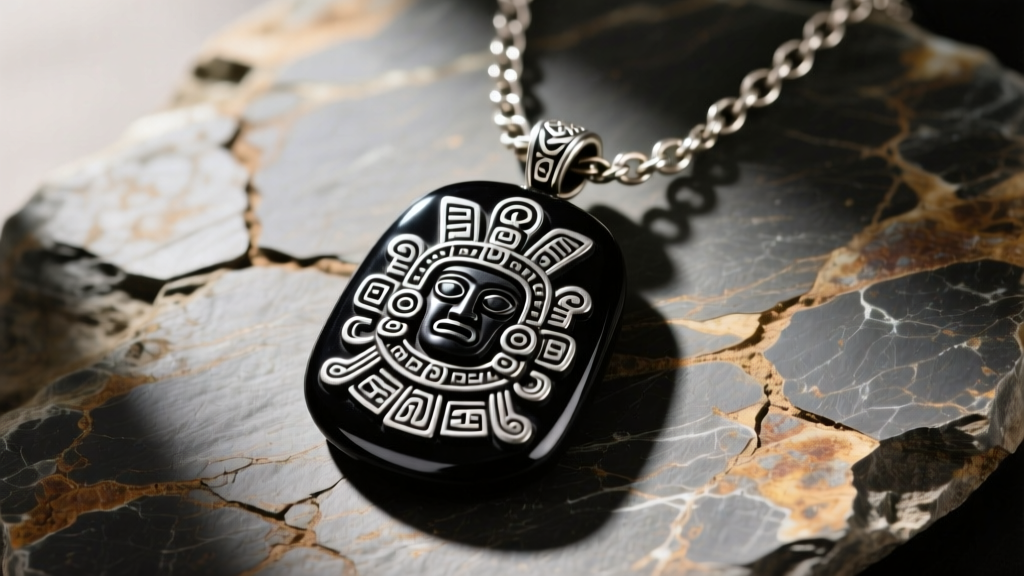
Gold Alloys and Skin Reactivity
When selecting a gold chain to suspend a heavy jade or obsidian pendant, the karat weight dictates both durability and skin reactivity. 24k gold is too soft (Mohs 2.5) to support heavy Mesoamerican pendants without stretching. 14k gold (58.5% pure gold) alloyed with copper and silver offers the optimal tensile strength for heavy Mayan pendants. However, buyers with contact dermatitis must verify the alloying metals; nickel is a common allergen in some white gold alloys.
Titanium and Niobium Alternatives
For modern interpretations of Mayan collars and heavy pectorals, weight is a significant ergonomic factor. A solid jadeite collar can weigh several pounds, causing neck strain. Contemporary jewelers are increasingly using Grade 5 Titanium (Ti-6Al-4V) for the structural backing and chain links. Titanium offers a strength-to-weight ratio that vastly outperforms steel, and it is 100% hypoallergenic, making it ideal for heavy statement pieces worn directly against the skin.
Material Durability & Care Matrix
Use the following matrix to evaluate the physical limitations of common Mayan necklace materials before purchasing or wearing them in active environments.
| Material | Mohs Hardness | Specific Gravity | Primary Vulnerability | Ideal Wear Scenario |
|---|---|---|---|---|
| Jadeite (Guatemalan) | 6.5 - 7.0 | 3.30 - 3.38 | Surface wax degradation | Daily wear, heirloom display |
| Obsidian | 5.0 - 5.5 | 2.35 - 2.60 | Conchoidal chipping, scratching | Occasional wear, controlled environments |
| Tumbaga / 14k Gold | 2.5 - 3.5 | 12.9 - 15.6 | Bending under heavy loads | Structural chain links, bezel settings |
| Spondylus Shell | 3.0 - 4.0 | 2.60 - 2.80 | Calcium carbonate dissolution | Display only, avoid all moisture/acids |
| Grade 5 Titanium | 6.0 (Alloy) | 4.43 | None (highly inert) | Heavy structural collars, daily wear |
How to Authenticate Genuine Mayan Material Antiquities
The secondary market for Pre-Columbian jewelry is rife with sophisticated forgeries. Distinguishing a genuine Mayan necklace from a modern replica requires testing the material properties rather than relying solely on visual motif analysis.
The Specific Gravity Water Displacement Test
Because ancient Mayan jadeite was sourced from specific geological veins in the Motagua Valley, its specific gravity (SG) is highly consistent. By weighing the pendant in air and then suspended in water, you can calculate the SG. If a 'jade' pendant yields an SG of 2.95, it is likely nephrite or a modern serpentine substitute (like bowenite), not authentic Mesoamerican jadeite. Serpentine typically has an SG below 2.60 and a much lower Mohs hardness (2.5-5.5), making it easily scratchable with a steel pin.
UV Fluorescence and the Chelsea Filter
Under long-wave ultraviolet (UV) light, some natural, untreated Guatemalan jadeite exhibits a faint, chalky fluorescence due to trace elements. Conversely, modern polymer-impregnated 'B-jade' (acid-bleached and resin-filled jadeite often passed off as antique) will frequently fluoresce brightly with a bluish-white tint due to the epoxy resins. Furthermore, examining the stone through a Chelsea color filter can help identify chromium-rich imperial green jadeite, which will often show a faint red or pinkish hue, whereas green-dyed quartz or glass will not.
Final Verdict: Selecting Your Mayan Necklace by Lifestyle
Choosing the right Mayan necklace requires aligning the material properties with your lifestyle. If you seek a durable, daily-wear piece that honors Mesoamerican heritage, a modern interpretation featuring Guatemalan jadeite set in 14k gold or Grade 5 titanium is virtually indestructible under normal conditions. The interlocking crystal structure of the jadeite will survive decades of wear, provided you avoid harsh chemical cleaners.
Conversely, if you are acquiring an authentic antiquity featuring obsidian or Spondylus shell, you are acting as a conservator. These materials demand rigorous environmental control, protection from abrasion, and an understanding that their fragility is intrinsically tied to their historical value. By respecting the mineralogical realities of these ancient materials, you ensure that the legacy of Mayan craftsmanship endures for generations to come.


