How to Measure a Chain Necklace: The Ultimate Fit Guide
Learn exactly how to measure a chain necklace, from standard collar lengths to pendant drops, ensuring a flawless fit for every neckline.

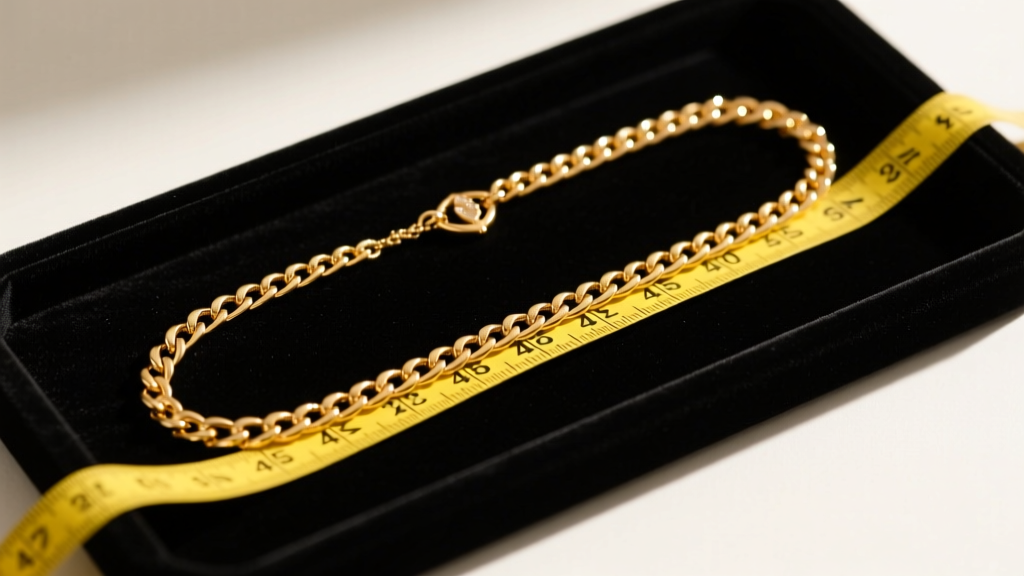
Why Guessing Your Necklace Length Fails
Ordering a '16-inch' chain online only to find it chokes your neck or hangs awkwardly low is a universal jewelry frustration. The root of this problem lies in a fundamental misunderstanding of how chains are measured versus how they actually drape. When you learn how to measure a chain necklace correctly, you quickly realize that a stamped length is merely a starting point. Factors like chain gauge, clasp mechanics, and the hidden geometry of pendant bails drastically alter the final visual drop.
In 2026, with the rise of precision laser-welded links and custom 3D-printed bails, understanding exact millimeter measurements is more important than ever. A heavy 6mm Cuban link behaves entirely differently than a 1.2mm cable chain, even if both are stamped '18 inches.' This beginner-friendly explainer will strip away the guesswork, providing you with a precise, actionable framework to measure your neck, evaluate existing chains, and calculate the exact pendant drop for any neckline.
The Essential Tools for Accurate Measurement
Before diving into the methods, gather the right tools. Relying on a standard metal tape measure from a hardware store will yield inaccurate results due to its rigidity. You need tools that mimic the drape of precious metals.
- Flexible Tailor's Tape: The gold standard for body measurements. Ensure it is fiberglass or cloth to prevent stretching.
- Non-Stretch Cotton String: Ideal for simulating the drape of a chain around the collarbone.
- Steel Ruler or Measuring Mat: For laying out existing chains perfectly flat.
- Digital Calipers (Optional but Recommended): Crucial for measuring the exact wire gauge and clasp dimensions, which impact the functional length of thicker chains.
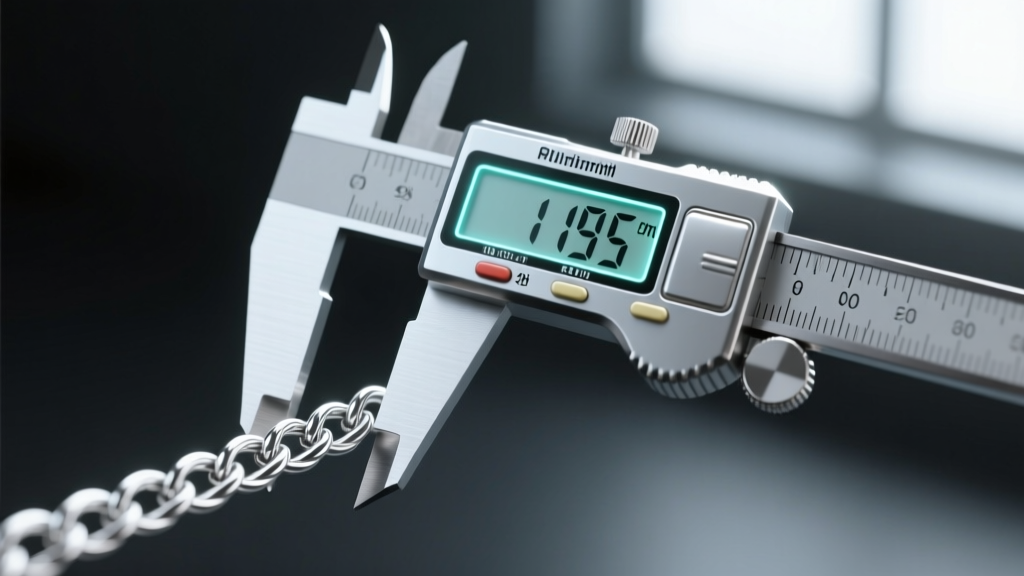
Step-by-Step: How to Measure a Chain Necklace
Whether you are trying to replicate the fit of a favorite piece or sizing your neck for a brand-new purchase, these two methods will guarantee accuracy.
Method 1: Measuring an Existing Chain (The Clasp Rule)
If you have a necklace that fits perfectly and you want to buy a duplicate in a different metal or style, you must measure it correctly. The most common mistake beginners make is excluding the clasp.
- Lay it Flat: Place the chain on a flat surface. Gently coax it into a straight line, but do not pull it taut. Pulling stretches the links and artificially inflates the measurement.
- Include the Hardware: Measure from the very end of the jump ring on the clasp side to the very end of the tag or ring on the receiving side. According to Blue Nile's Necklace Length Guide, the industry standard for chain length includes the clasp assembly.
- Account for Thickness: If you are measuring a thick chain (like a 5mm Figaro or Cuban), measure the inner edge of the curve if it's clasped in a circle, or lay it flat and subtract roughly 2-3mm to account for the rigidity of the thick links when worn.
Method 2: Sizing Your Neck for a New Purchase
To find your ideal length from scratch, you need to measure your actual neck and add the necessary 'comfort drop.'
- Wrap the String: Take your non-stretch cotton string and wrap it around your neck at the exact height where you want the top of the chain to rest.
- Mark and Measure: Pinch the string where it meets, lay it flat against a steel ruler, and note the measurement. This is your exact neck circumference.
- Apply the Comfort Multiplier: A chain that matches your exact neck circumference will act as a tight choker. For a standard collar fit, add 2 inches (50mm). For a princess length that rests on the collarbone, add 4 to 6 inches (100-150mm) to your base neck measurement.
Standard Necklace Lengths and Where They Fall
To contextualize your measurements, compare your numbers against the industry standard length chart. As noted by JewelryWise, these lengths are calibrated for an average neck size of 13.5 to 14 inches. If your neck measurement is larger, you must size up accordingly to achieve the same visual drape.
| Standard Length | Metric (mm) | Visual Placement | Best Necklines |
|---|---|---|---|
| 14 Inches (Collar) | 355 mm | Tightly wraps around the base of the neck | Off-the-shoulder, V-neck, Open collars |
| 16 Inches (Choker) | 406 mm | Rests perfectly on the collarbone | Crew neck, Boat neck, Everyday wear |
| 18 Inches (Princess) | 457 mm | Falls just below the collarbone | High necklines, Scoop neck, Pendants |
| 20 to 22 Inches (Matinee) | 508 - 558 mm | Rests on the upper chest / bust line | Business attire, Turtlenecks, Deep V |
| 24 to 30 Inches (Opera) | 609 - 762 mm | Falls below the bust, stomach level | Evening wear, Layering, High fashion |
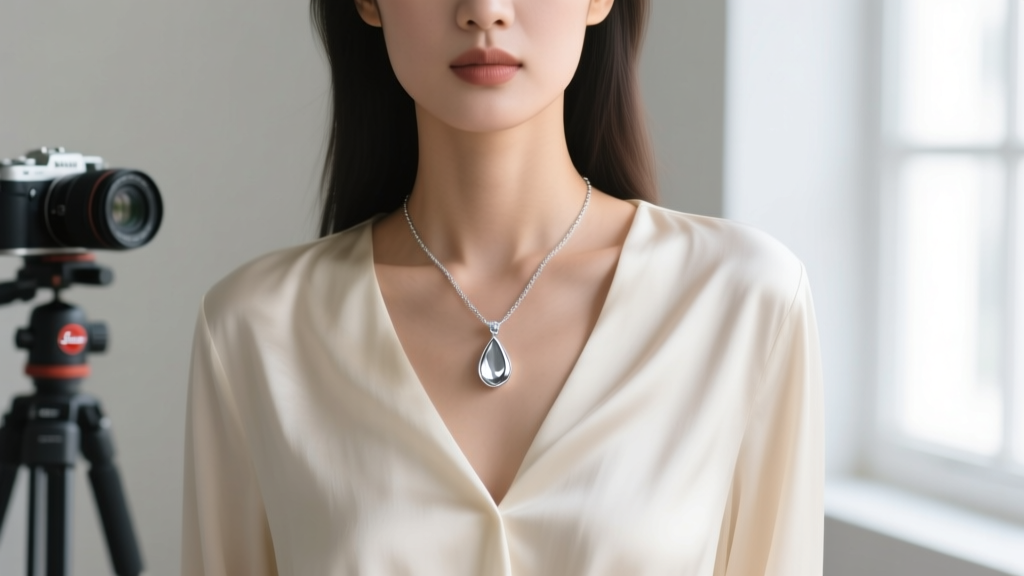
The Pendant Drop Factor: Calculating Total Visual Length
When learning how to measure a chain necklace, beginners often forget the pendant. The chain length is only half the equation; the 'pendant drop' dictates where the focal point of your jewelry actually sits.
To calculate the true visual length, use this simple formula:
Chain Length + (Bail Length / 2) + Pendant Body Length = Total Visual Drop
For example, if you have an 18-inch chain and attach a pendant with a 15mm hidden bail and a 25mm teardrop body, the bottom of the pendant will hang nearly 1.5 inches lower than the bottom of the bare chain. If you are wearing a crisp button-down shirt and want the pendant to sit inside the collar rather than resting on the fabric, you must subtract the pendant's total drop from your desired visual length before purchasing the chain.
Pro Tips for Different Chain Gauges and Clasps
Not all 18-inch chains are created equal. The physical hardware drastically alters the functional fit.
The Gauge Thickness Illusion
Chain gauge (the thickness of the wire) dictates how the metal bends. A delicate 1.0mm snake chain is highly flexible and will drape tightly against the skin, feeling true to its stamped length. Conversely, a rigid 5.0mm rope chain cannot bend sharply. It forms a wider circle around the neck, effectively 'shrinking' the inner diameter. If you are upgrading from a thin chain to a thick, heavy gauge chain, always add 0.5 to 1 inch to your usual size to maintain the same drape.
Clasp Mechanics and Allowances
The clasp is functional hardware that eats into your chain's length.
- Spring Ring Clasps: Small and lightweight, typically adding only 6mm to 8mm to the total length.
- Lobster Clasps: The industry standard for medium to heavy chains. A standard 12mm lobster clasp adds roughly half an inch of functional length.
- Toggle Clasps: These require significant slack to allow the T-bar to pass through the O-ring. If a toggle chain is sized too tightly, it will pop open. Always add an extra 0.75 inches of slack when sizing a chain meant for a toggle clasp.
Common Sizing Mistakes to Avoid
Even with the right tools, a few common pitfalls can ruin the fit of your necklace. Avoid these beginner errors:
- Measuring Over Thick Clothing: Always measure your neck against bare skin or a very thin camisole. A winter sweater can add up to 1.5 inches to your neck circumference, resulting in a chain that is far too loose when worn in the summer.
- Ignoring Metal Memory: Chains worn tightly (like 14-inch chokers) are subjected to constant friction and tension. Over time, links can stretch. If you are buying a soft metal like high-karat 22k or 24k gold, buy a chain with an adjustable extender chain to accommodate future stretching.
- Forgetting the Extender Chain: Many modern chains come with a 2-inch extender. When measuring an existing chain to replicate it, decide if you want to measure the base chain or the chain fully extended.
Final Thoughts on Finding Your Perfect Fit
Mastering how to measure a chain necklace transforms you from a passive buyer into an informed collector. By accounting for the inner diameter of thick gauges, the mechanical reality of lobster and toggle clasps, and the hidden math of pendant bails, you can confidently order bespoke and custom pieces that fit your unique anatomy perfectly. Keep your flexible tailor's tape and digital calipers in your jewelry toolkit, and you will never have to rely on the guesswork of generic sizing charts again.


