Master How to Measure Length of Necklace for Any Neckline
Learn exactly how to measure length of necklace pieces for flawless layering. Discover expert styling tricks, standard sizes, and neckline pairing tips.

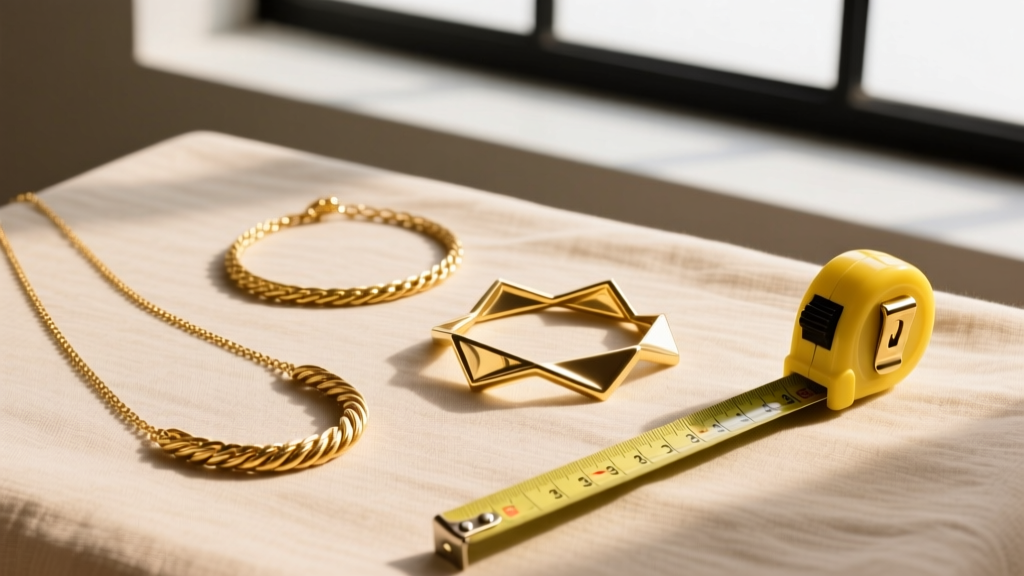
In the modern jewelry landscape, the difference between a chic, intentional stack and a tangled, chaotic mess often comes down to a single inch. As layering trends have evolved into highly curated, architectural stacks, understanding how to measure length of necklace pieces with absolute precision has become a non-negotiable skill for stylists and collectors alike. Whether you are pairing a delicate 14-inch choker with a heavy 22-inch pendant or trying to match a vintage find to a specific neckline, guessing is no longer an option.
This comprehensive style and trend analysis breaks down the exact methodology for measuring necklaces, the physics of chain drape, and the mathematical frameworks required to build flawless, tangle-free layers in 2026.
The Anatomy of Necklace Sizing: Why Millimeters Matter
Fast fashion brands often lump necklaces into vague categories like 'short' or 'long.' However, high jewelry and independent designers operate on strict millimeter tolerances. A 15-inch chain sits entirely differently on the collarbone than a 16-inch chain. The former creates a snug, choker-adjacent silhouette that highlights the clavicle, while the latter rests just below it, offering a more relaxed drape.
According to industry standards highlighted by the Gemological Institute of America (GIA), precise measurements are critical not just for aesthetics, but for the structural integrity of the piece. A chain that is too short for the wearer's neck circumference places undue stress on the jump rings and clasp, leading to premature metal fatigue and breakage. Therefore, mastering how to measure length of necklace items is the first step in both styling and jewelry preservation.
Step-by-Step: How to Measure Length of Necklace Pieces Accurately
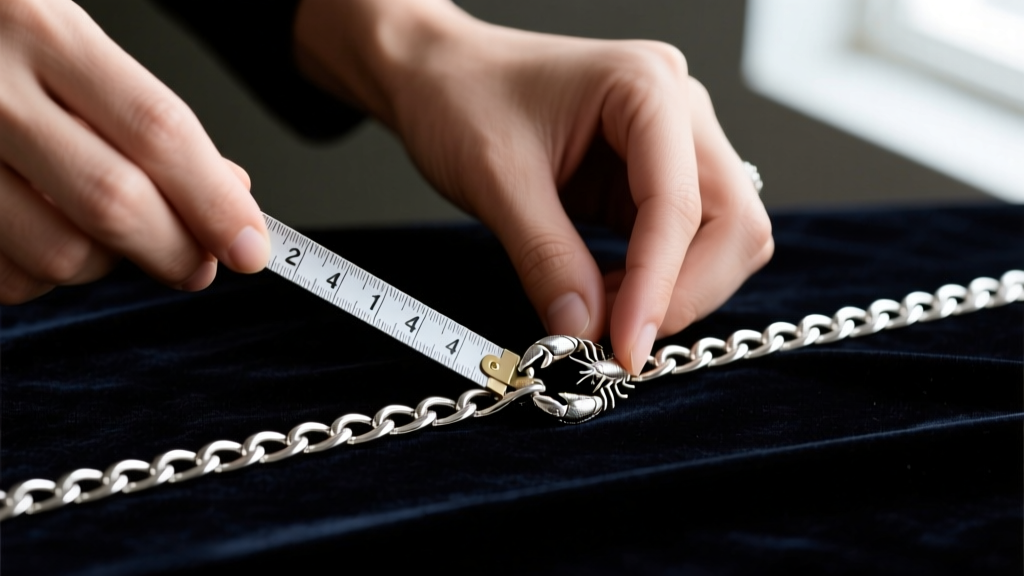
To get a true measurement, you must abandon the rigid metal tape measure used in construction. Metal tapes do not flex and will artificially shorten the measurement of a curved chain. Instead, use a flexible fiberglass tailor's tape or a piece of non-stretch string paired with a ruler.
The Golden Rules of Measurement
- Include the Clasp: Always measure from the very end of the jump ring on one side to the very end of the clasp on the other. The clasp is part of the wearable circumference.
- Exclude the Extender: If your chain has a 2-inch extender chain, measure the base chain first, then note the extender separately (e.g., '16 inches + 2-inch extender').
- Lay it Flat, Don't Pull: Unclasp the necklace and lay it on a flat surface. Smooth out any twists in the links, but do not pull it taut. Pulling stretches the gaps between links, yielding a false, longer measurement.
- Account for Pendant Drop: If you are measuring a necklace with a fixed pendant, you must record two numbers: the chain length and the total drop length. A 16-inch chain with a 1.5-inch pendant will visually sit like an 18-inch necklace at the center point.
The 2026 Standard Length Chart & Styling Matrix
Understanding standard lengths allows you to predict how a piece will interact with different garments. The table below maps standard measurements to their traditional names, ideal necklines, and current styling relevance.
| Length (Inches) | Industry Name | Ideal Neckline Pairing | 2026 Trend Status |
|---|---|---|---|
| 14" - 15" | Collar / Choker | Off-shoulder, V-neck, Scoop | High: Micro-layering base |
| 16" - 18" | Princess | Crew neck, Boat neck, Button-down | Ubiquitous: The everyday staple |
| 20" - 24" | Matinee | Turtleneck, High-neck, Blazer | Rising: Corporate-chic layering |
| 28" - 36" | Opera / Rope | Deep plunge, Evening wear | Niche: Statement vintage styling |
As noted by jewelry care experts at Jewelers Mutual, pairing the correct length with the appropriate neckline prevents the metal from catching on fabrics or hiding entirely beneath collars, ensuring your investment pieces are always visible and secure.
Pro Layering Frameworks: Combining Measured Lengths
The most common mistake in layering is choosing necklaces that are too close in length, causing them to tangle and compete visually. To achieve a curated stack, you must utilize the Minimum Drop Differential framework.

The 2-Inch Rule for Tangle-Free Stacks
For standard chains (1mm to 2.5mm width), maintain a minimum 2-inch difference between each layer. This gap accounts for the natural sway of the body and prevents the clasps from interlocking.
- The Duo Stack: 14" (snake chain) + 16.5" (cable chain with small pendant). The difference in chain texture prevents friction, while the 2.5-inch drop creates a distinct V-shape.
- The Trio Cascade: 15" (beaded or pearl) + 18" (medium Cuban link) + 22" (heavy rope chain with large medallion). This utilizes varying weights and widths to anchor the layers.
Gauge and Weight Considerations
Length is only half the equation; chain gauge (thickness) dictates how the length behaves. A 20-inch chain made of 0.8mm delicate cable will drape closely to the skin, conforming to the collarbone. A 20-inch chain made of 4.0mm hollow-rope links possesses structural rigidity and will stand away from the chest. When planning a stack based on your measurements, always pair a rigid, thicker chain with a longer drop, and a delicate, fluid chain with a shorter drop to maintain visual hierarchy.
Troubleshooting Common Sizing Illusions
Even when you know exactly how to measure length of necklace pieces, optical illusions and physical variables can alter the final fit.
The Neck Circumference Variable
Standard jewelry mannequins have a neck circumference of roughly 13 to 14 inches. If your neck measures 15 inches, a standard 16-inch 'princess' chain will sit much tighter on you, functioning more like a choker. Always measure your own neck with a flexible tape, add your desired amount of 'ease' (usually 1.5 to 2 inches for a comfortable fit), and use that as your baseline for purchasing short chains.
The Heavy Pendant Pull
A heavy gemstone or solid gold pendant will pull the back of the chain upward, effectively shortening the front drop. If you are threading a 15-gram pendant onto an 18-inch chain, expect the visual drop to behave like a 16.5-inch chain. To counteract this, stylists recommend using a necklace with an integrated bail or a heavier chain gauge (3mm+) that can support the weight without warping the drape.
"Precision in jewelry styling is not about rigid rules; it is about understanding the physics of metal and the geometry of the body. When you master the measurement, you master the drape."
By treating your jewelry box with the same analytical precision as a tailor treats a bespoke suit, you elevate your daily styling from accidental to intentional. Keep your fiberglass tape handy, respect the 2-inch layering rule, and never underestimate the power of a perfectly measured millimeter.


