Styling an 18 Inch Necklace on Woman: A Step-by-Step Guide
Learn how to perfectly style an 18 inch necklace on woman. Our step-by-step guide covers neckline matching, chain gauges, and layering tips.


The 18-inch necklace, universally recognized in the jewelry industry as the 'princess' length, remains the most versatile and widely purchased chain size in 2026. When evaluating how an 18 inch necklace on woman frames the face and décolletage, it consistently hits the sweet spot: resting elegantly on the collarbone without plunging too deeply into the neckline. However, achieving a flawless drape requires more than simply clicking 'add to cart' on a standard length. Neck anatomy, chain gauge physics, and pendant weight distribution all dictate how the piece will actually sit.
This comprehensive, step-by-step guide will walk you through the exact mechanics of measuring, styling, and troubleshooting the 18-inch necklace, ensuring you achieve a custom-tailored look every time.
Step 1: Calculate the True Drop Based on Neck Circumference
The most common mistake consumers make is assuming an 18-inch chain drops exactly 18 inches from the base of the neck. In reality, the chain must first wrap around the cervical circumference. To understand how an 18 inch necklace on woman will actually rest, you must calculate the 'center drop'.
According to Jewelers of America, the average female neck circumference ranges between 13 and 15 inches. Here is the mathematical breakdown of how the remaining chain length translates to the visual drop:
- 13-inch neck: Leaves 5 inches of total slack, resulting in a center drop of roughly 2.5 inches below the hollow of the throat. This will sit slightly below the collarbone.
- 14-inch neck: Leaves 4 inches of slack, yielding a 2-inch center drop, resting directly on the inner clavicle.
- 15-inch neck: Leaves 3 inches of slack, creating a 1.5-inch center drop, sitting higher and closer to the base of the throat, mimicking a choker-princess hybrid.
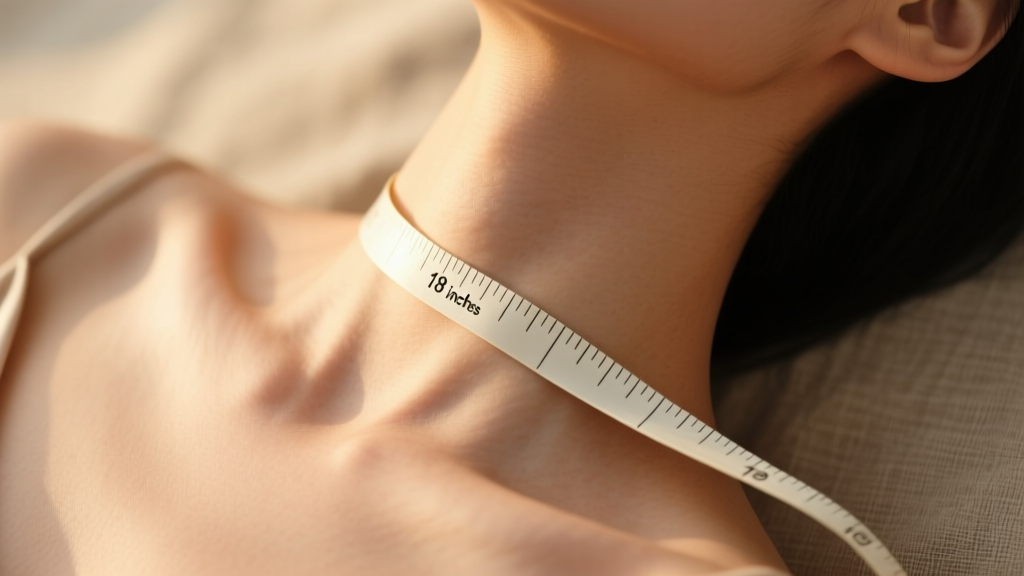
The String-and-Ruler Method
Before purchasing, cut a piece of non-stretch string to exactly 18 inches. Wrap it around your neck and use a mirror to mark where the string naturally falls. This physical simulation accounts for your unique shoulder slope and neck thickness, providing a far more accurate preview than digital try-on tools.
Step 2: Match the 18-Inch Drop to Specific Necklines
An 18-inch chain is a masterclass in versatility, but its visual impact shifts dramatically depending on the garment beneath it. The goal is to create parallel lines or complementary geometric shapes. Below is a definitive styling matrix for pairing this exact length with modern wardrobes.
| Neckline Type | Best 18-Inch Chain Style | Pendant Weight Limit | Visual Effect |
|---|---|---|---|
| Classic V-Neck | 1.2mm Cable or Rope Chain | 3 to 6 grams | The pendant rests in the negative space of the 'V', elongating the neck and drawing the eye downward. |
| Crew Neck / T-Shirt | 1.8mm to 2.5mm Paperclip | Standalone (No pendant) | The chain sits just above or directly on the fabric hem, providing a structured, modern contrast to casual cotton. |
| Scoop Neck | 0.9mm Box Chain | 1 to 3 grams (Delicate) | Follows the curve of the scoop without overlapping the fabric hem, creating a clean, layered silhouette. |
| Button-Down Shirt | 1.5mm Snake or Herringbone | None or small slider | Worn tucked inside the collar or resting on the skin with the top two buttons undone for an effortless, fluid drape. |
Step 3: Select the Correct Gauge and Metallurgy
The structural integrity of your necklace relies heavily on the intersection of gauge thickness and metal purity. As the Gemological Institute of America (GIA) notes, higher karat gold is inherently softer, which directly impacts how an 18-inch chain will hold up to daily wear and pendant tension.
Gauge Sizing Framework
Chain gauge is measured in millimeters (mm). Choosing the wrong gauge will either result in a chain that snaps under pendant weight or one that looks disproportionately bulky.
- 0.8mm - 1.0mm (Micro-Delicate): Ideal for lightweight solitaire diamonds or gemstones under 2 grams. Prone to tangling and stretching if subjected to pulling.
- 1.2mm - 1.5mm (Standard): The industry workhorse. Easily supports pendants weighing 3 to 7 grams without compromising the links. Offers the best balance of visibility and durability.
- 1.8mm - 2.5mm (Statement): Best worn as standalone pieces without pendants. The links are thick enough to catch the light independently and resist kinking.
Material Durability vs. Aesthetics
When selecting an 18-inch chain, consider the Vickers hardness of the metal. 14k gold (58.5% pure gold) has a Vickers hardness of approximately 170, making it highly resistant to stretching. In contrast, 18k gold (75% pure) sits around 135. If you are hanging a 5-gram pendant on an 18k gold chain, you must increase the gauge to at least 1.5mm to prevent the links near the clasp from elongating over time. For sterling silver (925), always opt for rhodium-plated finishes to stave off the sulfur-induced tarnish that plagues standard silver alloys.
Step 4: Execute the 2-Inch Layering Rule
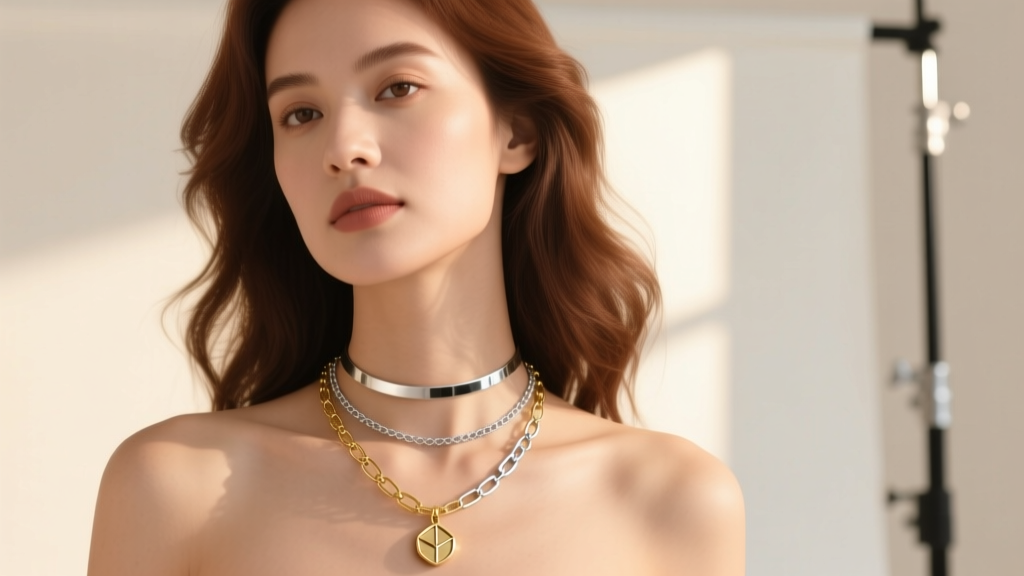
The 18-inch necklace serves as the perfect anchor for a multi-chain stack. The golden rule of layering, heavily favored by contemporary stylists, is the '2-inch gap'. This ensures the chains do not tangle and each piece occupies its own distinct visual tier.
Pro-Tip: To prevent friction wear between layered chains, never stack two chains of the exact same link pattern. The metal-on-metal friction will act like a micro-file, shaving down the links over months of wear.
The Ultimate 3-Piece Stack Formula
- Tier 1 (16 inches): A 1.5mm Herringbone or choker-style chain that hugs the base of the neck.
- Tier 2 (18 inches): Your anchor piece. A 1.2mm cable chain featuring a 4mm bezel-set gemstone or geometric pendant.
- Tier 3 (20 inches): A 2.0mm hollow paperclip or rope chain that rests on the upper sternum, providing textural contrast and weight to the bottom of the stack.
Troubleshooting Common 18-Inch Necklace Issues
Even with perfect measurements, physics can interfere with your styling. Here is how to solve the two most frequent complaints associated with the princess length.
Issue 1: The Clasp Keeps Sliding to the Front
The Cause: This happens when the clasp is heavier than the chain or pendant at the front. A standard 14k gold lobster clasp can weigh up to 1.2 grams. If your 18-inch chain is a delicate 0.9mm cable (total weight roughly 2.5 grams), the center of gravity is skewed, causing the necklace to spin.
The Fix: Swap the lobster clasp for a lightweight spring-ring clasp (usually under 0.4 grams). Alternatively, thread a tiny silicone O-bead onto the chain near the back of the neck to act as a friction counterweight.
Issue 2: The Pendant Constantly Flips Upside Down
The Cause: The bail (the loop connecting the pendant to the chain) is too wide for the chain gauge, allowing the pendant to rotate freely and invert.
The Fix: Have a jeweler solder a small 'jump ring' inside the bail to reduce its inner diameter, or switch to a chain with a flatter profile, like a box chain, which naturally restricts rotational movement compared to a round cable chain.
Final Thoughts on the Princess Length
Mastering the styling of an 18 inch necklace on woman requires a blend of anatomical awareness and material science. By calculating your true center drop, matching the gauge to your pendant's gram weight, and utilizing the 2-inch layering rule, you transform a basic jewelry staple into a precision-engineered style asset. Whether worn solo against a crisp button-down or anchored in a textured evening stack, the 18-inch chain remains the undisputed backbone of a modern jewelry wardrobe.


