How to Choose, Wear, and Care for a Medicine Pouch Necklace
Learn how to choose, style, and maintain your medicine pouch necklace. Discover material grades, cord lengths, and layering tips for daily wear.

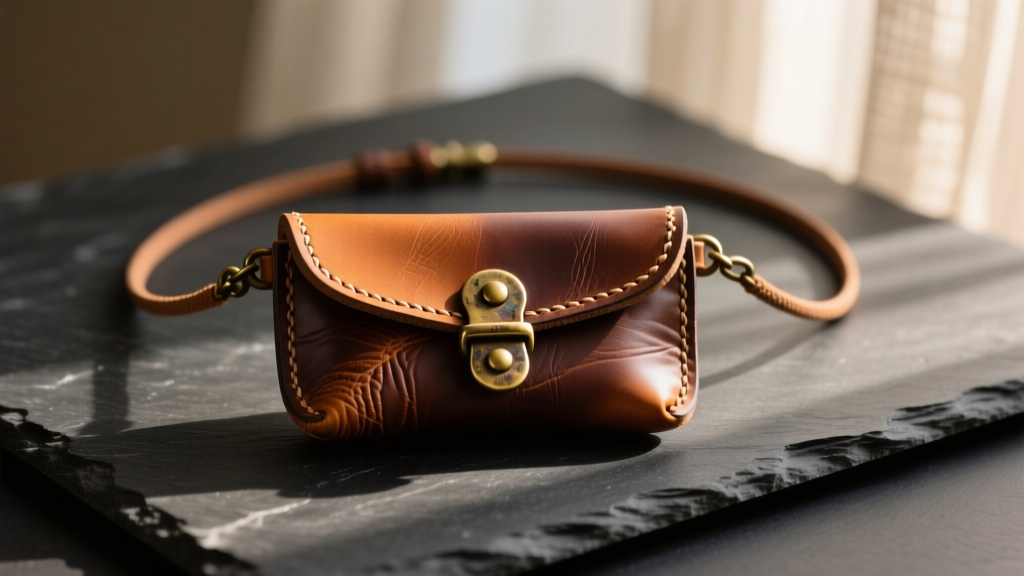
The Anatomy of a Meaningful Accessory
A medicine pouch necklace is far more than a simple pendant; it is a deeply personal vessel designed to hold protective herbs, meaningful crystals, or private mementos close to your heart. Rooted in Indigenous traditions and adapted into modern spiritual and bohemian fashion, these pouches require specific structural considerations to function as reliable daily wear jewelry. Unlike a standard stamped metal charm, a medicine pouch must bear the physical weight of its contents while resisting the degradation caused by body oils and environmental moisture. In this comprehensive guide, we break down the exact material grades, hardware specifications, and styling techniques you need to select and maintain a high-quality medicine pouch necklace.
Step 1: Selecting the Right Pouch Material and Grade
The longevity of your necklace depends entirely on the material grade of the pouch itself. Because these pieces are often filled with 15 to 30 grams of organic matter or stones, the structural integrity of the material is paramount. Avoid 'genuine leather' marketing terms, which often indicate low-grade bonded leather that will crack and tear at the cord punch-holes within months.
| Material Grade | Weight / Thickness | Average Price Range | Durability & Failure Modes |
|---|---|---|---|
| Vegetable-Tanned Full-Grain | 3-4 oz (1.2 - 1.6mm) | $45 - $95 | Excellent. Develops a patina. Resists tearing at stress points. |
| Chrome-Tanned Top-Grain | 2-3 oz (0.8 - 1.2mm) | $25 - $50 | Moderate. Supple but prone to dry-rot and edge fraying over time. |
| .925 Sterling Silver (Cast) | 1.5 - 2.0mm walls | $150 - $350 | Superior. Heavy. Requires anti-tarnish rhodium plating for low maintenance. |
| Waxed Canvas / Cork | 12oz Canvas / 2mm Cork | $30 - $60 | Good. Water-resistant, but cork can snap if folded repeatedly at the clasp. |
For traditionalists, 3-4 oz vegetable-tanned full-grain leather is the gold standard. It is thick enough to hold the shape of the pouch when filled with heavy crystals like clear quartz, yet flexible enough to allow the drawstring or clasp to function smoothly. If you opt for metal, ensure it is stamped .925 sterling silver; base metals plated in silver will quickly corrode when exposed to the natural acids in your skin and the essential oils from herbs stored inside.
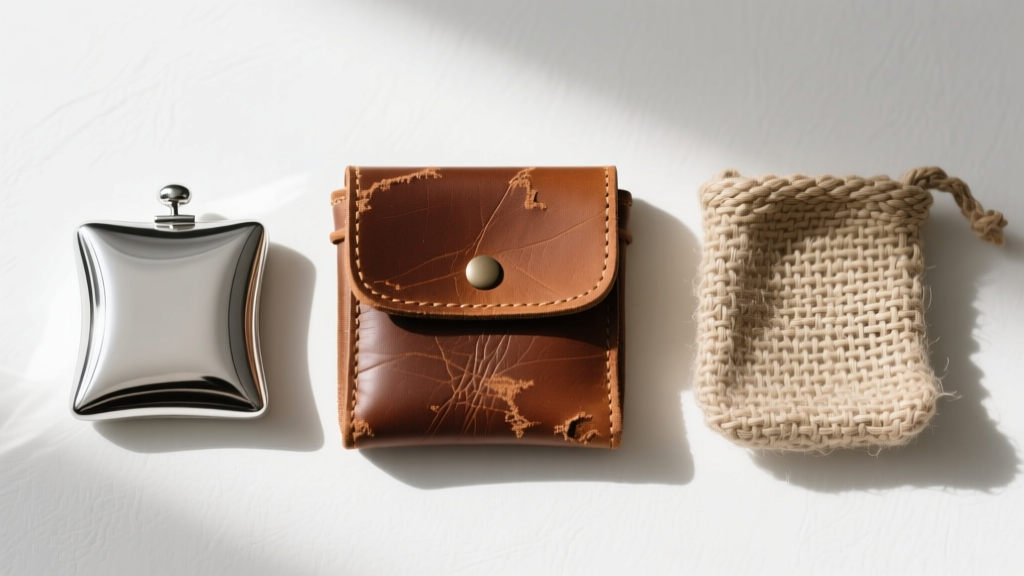
Step 2: Engineering the Cord and Hardware
The most common failure point in a medicine pouch necklace is not the pouch itself, but the hardware connecting it to the cord. A fully loaded leather pouch can easily weigh upwards of 25 grams. Standard 20-gauge or 18-gauge jump rings will slowly pull apart under this continuous dynamic load.
Hardware Specifications
- Jump Rings: Demand 14-gauge or 16-gauge jump rings made from solid brass, stainless steel, or sterling silver. According to jewelry fabrication standards outlined by Rio Grande, a 16-gauge wire provides the necessary tensile strength to support heavy pendants without warping.
- Cord Thickness: Opt for a 2mm to 3mm braided leather cord or a tightly woven hemp rope. Thinner 1mm cords will slice into the back of your neck due to the concentrated weight of the pouch.
- Clasps: Avoid standard lobster clasps on thick leather cords, as they create a rigid hinge point that snaps the cord over time. Instead, use a sterling silver tube clasp with a magnetic core, or traditional adjustable macramé slip-knots for a seamless, unbroken look.
Step 3: Sizing and Neckline Pairing
Because medicine pouches are inherently three-dimensional and bulky, choosing the correct drop length is critical for both comfort and aesthetic proportion. A pouch that sits too high will feel like a chokehold, while one that drops too low will swing awkwardly and catch on clothing.
- 18-Inch (Princess Length): Rests just below the collarbone. Best paired with deep V-necks or open scoop necks. Avoid with crew necks, as the pouch will clash with the fabric hem and create visual clutter.
- 20 to 22-Inch (Matinee Length): The most versatile sizing for a medicine pouch. It rests on the upper sternum, allowing the pouch to lay flat against the chest. Ideal for layering over button-down shirts, tunics, or heavy knit sweaters in the autumn.
- 24 to 28-Inch (Opera Length): Drops to the solar plexus or lower. Best reserved for smaller, flatter pouches. Heavy, stone-filled pouches at this length will act as a pendulum, causing the cord to fray against your shirt collar due to excessive kinetic movement.
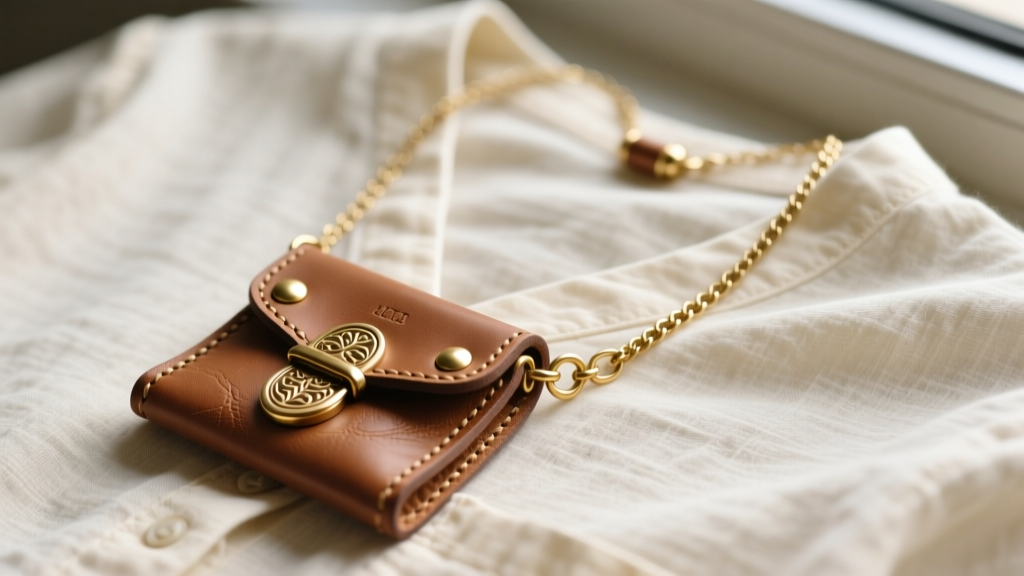
Step 4: Curating the Contents Safely
What you place inside your medicine pouch necklace dictates how you must care for it. According to the Gemological Institute of America (GIA), many porous stones can be damaged by the organic oils and acids present in dried botanicals.
When combining raw organic materials with polished minerals inside a confined leather space, moisture and oil transfer are inevitable. Always wrap raw herbs in a small piece of unbleached muslin cloth before placing them in the pouch to protect both the leather interior and your crystals.
Recommended Contents & Precautions
- Dried Herbs (Sage, Sweetgrass, Cedar): Ensure herbs are 100% moisture-free. Any residual dampness will cause the interior of a leather pouch to mold and degrade the stitching from the inside out.
- Crystals (Amethyst, Clear Quartz, Turquoise): Turquoise is highly porous and will absorb essential oils from accompanying herbs, permanently darkening the stone. Wrap porous stones in a microfiber pouch before insertion.
- Paper Mementos: If storing handwritten notes or photographs, laminate them or seal them in a tiny archival-safe Mylar sleeve to protect against ambient humidity trapped inside the leather.
Step 5: Routine Maintenance and Conditioning
A high-quality medicine pouch necklace requires a specific maintenance routine to prevent the leather from drying out and the hardware from oxidizing. Leather care experts at Weaver Leather Supply recommend conditioning vegetable-tanned leather every 3 to 6 months, depending on your climate and how often you wear the piece against your bare skin.
The 3-Step Cleaning Protocol
- Empty and Dust: Remove all contents. Use a soft-bristled horsehair brush to gently sweep away dust and dried herb particles from the interior and the crevices of the stitching.
- Condition the Leather: Apply a minuscule amount of pure neatsfoot oil or natural beeswax balm to a lint-free cloth. Rub it into the exterior leather in circular motions. Never use petroleum-based conditioners, as they will break down the natural fibers and rot the cotton or linen stitching.
- Polish the Hardware: Use a specialized jewelry polishing cloth to buff the brass or sterling silver jump rings and clasps. Avoid liquid silver dips, as accidental drips onto the leather will leave permanent, dark chemical stains.
Frequently Asked Questions
Can I wear my medicine pouch necklace in the shower?
No. Submerging vegetable-tanned leather in water strips its natural oils, leading to severe stiffness and eventual cracking. Furthermore, hot water and soap will accelerate the tarnishing of brass and sterling silver hardware. Always remove your pouch before bathing or swimming.
How do I fix a stretched drawstring hole?
If the top hole of your leather pouch has stretched out and no longer grips the cord, you can apply a tiny drop of flexible jewelry adhesive (like E6000) to the inside rim of the hole to reinforce the fibers. Alternatively, have a jeweler install a small brass grommet to provide permanent structural support.
By prioritizing heavy-duty hardware, selecting full-grain materials, and practicing mindful maintenance, your medicine pouch necklace will evolve from a simple accessory into a lifelong, deeply personal artifact.


