Understanding the Squash Blossom Necklace Meaning & History
Discover the rich squash blossom necklace meaning, Navajo history, turquoise symbolism, and how to identify authentic sterling silver pieces.

Introduction to the Squash Blossom Necklace
When exploring iconic Native American jewelry, few pieces command as much respect and curiosity as the squash blossom necklace. For beginners and seasoned collectors alike, understanding the squash blossom necklace meaning requires looking beyond its striking aesthetic. This masterpiece of Southwestern silversmithing is not merely a fashion accessory; it is a wearable archive of trade, adaptation, and cultural resilience. Originating primarily from the Navajo (Diné) and later adopted by the Zuni and Hopi peoples, these necklaces are defined by their distinctive tripartite bead design and the central crescent pendant. In this comprehensive guide, we will decode the historical symbolism, examine the metallurgical anatomy, and provide a practical framework for identifying and purchasing authentic pieces in today's market.
The True Squash Blossom Necklace Meaning
To the untrained eye, the necklace appears to be a string of silver flowers surrounding a crescent moon. However, the true meaning is rooted in a complex history of cross-cultural exchange that dates back to the 19th century.
The Naja Pendant: Crescent Moon Symbolism
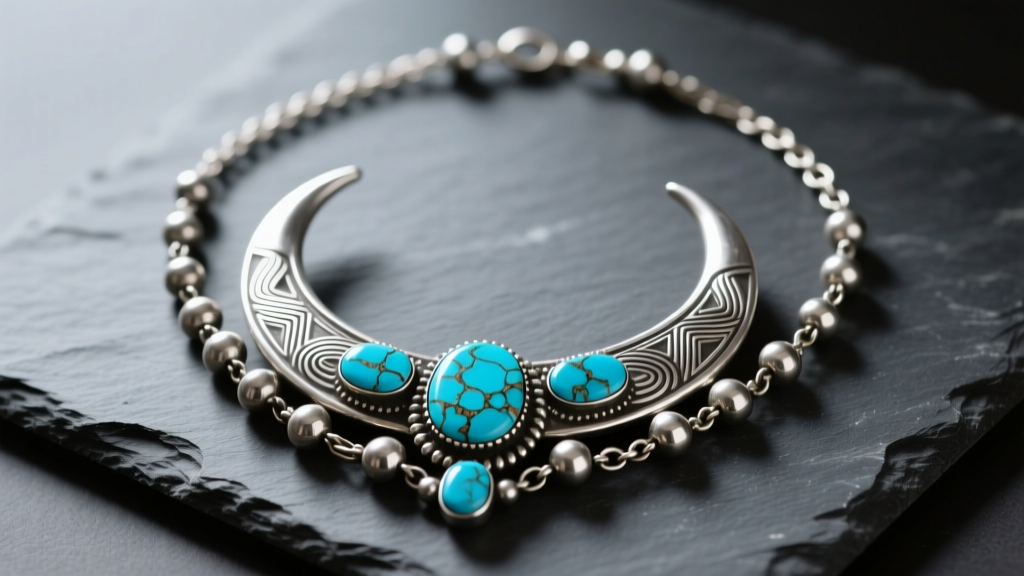
The focal point of any squash blossom necklace is the Naja (pronounced nah-zhah), the inverted crescent pendant at the bottom. The Naja did not originate in North America. Its roots trace back to the Moors of North Africa, who used the crescent symbol on horse bridles to ward off the evil eye. When the Spanish conquistadors arrived in the Americas, they brought this equestrian hardware with them. The Navajo, encountering the Spanish in the 16th and 17th centuries, recognized the beauty and power of the symbol. By the late 1800s, Navajo silversmiths—beginning with the legendary Atsidi Sani—began casting and forging Najas from melted silver coins, transforming a functional piece of horse tack into a profound symbol of protection and status.
The "Blossoms": Pomegranate or Squash?
The most common misconception regarding the squash blossom necklace meaning is that the beads represent the blossom of a local squash plant. In reality, the flared, tri-petal silver beads were originally inspired by the pomegranate blossom. Spanish missionaries and settlers cultivated pomegranates in the Southwest, and the flower's distinct shape was replicated in Mexican silverwork and military uniform decorations. Navajo artisans adapted this design. Because the pomegranate was not a native staple crop, English-speaking traders and settlers later misidentified the beads as squash blossoms, a vital and sacred agricultural crop for the Pueblo and Navajo peoples. The name stuck, but the design lineage remains a testament to global trade routes.
Anatomy of an Authentic Piece: Materials and Specs
Authenticity in Native American jewelry is governed by strict material standards and the Indian Arts and Crafts Association guidelines. A genuine piece is a masterclass in metallurgy and lapidary arts.
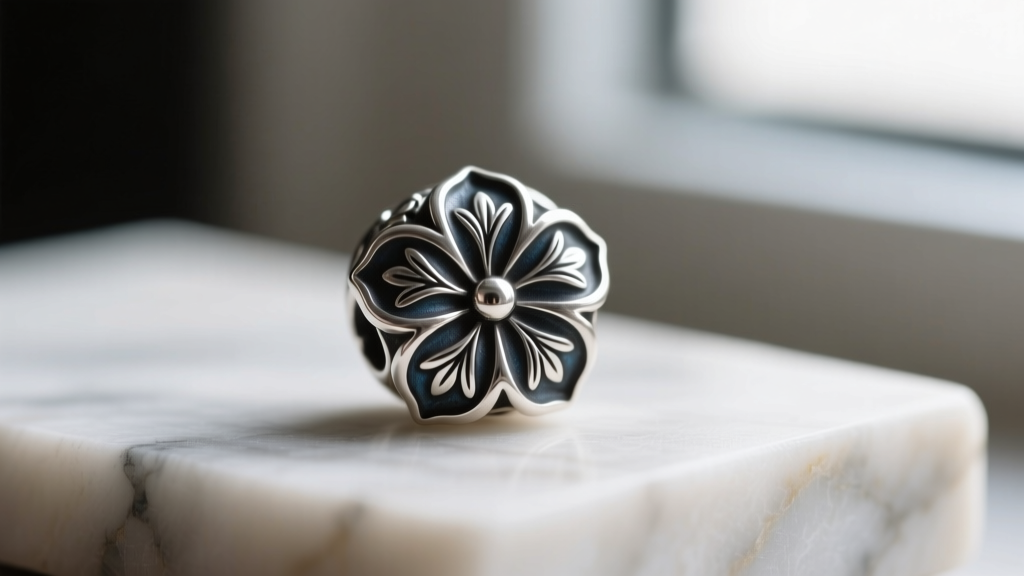
The silver used in vintage pieces (pre-1930s) is often "coin silver," which has a purity of roughly .900, resulting in a slightly darker, warmer patina than modern sterling. Contemporary pieces are crafted from .925 sterling silver. The wire used for the necklace strands typically ranges from 14-gauge to 16-gauge, providing enough structural integrity to support the heavy Naja without kinking. The turquoise cabochons are set using hand-cut, smooth bezels, a technique that requires immense precision to ensure the stone is seated without the use of modern adhesives.
| Component | Vintage (1900-1950) | Contemporary Master (1980-Present) |
|---|---|---|
| Silver Grade | Coin Silver (.900) or early Sterling | High-polish or Satin Sterling (.925) |
| Turquoise Type | Unidentified local mines, often matrix-heavy | Certified mines (e.g., Sleeping Beauty, Bisbee) |
| Bead Construction | Sandcast or hand-forged, slight asymmetries | Precision cast or meticulously hand-stamped |
| Naja Attachment | Leather thong or heavy silver wire loop | Custom silver bale or integrated wire wrap |
Pricing Guide: What to Expect in the Market
The value of a squash blossom necklace varies wildly based on age, the reputation of the silversmith, and the quality of the turquoise. According to data from the Smithsonian National Museum of the American Indian, historical provenance can exponentially increase a piece's value. Here is a practical pricing framework for buyers:
- The "Fred Harvey" Era / Tourist Trade ($400 - $900): Produced between the 1900s and 1940s for the tourist trade. These pieces are lighter, often feature smaller or lower-grade turquoise, and were mass-produced by companies like Maisel's. They hold historical charm but lack the heavy-gauge silver of tribal pieces.
- Mid-Century Vintage Tribal ($1,500 - $4,500): Handmade by Navajo or Zuni artisans between the 1950s and 1970s. Expect heavy coin or sterling silver, deep stamp work, and high-quality, natural turquoise (often from now-closed mines like Bisbee or Lander Blue).
- Contemporary Master Silversmiths ($3,000 - $15,000+): Crafted by renowned living artists (e.g., Gary Yazzie, Ernie Lister). These feature flawless stamp work, premium gem-grade turquoise, and often incorporate complex techniques like tufa casting or gold inlay.
How to Style and Wear a Squash Blossom Today
Wearing a squash blossom necklace requires an understanding of proportion and cultural respect. Because these necklaces are inherently heavy—often weighing between 80 and 150 grams—they sit best over structured fabrics that can support the weight without pulling.
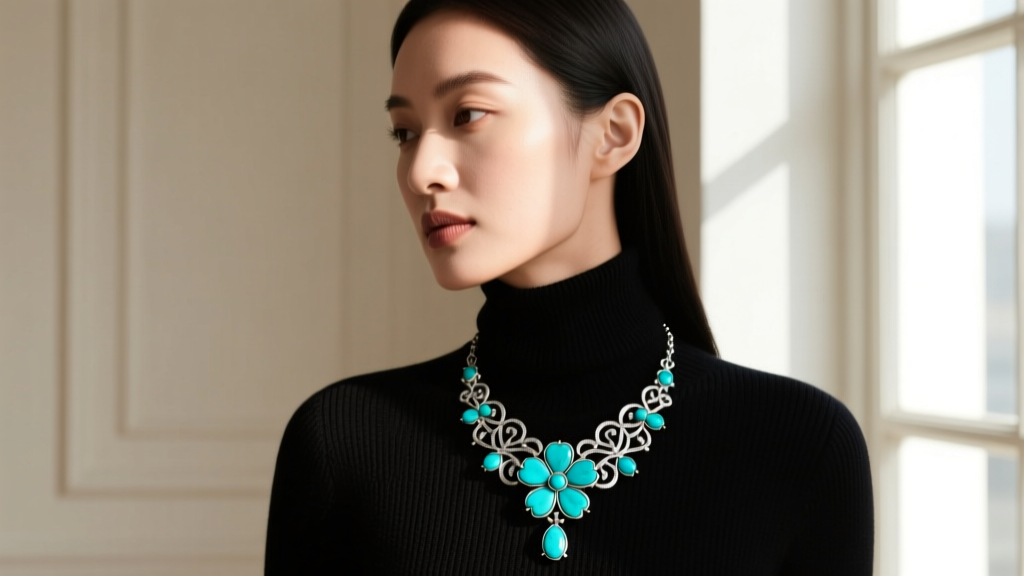
For a modern, sophisticated look, pair a medium-weight squash blossom with a minimalist, dark-colored garment, such as a black merino wool turtleneck or a crisp, unbuttoned white linen shirt. This allows the intricate silverwork and the vivid blue or green matrix of the turquoise to serve as the undisputed focal point. Avoid wearing them with busy patterns or competing statement earrings; let the necklace breathe.
A Note on Cultural Respect: The squash blossom necklace is a sacred and culturally significant item to the Navajo, Zuni, and Hopi peoples. Wearing one is a celebration of Native American artistry. Always ensure you are purchasing from verified Native American artists or reputable dealers who comply with the Indian Arts and Crafts Act of 1990, which makes it illegal to misrepresent Native-made goods.
Care and Maintenance for Longevity
Turquoise is a porous, relatively soft stone (rating 5-6 on the Mohs scale). Never use commercial silver dips, ultrasonic cleaners, or harsh chemicals on your necklace, as these will strip the natural oils from the turquoise, causing it to crack or lose its vibrant color. Instead, use a soft, untreated microfiber polishing cloth to gently buff the silver beads and Naja. Store the necklace flat in a cloth bag to prevent the heavy beads from pulling on the wire and to protect the silver from rapid oxidation caused by ambient humidity. With proper care, a well-crafted squash blossom necklace will remain a stunning, meaningful heirloom for generations.


