Gifting Guide: What Does a Key on a Necklace Mean?
Discover what a key on a necklace means and how to choose the perfect key pendant gift for anniversaries, graduations, and milestones in our expert guide.

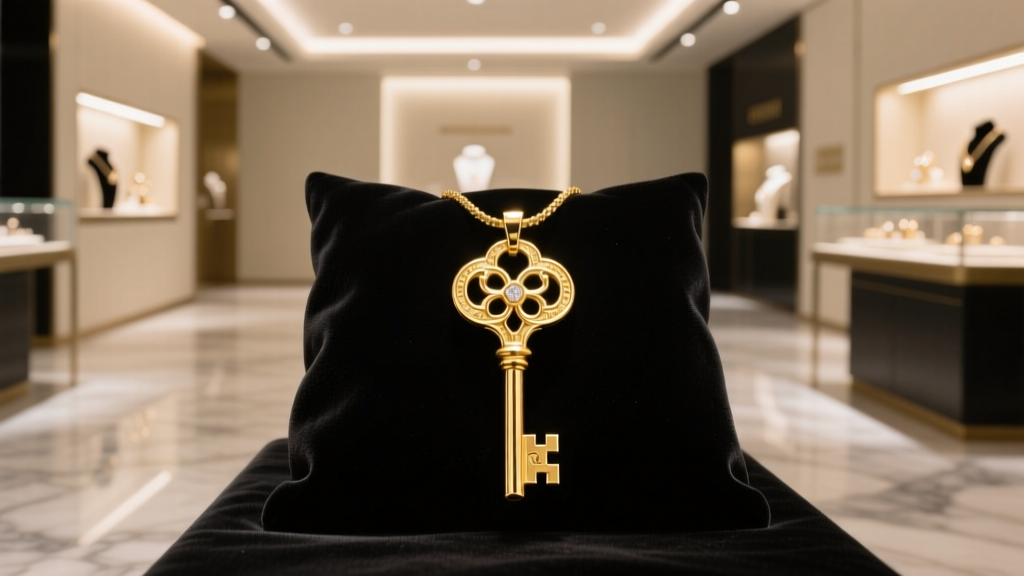
The Enduring Allure of the Key Pendant
Jewelry has long served as a wearable language, allowing us to communicate sentiments that words often fail to capture. When shopping for symbolic jewelry, many buyers ask, "what does a key on a necklace mean?" The answer is not singular; rather, it spans centuries of romantic lore, spiritual awakening, and milestone celebrations. As a gift, a key pendant is profoundly versatile, yet it carries a weight of intention that makes it far more impactful than a standard geometric charm.
In this comprehensive gifting guide, we will decode the historical and modern symbolism of key necklaces, break down the exact metallurgical grades you should look for, and provide a structural framework for pairing chains with key pendants to ensure your gift is both meaningful and mechanically sound.
Historical Roots: From Functional Tools to Romantic Tokens
To understand the modern gifting appeal of the key pendant, we must look to the Victorian era. During the 19th century, jewelry symbolism—often referred to as the 'language of jewelry'—was at its peak. According to the Victoria and Albert Museum, Victorian lovers frequently exchanged tokens that conveyed secret messages. The skeleton key emerged as a powerful romantic motif, symbolizing the giver's desire to 'unlock' the recipient's heart.
Unlike modern padlocks, antique skeleton keys featured intricate, ornate bows (the top loop) and complex bitting (the teeth). When jewelers began miniaturizing these functional tools into pendants, they retained the elaborate filigree, transforming a mundane household object into a luxurious declaration of intimacy and trust.
What Does a Key on a Necklace Mean in Modern Gifting?
Today, the symbolism of the key necklace has expanded beyond romance. Depending on the occasion and the design of the pendant, the meaning shifts to match the milestone you are celebrating.
1. Romantic Milestones and Anniversaries
The classic "key to my heart" motif remains a staple for Valentine’s Day, proposals, and anniversaries. For romantic gifting, opt for keys that incorporate hidden details, such as a heart-shaped cutout in the bow, or a tiny pavé diamond set into the shaft of the key. A 14k rose gold key pendant is particularly popular for romantic occasions, as the warm, coppery hue of rose gold is universally associated with affection and passion.
2. Graduations and Academic Achievements
Gifting a key necklace to a high school or college graduate symbolizes 'unlocking potential' and opening doors to new opportunities. For this occasion, sleek, modern, and geometric key designs are preferable to ornate vintage styles. A minimalist platinum or white gold key pendant represents the sharp, forward-looking mindset of a graduate stepping into the professional world.
3. 21st Birthdays and Adulthood
In many cultures, turning 21 or 18 signifies the transition into adulthood—often colloquially referred to as 'getting the keys to the house.' A key necklace serves as a permanent, wearable reminder of this newfound independence and responsibility. Sterling silver or mixed-metal designs offer a trendy, accessible luxury that appeals to younger demographics entering adulthood.
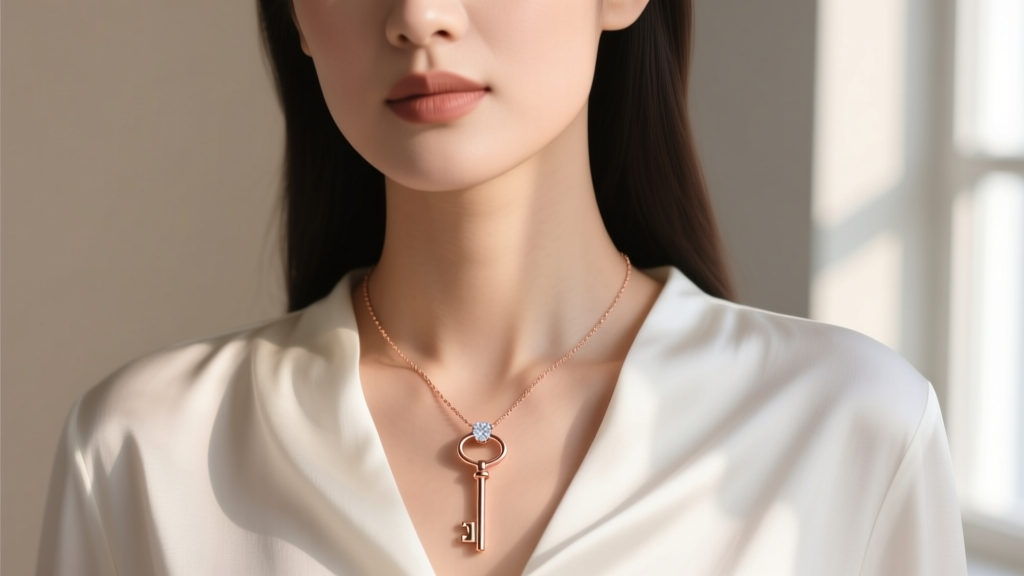
Material Grades and Metallurgy: Choosing the Right Metal
When selecting a key pendant, the metal grade dictates not only the price but the longevity of the piece. Keys feature thin, protruding elements (the teeth) that are prone to bending or snapping if cast in metals that are too soft. The Gemological Institute of America (GIA) notes that pure 24k gold is far too malleable for intricate jewelry. Therefore, alloyed metals are essential for key pendants.
- 14k Gold (58.5% Pure Gold): The optimal choice for detailed skeleton keys. The higher alloy content (usually copper, silver, and zinc) provides excellent tensile strength, ensuring the delicate 'teeth' of the key will not bend during daily wear.
- 18k Gold (75% Pure Gold): Offers a richer, deeper yellow color but is noticeably softer. Best reserved for modern, chunky, geometric key designs that lack fragile, thin protrusions.
- Sterling Silver (925): A budget-friendly classic. However, silver is prone to tarnishing and scratching. Ensure the silver key pendant is plated with rhodium to increase surface hardness and delay oxidation.
- 316L Stainless Steel: The ultimate choice for hypoallergenic, budget-conscious gifting. It will not tarnish, bend, or rust, making it ideal for recipients who lead active lifestyles.
The Hardware: Chain Pairing and Bail Mechanics
A common mistake when gifting key necklaces is selecting a chain that is incompatible with the pendant's 'bow' (the top loop). Key pendants generally have smaller, more restrictive inner diameters than standard gemstone bails.
"The mechanical harmony between a pendant's bail and the chain's width is the most overlooked aspect of necklace design. A chain that is too thick will cause the key pendant to hang at an awkward, tilted angle, ruining the visual symmetry of the piece." — Master Jeweler Bench Notes.
Chain Compatibility Guide for Key Pendants
| Chain Type | Max Width for Standard Key Bow | Durability & Drape | Best For |
|---|---|---|---|
| Cable Chain | 1.2mm - 1.5mm | Moderate; classic drape but can catch on hair | Lightweight, minimalist keys |
| Box Chain | 1.0mm - 2.0mm | High; smooth, interlocking squares resist kinking | Heavy, ornate skeleton keys |
| Rope Chain | 1.5mm - 2.5mm | Very High; twisted links reflect maximum light | Adding texture to simple key designs |
| Snake Chain | 1.0mm - 1.5mm | Low; sleek but prone to permanent kinking if bent | Modern, geometric pendants (with care) |
Pro-Tip: If you are gifting a heavy solid gold key pendant, always pair it with a box chain equipped with a lobster clasp rather than a spring-ring clasp. Lobster clasps offer superior structural integrity and can support the weight of a 14k gold pendant without warping over time.
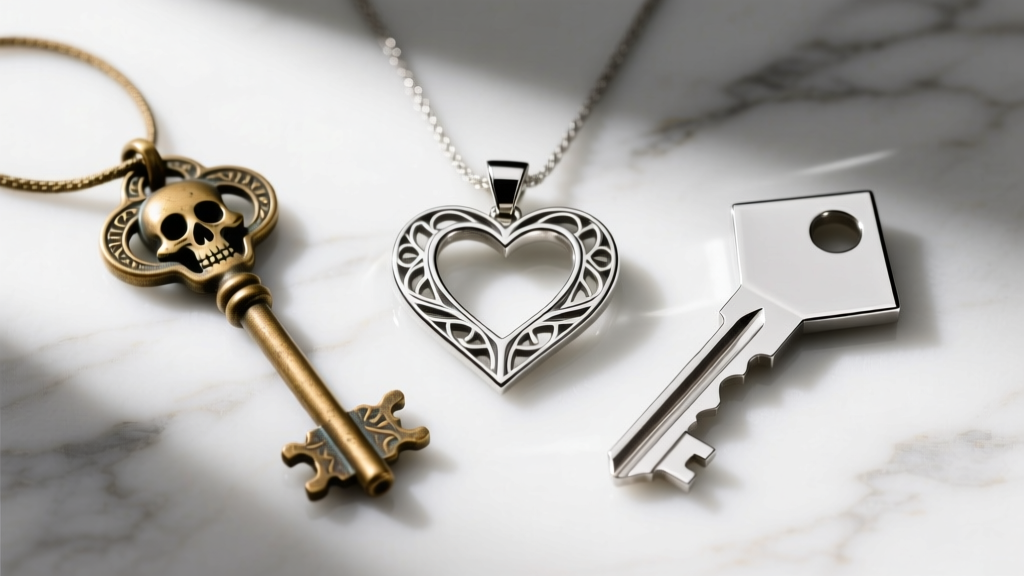
2026 Pricing Guide: What to Expect
Understanding the market value of key necklaces ensures you are gifting a piece that aligns with your budget and the significance of the occasion. According to market data from Jewelers of America, precious metal fluctuations continually impact jewelry pricing, but the following tiers remain accurate for quality craftsmanship.
Tier 1: Fashion & Everyday Wear ($30 - $90)
Materials: 316L Stainless Steel, Gold-Plated Brass, or base metals. Designs: Trendy, oversized, or minimalist stamped keys. Gifting Occasion: Birthdays, casual holidays, or 'thinking of you' gifts for friends and teenagers.
Tier 2: Accessible Luxury ($120 - $450)
Materials: Solid 925 Sterling Silver, 10k Gold, or Gold Vermeil. Designs: Intricate vintage reproductions, heart-key hybrids, or keys with small cubic zirconia accents. Gifting Occasion: High school graduations, 18th/21st birthdays, or early-stage relationship milestones.
Tier 3: Fine Jewelry & Heirlooms ($600 - $2,500+)
Materials: Solid 14k or 18k Gold, Platinum. Designs: Hand-engraved skeleton keys, Art Deco-inspired geometric keys, or pendants featuring natural diamonds and sapphires. Gifting Occasion: Major anniversaries (1st, 5th, 10th), college graduations, or the birth of a child (often given as a 'push present' symbolizing the unlocking of a new life chapter).
Final Thoughts on Gifting Key Jewelry
Ultimately, the answer to "what does a key on a necklace mean" is defined by the intention of the giver and the life stage of the recipient. Whether it represents the unlocking of a romantic heart, the opening of professional doors post-graduation, or the safeguarding of personal secrets, the key pendant remains one of the most profoundly narrative-driven pieces in the jeweler's vitrine. By paying close attention to the metal grade, the structural compatibility of the chain, and the specific design nuances, you can curate a gift that will be cherished—and worn—with deep personal significance for decades to come.


