Megalodon Tooth Necklace Styling: 2026 Coastal Core Trends
Discover how the megalodon tooth necklace evolved into a 2026 coastal core staple. Learn fossil grading, chain pairings, and styling tips.

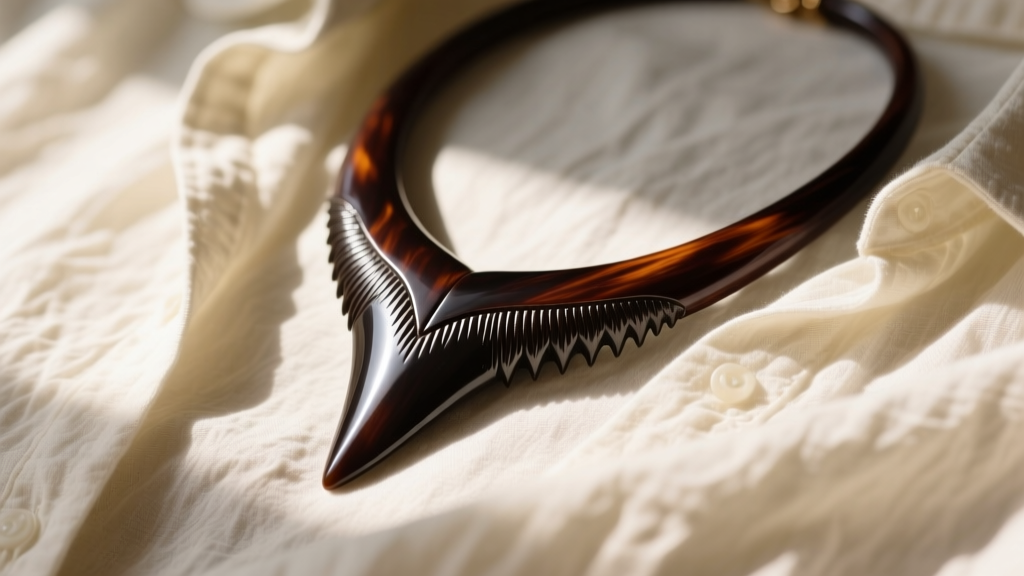
Once relegated to the realm of surf shop trinkets and teenage beachcombers, the megalodon tooth necklace has undergone a radical sartorial transformation. As we navigate the style landscape of 2026, this prehistoric pendant has emerged as a cornerstone of the 'Coastal Noir' and 'Elevated Nautical' aesthetics. No longer just a souvenir, a well-sourced, properly mounted megalodon tooth is now a statement piece that bridges organic history with high-end menswear and womenswear.
This guide breaks down the metallurgical, geological, and stylistic specifics of wearing a megalodon tooth necklace today, ensuring your investment is both structurally sound and sartorially impeccable.
The Evolution: From Surf Shack to Sartorial Staple
The cultural cachet of the megalodon tooth has shifted dramatically. According to the Smithsonian National Museum of Natural History, the Otodus megalodon dominated the oceans roughly 23 to 3.6 million years ago, leaving behind teeth that are essentially permineralized calcium phosphate. In the past, these fossils were drilled haphazardly and strung on leather cords.
In 2026, the trend is defined by intentionality. The 'Coastal Grandfather' and 'Nautical Noir' movements have reclaimed the megalodon tooth necklace, pairing it with unstructured linen blazers, heavy-gauge cashmere, and bespoke silverwork. The focus has shifted from sheer size to the quality of the fossil's serrations, the richness of its mineral patina, and the architectural quality of the metalwork securing it.
Fossil Authenticity vs. High-End Replicas
Before styling, one must understand the medium. Genuine megalodon teeth rate between 2.5 and 3.5 on the Mohs hardness scale. They are highly susceptible to scratching and can fracture if dropped on hard stone. Because of this, the market is flooded with cast replicas. While a museum-grade fossil is a historical artifact, a high-end bronze or 3D-printed resin replica offers durability for daily wear.
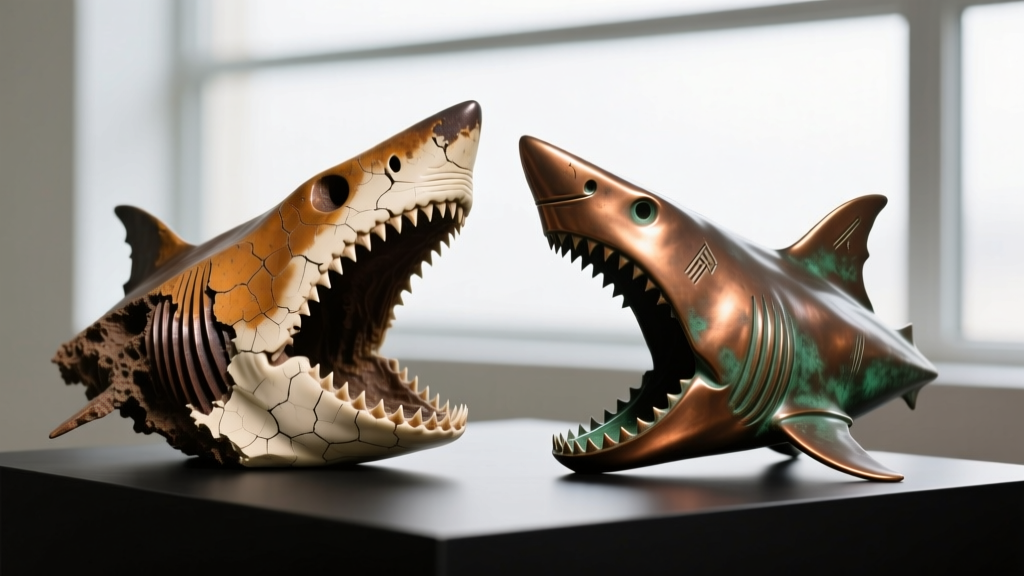
| Material Type | Origin / Composition | Price Range (USD) | Durability & Care |
|---|---|---|---|
| Museum-Grade Fossil | 5+ inches, pristine serrations, Lee Creek or SC River origins. | $800 - $5,000+ | Fragile. Avoid ultrasonic cleaners, chemicals, and impact. |
| Commercial Fossil | 3-4 inches, minor chips, restored roots, terrestrial sediment. | $120 - $400 | Moderate. Still requires careful handling and soft cloth polishing. |
| Cast Bronze Replica | Molded from genuine fossils, cast in solid marine-grade bronze. | $80 - $250 | High. Develops a natural verdigris patina; can be polished. |
| 3D Printed Resin | Scanned and printed in high-density, UV-cured jewelry resin. | $40 - $120 | Low to Moderate. Prone to yellowing under prolonged UV exposure. |
For those seeking the deepest, most dramatic colors—such as the jet-black teeth from anoxic riverbed environments or the rare blue-green hues from specific phosphate matrices—genuine fossils are mandatory. The Florida Museum of Natural History notes that these color variations are dictated entirely by the surrounding sediment and minerals during the millions of years of fossilization.
Chain Pairings: Matching Metal to the Millennia
The most common point of failure in a megalodon tooth necklace is not the fossil itself, but the chain. A high-quality 5-inch fossil can easily weigh between 35 and 60 grams. Standard 2mm cable chains will stretch, kink, or snap under this dynamic load.
The Structural Requirements
- Chain Gauge: Opt for a 5mm to 7mm rope chain, Figaro, or Cuban link. These weaves distribute weight evenly and resist kinking.
- Metallurgy: Solid 14k or 18k gold, or heavy-gauge sterling silver (stamped .925). Avoid gold-plated brass, as the friction from the heavy pendant will wear through the plating within months.
- The Clasp: A standard spring-ring clasp is insufficient. You must use a lobster clasp rated for at least 50 lbs of tensile strength, or a custom-machined box clasp with a safety latch.
The Bail and Mounting
How the tooth connects to the chain is a hallmark of 2026 craftsmanship. The archaic method of drilling a hole directly through the delicate root lobes is now frowned upon by high-end jewelers, as it compromises the structural integrity of the fossil. Instead, look for custom-cast bezel caps or tension-mounted wire wraps in precious metals that cradle the root without invasive drilling. If drilling is necessary, it should only be done using a diamond-tipped core bit, lubricated with water, penetrating only the thickest, non-serrated portion of the root.
2026 Styling Frameworks: Beyond the Surfboard
Integrating a megalodon tooth necklace into a modern wardrobe requires an understanding of proportion and texture. The raw, organic lines of the tooth must be balanced against tailored or heavily textured fabrics.
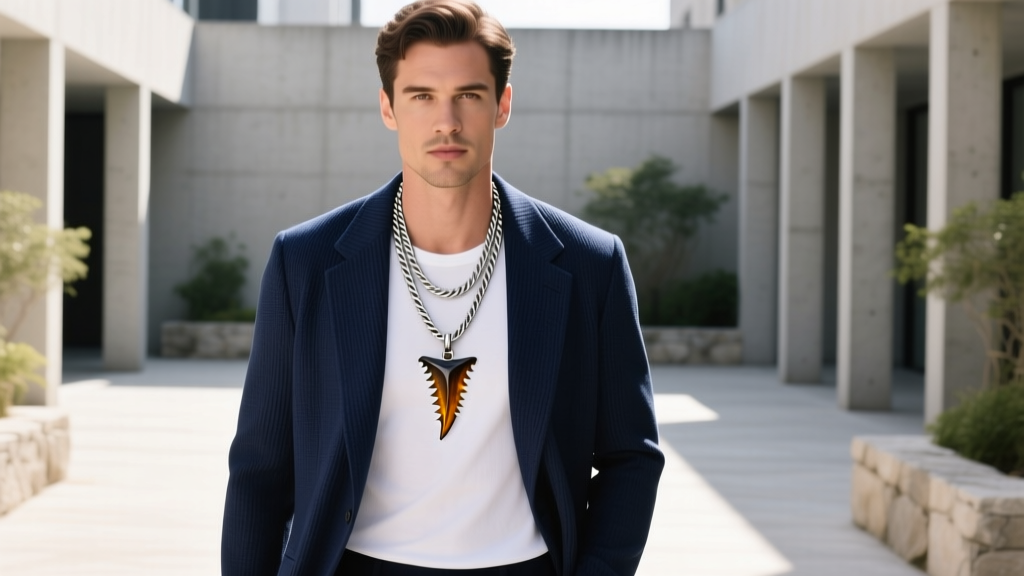
The Coastal Noir Aesthetic
This look relies on high contrast and moody, nautical tones. Pair a dark, charcoal-grey or black fossil (sourced from South Carolina's Cooper River) with a heavy oxidized sterling silver rope chain. Wear it over a charcoal merino wool turtleneck or an unstructured navy linen blazer. The silver and dark fossil create a subtle, brooding elegance that works perfectly for evening dinners in coastal cities.
The Elevated Earth-Tone Layer
For a warmer, more relaxed approach, utilize a brown or tan terrestrial fossil set in 14k yellow gold. Layer the 24-inch megalodon pendant with a shorter (18-inch) minimalist gold herringbone chain and a mid-length (20-inch) beaded lapis lazuli or turquoise necklace. This tiered approach anchors the heavy fossil and integrates it into a bohemian-yet-refined summer wardrobe, best worn over an open, cream-colored camp-collar shirt.
Sourcing, Ethics, and Provenance
As the demand for premium megalodon tooth necklaces has surged, so has the importance of ethical sourcing. Fossil hunting is heavily regulated. For instance, collecting fossils from state-owned riverbeds in South Carolina requires a specific Hobby Diver License, and commercial harvesting is strictly controlled.
When purchasing a genuine fossil pendant in 2026, always demand a certificate of provenance from the jeweler or fossil dealer. This document should detail the geographic origin of the tooth and confirm it was sourced in compliance with local paleontological laws. Avoid teeth with excessive, poorly matched epoxy restoration on the serrations, as this is a common tactic to inflate the value of damaged commercial-grade fossils.
Final Thoughts on Prehistoric Pendants
The megalodon tooth necklace has successfully transcended its novelty origins to become a legitimate artifact of personal style. By prioritizing structural chain integrity, non-invasive metalwork mounting, and intentional wardrobe pairings, you can wear a piece of the Miocene epoch that feels entirely contemporary. Whether you choose a museum-grade fossil or a master-cast bronze replica, the key to pulling off this trend in 2026 lies in respecting the weight, history, and raw geometry of the apex predator's legacy.


