Memory Wire Necklace Guide: Material Properties & Gauge Sizes
Discover the metallurgy behind the memory wire necklace. Compare carbon steel, stainless, and Nitinol, plus gauge sizes and failure modes.

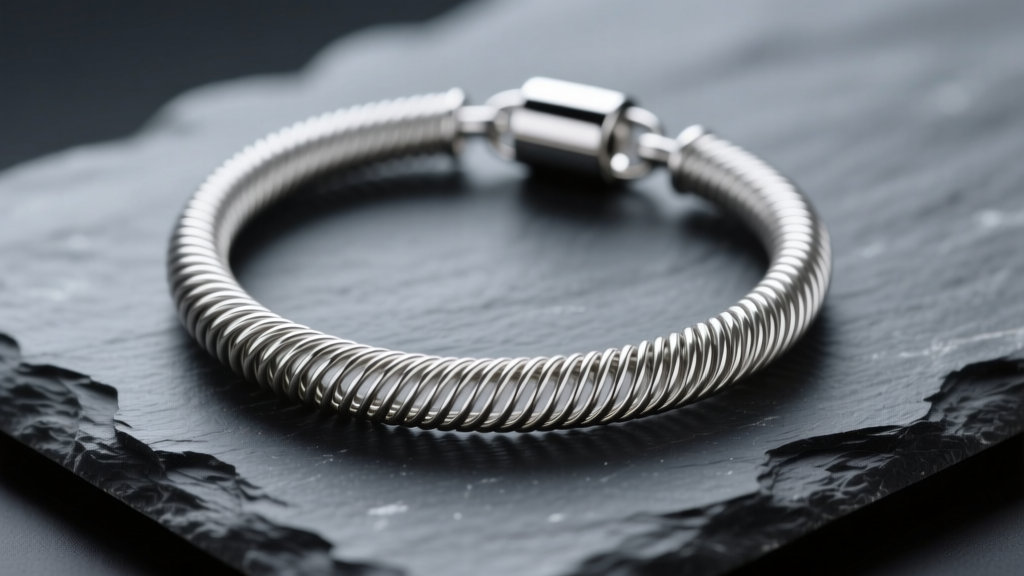
When jewelry makers and designers need a structural foundation that holds its shape without a clasp, the memory wire necklace is the undisputed champion of tension-based design. However, the term "memory" in the jewelry craft industry is largely a marketing colloquialism that masks a fascinating reality of metallurgical engineering. Unlike true shape-memory alloys that react to temperature changes, the wire used in these necklaces relies on extreme yield strength and elastic springback to maintain its coiled geometry.
Understanding the material properties, gauge specifications, and failure modes of memory wire is critical for both creators designing durable pieces and consumers looking for hypoallergenic, long-lasting jewelry. In this comprehensive guide, we dissect the metallurgy, compare the core materials, and provide actionable frameworks for selecting the right wire for your next project.
The Metallurgy of "Memory": Springback vs. Shape Memory
True shape-memory alloys, such as Nitinol (Nickel Titanium Naval Ordnance Laboratory), possess the ability to return to a pre-deformed shape when heated. According to materials science data from AZoM, Nitinol undergoes a reversible solid-state phase transformation between austenite and martensite crystal structures. While Nitinol is used in medical stents and high-end aerospace applications, it is prohibitively expensive and difficult to work with for standard jewelry crafting.
Instead, the commercial memory wire necklace relies on high-carbon steel or stainless steel that has been heavily cold-drawn and subsequently heat-treated. This manufacturing process aligns the grain structure of the metal and introduces dislocations that drastically increase the wire's yield strength. The "memory" you experience is actually elastic springback—the metal's ability to endure high levels of torsional and tensile stress and snap back to its coiled state, provided the stress does not exceed its elastic limit.
Material Breakdown: Carbon Steel vs. Stainless vs. Nitinol
Not all memory wire is created equal. The core material dictates the necklace's longevity, tarnish resistance, and skin compatibility. Below is a comparative matrix of the materials currently dominating the market.
| Material Core | Tensile Strength | Corrosion Resistance | Hypoallergenic | Avg. Cost (per 10 ft) |
|---|---|---|---|---|
| High-Carbon Steel | Very High (2500+ MPa) | Poor (Requires Plating) | No (Contains Nickel/Iron) | $3.00 - $5.00 |
| 304 Stainless Steel | High (1800-2200 MPa) | Moderate | Rarely (Contains 8-10% Ni) | $8.00 - $12.00 |
| 316L Stainless Steel | High (1700-2000 MPa) | Excellent (Molybdenum added) | Mostly (Surgical Grade) | $15.00 - $22.00 |
| Nitinol (NiTi) | Moderate (800-1100 MPa) | Excellent | No (High Nickel Content) | $150.00+ |
For most commercial jewelry, 316L stainless steel is the gold standard. The addition of molybdenum in the 316L alloy prevents pitting and crevice corrosion from sweat and cosmetics, making it vastly superior to 304 stainless for a memory wire necklace worn directly against the skin.
Gauge Sizes and Coil Diameters for Necklaces
Selecting the correct thickness (gauge) and diameter is non-negotiable for structural integrity. Memory wire is typically sold in pre-cut coils or continuous spools measured in fractions of an inch rather than standard AWG (American Wire Gauge), though cross-referencing is helpful for bead hole compatibility.
Standard Thickness Specifications
- 0.018-inch (approx. 22 AWG): The most versatile size. Flexible enough to accommodate multiple passes through standard glass or gemstone beads (1mm holes) while maintaining enough rigidity to hold a choker shape.
- 0.020-inch (approx. 20 AWG): Offers a stiffer drape. Ideal for heavier stone beads, lampwork glass, or designs requiring fewer beads but higher structural tension.
- 0.024-inch (approx. 18 AWG): Extremely rigid. Used primarily for heavy, multi-strand collar necklaces or structural frameworks where the wire itself is a prominent visual element.
Coil Diameters and Neckline Placement
The diameter of the coil determines where the necklace sits on the body. Because the wire is under constant tension, a mismatch in diameter will result in the necklace either choking the wearer or drooping awkwardly.
- 1.25 to 1.5 inches (Choker): Sits tightly at the base of the neck. Requires precise sizing.
- 1.75 to 2.25 inches (Standard/Collar): The most common commercial size, resting comfortably on the collarbone.
- 2.5 to 3.0 inches (Lariat/Draped): Used for longer, open-front designs that hang lower on the chest.
The Danger of Over-Stretching: Yield Strength Limits
The most common failure mode of a memory wire necklace is the permanent loss of its "memory." This occurs when the wearer stretches the wire beyond its yield point, pushing the metal out of the elastic deformation zone and into the plastic deformation zone.
Expert Troubleshooting: If your memory wire necklace suddenly droops and refuses to spring back, the crystalline lattice of the steel has been permanently displaced. No amount of bending by hand will restore the original heat-treated tension. The wire must be discarded or repurposed into a non-tension design, such as a wrapped ring or a straight bead strand.
To prevent this, wearers must be educated on the proper "pinch and pull" technique for donning the necklace, rather than pulling it over the head like a standard chain. For thicker 0.024-inch wires, the shear force required to stretch the coil can easily exceed 40 pounds of lateral pressure, which will snap the wire or permanently warp the coil geometry.
Coatings and Platings: The Hidden Vulnerability
While high-carbon steel offers the highest tensile strength and the snappiest springback, it is highly susceptible to oxidation. To counter this, manufacturers apply electroplated coatings. Understanding these coatings is vital for assessing the lifespan of the jewelry.
- Brass/Copper Base Plating: Applied first to ensure adhesion. If the top layer wears off, the copper will react with skin acids, leaving a green residue.
- Silver and Gold Plating: Usually applied in micro-thin layers (0.5 to 1.5 microns). Because memory wire is under constant mechanical stress and frequently bent during wear, rigid platings like gold can micro-fracture and flake off much faster than they would on a static chain necklace.
- Antique/Oxidized Finishes: Achieved through chemical darkening. These are highly durable because the color is integrated into the surface layer rather than sitting on top of it.
For designers prioritizing longevity over initial cost, bare 316L stainless steel memory wire is vastly superior to plated carbon steel. It requires no coating, will not flake, and maintains a permanent, bright metallic luster that can be polished with a standard jeweler's cloth.
Sourcing and Brand Recommendations
When sourcing materials for production or personal use, relying on established brands ensures consistent heat-treating and accurate gauge tolerances. Beadalon remains the industry benchmark for craft-grade memory wire, offering highly consistent 0.018-inch and 0.020-inch spools that are perfectly tempered for bead stringing. Fire Mountain Gems also provides excellent bulk options for stainless steel variants, which are essential for designers creating hypoallergenic, high-end tension necklaces.
Ultimately, the success of a memory wire necklace hinges on respecting the physical limits of the metal. By matching the correct gauge to your bead weight, selecting a corrosion-resistant core like 316L stainless, and educating the end-user on proper handling, you can create structural jewelry that defies gravity and stands the test of time.


