Mens Big Cross Necklace Troubleshooting: Fix Chain & Weight Issues
Is your mens big cross necklace breaking or sitting wrong? Learn expert troubleshooting for chain gauge, clasp failures, and pendant weight ratios.

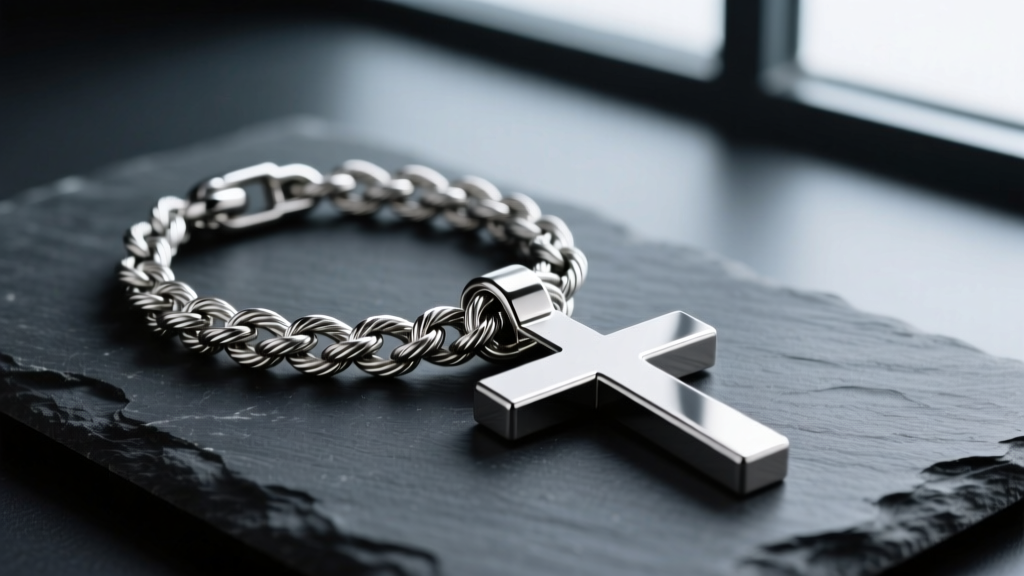
The Physics of Heavy Pendants: Why Your Setup is Failing
When you invest in a substantial piece of jewelry, specifically a mens big cross necklace, you are no longer just dealing with fashion; you are dealing with physics. A large cross pendant—typically ranging from 2.5 to 4 inches in height and weighing anywhere from 30 to over 80 grams—introduces significant dynamic load to your neckwear. Every time you walk, bend over, or shift in your seat, that heavy pendant acts as a pendulum, generating kinetic energy that transfers directly to the chain, the bail, and the clasp.
The most common complaint we see at Jewel Style Radar is premature chain breakage or severe bail wear. This rarely happens because the chain itself is inherently weak; rather, it occurs due to a fundamental mismatch between the pendant's mass and the chain's tensile strength. Standard fashion chains, often measuring between 1.5mm and 2.5mm in thickness, are engineered for lightweight pendants (under 15 grams). When subjected to the shear stress of a 50-gram solid stainless steel or gold cross, the microscopic links stretch, deform, and eventually snap. To solve this, we must systematically troubleshoot the three critical failure points: the bail, the chain gauge, and the clasp mechanism.
Troubleshooting Bail Friction and Shear Stress
The bail is the unsung hero of any pendant necklace. It is the loop that connects the heavy cross to the chain. In many mass-produced mens big cross necklace designs, the bail is an afterthought—a thin, hollow tube of metal soldered onto the back of the cross. When you thread a thick, heavy chain through a narrow bail, you create a high-friction environment.
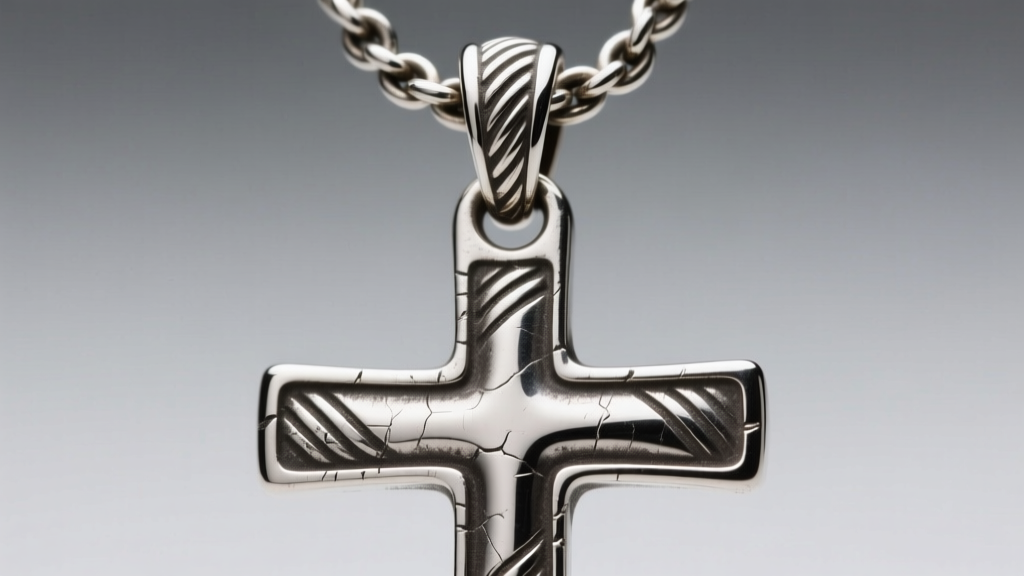
Over time, the microscopic abrasion between the chain links and the interior of the bail acts like a saw. According to metallurgical analyses published by JCK Online, continuous friction on soft metals like sterling silver or low-karat gold can wear through a 1mm bail wall in less than six months of daily wear. If your cross pendant feels like it is sitting at an awkward angle, or if you notice black metallic dust accumulating near the clasp, your bail is actively degrading.
The Fix: Upgrading the Bail Architecture
If you are having a custom piece made or modifying an existing one, demand a soldered V-bail or a heavy-duty tube bail with an interior diameter at least 1.5 times larger than your chain's thickness. For a 4mm chain, the bail interior must be at least 6mm to allow for fluid movement without grinding. Furthermore, ensure the bail is cast in the same metal as the pendant to prevent galvanic corrosion, a reaction that accelerates wear when two dissimilar metals rub together in the presence of skin oils and sweat.
Pendant-to-Chain Weight Ratio Matrix
Use this troubleshooting matrix to ensure your chain can handle the dynamic load of your specific cross pendant. Never rely on the visual thickness of a chain; a hollow 5mm rope chain will snap under less weight than a solid 3mm curb chain.
| Pendant Weight | Minimum Chain Gauge (Solid) | Recommended Chain Style | Required Clasp Type |
|---|---|---|---|
| 20g - 35g | 2.5mm - 3.0mm | Solid Curb, Franco | Standard Lobster (12mm) |
| 35g - 55g | 3.5mm - 4.5mm | Miami Curb, Box Chain | Heavy Lobster (15mm+) |
| 55g - 80g | 5.0mm - 6.0mm | Solid Miami Curb, Rope | Box Clasp w/ Figure-8 Safety |
| 80g+ | 6.5mm+ | Custom Solid Links | Custom Toggle or Magnetic Lock |
Solving Proportion and Length Disasters
A frequent aesthetic and physical problem with a mens big cross necklace is improper chain length, leading to the pendant resting in an unflattering or physically irritating position. A heavy cross swinging against the collarbone causes skin chafing, while one resting too low on the stomach looks disproportionate and catches on belts or waistbands.

The solution lies in what jewelers call the Sternum Anchor Rule. For a cross pendant measuring between 2.5 and 3.5 inches in height, the bottom tip of the cross should rest exactly at the xiphoid process (the lower tip of the sternum). For the average male torso, this requires a 24-inch chain. If you are taller than 6'2" or have a broader chest, you will need to scale up to a 26-inch or 28-inch chain to maintain this anatomical anchor point. Avoid 20-inch chains for oversized crosses; they will sit too high, resembling a bib, and the heavy pendant will constantly flip over due to the steep angle of the chain against the collarbone.
Clasp Failures: Upgrading the Weakest Link
If your heavy cross necklace has suddenly dropped and been lost, the culprit is almost certainly the clasp. The standard spring-ring clasp is entirely inadequate for heavy pendants. Inside a spring ring is a microscopic, tension-loaded wire spring. Under the sudden dynamic shock of a heavy pendant dropping or catching on a shirt, this internal spring snaps instantly, and the clasp slides open.
Even standard lobster clasps can fail if they are not sized correctly. A 10mm lobster clasp on a 4mm chain creates a structural bottleneck. The lever on the lobster clasp can bend outward under the lateral torque of a swinging 60-gram cross. For any mens big cross necklace exceeding 40 grams, you must upgrade to a Box Clasp with a Figure-8 Safety Catch. The box clasp utilizes a V-shaped tongue that clicks securely into a square housing, distributing the tensile load across the entire metal surface rather than relying on a single tiny spring. The secondary figure-8 wire acts as a fail-safe, ensuring that even if the primary tongue is depressed accidentally, the necklace remains secured around your neck.
Material Degradation and Skin Irritation Fixes
Heavy pendants sit flush against the skin, trapping sweat, dead skin cells, and friction. If your chest is turning green or developing a rash beneath the cross, you are dealing with material degradation and contact dermatitis. According to the Gemological Institute of America (GIA), nickel allergies and copper oxidation are the primary culprits behind jewelry-induced skin irritation.
Many budget-friendly large crosses are made from a brass or copper core that is flash-plated with a microscopic layer of gold or silver. The heavy friction of a big pendant rubbing against the chest wears through this plating in weeks, exposing the reactive base metals to your skin's acidity.
Expert Troubleshooting Tip: If you want the look of gold but need the durability for a heavy, high-friction pendant, seek out 316L surgical stainless steel that has been treated with PVD (Physical Vapor Deposition) gold coating. Unlike traditional electroplating, PVD bonds the gold color at a molecular level, creating a surface that is up to 10 times more resistant to the friction and sweat generated by a heavy chest piece.
Final Troubleshooting Checklist
Before wearing your heavy cross necklace daily, run through this rapid diagnostic checklist to prevent catastrophic failure:
- The Pull Test: Hold the chain by the clasp and let the pendant hang. Give it a sharp, sudden tug. If the links stretch or the clasp lever bows outward, the hardware is undersized.
- The Bail Inspection: Look inside the bail hole with a magnifying glass. If you see deep grooves or thinning metal, take it to a jeweler immediately for a bail replacement before it snaps.
- The Skin Check: After the first week of wear, inspect the skin on your lower sternum. Any redness or discoloration means the metal alloy is reacting to your sweat; switch to solid 14k gold, platinum, or PVD-coated 316L steel.
By respecting the physics of heavy jewelry and matching your chain gauge, clasp type, and bail architecture to the specific weight of your pendant, you can ensure your statement piece remains secure, comfortable, and structurally sound for years to come.


