Copper Necklace for Men: Metallurgy, Sizing & Care Guide
Discover the technical details of a copper necklace for men. Learn about purity grades, oxidation prevention, gauge sizing, and clasp mechanics.

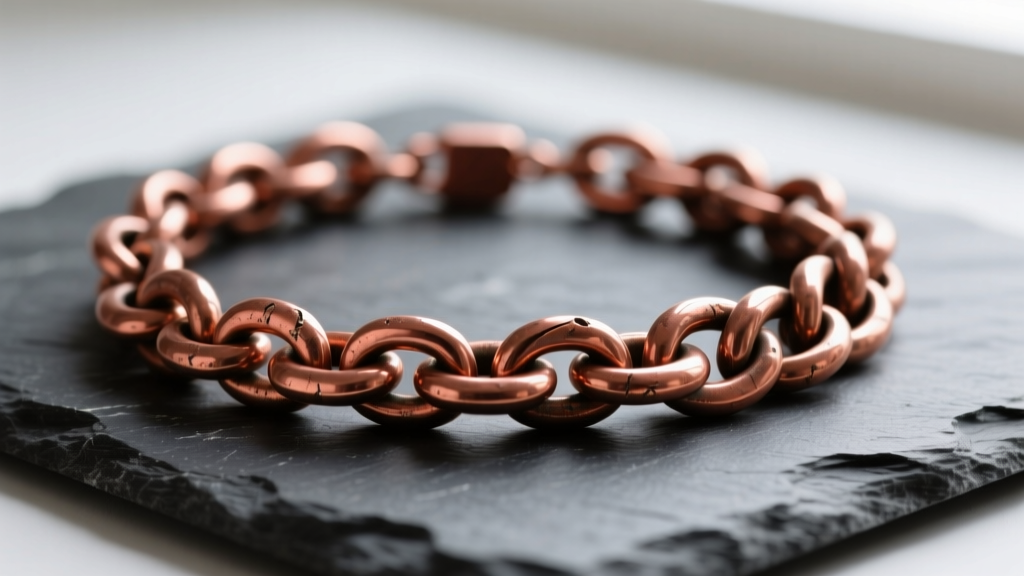
When selecting a copper necklace for men, most buyers focus solely on the aesthetic warmth of the metal. However, as a material, copper presents unique metallurgical challenges and opportunities that dictate how it wears, ages, and interacts with human skin. Unlike gold or platinum, copper is a highly reactive, relatively soft transition metal that demands a technical understanding of gauge thickness, hardware integrity, and oxidation management. This deep dive explores the exact specifications, material grades, and maintenance protocols required to master copper jewelry.
The Metallurgy of Men's Copper Jewelry
Not all copper is created equal. In high-quality jewelry, the standard is Electrolytic Tough Pitch (ETP) copper, designated as UNS C11000 or C110. According to metallurgical standards referenced by Rio Grande, ETP copper contains a minimum of 99.9% pure copper with a strictly controlled oxygen content of 0.02% to 0.04%. This specific oxygen balance is critical: it prevents hydrogen embrittlement during the annealing and soldering processes, ensuring the chain links do not become brittle and snap under tension.
It is vital to distinguish pure copper from its common alloys. Brass (copper and zinc) and bronze (copper and tin) are significantly harder and more yellow/brown in hue. A true copper necklace for men will exhibit a distinct salmon-pink to reddish-brown tone when freshly polished. Because pure copper sits at just 2.5 to 3 on the Mohs hardness scale, it is highly malleable. This malleability allows for intricate link weaving but necessitates careful engineering when determining chain thickness and weight distribution.
Gauge, Weight, and Chain Link Architecture
For men's jewelry, structural integrity is paramount. A chain that is too thin will stretch and deform under its own weight or minor snags. The thickness of the wire used to make the links is measured in gauge (AWG) or millimeters. Below is a technical framework for selecting the right chain architecture based on tensile stress and daily wearability.
| Chain Style | Recommended Gauge | Thickness (mm) | Structural Characteristics |
|---|---|---|---|
| Cuban Link | 8 AWG to 6 AWG | 3.2mm - 4.1mm | High lateral rigidity; interlocking flat links distribute weight evenly, minimizing stretch. |
| Wheat (Spiga) | 12 AWG to 10 AWG | 2.0mm - 2.5mm | Four-strand woven structure provides excellent tensile strength but is prone to trapping skin oils. |
| Rope Chain | 10 AWG to 8 AWG | 2.5mm - 3.2mm | Twisted links create high light refraction; however, the helical structure can unravel if a single solder joint fails. |
| Curb Chain | 6 AWG to 4 AWG | 4.1mm - 5.1mm | Heavy, flat-lying links; requires robust soldering at every joint to prevent lateral warping. |
When evaluating a heavy copper chain, inspect the solder joints. Because copper conducts heat exceptionally well, jewelers must use precise torch control and high-temperature silver-bearing solder to close the links without melting the base metal. Unsoldered or merely "pinched" links will inevitably pull apart when worn by an active individual.
The Verdigris Factor: Skin Chemistry and Oxidation
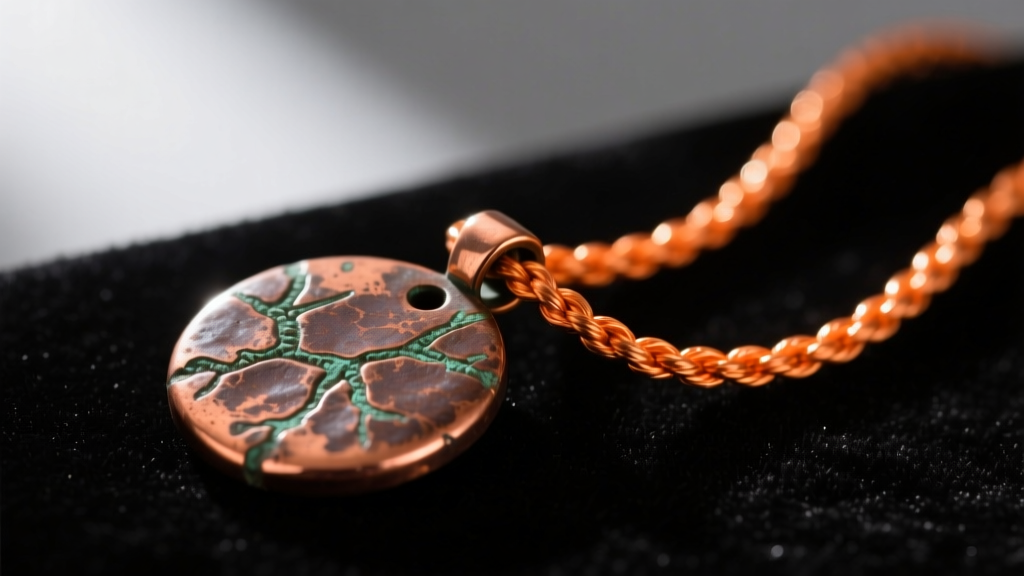
The most common complaint regarding copper jewelry is the green discoloration it leaves on the skin. This is not an allergic reaction, nor is it a sign of toxic impurities. It is a predictable chemical reaction. Human sweat contains water, sodium chloride (salt), and lactic acid, with a pH typically ranging from 4.5 to 7.0. When copper reacts with the chlorides and acids in sweat, it forms copper chloride and copper chelates, which present as a blue-green compound known as verdigris.
Managing the Patina vs. Sealing the Metal
Men generally fall into two camps regarding copper oxidation: those who want to preserve the bright, polished orange hue, and those who prefer a darkened, antiqued patina. The Ganoksin Project, a leading authority on jewelry fabrication, notes that chemical patinas (like liver of sulfur) can be applied to copper to force a stable dark brown or black oxide layer, which actually slows down further environmental degradation.
- For a Bright Finish: The copper must be sealed. Jewelry-grade clear coats, such as acrylic electrophoretic lacquers or specialized nano-ceramic coatings, create a physical barrier between the metal and the skin's acidic oils. Note that these coatings will eventually wear off at high-friction points (like the back of the neck) and require reapplication.
- For Raw Copper: Embrace the antimicrobial properties and the evolving patina. To prevent skin staining, apply a thin layer of clear beeswax or a specialized jewelry wax to the inner curve of the chain or pendant before wearing. This provides a breathable, easily renewable barrier that washes off with hot water and soap.
Clasp Mechanics and Hardware Integrity
A critical failure point in many copper necklaces is the clasp assembly. Because pure copper is soft and has a low yield strength, it suffers from "creep"—the tendency of a solid material to move slowly or deform permanently under the influence of mechanical stresses. A traditional lobster clasp made entirely of pure copper will quickly lose its spring tension, rendering the locking mechanism useless and risking the loss of the chain.
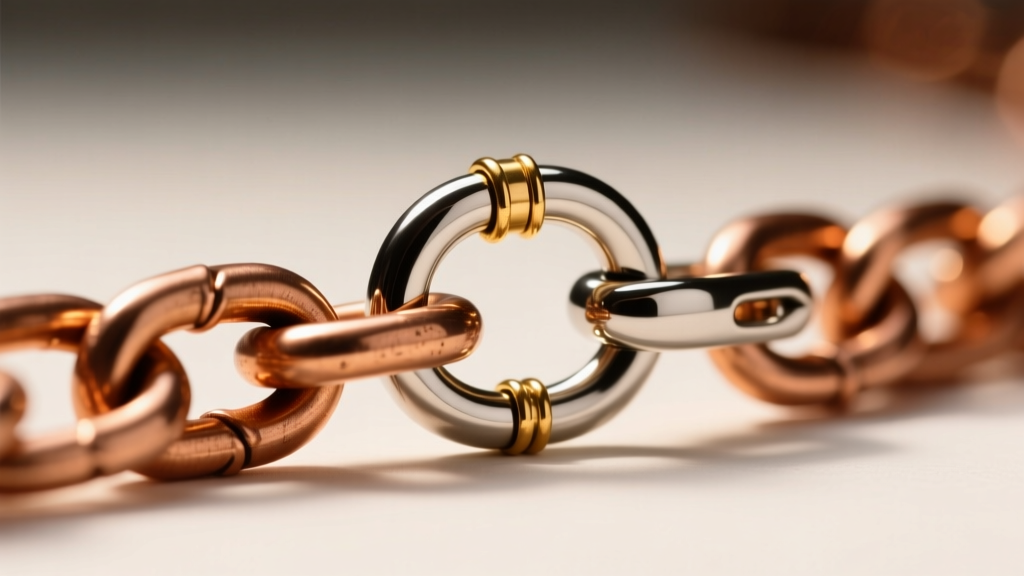
The Expert Solution: High-end copper necklaces utilize bi-metal hardware. The chain itself is crafted from C110 copper, but the clasp, the jump rings, and the internal springs are fabricated from 316L surgical stainless steel or Grade 5 Titanium. This ensures the locking mechanism retains its mechanical memory and tensile strength indefinitely. When inspecting a copper necklace for men, always verify the clasp material. If the lobster clasp is magnetic, it is likely steel (which is good for the spring, but ensure it is plated or stainless to prevent rust). If it is entirely non-magnetic and feels soft, it is likely pure copper and should be avoided for heavy chains.
Sizing Framework: Drop Lengths for Male Physiques
Copper is a dense metal (8.96 g/cm³). A thick copper chain will carry significant physical weight, making the drop length crucial for both comfort and visual proportion. Use this sizing matrix based on standard male anthropometric data:
- 18 to 20 Inches (The Collarbone Drop): Sits at the base of the neck. Ideal for smaller, lighter pendants or thinner 12-gauge wheat chains. Best suited for men with a neck circumference under 16 inches.
- 22 to 24 Inches (The Mid-Chest Drop): The most versatile length for a copper necklace for men. It rests on the upper sternum, allowing the weight of heavier 8-gauge Cuban links to distribute comfortably across the pectoral muscles rather than pulling on the cervical spine.
- 26 to 30 Inches (The Long Drape): Reserved for statement pieces and large, heavy copper pendants (such as cast compasses or geometric totems). Requires a minimum 6-gauge chain to support the pendant's pendulum swing without stressing the upper links.
Expert Maintenance Protocol
When your copper necklace loses its luster or develops an uneven, muddy oxidation, avoid harsh commercial jewelry dips designed for silver, as they can cause micro-pitting in copper. Instead, utilize a controlled chemical and mechanical cleaning process:
The Citric-Abrasive Method: Create a paste using fresh lemon juice (citric acid) and fine non-iodized table salt. The acid dissolves the copper oxide layer, while the salt provides a micro-abrasive action. Apply with a soft-bristled toothbrush, working in the direction of the chain links. Rinse immediately with distilled water to halt the acid reaction, and dry completely with a microfiber cloth to prevent water spotting.
For heavily tarnished pieces with deep crevices, an oxalic acid-based cleaner (commonly found in specialized brass and copper polishes) will chelate the oxidized copper molecules, lifting them from the surface without aggressively removing the underlying healthy metal. Always follow up a chemical clean with a hand-buffing using a treated jeweler's rouge cloth to burnish the surface and delay the onset of the next oxidation cycle.
Understanding the metallurgy, structural requirements, and chemical behaviors of copper transforms it from a novelty material into a sophisticated, enduring staple of men's jewelry. By prioritizing ETP purity, bi-metal hardware, and proper gauge sizing, you ensure your copper necklace remains a functional and striking asset for years to come.


