Pendant Diamond Necklace Mens: 2026 Value & Budget Guide
Discover how to assess true value when buying a pendant diamond necklace mens. Compare 2026 pricing, lab-grown vs. natural, and metal grades.

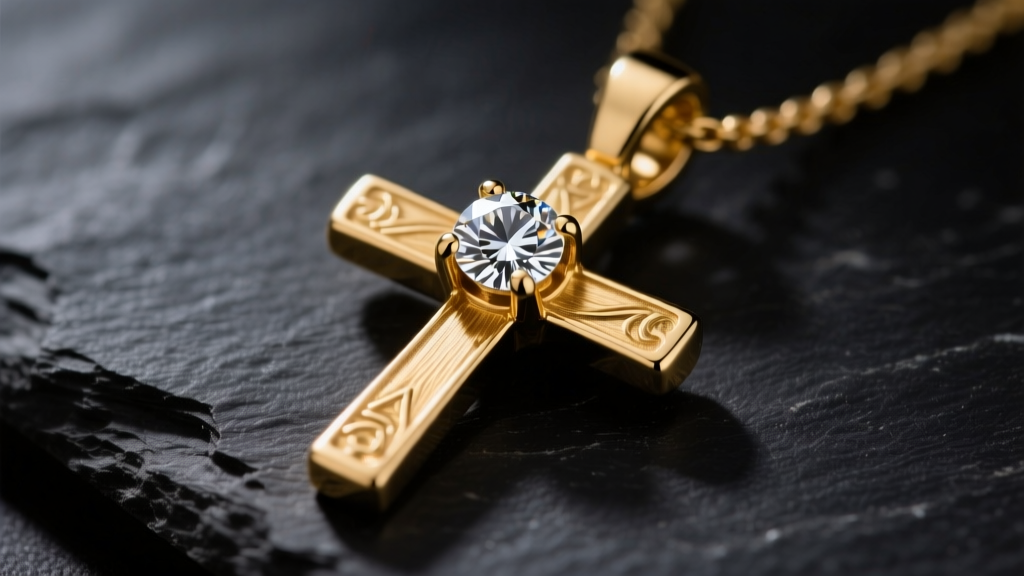
The landscape of men's diamond jewelry has shifted dramatically over the last few years. What was once a niche market dominated by oversized, overly flashy pieces has matured into a sophisticated category where craftsmanship, material integrity, and smart budget allocation reign supreme. If you are shopping for a pendant diamond necklace mens in 2026, you are likely navigating a confusing market saturated with inflated retail markups, misleading clarity grades, and aggressive lab-grown marketing.
This guide strips away the jewelry store sales pitches. We will break down the actual cost drivers of men's diamond pendants, reveal the specific grading shortcuts you can take without sacrificing visual impact, and provide a mechanical assessment of chain-to-bail durability. Whether your budget is $500 or $5,000, understanding where your money actually goes is the key to securing a piece that holds both aesthetic and structural value.
The Real Cost Breakdown: Where Your Money Goes
When evaluating a men's diamond pendant, the retail price is typically a composite of three factors: the center stone (or stones), the precious metal weight, and the brand premium. In 2026, the brand premium on men's jewelry remains stubbornly high at luxury houses, often accounting for 60% to 80% of the final ticket price. To assess true value, we must look at the raw material and labor costs.
Below is a realistic 2026 market assessment for a standard 1-carat total weight (CTW) men's pendant (e.g., a solitaire round or a small cross) set in 14K gold.
| Material / Stone Type | Avg. Retail Price (1 CTW) | Estimated Resale Value | Best Use Case |
|---|---|---|---|
| Natural Diamond (14K Gold) | $3,200 - $6,500 | 20% - 35% of retail | Heirlooms, traditional status |
| Lab-Grown Diamond (14K Gold) | $600 - $1,400 | 5% - 10% of retail | Everyday wear, strict budgets |
| Moissanite (10K/14K Gold) | $250 - $500 | Negligible | Maximum sparkle, low budget |
As the Federal Trade Commission (FTC) Jewelry Guides dictate, sellers must accurately represent the origin and weight of these stones. However, the resale reality is stark: natural diamonds retain a fraction of their retail value, while lab-grown diamonds have seen their wholesale prices plummet, rendering them virtually worthless on the secondary market. You are buying lab-grown for immediate visual impact, not as an investment.
Diamond Grading for Men: Stop Overpaying for Clarity
The most common mistake men make when buying a diamond pendant is over-indexing on clarity and color. The Gemological Institute of America (GIA) established the 4Cs primarily with engagement rings in mind—stones that are viewed up close on the hand. A pendant rests on the chest, typically 24 to 36 inches away from the observer's eye.
The Clarity Distance Hack
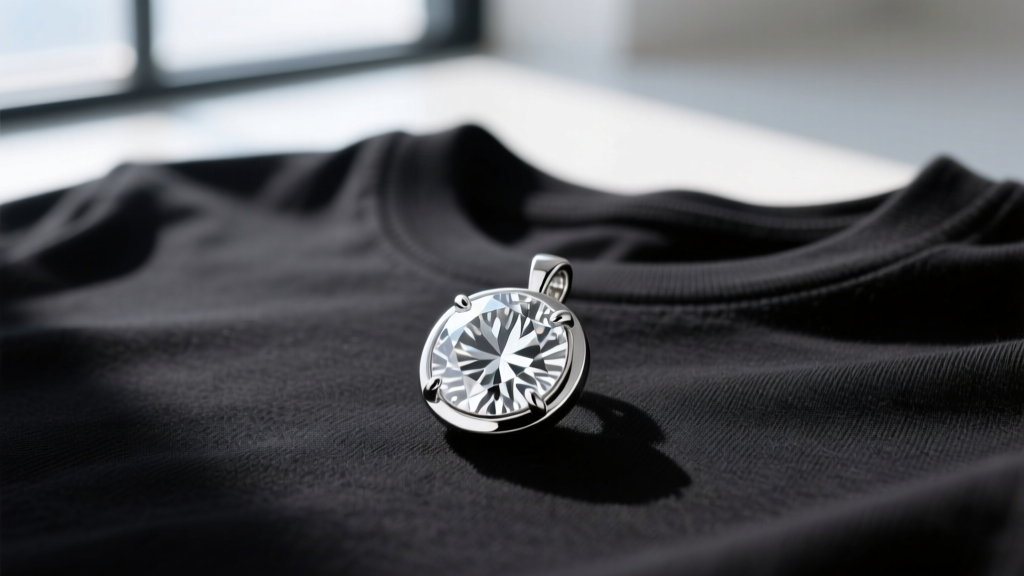
Because of the viewing distance, you can safely drop down to SI2 (Slightly Included) or even I1 (Included) clarity grades without anyone noticing. The critical caveat is the type of inclusion. Avoid stones with large, black carbon spots in the center of the table. Instead, look for I1 diamonds with white, translucent inclusions (like feathers or clouds) near the girdle. These are entirely invisible when the pendant is worn over a t-shirt or jacket.
Color and Metal Synergy
If you are setting your pendant in 14K or 18K yellow gold, do not pay the premium for D-F colorless diamonds. The yellow reflections from the gold prongs or bezel will tint the stone anyway. Opt for J, K, or L color grades. The faint warm tone of the diamond will blend seamlessly with the yellow gold, creating a cohesive, rich look while saving you 20% to 30% on the stone cost.
Metal Selection and Mechanical Durability
Men's jewelry takes a beating. It gets caught on shirts, banged against gym equipment, and subjected to sweat and friction. The metal you choose for your pendant and chain dictates its lifespan.
- 10K Gold (41.7% Pure): Stamped '10K' or '417'. This is the most durable gold alloy. The higher percentage of zinc, copper, and silver gives it immense tensile strength. It is highly recommended for heavy men's chains and pendant bails that bear significant weight.
- 14K Gold (58.5% Pure): The industry sweet spot. It offers excellent durability while maintaining the rich color and hypoallergenic properties of pure gold.
- 18K Gold (75% Pure): Softer and more prone to scratching. Beautiful for the pendant face, but a poor choice for a heavy, everyday chain.
- Platinum: Extremely dense and durable, but heavy. It is often overkill for a simple pendant bail but excellent for a high-end, permanent chain.
The Bail-to-Chain Failure Point
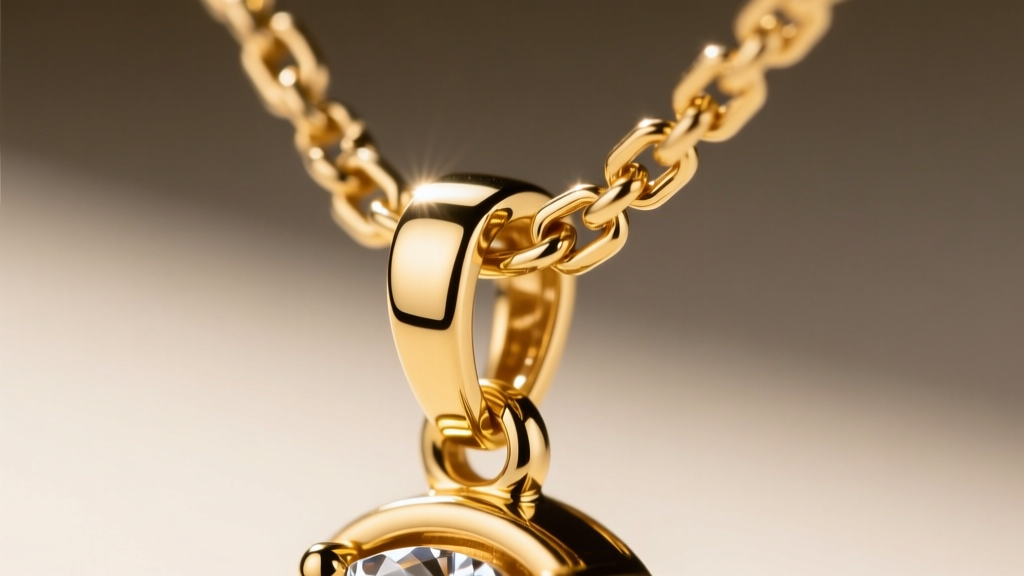
The most common structural failure in men's necklaces is the bail (the loop connecting the pendant to the chain) wearing through. This happens due to a mechanical mismatch. If you thread a 4mm Cuban link chain through a bail with a 4mm interior diameter, the friction will act like a saw, cutting through the gold in less than 18 months. The Golden Rule: The interior diameter of the bail must be at least 1.5mm wider than the thickness of your chain to allow for natural movement and prevent grinding.
Prong vs. Bezel: Setting Styles for Active Lifestyles
The way your diamond is secured drastically impacts both the value and the longevity of the piece.
"A traditional four-prong setting maximizes light return but leaves the diamond's girdle exposed to lateral impacts. For men who work with their hands or wear their jewelry daily, a bezel setting is a non-negotiable upgrade for stone security."
A bezel setting wraps a rim of metal entirely around the diamond's circumference. While it reduces the stone's visible surface area by about 5%, it virtually eliminates the risk of the diamond chipping or popping out if the pendant is snagged. When assessing value, a well-crafted bezel pendant commands a slightly higher labor cost but saves you from catastrophic stone loss down the line.
Actionable Buying Framework: The 3-Step Value Check
Before you swipe your card for a pendant diamond necklace mens, run the piece through this rapid assessment framework:
1. Verify the Metal Stamp and Weight
Check the back of the pendant and the clasp of the chain for hallmarks (e.g., 14K, 585, PT950). Weigh the piece. A solid 14K gold men's pendant should have a satisfying heft. If it feels suspiciously light, it may be hollowed out (a common cost-cutting measure in mall jewelry stores that makes the piece impossible to repair if dented).
2. Inspect the Bail Construction
Look closely at where the bail attaches to the pendant. Is it soldered securely at both the top and bottom, or is it a simple glued loop? Does it have a reinforced steel or platinum insert? A high-value piece will feature a robust, seamlessly soldered bail capable of handling the kinetic energy of a swinging chain.
3. Demand the Right Documentation
For any natural diamond pendant over $1,500, insist on a grading report from a top-tier lab like GIA or AGS. Store-issued "certificates of authenticity" are marketing documents, not independent gemological assessments. For lab-grown diamonds, an IGI or GCAL report is standard and sufficient to verify the stone is indeed a diamond and not a simulant.
Final Verdict on 2026 Market Value
Ultimately, the value of a men's diamond pendant is dictated by how well it aligns with your lifestyle and budget. If you want a massive, icy 3-carat look for under $1,000, lab-grown diamonds in a 10K white gold bezel setting offer unparalleled visual ROI. If you are seeking a subtle, 0.50-carat natural diamond solitaire to wear for the next forty years, prioritize a J-color, SI1-clarity stone set in a heavy 14K yellow gold mounting. By ignoring the inflated clarity grades and focusing on structural mechanics and smart material pairings, you can secure a piece that punches far above its price tag.


