Mens Hematite Necklace Value Guide: Pricing & Authenticity
Discover the true value of a mens hematite necklace. We compare natural vs. synthetic stones, analyze pricing tiers, and reveal hidden durability costs.

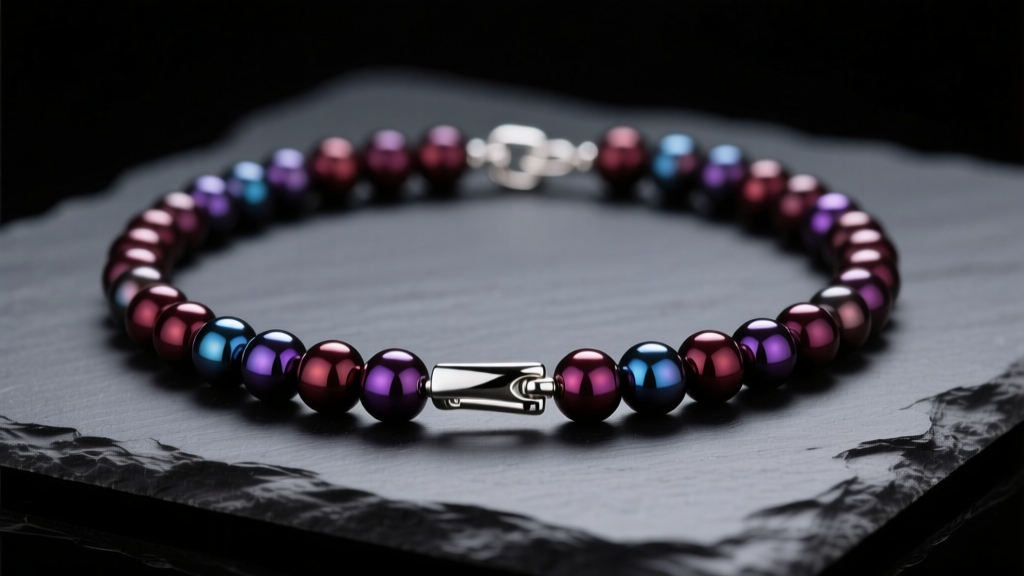
The Allure and Reality of Hematite Jewelry
When shopping for grounded, masculine accessories, a mens hematite necklace frequently tops the list. Its dark, metallic luster offers a sleek, understated aesthetic that pairs effortlessly with both casual streetwear and smart-casual attire. However, the market is saturated with conflicting options, ranging from five-dollar magnetic beads to eighty-dollar designer pieces. For the discerning buyer, understanding the true value of hematite requires looking past the surface shine and examining the mineralogy, structural integrity, and long-term wearability of the piece.
Hematite is an iron oxide mineral (Fe2O3) with a Mohs hardness of 5.5 to 6.5. While it is relatively hard, it is notoriously brittle and exceptionally dense. This unique combination of physical properties means that not all necklaces are constructed equally. A budget-friendly option might look identical to a premium piece on day one, but the hidden costs of poor stringing materials and synthetic composites often reveal themselves within months. In this comprehensive value assessment, we break down exactly what you are paying for, how to spot synthetic imitations, and which construction methods justify a higher price tag.
Natural Hematite vs. Hemalyke: What Are You Actually Buying?
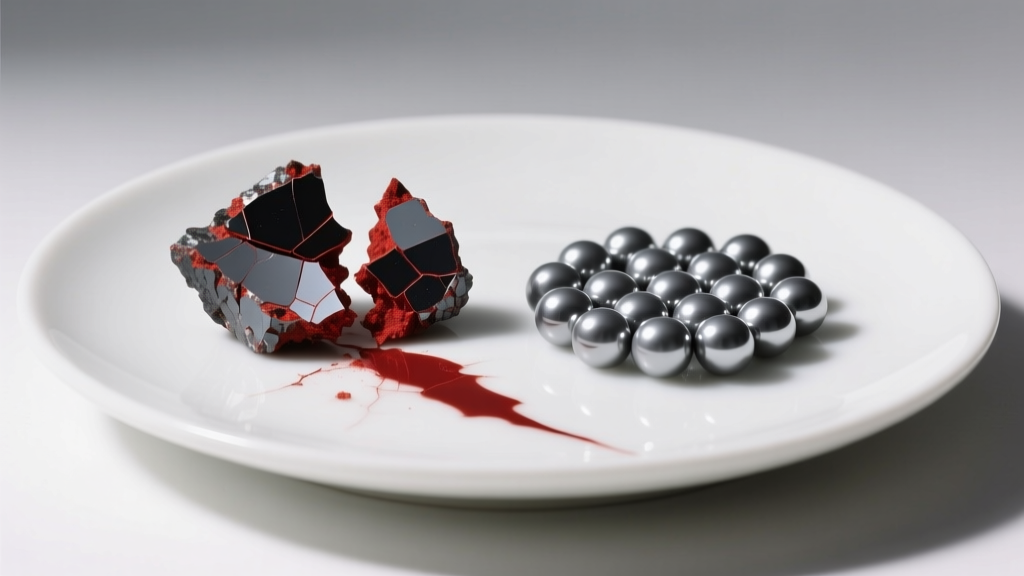
The most critical factor in determining the value of a mens hematite necklace is the authenticity of the beads. The jewelry market is currently flooded with a synthetic material known as Hemalyke, which is frequently mislabeled or ambiguously marketed as genuine hematite. According to mineralogical data from Mindat.org, natural hematite is a naturally occurring iron ore that is heavy, cold to the touch, and leaves a distinct reddish-brown streak when scraped against unglazed porcelain.
The Magnetic Misconception
Many buyers assume that because hematite contains iron, it must be highly magnetic. This is a common trap. Natural hematite is only very weakly magnetic or entirely non-magnetic in its raw bead form. The strongly magnetic necklaces sold online as "magnetic therapy hematite" are almost exclusively Hemalyke—a man-made composite of iron oxide dust mixed with a resin binder and infused with barium ferrite to create a strong magnetic pull. While Hemalyke is highly durable and uniform in shape, it lacks the thermal conductivity and natural weight distribution of mined hematite. If you are paying premium prices (over $40) for a magnetic necklace, you are likely overpaying for a synthetic composite.
Expert Insight: To perform a quick at-home authenticity test, take an unglazed ceramic tile or the unglazed bottom of a porcelain mug and gently drag a bead across it. Genuine hematite will leave a rust-red or brown streak, while Hemalyke or dyed glass will leave a grey, black, or completely clear mark.
Budget Breakdown: Pricing Tiers for Mens Hematite Necklaces
Evaluating the budget and value of these necklaces requires segmenting the market into three distinct pricing tiers. The price variance is rarely about the cost of the raw stone itself, but rather the quality of the hardware, the stringing medium, and the brand markup.
| Price Tier | Material Composition | Stringing & Hardware | Value Verdict |
|---|---|---|---|
| $8 - $18 | Hemalyke (Synthetic) or low-grade natural with poor polish | 0.8mm elastic cord, base metal magnetic clasp | Poor long-term value. Elastic will stretch and snap under the heavy weight of the beads within 3-6 months. |
| $25 - $45 | Authentic natural hematite, well-polished drill holes | Woven steel wire or heavy-duty silicone, sterling silver lobster clasp | Excellent value. The sweet spot for authentic stones paired with hardware that will actually support the necklace weight. |
| $55 - $120+ | Natural hematite mixed with matte onyx, lava rock, or silver tubes | Knotted silk, Kevlar cord, or solid chain integration with designer branding | Good aesthetic value, but you are paying for design complexity and brand name rather than raw material superiority. |
Hidden Costs: Durability, Cord Stretching, and Rust
When assessing the budget of a mens hematite necklace, you must factor in the hidden maintenance costs and failure modes associated with iron oxide. Hematite is exceptionally dense; a standard 20-inch necklace featuring 8mm beads can easily weigh between 70 and 85 grams. This sheer mass creates continuous kinetic tension on the stringing material.
The Drill Hole Abrasion Problem
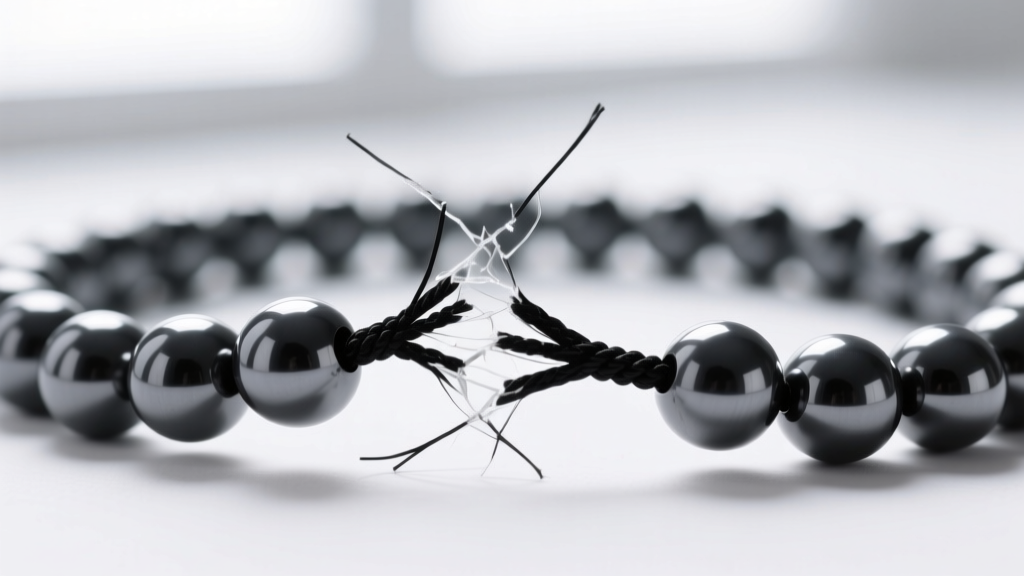
In budget-tier necklaces, the beads are mass-tumbled, leaving the inner drill holes rough and sharp. When threaded onto cheap elastic cord, the heavy beads act like tiny saws. Every time the necklace shifts against your chest, the rough inner edges micro-abrade the elastic from the inside out. According to gemological care guidelines referenced by the GIA Gem Encyclopedia, heavy gemstone beads require specialized stringing. A true high-value necklace will use 0.5mm woven stainless steel cable or 1.5mm reinforced silicone cord, and the drill holes will be individually polished or micro-beveled to prevent internal cutting.
Oxidation and Sweat Damage
Because hematite is literally iron ore, it is susceptible to oxidation. If you wear a natural hematite necklace during intense workouts or in high-humidity environments, the combination of saline sweat and moisture will cause the beads to develop a dull, rust-like patina over time. High-end manufacturers mitigate this by applying a microscopic clear-coat sealant to the beads, a process that adds to the manufacturing cost but significantly extends the lifespan and luster of the piece.
How to Inspect a Hematite Necklace Before Buying
Whether you are shopping online or evaluating a piece in a physical boutique, use this rapid checklist to ensure you are getting genuine value for your money:
- Check the Temperature: Pick up the necklace. Genuine hematite has high thermal conductivity and will feel noticeably cold to the touch, taking a few moments to warm up to your skin. Synthetic Hemalyke or glass will feel room-temperature instantly.
- Examine the Clasp: A heavy 80-gram necklace requires a secure closure. Avoid necklaces that rely solely on magnetic clasps without a secondary locking mechanism, as the sheer weight of the beads can pull the magnets apart if snagged on clothing.
- Look for Uniformity Flaws: Natural hematite is mined and cut. If you look closely at the beads under a bright light, you should see slight variations in the metallic sheen, tiny natural pits, or minor asymmetry. Perfectly uniform, mirror-like beads are almost certainly synthetic.
- Test the Weight Distribution: Hold the necklace by the clasp. If the elastic cord is visibly bowing or stretching between the beads even when just hanging from your hand, the cord is rated too low for the mass of the stones.
Final Verdict: Is It Worth Your Money?
A mens hematite necklace is a highly worthwhile investment, provided you allocate your budget correctly. The sub-$15 market is a trap of synthetic materials and failing elastic cords that will ultimately cost you more in replacements and lost beads. By targeting the $25 to $45 range, you secure authentic, cold-to-the-touch natural iron oxide paired with structural stringing materials like woven steel wire. This ensures your accessory remains a permanent, durable staple in your wardrobe rather than a disposable fast-fashion afterthought. Always prioritize the quality of the hardware and the stringing medium over the brand name, and your investment will easily withstand years of daily wear.


