Men's Lariat Necklace: Troubleshooting Fit, Tangles & Slippage
Fix common men's lariat necklace issues like chain tangling, slider slippage, and proportion errors. Expert tips on gauges and materials.

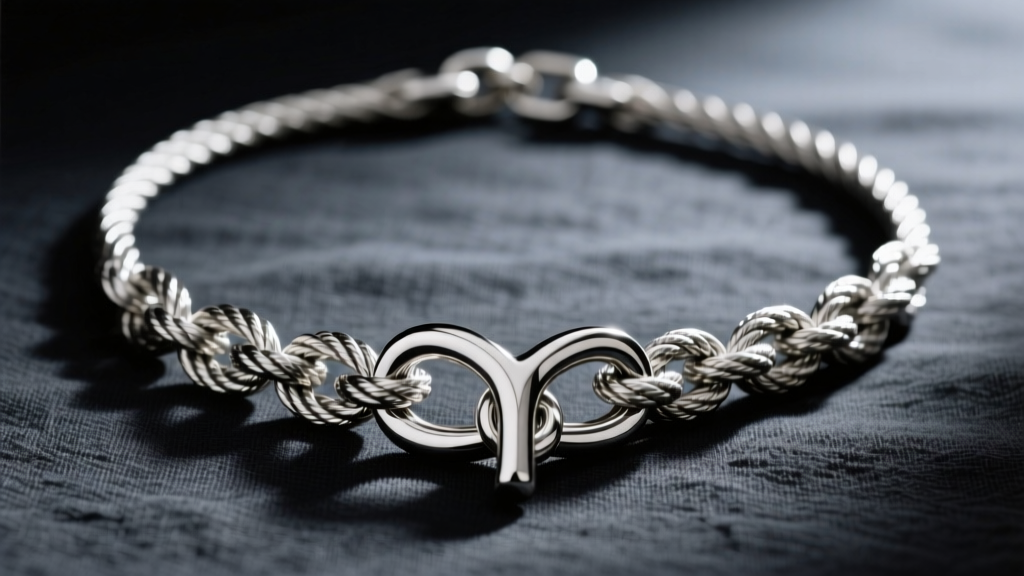
The Anatomy of a Men's Lariat: Where They Fail
The men's lariat necklace—often referred to as a Y-necklace or lasso chain—is a bold staple in contemporary menswear. However, its unique structural geometry makes it highly susceptible to specific mechanical failures that standard necklaces do not face. Unlike a simple continuous loop, a lariat features a primary cervical chain that branches into a vertical drop. This Y-junction, combined with the sliding tension mechanism required to adjust the drop, creates three primary pain points for wearers: chronic tangling at the drop, slider slippage throughout the day, and structural failure at the solder point.
As a domain expert in jewelry mechanics and menswear styling, I have diagnosed and repaired hundreds of these pieces. The vast majority of issues stem from poor manufacturing choices regarding wire gauge, chain link style, and slider hardware. Below, we break down how to troubleshoot and permanently fix the most common men's lariat necklace problems, ensuring your piece hangs perfectly and lasts for years.
Troubleshooting Chain Tangling & Y-Drop Knots
The most frequent complaint regarding lariat necklaces is the tendency for the vertical Y-drop to tangle with the main chain or twist upon itself. This is rarely a user error; it is almost always a physics problem dictated by the chain's link profile.
Why Your Chain Keeps Twisting
Chains with a flat or semi-flat profile—such as Herringbone, Snake, or Box chains—have a natural rotational memory. When the vertical drop hangs freely, gravity forces the metal links to seek their flattest resting state against the chest. If the main chain and the drop chain are both Herringbone, they will inevitably twist and knot within minutes of movement. According to manufacturing data from Rio Grande Jewelry Supply, flat chains lack the torsional flexibility required for multi-directional pendants and drops.
The Fix: Upgrade the Link Profile
To eliminate tangling, you must use chains with radial symmetry. The best chain styles for men's lariats include:
- Rope Chains: The twisted, helical structure naturally dissipates rotational energy, keeping the drop hanging straight.
- Wheat (Spiga) Chains: The woven, four-directional braid offers immense tensile strength and resists twisting.
- Curb Chains: When filed flat, interlocking curb links lay flush against the chest without rotating.
Gauge Recommendation: For a masculine aesthetic that resists kinking, the main chain should be between 12-gauge (2.0mm) and 10-gauge (2.5mm), while the Y-drop can be slightly lighter at 14-gauge (1.6mm) to reduce pendulum weight.
Fixing Slider Slippage: Tension Beads vs. Silicone
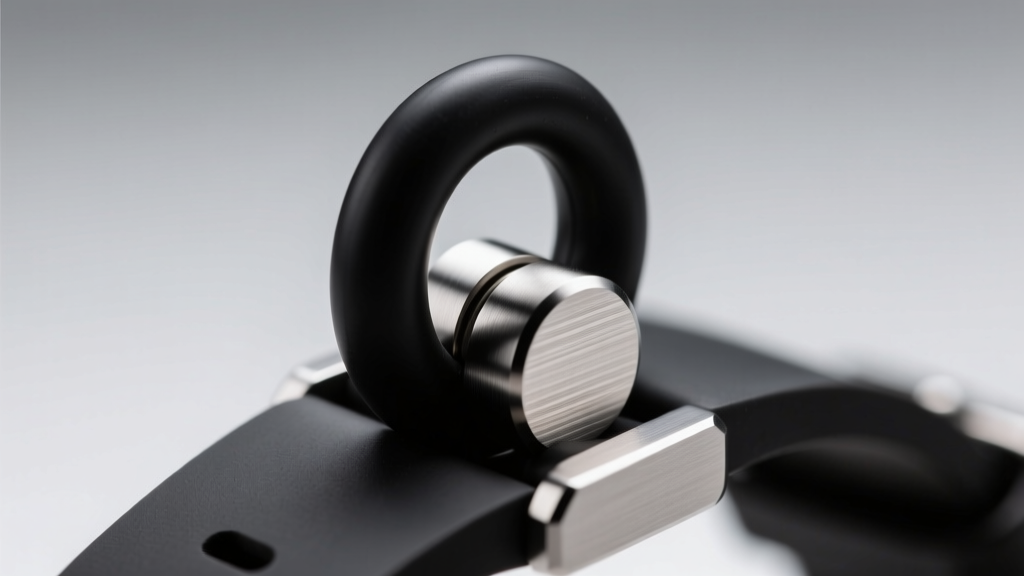
The slider bead (or tension clasp) is the component that allows you to adjust the length of the Y-drop. A frustratingly common issue is the slider slowly creeping down the chain throughout the day, causing the drop to hang awkwardly low or slip entirely off the end of the chain.
Diagnosing the Slippage
Slippage occurs when the internal diameter of the slider bead is even a fraction of a millimeter wider than the chain's outer profile. This is especially prevalent when manufacturers pair smooth chains (like Box or Snake) with smooth metal tube beads. Over time, the friction wears down the interior of the metal bead, accelerating the slippage.
The Silicone O-Ring Hack
You do not need to buy a new necklace to fix a loose slider. You can retrofit your existing metal slider bead using a micro silicone O-ring.
- Purchase a pack of 1mm to 1.5mm inner-diameter silicone O-rings (commonly sold for vape tanks or micro-plumbing).
- Using a pair of flush cutters, carefully snip the O-ring to create an open 'C' shape.
- Thread the chain through the O-ring, then slide the O-ring up into the hollow cavity of your metal slider bead.
- The silicone provides high-friction grip against the chain links, completely halting slippage while remaining invisible from the outside.
Pro-Tip: If your lariat features a leather cord instead of a metal chain, replace the metal slider bead entirely with a silicone-lined cord grip or a traditional toggled leather knot, as metal beads will eventually fray and sever leather fibers.
Proportion & Length: Solving the Chest Placement Problem
A men's lariat necklace that looks perfectly proportioned on a mannequin can look like a choking hazard or an awkward belly-chain on a real human body. The Y-drop must terminate precisely at the lower sternum or upper solar plexus. If the drop is too short, it visually widens the chest; if it is too long, it catches on belt buckles and looks sloppy.
The Sizing Matrix
Standard jewelry sizing often fails to account for chest circumference and torso length. Use this troubleshooting matrix to determine if your current lariat needs to be shortened by a jeweler or replaced entirely.
| Chest Size | Torso Length | Ideal Base Chain | Ideal Y-Drop | Total Hang Length |
|---|---|---|---|---|
| 36 - 38 Inches | Short | 22 Inches | 3.0 Inches | 25.0 Inches |
| 39 - 42 Inches | Average | 24 Inches | 3.5 Inches | 27.5 Inches |
| 43 - 46 Inches | Average | 26 Inches | 4.0 Inches | 30.0 Inches |
| 47 - 50 Inches | Long | 28 Inches | 4.5 Inches | 32.5 Inches |
If your current chain is 24 inches but you have a 44-inch chest, the chain will sit too high on the trapezius, causing the Y-drop to pull tight against the collarbone. Have a bench jeweler add custom jump rings to extend the cervical chain, or invest in a piece sized to your actual measurements.
Material Upgrades to Prevent Breakage & Tarnish
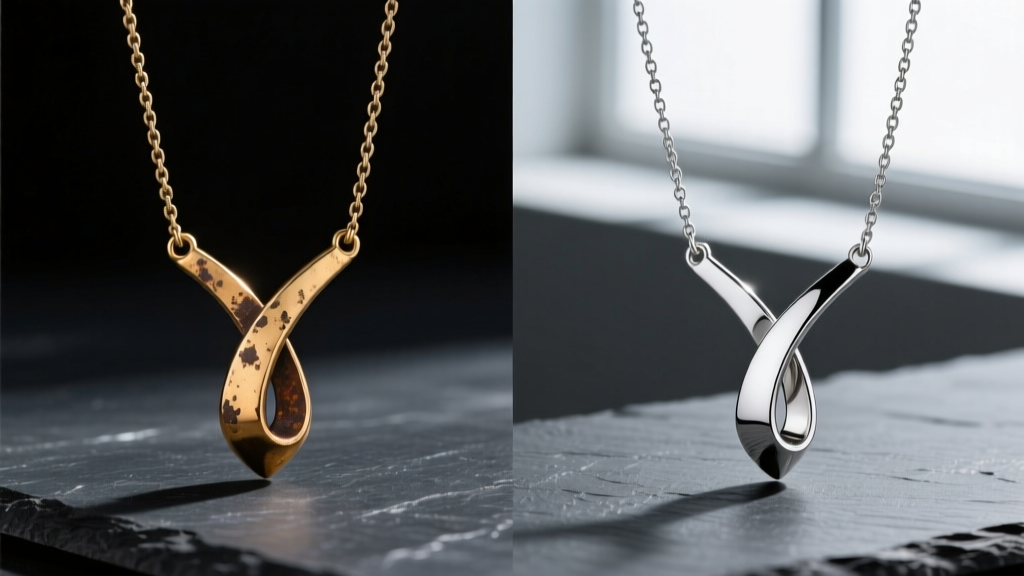
The Y-junction is the weakest structural point on any lariat necklace. The vertical drop is typically attached to the main chain via a single jump ring or a soldered loop. When the drop swings, it exerts lateral shear stress on this junction.
The Solder Point Failure Mode
In mass-produced, gold-plated brass or copper lariats, the heat required to solder the Y-junction often burns away the protective rhodium or gold plating. This exposes the base metal to sweat and oxygen. As noted by repair specialists at Jewelers Mutual, this localized exposure leads to rapid galvanic corrosion. The brass oxidizes, turns your skin green, and eventually snaps at the solder point.
Choosing the Right Metal
To troubleshoot chronic breakage and tarnishing at the Y-drop, you must upgrade your material. Avoid gold-plated brass entirely. Instead, look for:
- 316L Surgical Stainless Steel: Highly resistant to tarnish, incredibly strong, and affordable ($40 - $90 range). The Y-junctions are usually laser-welded, preventing heat damage.
- Grade 5 Titanium: Hypoallergenic, lighter than steel, and possesses a higher tensile strength. Ideal for men with sensitive skin or nickel allergies.
- Solid 14k or 18k Gold: If opting for precious metals, ensure the Y-junction is soldered with hard solder (which has a higher melting point and greater structural integrity) rather than soft solder.
Final Styling Fixes for Menswear
Once the mechanical issues of tangling, slippage, and breakage are resolved, the final troubleshooting step is styling. A lariat necklace can easily cross the line from 'rugged accessory' to 'costume jewelry' if not integrated properly into an outfit.
The V-Neck Rule: Lariats mimic the geometry of a V-neck. They look best when echoing an open collar. Wear your lariat over a crewneck t-shirt, but ensure the Y-drop terminates at least two inches below the collar ribbing. Alternatively, wear it under an unbuttoned flannel or denim shirt, allowing the chain to frame the open placket.
The Minimalist Pendant: For men's lariats, the terminal end of the Y-drop should feature a subtle, weighted geometric tip—such as a brushed steel cylinder, a matte black onyx bead, or a simple metal dart. Avoid oversized gemstones or ornate filigree at the end of the drop, as these add unnecessary pendulum weight (causing more swinging and tangling) and skew the aesthetic away from modern menswear.


