The Definitive Mens Necklace Lengths Guide: Fit, Drop & Specs
Master your fit with our expert mens necklace lengths guide. Explore precise chain drops, pendant weight ratios, and anatomical mapping for modern styles.


When it comes to men's jewelry, the difference between a sharp, intentional look and a sloppy, uncomfortable one is almost entirely dictated by precise measurements. Most retail guides offer vague advice like "choose a length that feels right," but true style requires an understanding of physics, anatomy, and metallurgy. As we navigate men's jewelry trends in 2026, the shift is heavily leaning toward intentional, weighted layering and structural durability. This expert mens necklace lengths guide bypasses the fluff, providing exact drop metrics, tensile strength considerations, and pendant-to-chain weight ratios to ensure your jewelry performs as flawlessly as it looks.
The Anatomy of a Men's Chain: Beyond Basic Inches
A necklace is not merely a loop of metal; it is a dynamic suspension system. The way a chain drapes across the clavicle or sternum is governed by its link structure, gram weight, and the wearer's anatomical proportions. For instance, a 20-inch rope chain will sit drastically differently on a man with a 15-inch neck circumference compared to one with an 18-inch neck. Furthermore, the link type dictates the chain's flexibility and light refraction. A flat-link Cuban chain will sit flush against the skin and reflect light broadly, while a high-twist rope chain will catch light in multi-directional facets but is more prone to trapping skin oils and debris.
According to manufacturing standards outlined by Rio Grande, a premier jewelry supply authority, the structural integrity of a chain is determined by the solder points on each individual link. Machine-made chains often feature micro-soldered seams that can fail under the kinetic stress of a heavy pendant. Understanding these mechanical realities is the first step in selecting the correct length and hardware.
The Core Mens Necklace Lengths Guide: Measurement Matrix
To engineer the perfect fit, you must map the chain length to the intended drop point and the garment neckline. The following matrix serves as a technical baseline for standard male anatomical proportions (assuming a 16-inch neck circumference and average torso length).
| Chain Length | Anatomical Drop Point | Ideal Width (mm) | Max Pendant Weight | Optimal Neckline |
|---|---|---|---|---|
| 18 Inches | Base of Neck / Adam's Apple | 1.5mm - 2.5mm | < 5g | Tight Crew Neck |
| 20 Inches | Collarbone / Clavicle | 2.0mm - 4.0mm | 10g - 15g | V-Neck / Open Collar |
| 22 Inches | Mid-Chest / Upper Sternum | 3.0mm - 5.0mm | 15g - 25g | Unbuttoned Dress Shirt |
| 24 Inches | Lower Sternum / Solar Plexus | 4.0mm - 8.0mm | 25g - 40g+ | Deep V / Streetwear Tees |
| 30+ Inches | Mid-Torso / Abdomen | 6.0mm - 12.0mm | N/A (Standalone) | Outerwear / Hoodies |

Chain Width, Gauge, and Pendant Weight Ratios
A common failure mode in men's jewelry is pairing a heavy pendant with an inadequate chain, leading to metal fatigue, link stretching, and eventual snapping. The industry standard for safe suspension is the 1:6 Weight-to-Width Ratio Rule. For every 1mm of chain width (assuming a solid or semi-solid link construction like a curb or cable), the chain can safely support approximately 6 to 8 grams of pendant weight without suffering structural creep.
Bail Sizing and Friction Wear
The bail—the loop on the pendant that threads onto the chain—is a critical friction point. If you are threading a 4mm chain through a pendant, the inner diameter of the bail must be at least 6mm (1.5x the chain width). A tight bail creates lateral friction every time the wearer moves, effectively acting as a slow-motion file against the chain links. Over 12 to 18 months of daily wear, this friction will shave off microns of metal, eventually compromising the solder joints of the links.
Expert Tip: If you purchase a heavy gemstone or solid gold pendant with a narrow bail, have a jeweler swap it for a tapered, high-polish sterling silver or gold bale. The taper allows the chain to glide smoothly rather than grinding against the inner edges.
Metallurgy and Tensile Strength
The material grade of your chain directly impacts how it behaves under tension and weight. According to metallurgical data from the Gemological Institute of America (GIA), different alloys exhibit vastly different yield strengths.
- 925 Sterling Silver: Highly malleable but prone to "creep" (permanent stretching) if subjected to a constant heavy load. A 2mm silver chain holding a 15g pendant will visibly elongate within a year. Pricing range: $40 - $120.
- 316L Surgical Stainless Steel: Exceptional tensile strength and highly resistant to stretching. However, 316L cannot be easily soldered with standard jewelry torches, meaning a broken steel chain is often unrepairable. Pricing range: $25 - $80.
- 14k Gold (58.5% Purity): The optimal balance of durability, malleability, and value. The copper and zinc alloys in 14k gold provide excellent tensile strength while remaining fully solderable by any bench jeweler. Pricing range: $450 - $1,200.
Anatomical Mapping: Neck Circumference and Drop Physics
Standard lengths are calibrated for a 16-inch neck. If your neck circumference deviates from this baseline, you must adjust your target length accordingly. Measure your neck at the base (where a standard collar sits) using a flexible tailor's tape. For every inch your neck exceeds 16 inches, you must add 0.5 inches to your desired chain length to achieve the same visual drop point on the chest.
Furthermore, consider the "pendulum effect." A 24-inch chain resting on the sternum is subject to high kinetic sway during walking or running. If the pendant is top-heavy, it will constantly flip upside down. To counteract this, select a pendant with a low center of gravity and a wide, flat bail that grips the chain links, or opt for a heavier chain (5mm+) that provides enough friction to keep the pendant oriented correctly.
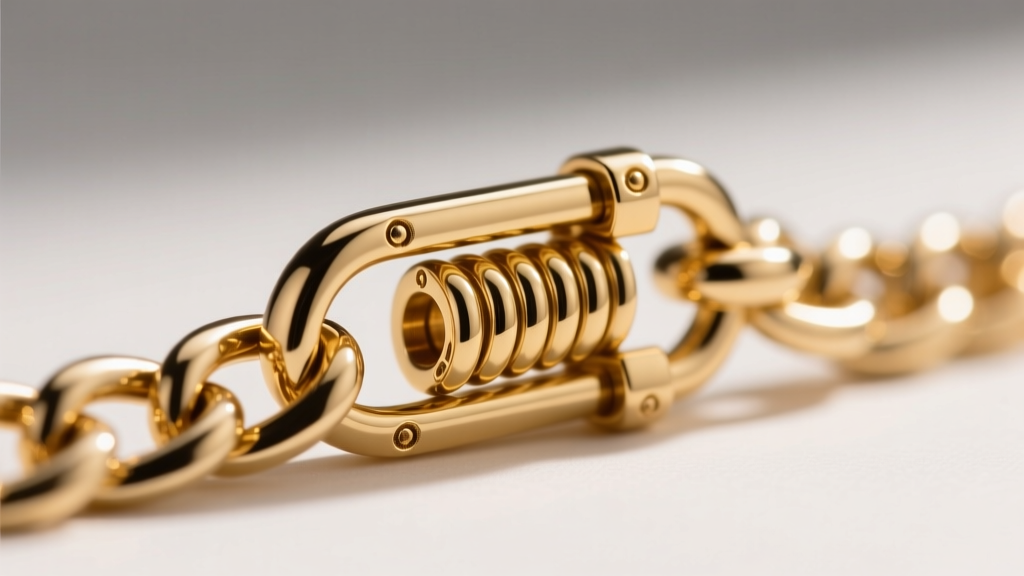
Clasp Mechanics and Hardware Fail Points
The clasp is invariably the weakest link in any necklace assembly. Choosing the wrong clasp for your chain's gram weight is a guarantee of eventual loss.
- Spring Ring Clasps: Rated for roughly 3 to 5 lbs of tension. Suitable only for chains under 2.5mm and under 10 grams. The internal spring mechanism is highly susceptible to sweat corrosion and snapping.
- Lobster Clasps: Rated for 8 to 12 lbs of tension. The standard for chains ranging from 3mm to 6mm. Ensure the trigger mechanism operates smoothly; a sticky trigger indicates poor internal polishing.
- T-Bar / Toggle Clasps: Rely on gravity and tension rather than springs. Ideal for heavy chains (30g+) and thick links (8mm+). The T-bar must be at least 1.5x the width of the receiving ring to prevent accidental slip-through during lateral movement.
Troubleshooting Common Fit and Wear Issues
Even with precise measurements, real-world wear introduces variables. Here is how to troubleshoot the most common technical issues men face with their necklaces:
1. The Chain Keeps Sliding to One Side
This occurs when the chain is too long or too light for the pendant, or when the wearer has asymmetrical shoulder slopes. Solution: Add a small, clear silicone o-ring or a specialized rubber pendant stabilizer bead to the back of the neck. This creates friction against the skin and anchors the chain in place.
2. Skin Irritation and Green Discoloration
Often blamed on "fake gold," this is actually a chemical reaction between copper alloys (in 10k or 14k gold, or silver) and the acidic pH of your sweat. Solution: Wash the chain weekly with a mild, phosphate-free dish soap to remove sebum buildup. If the issue persists, upgrade to 18k gold, platinum, or Argentium silver, which replaces copper with germanium to eliminate tarnishing and skin reactions.
3. Hair Snagging in Rope Chains
Rope chains offer brilliant light refraction but act like velcro for chest and neck hair. Solution: If you prefer the rope aesthetic but have significant body hair, opt for a "diamond-cut" hollow rope or switch to a flat-link style like a Figaro or Cuban chain, which features a closed, flush surface profile that glides over hair without catching.
Mastering the technical specifications of men's jewelry transforms an accessory from a mere decoration into a precision-engineered extension of your personal style. By respecting the physics of drop lengths, weight ratios, and metallurgical limits, you ensure your pieces remain durable, comfortable, and visually striking for decades.


