Mens Necklace Lengths: Matching Materials to Drape and Weight
Master mens necklace lengths by matching chain materials to drape and weight. Explore metal density, tensile strength, and styling frameworks for 2026.


Most style guides on mens necklace lengths stop at telling you that 18 inches sits at the collarbone and 24 inches hits the sternum. But as a jewelry stylist analyzing trends for 2026, I see men make a critical error: ignoring the physics of materials. A 24-inch chain in solid 14k gold behaves, drapes, and feels entirely different than a 24-inch chain in aerospace-grade titanium. Length is merely a measurement of distance; material dictates the actual wearability, drape, and structural integrity of the piece.
When selecting the perfect chain, you must cross-reference your desired length with the specific gravity, tensile strength, and thermal conductivity of the metal. This guide bridges the gap between traditional sizing charts and material science, ensuring your necklace not only fits your frame but performs flawlessly over time.
The Physics of Drape: Specific Gravity and Chain Fall
The way a chain falls against the chest is governed by its specific gravity (SG)—the density of the metal relative to water. High-density metals pull downward, creating a taut, rigid drape, while low-density metals conform to the body and offer a relaxed, fluid fall.
- 14k Yellow Gold (SG 12.9): Extremely dense. A 24-inch, 5mm rope chain in 14k gold weighs roughly 45 grams. This weight creates a pronounced, heavy drape that sits firmly against the sternum.
- 316L Stainless Steel (SG 8.0): Moderately dense. The exact same 24-inch dimensions in surgical steel weigh about 28 grams. It offers a substantial feel without the extreme neck strain of gold.
- Grade 5 Titanium (SG 4.4): Ultra-lightweight. That same chain in titanium weighs barely 15 grams. It moves fluidly with the body and is virtually unnoticeable on the cervical spine.
Understanding these density metrics is crucial when scaling up to longer mens necklace lengths. A 30-inch chain in solid platinum will cause severe neck fatigue and stretch the links over time, whereas a 30-inch carbon fiber or titanium chain will remain comfortable for all-day wear.
Mens Necklace Lengths Chart by Material Weight
Use this structural framework to match your desired length with the optimal material and gauge (thickness). This prevents the common mistake of buying a long, heavy chain that acts like a pendulum, or a short, flimsy chain that lacks visual presence.
| Length | Placement | Ideal Material | Recommended Gauge / Style | Drape Profile |
|---|---|---|---|---|
| 18" | Base of Neck / Collarbone | 18k Gold, Platinum, Sterling Silver | 4mm - 8mm (Curb, Figaro) | Rigid, structured, high skin contact |
| 20" | Upper Chest / Clavicle | 14k Gold, 316L Steel, Bronze | 3mm - 6mm (Rope, Box, Cuban) | Fluid but grounded, versatile layering base |
| 22" | Mid-Chest | 316L Steel, Brass, Leather/Metal mix | 2mm - 5mm (Wheat, Bead, Curb) | Relaxed, ideal for pendant suspension |
| 24" | Sternum | Grade 5 Titanium, Hollow Gold, Steel | 2mm - 4mm (Box, Snake, Bead) | Heavy swing, requires high tensile strength |
| 28" - 30"+ | Below Sternum / Solar Plexus | Titanium, Carbon Fiber, Woven Leather | 2mm - 3mm (Bead, Cord, Thin Chain) | Ultra-fluid, high kinetic movement |
Long-Length Chains (24" - 30"+): Managing Tensile Stress
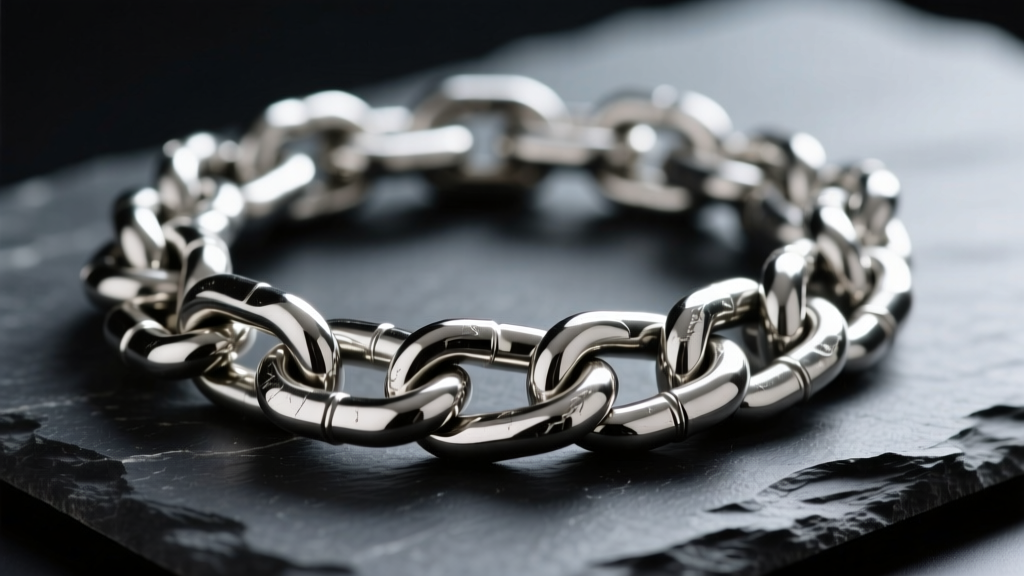
When a chain extends past the 24-inch mark, it transitions from a static accessory to a dynamic one. Long chains swing with your stride, creating kinetic energy and tensile stress. The weakest point of any chain is the jump ring connecting to the clasp. If you choose a soft, high-density metal like 22k gold or pure silver for a 28-inch chain, the pendulum effect will eventually warp the jump ring open, leading to a lost piece.
For extreme mens necklace lengths, aerospace-grade materials are non-negotiable. According to metallurgical data from Titanium Jewelry, Grade 5 titanium (Ti-6Al-4V) boasts a tensile strength of roughly 130 ksi (kilopounds per square inch), compared to the 75 ksi of standard 316L stainless steel. This means a 2mm Grade 5 titanium box chain at 28 inches can withstand the violent swinging of an active lifestyle without stretching or snapping, all while weighing less than a standard cotton t-shirt collar.
Avoid: Hollow gold chains or thin silver snake chains at lengths over 24 inches. The internal structural voids in hollow chains make them highly susceptible to kinking and snapping under dynamic swing loads.
Short & Medium Lengths (18" - 22"): Density and Skin Contact
At shorter lengths, the chain sits in the "splash zone" of the body's highest heat and sweat zones: the base of the neck and the clavicle. Here, the chain is in constant contact with the skin, and kinetic swing is minimal. This is where high-density precious metals earn their keep.
An 18-inch or 20-inch chain in 14k or 18k gold provides a luxurious, heavy drape that anchors perfectly at the collarbone. The Gemological Institute of America (GIA) notes that alloying gold with metals like copper and zinc not only increases durability but also alters the thermal conductivity of the piece. Precious metals quickly acclimate to body temperature, making them comfortable for 24/7 wear at shorter lengths.
Pro-Tip for Skin Contact: If you have acidic sweat or sensitive skin, avoid wearing brass or low-grade sterling silver at the 18-inch length. The constant friction and moisture will accelerate galvanic corrosion, leading to the dreaded "green neck" effect. Opt for 316L surgical steel, platinum, or solid 14k+ gold for chains that live at the base of the throat.
Clasp Mechanics and Link Integrity at Scale

The clasp is the mechanical failure point of any necklace, and its required strength scales directly with the chain's length and material weight. A jewelry manufacturing resource like Rio Grande categorizes clasps by load-bearing capacity, a concept rarely discussed in men's fashion but vital for longevity.
- Lobster Clasps: Essential for heavy, short-to-medium chains (18"-22" in solid gold or thick steel). The internal spring mechanism is robust enough to handle the static downward pull of dense metals.
- Hidden Box Clasps with Safety Latches: The gold standard for medium-to-long chains (22"-26"). They distribute tension across a wider surface area and maintain the visual continuity of patterns like the Cuban or Figaro link.
- Magnetic or Neodymium Clasps: Best reserved for ultra-lightweight, long-length chains (26"+ in titanium or carbon fiber). While convenient, strong magnets can fail if the chain catches on clothing, making them unsuitable for heavy steel or gold chains.
The 2026 Pricing Reality: Cost per Gram vs. Length
When budgeting for specific mens necklace lengths, you must calculate the cost-per-gram reality of your chosen material. As of 2026, the spot price of gold continues to push solid gold chains into luxury investment territory.
A 22-inch, 5mm solid 14k gold Cuban link chain will typically retail between $2,800 and $4,500, depending on the exact gram weight and brand markup. If you want that exact same visual presence and length but lack the budget, a 316L stainless steel equivalent with PVD (Physical Vapor Deposition) gold plating will cost between $60 and $120. PVD coating in 2026 is highly advanced, offering a 0.3-micron layer of real gold that is bonded at a molecular level, resisting sweat and friction far better than traditional electroplating.
For the ultra-long 28-inch to 30-inch lengths, titanium remains the most cost-effective and physically viable choice. A high-grade titanium chain at this length will cost between $150 and $300, offering a premium, modern aesthetic without the $6,000+ price tag a solid gold chain of that length would command.
Final Styling Framework
Mastering mens necklace lengths requires looking beyond the tape measure. If you want a short, bold statement piece at 18 inches, invest in the density and prestige of solid gold or platinum. If you are aiming for a relaxed, streetwear-inspired drape at 24 inches or beyond, prioritize the tensile strength and lightweight properties of Grade 5 titanium or engineered steel. By aligning the physics of the material with the geometry of the length, you ensure your jewelry not only looks impeccable but performs flawlessly for decades.


