The Ultimate Mens Necklace Material Guide: Steel, Titanium & Gold
Compare the best metals for a mens necklace. We break down titanium, tungsten, steel, and gold for durability, weight, and skin safety.

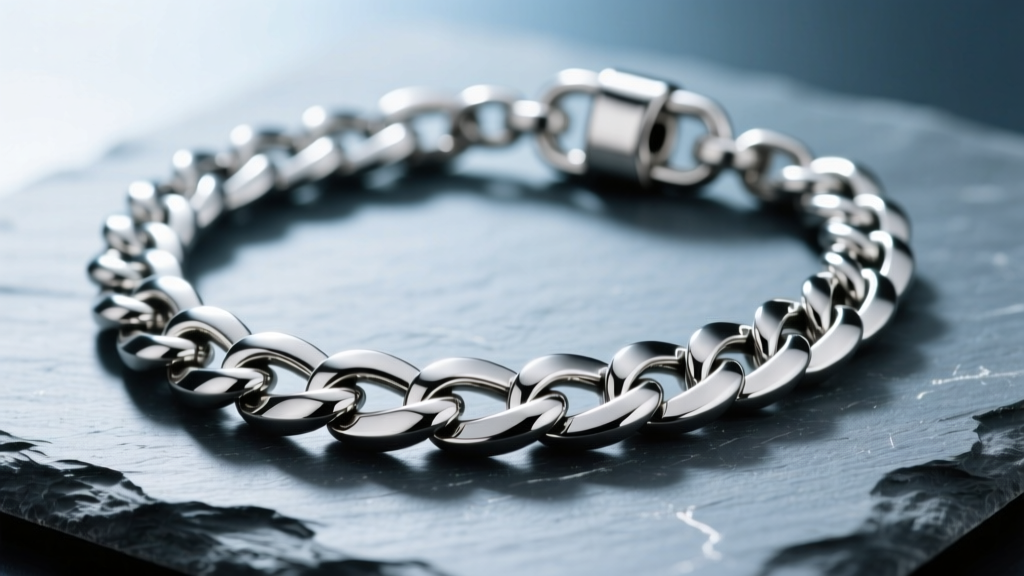
Choosing the right mens necklace goes far beyond selecting a chain style or pendant design. The metallurgical properties of the metal dictate how the piece will age, react to your skin chemistry, and withstand daily mechanical stress. In 2026, advancements in CNC machining and alloy blending have introduced aerospace-grade materials into mainstream jewelry, making it crucial to understand the exact science behind your chain.
This guide bypasses generic fashion advice and dives deep into the material properties, Vickers hardness scales, and failure modes of the top five metals used in men's chains today.
Why Metallurgy Dictates Chain Longevity
A necklace is a high-wear item. It is subjected to constant tensile stress from its own weight, friction against clothing, and prolonged exposure to human sweat, which has a pH ranging from 4.5 to 7.0 and contains corrosive chlorides. When evaluating a mens necklace, jewelers look at three primary metrics:
- Tensile Strength: The maximum stress the metal can withstand while being stretched before breaking (measured in Megapascals, MPa).
- Vickers Hardness (HV):strong> Resistance to surface scratching and denting.
- Yield Strength: The point at which the metal permanently deforms (stretches) without snapping.
The Big Five: Mens Necklace Materials Ranked
1. Grade 316L Stainless Steel (The Workhorse)
Often marketed as "surgical steel," 316L is the undisputed king of affordable, high-durability chains. The "L" stands for low carbon, but the secret weapon is the addition of 2-3% molybdenum. This specific alloying element drastically increases resistance to chloride pitting—meaning it will not corrode when exposed to salty sweat or ocean water. With a Vickers hardness of roughly 150-200 HV, it resists daily scratches better than silver or gold, though it can still be marred by hardened steel or tungsten.
Expert Insight: Avoid 304 stainless steel chains. While cheaper, 304 lacks molybdenum and will eventually develop micro-pitting and rust spots along the link joints when exposed to acidic skin chemistry.
2. Aerospace-Grade Titanium (The Featherweight)
Titanium offers an unparalleled strength-to-weight ratio. A 6mm titanium Cuban chain weighs roughly 45% less than the exact same chain in 316L steel. However, not all titanium is equal. Grade 2 (commercially pure) is relatively soft (~120 HV) and prone to scratching. For a premium mens necklace, you must look for Grade 5 Titanium (Ti-6Al-4V). Alloyed with aluminum and vanadium, Grade 5 jumps to ~350 HV, making it incredibly scratch-resistant and completely hypoallergenic.
3. Tungsten Carbide (The Indestructible Anchor)
With a staggering Vickers hardness of 1500-2000 HV, tungsten carbide is virtually scratch-proof. It will maintain a mirror polish for decades. However, this extreme hardness comes with severe brittleness. Tungsten lacks tensile flexibility; if a tungsten chain is caught on a door handle and yanked, the links will not stretch—they will shatter. Furthermore, tungsten cannot be soldered. If a link fails, the chain cannot be repaired and must be entirely replaced.
4. Sterling Silver & Solid Gold (The Precious Standards)
Sterling silver (925) is notoriously soft (~70 HV) and highly susceptible to sulfur-induced tarnishing. It is generally not recommended for heavy, daily-wear men's chains unless it is a thick box or rope chain that can tolerate stretching. According to the Gemological Institute of America (GIA), when it comes to gold, 14k (58.5% pure gold) is the optimal balance for men's chains. It provides the rich color of gold while the copper and zinc alloys grant enough tensile strength to support heavy pendants without permanent link deformation.
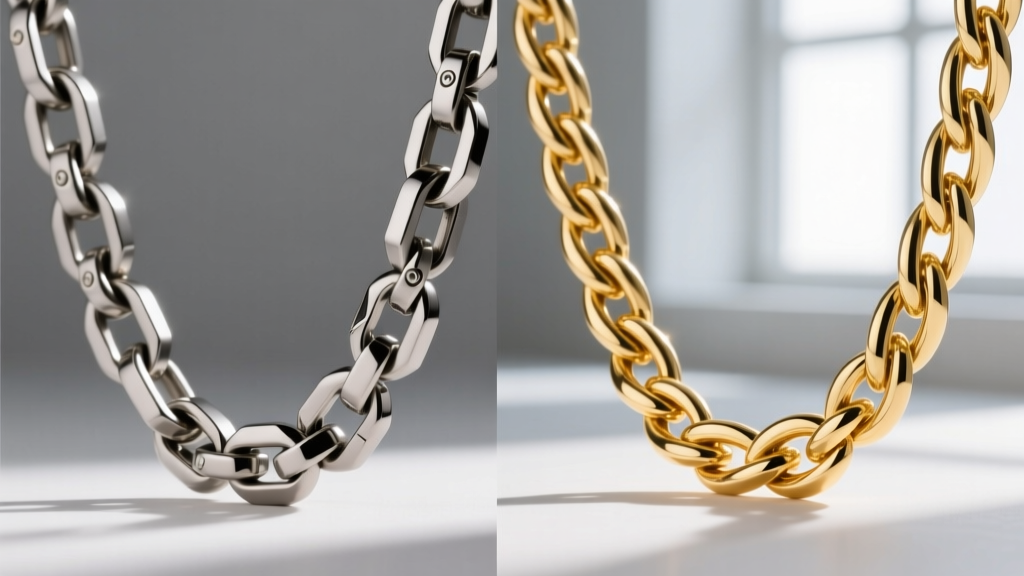
Material Properties Comparison Matrix
The following table breaks down the exact specifications you should expect when shopping for your next chain.
| Metal / Alloy | Vickers Hardness (HV) | Tensile Strength | Tarnish / Rust | Approx. Cost (per gram) |
|---|---|---|---|---|
| 316L Stainless Steel | 150 - 200 | ~485 MPa | Highly Resistant | $0.10 - $0.30 |
| Grade 5 Titanium | 330 - 350 | ~900 MPa | Immune | $0.50 - $1.50 |
| Tungsten Carbide | 1500 - 2000 | ~550 MPa (Brittle) | Immune | $0.80 - $2.00 |
| 14k Yellow Gold | 130 - 150 | ~400 MPa | Immune | $45.00 - $65.00 |
| Sterling Silver (925) | 65 - 75 | ~280 MPa | Prone to Tarnish | $0.80 - $1.20 |
Skin Reactivity and Allergy Troubleshooting
One of the most common failure points in men's jewelry is contact dermatitis. The culprit is rarely the primary metal, but rather the binder or alloy used. For example, pure tungsten is too brittle to form jewelry, so it is bound with other metals. High-quality tungsten chains use a nickel binder, which is fully hypoallergenic. Cheap alternatives use a cobalt binder, which reacts with sweat to cause severe rashes and turn the skin green. The Mayo Clinic identifies nickel and cobalt as primary triggers for allergic contact dermatitis. If you have sensitive skin, strictly limit your choices to Grade 2/5 Titanium, Platinum, or high-purity 18k+ Gold, and always verify the binder used in alternative metals.
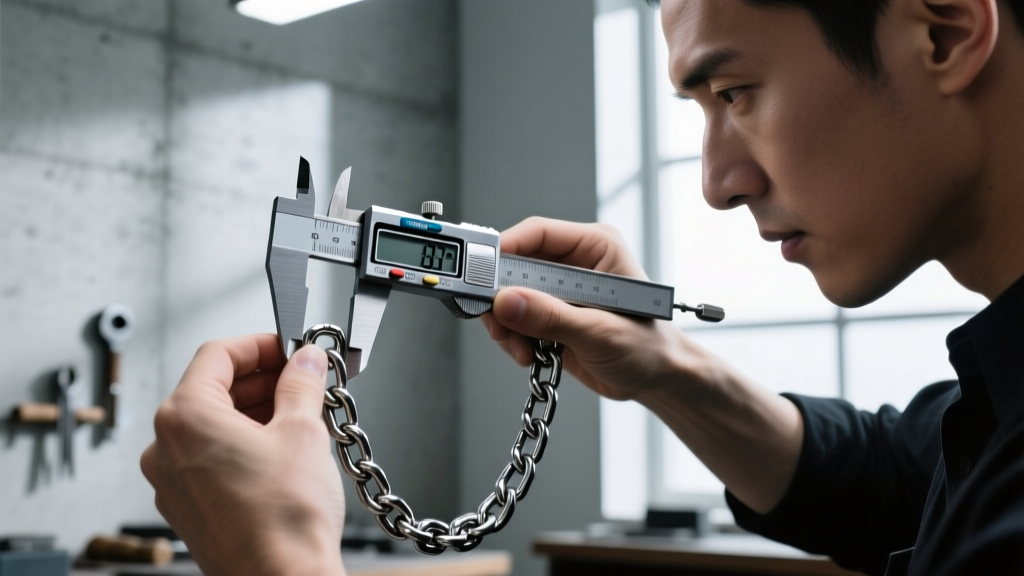
Matching Chain Links to Material Hardness
Not every chain style can be manufactured from every metal. The physical properties of the alloy dictate the available link patterns:
- Rope & Figaro Chains: These require intricate twisting, soldering, and diamond-cutting. They are easily achieved in gold, silver, and steel. However, you will almost never find a true tungsten rope chain because tungsten cannot be soldered or easily twisted without shattering.
- Cuban & Curb Chains: The flat, interlocking links are perfect for hard metals like Grade 5 Titanium and Tungsten, as they are CNC-machined from solid blocks or sintered in molds rather than drawn and twisted from wire.
- Box Chains: Excellent for softer metals like 14k gold and silver, as the folded geometric links provide structural rigidity that compensates for the metal's low yield strength.
Clasp Engineering: The Weakest Link
A chain is only as strong as its clasp. When buying a heavy mens necklace (over 50 grams), the clasp must be engineered to handle the kinetic shock of the chain swinging.
Spring Ring Clasps are entirely inadequate for men's chains over 4mm thick; the internal spring mechanism will fail under the sheer weight of the chain.
Lobster Clasps are the standard for steel and titanium chains, offering a secure, self-closing mechanism. For precious metals and heavy chains, always demand a Box Clasp with a Figure-8 Safety Latch. The box clasp distributes the tensile load across a wide surface area, while the secondary wire latch ensures that if the primary lever is accidentally depressed, the chain remains secured to your neck.
Final Verdict: Which Metal Wins?
There is no single "best" metal, only the right metal for your specific lifestyle. If you want a heavy, statement-making Cuban chain that you can wear in the gym, the shower, and the ocean without a second thought, 316L Stainless Steel is the undisputed champion of durability and value. If weight is a concern and you suffer from metal allergies, invest in Grade 5 Titanium. Finally, if you are seeking an heirloom piece with intrinsic financial value and traditional prestige, a 14k Solid Gold chain remains the ultimate benchmark of men's luxury jewelry.


