Necklace Sizes Mens: Technical Guide to Chain Length and Width
Master men's necklace sizes with our technical guide. Explore exact chain lengths, gauge widths, pendant drops, and fit mechanics for perfect proportions.
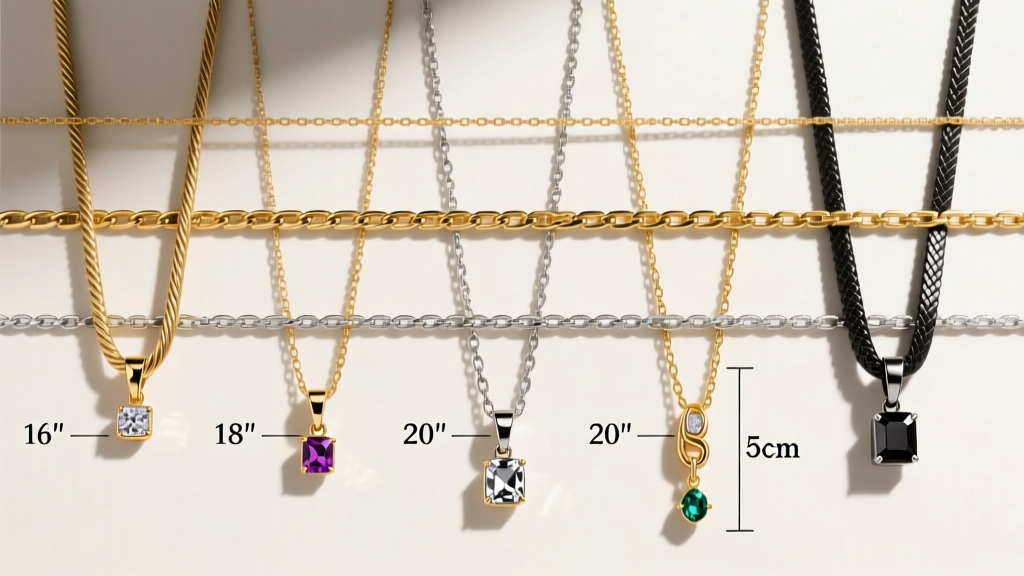

When evaluating necklace sizes mens typically wear, the jewelry industry often relies on outdated, generalized charts that ignore the biomechanics of the male neck, shoulder mobility, and the structural engineering required for heavier chains. Sizing a men's necklace is not merely about picking a number; it is a precise calculation involving neck circumference, trapezius muscle movement, chain gauge, and tensile clasp limits. Whether you are sizing a subtle 2mm cable chain or a 12mm solid gold Cuban link, understanding the technical specifications ensures both aesthetic proportion and structural longevity.
The Biomechanics of Men's Neck Proportions
The average adult male neck circumference ranges from 15 to 17.5 inches. However, a chain that matches the neck circumference exactly will act as a tourniquet, restricting the jugular vein and limiting the natural articulation of the cervical spine. For a comfortable fit, a men's chain must feature a minimum drop allowance of 2.5 to 3 inches beyond the measured neck circumference. Furthermore, men with developed trapezius muscles or broader clavicle structures require an additional 0.5 to 1 inch of length to prevent the chain from riding up and causing friction against the sternocleidomastoid muscle.
Before purchasing, measure the neck using a flexible tailor's tape at the Adam's apple, then add 3 inches to establish your baseline minimum length. This baseline ensures the chain rests properly without pulling the skin during lateral head movement.
Decoding Chain Lengths: Anatomical Landmarks
The visual impact of a chain is dictated by where it intersects the anatomy. Here is the technical breakdown of standard men's chain lengths and their exact resting points:
- 18 Inches (45cm): Sits tightly at the base of the neck, just above the clavicle. Best suited for men with neck circumferences under 15 inches. Ideal for lightweight chains (1-3mm) and small, discreet pendants like military dog tags.
- 20 Inches (50cm): The industry standard. Rests precisely on the collarbone. This length accommodates the average male physique and provides enough slack for the chain to drape naturally without swinging excessively during movement.
- 22 Inches (55cm): Drops to the upper sternum, roughly two inches below the collarbone. This is the optimal length for statement pieces, thicker chains (5-8mm), and mid-sized pendants, as it clears the neckline of most crew-neck and V-neck shirts.
- 24 Inches (60cm): Rests at the mid-sternum. Primarily used for heavy, wide chains (8mm+) or religious medallions. At this length, the chain's weight is distributed across the chest rather than the cervical spine.
- 30+ Inches (76cm+): Drops below the sternum to the solar plexus. Reserved for hip-hop aesthetics, oversized pendants, or layering over outerwear like hoodies and jackets.

Gauge, Width, and Weight: The Technical Specs
Width (measured in millimeters) directly correlates to the chain's weight per inch and its required clasp engineering. Hollow chains may mimic the width of solid chains but suffer from catastrophic failure modes, such as crushing under minor compressive force. According to manufacturing data from Rio Grande's findings catalog, solid link chains require specific clasp tensile strengths based on their mass.
| Chain Width | Avg. Weight (Solid 14k Gold) | Visual Category | Required Clasp Type |
|---|---|---|---|
| 1mm - 2mm | 1.5g - 3g per 20" | Subtle / Minimalist | Standard Spring Ring or Small Lobster |
| 3mm - 5mm | 8g - 18g per 20" | Standard / Everyday | Medium Lobster (12mm-15mm) |
| 6mm - 9mm | 25g - 55g per 20" | Statement / Bold | Box Clasp with Figure-Eight Safety |
| 10mm - 14mm | 70g - 140g+ per 20" | Heavy / Hip-Hop | Custom Fold-Over or Magnetic Lock |
Pendant Drop Ratios and Bail Sizing
When integrating a pendant into men's necklace sizes, the bail (the loop connecting the pendant to the chain) is the most frequent point of mechanical failure. A common error is pairing a thick chain with a pendant that has an undersized bail, leading to severe friction wear on both the chain's apex link and the bail itself.
Calculating the Golden Ratio for Pendants
For optimal visual proportion, a pendant's height should not exceed 15% of the total chain length. For a 20-inch chain, the pendant should measure no more than 3 inches from the top of the bail to the bottom point. Furthermore, the inner diameter of the bail must be at least 1.5mm larger than the width of the chain. If you are using a 5mm Cuban link, the bail must have an internal clearance of at least 6.5mm to allow the links to articulate freely without binding, which can cause the chain to kink and eventually snap at the stress point.

Clasp Engineering for Heavy Men's Chains
The clasp is the weakest link in any chain assembly. For chains exceeding 30 grams, standard lobster clasps are highly susceptible to spring fatigue and accidental depression against the chest wall. The Gemological Institute of America (GIA) frequently notes that metal fatigue in jewelry findings is exacerbated by repetitive tension. For heavy men's chains, a box clasp (also known as a tongue-and-groove clasp) is mandatory. The internal wedge locks into a recessed housing, distributing the tensile load across the entire metal surface rather than relying on a tiny steel spring. Always ensure that heavy box clasps are equipped with a dual figure-eight safety catch on the exterior to prevent total loss if the primary tongue mechanism fails.
Troubleshooting Common Fit and Sizing Failures
Expert Insight: Never use a jump ring to connect a heavy pendant to a thick chain. Jump rings, unless laser-welded, will slowly pry open under the pendulum effect of a heavy pendant swinging during walking. Always use a solid, soldered link or a specialized screw-thread bail.
When troubleshooting fit issues or structural failures in men's necklaces, consider the following technical interventions:
- Hair Pulling in Rope and Figaro Chains: If a chain catches chest or neck hair, the links are likely hollow or poorly tumbled, leaving microscopic burrs on the metal edges. Upgrading to a solid, diamond-cut, and high-polish chain eliminates these friction points.
- Skin Discoloration and Irritation: Often misdiagnosed as an allergy to gold, green or black skin discoloration is usually caused by the copper or nickel alloys in 10k or 14k white gold reacting to sweat. For men with high perspiration rates or active lifestyles, upgrading to 18k gold, platinum, or 316L surgical stainless steel eliminates alloy oxidation.
- Chain Stretching: Over time, soft metals like 22k or 24k gold will stretch under the weight of a pendant due to their low Mohs hardness and high malleability. If a heavy pendant is required, the chain must be forged from 14k or 18k gold, or platinum, which possess the necessary yield strength to maintain link integrity over decades of wear.
By treating necklace sizing as an engineering challenge rather than a simple fashion choice, you ensure that the piece not only complements the male physique but survives the mechanical stresses of daily wear. Always prioritize solid construction, precise anatomical length mapping, and heavy-duty clasp mechanics when selecting the ideal chain.