The Ultimate Guide to Choosing a Mens Titanium Cross Necklace
Discover what to look for in a mens titanium cross necklace. Learn about titanium grades, chain types, weights, and finishes in our expert buying guide.

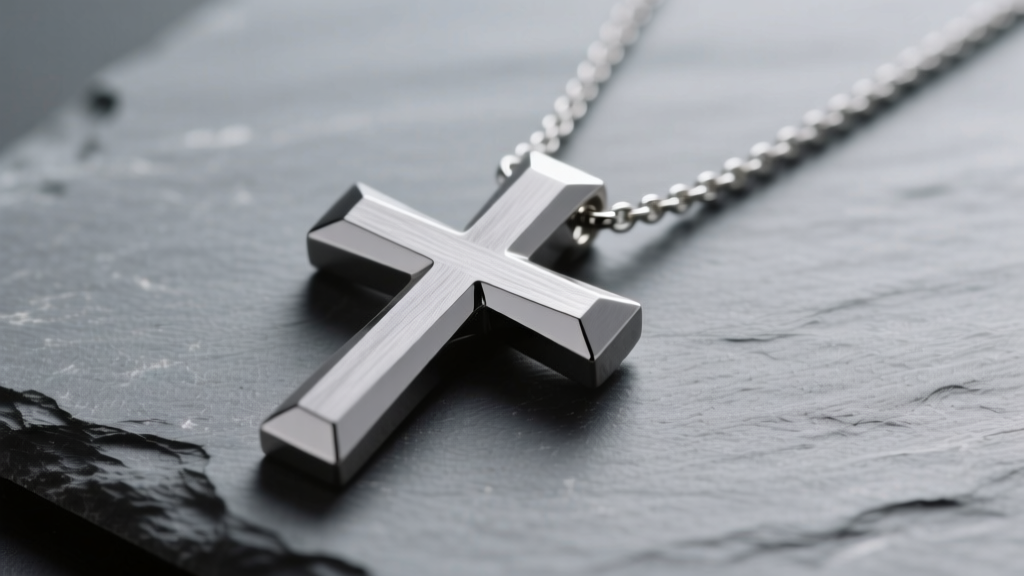
When it comes to men's jewelry, few pieces carry the enduring symbolism and rugged versatility of a cross pendant. However, the metal you choose dictates the longevity, comfort, and overall aesthetic of the piece. Over the last decade, titanium has emerged as the undisputed king of men's everyday jewelry. As of 2026, advancements in CNC machining and laser welding have made the mens titanium cross necklace more accessible and intricately designed than ever before. But not all titanium is created equal. This comprehensive buying guide will decode the metallurgy, chain mechanics, and design nuances you need to know before making your purchase.
The Metallurgy of Titanium: Why It Outperforms Steel
Titanium is celebrated for its exceptional strength-to-weight ratio. With a density of approximately 4.506 g/cm³, it is roughly 45% lighter than 316L surgical stainless steel and nearly 70% lighter than tungsten carbide. This means a substantial, masculine cross pendant won't pull uncomfortably on your neck or stretch out your chain over time.
Furthermore, titanium is highly biocompatible. According to the International Titanium Association, pure titanium is entirely hypoallergenic and contains zero nickel, making it the ultimate choice for men with sensitive skin or metal contact dermatitis. Unlike plated brass or low-grade steel, a solid titanium pendant will never turn your skin green or corrode when exposed to sweat, chlorine, or saltwater.
Decoding Titanium Grades: Grade 2 vs. Grade 5
The most critical mistake buyers make is assuming all titanium jewelry shares the same physical properties. In the jewelry industry, two primary grades dominate the market:
Commercially Pure (CP) Grade 2
Grade 2 titanium is 99% pure. It is highly corrosion-resistant and hypoallergenic but relatively soft on the Vickers hardness scale (around 150 HV). Because of its softness, Grade 2 is usually stamped, bent, or cast into simple shapes. It cannot hold a mirror polish and is typically finished with a brushed or satin texture. It is more prone to micro-scratches from daily wear.
Aerospace Grade 5 (Ti-6Al-4V)
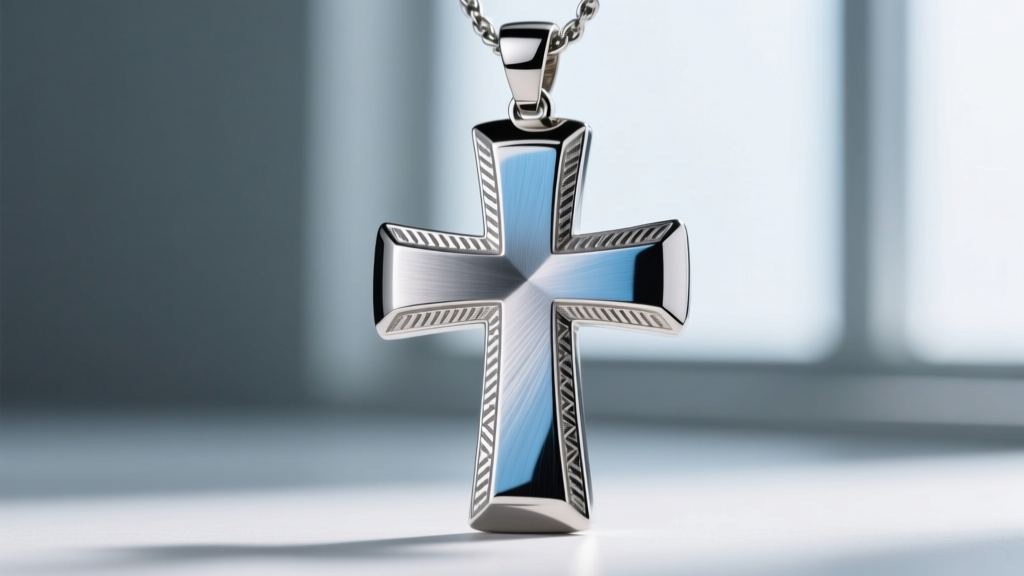
Grade 5 is an alloy composed of 90% titanium, 6% aluminum, and 4% vanadium. With a Vickers hardness of roughly 350 HV, it is more than twice as hard as Grade 2. This extreme durability allows jewelers to use precision CNC milling to create sharp, intricate bevels, deep engravings, and flawless mirror polishes. If you want a mens titanium cross necklace with sharp, modern geometry and high-shine accents, Grade 5 is mandatory.
Chain Mechanics: The Hidden Challenge of Titanium Links
One of the most closely guarded secrets in the jewelry industry is the difficulty of manufacturing pure titanium chains. Titanium is highly reactive to oxygen at high temperatures. To weld a tiny chain link securely, the process must be done using laser or TIG welding inside an inert argon gas chamber. This makes mass-producing delicate titanium chains incredibly expensive.
The Hybrid Compromise
Because of these manufacturing hurdles, many mid-tier brands pair a solid Grade 5 titanium cross pendant with a 316L stainless steel chain. If you have severe nickel allergies, you must verify that the chain is also solid titanium or a safe alternative like niobium. For most men, however, a high-quality PVD-coated steel chain or a surgical steel chain paired with a titanium pendant offers the best balance of durability and cost.
Clasp Security and Sizing
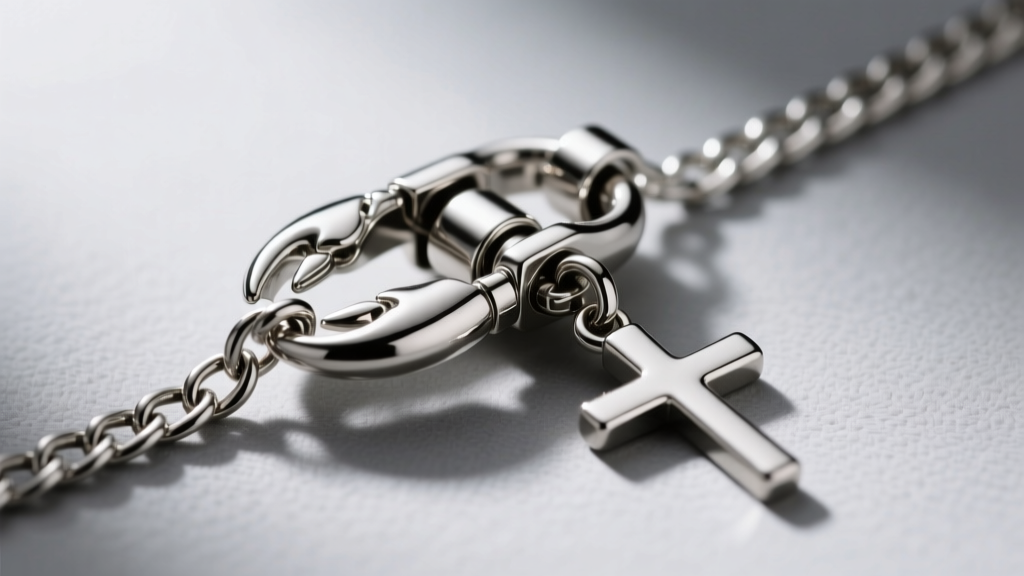
Avoid spring-ring clasps, which are prone to snapping under the weight of a heavy pendant. Always opt for a lobster clasp or a magnetic neodymium clasp with a safety catch. For chain width, a 2.5mm to 4.0mm curb or Figaro chain provides the ideal visual weight to support a masculine cross pendant without snapping at the bail.
Weight, Dimensions, and Proportions
Choosing the right size is essential for comfort and style. A pendant that is too small will look lost on a broader chest, while one that is too heavy will cause neck fatigue. Use the data table below to find the ideal proportions based on your build and preference.
| Pendant Category | Dimensions (H x W) | Average Weight | Ideal Chain Width | Best For |
|---|---|---|---|---|
| Minimalist / Subtle | 25mm x 15mm | 3 - 5 grams | 1.5mm - 2.0mm | Layering, office wear, slender builds |
| Standard / Everyday | 35mm x 22mm | 8 - 12 grams | 2.5mm - 3.0mm | Daily wear, casual and smart-casual outfits |
| Heavy / Statement | 50mm x 35mm | 18 - 25 grams | 4.0mm - 6.0mm | Streetwear, broader builds, outerwear styling |
Finishes and Reactive Anodizing
Unlike gold or silver, titanium cannot be easily soldered or plated with traditional electroplating methods. Instead, jewelers use a process called reactive anodizing to add color. By running an electrical current through the metal in an electrolyte bath, the thickness of the naturally occurring oxide layer on the surface is altered. This refracts light, creating vivid colors without the use of dyes or paints.
- 15-20 Volts: Produces deep purples and magentas.
- 30-40 Volts: Creates striking metallic blues and teals.
- 50-60 Volts: Yields rich gold and bronze hues.
Because the color is a structural property of the oxide layer, anodized titanium will not chip or peel like black rhodium or PVD coatings. However, it can be scratched if subjected to heavy abrasion, revealing the raw silver-grey metal beneath.
Expert Tip: If you purchase an anodized blue or purple titanium cross, clean it only with warm water and mild soap. Harsh chemicals or ultrasonic cleaners can alter the oxide layer and shift the color of your pendant.
Real-World Pricing and Brand Benchmarks
Understanding the market will prevent you from overpaying for inferior metals. Here is what you should expect to pay for a quality mens titanium cross necklace in the current market:
- Budget Tier ($15 - $30): Typically Grade 2 CP titanium. Simple stamped designs, satin finishes, and often paired with lower-grade alloy chains. Good for temporary wear or testing the style.
- Mid-Tier ($45 - $95): The sweet spot for quality. Features Grade 5 (Ti-6Al-4V) titanium, CNC-machined bevels, anodized accents, and secure lobster clasps. Brands in this tier offer excellent longevity.
- Luxury / Artisan ($120 - $350+): Incorporates advanced techniques like Damasteel (titanium mokume), forged carbon fiber inlays, or lab-grown diamond accents. These pieces are often hand-finished and come with lifetime structural warranties.
Final Pre-Purchase Checklist
Before you add that necklace to your cart, run it through this quick expert checklist to ensure you are getting a piece that will last a lifetime:
- Verify the Grade: Ensure the description explicitly states Grade 5 or Ti-6Al-4V if you want a high-polish, scratch-resistant finish.
- Check the Bail: The bail (the loop the chain passes through) should be thick and smoothly finished so it doesn't act like a saw against your chain links.
- Confirm the Chain Material: If you have metal allergies, ensure the chain is solid titanium or niobium, not just the pendant.
- Assess the Clasp: Reject any necklace that uses a flimsy spring-ring clasp for pendants weighing over 10 grams.
By prioritizing material science and structural integrity over fleeting trends, you will secure a mens titanium cross necklace that remains a steadfast, stylish companion for decades to come. For further reading on metal properties and jewelry care, the Gemological Institute of America (GIA) offers excellent resources on alternative metals in modern jewelry design.


