Wooden Bead Necklace Mens Guide: Woods, Sizing & Build
Explore the technical anatomy of a premium wooden bead necklace mens wear daily. Discover wood densities, stringing materials, and bead sizing metrics.

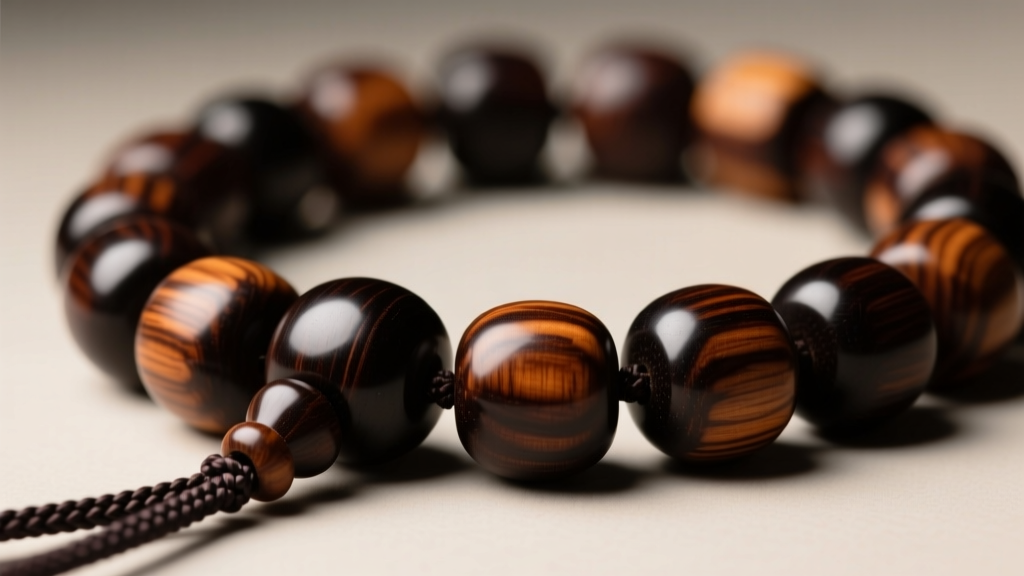
In the 2026 men's accessories market, the wooden bead necklace has evolved far beyond the realm of cheap souvenir shop trinkets. Today, a premium wooden bead necklace mens collectors and style enthusiasts seek out is a masterclass in material science, precision lapidary drilling, and structural engineering. Whether worn as a grounding spiritual tool, a minimalist fashion statement, or an organic contrast to tailored menswear, understanding the technical anatomy of these pieces is crucial for making informed purchasing decisions. This deep dive explores the exact metrics, wood densities, and stringing technologies that separate artisan-grade necklaces from mass-produced fast fashion.
The Material Science: Hardwoods, Softwoods, and the Janka Scale
The longevity, weight, and tactile feedback of a wooden bead necklace are dictated by the cellular density of the timber used. Jewelers and woodworkers rely on the Janka Hardness Scale—which measures the force required to embed a 0.444-inch steel ball halfway into the wood—to determine a species' suitability for bead turning and drilling.
For high-end men's necklaces, dense hardwoods are the standard. African Blackwood (Dalbergia melanoxylon) boasts a Janka rating of 3,660 lbf. Its extreme density allows it to be polished to a glass-like finish without the need for synthetic sealants, and it naturally resists the absorption of skin oils and sweat. Lignum Vitae, historically used for ship bearings, registers an astonishing 4,390 lbf, making it virtually impervious to moisture damage, though its high natural oil content can sometimes complicate the stringing process if not properly cured.
Conversely, aromatic woods like Sandalwood (Santalum album) and Agarwood (Aquilaria) are prized not for their hardness (Sandalwood sits at a modest 800 lbf), but for their complex volatile organic compounds (VOCs) that release a continuous fragrance. Because these woods are softer, they require larger drill hole tolerances to prevent blowout during the manufacturing process, which we will discuss in the sizing section. According to The Wood Database, understanding these cellular structures is vital, as softer woods are more prone to denting if knocked against metal hardware or stone surfaces.
Bead Sizing Metrics and Proportions for Men
Proportion is the cornerstone of men's jewelry design. While women's wooden bead strands frequently utilize 4mm to 6mm beads for a delicate drape, the standard metrics for a masculine silhouette demand heavier visual weight and physical mass.
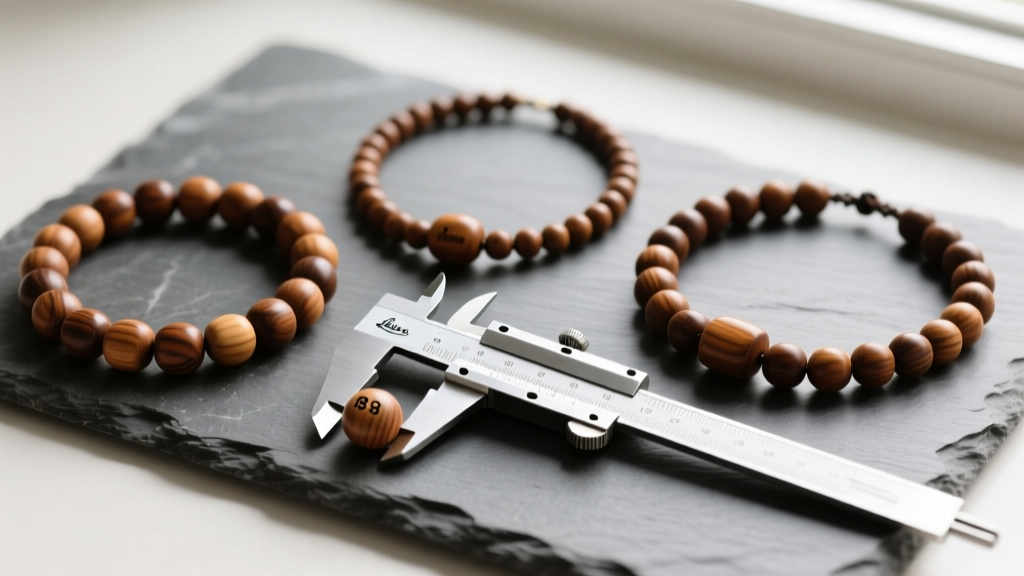
The Core Diameter Tiers
- 8mm Beads: The entry point for men's wooden necklaces. An 8mm bead provides a subtle, understated look that easily tucks beneath a crewneck sweater or collared shirt. A standard 18-inch strand requires approximately 57 beads.
- 10mm Beads: The industry standard for a bold, standalone statement piece. The 10mm diameter offers substantial tactile feedback and is heavy enough to lay flat against the sternum without flipping or tangling. An 18-inch strand requires roughly 46 beads.
- 12mm to 14mm Beads: Reserved for statement pieces, guru beads, or focal pendants. Wearing a full strand of 14mm beads can be overly cumbersome and heavy, causing neck fatigue. These sizes are best utilized as accent beads spaced between 8mm or 10mm runners.
Drill Hole Tolerances
A critical, often overlooked technical detail is the drill hole diameter. Hardwoods like Ebony can be drilled with a precise 1.0mm to 1.2mm bit, allowing for the use of thin, high-tensile wire or cord. However, brittle or highly figured woods like burl Agarwood require a wider 1.5mm to 2.0mm drill channel to prevent the internal wood grain from splintering or 'blowing out' when the drill bit exits the bead. This wider channel necessitates thicker stringing materials, which directly impacts the necklace's flexibility and drape.
Stringing Technologies: Tensile Strength and Sebum Degradation
The stringing core is the structural spine of any bead necklace. A failure here results in the catastrophic loss of the beads. In men's jewelry, the core material must withstand not only the physical weight of dense hardwoods but also the chemical environment of the human body.
Standard polyurethane elastic cords (often sold under consumer brand names like Stretch Magic) are highly susceptible to degradation from human sebum (skin oil), sweat, and UV exposure. Over a period of 12 to 18 months of daily wear, the plasticizers in these elastics break down, leading to dry rot, snapping, and the infamous 'stretched out' look where gaps appear between the beads.
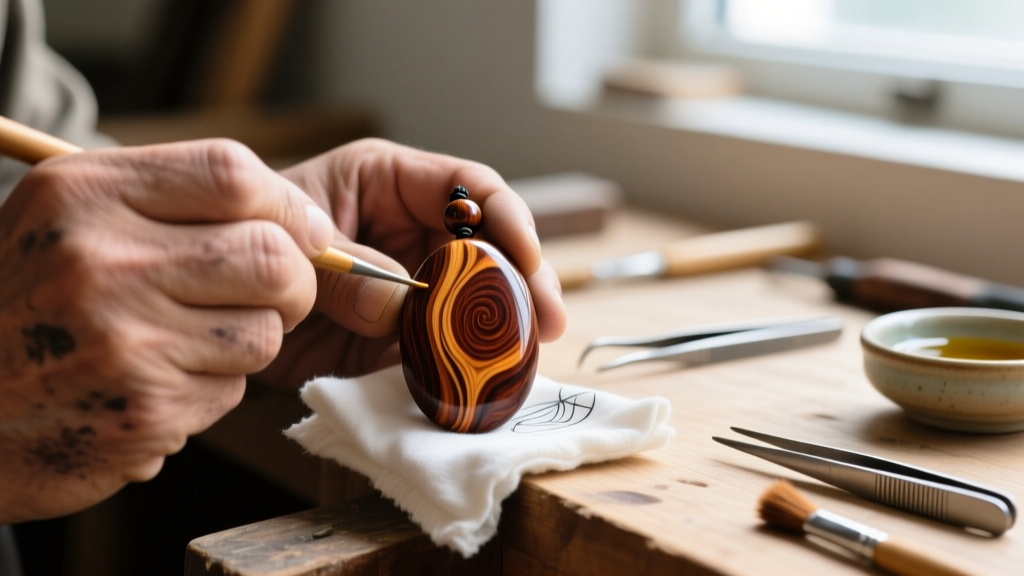
To combat this, expert artisans in 2026 are turning to advanced synthetic polymers and natural fibers:
- UHMWPE (Ultra-High-Molecular-Weight Polyethylene): Originally developed for ballistic armor and deep-sea fishing lines (e.g., PowerPro or SpiderWire), UHMWPE cords offer a tensile strength of 10 to 30 lbs at a diameter of just 0.8mm. It is entirely impervious to skin acids, sweat, and UV degradation. It does not stretch, meaning the necklace must be finished with a secure macramé slip-knot or a metal clasp to allow for removal.
- Heavy-Duty Silk Thread: For traditional mala necklaces or high-end sandalwood strands, size 'F' or 'G' natural silk thread is preferred. While it lacks the sheer tensile strength of UHMWPE, silk possesses a natural elasticity that absorbs shock and drapes beautifully. However, it must be replaced every 2 to 3 years as the organic protein fibers eventually degrade.
- Waxed Cotton Cord: A 1.5mm braided cotton cord infused with beeswax or carnauba wax provides excellent water resistance and a rugged, masculine aesthetic. The wax prevents the cotton fibers from wicking moisture and rotting from the inside out.
Wood Density & Durability Comparison Chart
The following table provides a technical comparison of the most common woods used in premium men's bead necklaces, factoring in hardness, drilling requirements, and market pricing.
| Wood Species | Janka Hardness (lbf) | Ideal Drill Hole | Moisture Resistance | Avg. Cost per 10mm Bead |
|---|---|---|---|---|
| African Blackwood | 3,660 | 1.0mm - 1.2mm | Exceptional | $1.50 - $3.00 |
| Lignum Vitae | 4,390 | 1.2mm - 1.5mm | Exceptional | $2.00 - $4.50 |
| Indian Sandalwood | 800 | 1.5mm - 2.0mm | Moderate | $3.00 - $8.00 |
| Agarwood (Oud) | 600 - 900 | 2.0mm+ | Poor (Requires Oil) | $15.00 - $100.00+ |
| Snakewood | 3,800 | 1.0mm | High | $5.00 - $12.00 |
Finishing Oils and Moisture Protection
Unlike metal or stone, wood is a hygroscopic material; it continuously exchanges moisture with the surrounding environment. If a wooden bead absorbs too much ambient humidity, it swells. If it dries out too quickly, it checks (cracks). Therefore, the finishing process is not merely aesthetic—it is a vital stabilization technique.
Polymerizing Oils vs. Non-Drying Oils
Mass-market necklaces are often tumbled in cheap mineral oil. Mineral oil is a non-drying oil; it never cures, meaning it will eventually leach out of the wood, leaving the beads dull and vulnerable to moisture ingress. Furthermore, mineral oil can turn rancid over time when exposed to dead skin cells and bacteria.
Premium artisans utilize polymerizing oils such as pure Tung oil or boiled Linseed oil. When exposed to oxygen, these oils undergo a chemical cross-linking process, hardening into a flexible, microscopic resin within the wood's cellular pores. This locks the internal moisture content in place while leaving the exterior feeling like natural wood, rather than a plastic-coated shell.
The Carnauba Wax Burnish
For ultra-dense woods like Ebony or Blackwood, liquid oils cannot penetrate the tightly packed cellular structure. Instead, lapidaries use a friction burnishing technique. The beads are spun on a lathe or tumbled with raw Carnauba wax flakes. The friction generates enough heat to melt the wax (which has a melting point of roughly 82°C / 180°F), driving it into the microscopic surface pores. Once cooled, it is buffed with a microfiber cloth, yielding a mirror-like, water-resistant shine that requires zero synthetic polyurethanes.
Expert Maintenance Tip: Never wear a premium wooden bead necklace in a chlorinated pool or saltwater environment. The chlorine and salt will rapidly strip the polymerized oils from the wood's surface, leading to irreversible micro-cracking and a permanent loss of luster. If exposed to sweat, wipe the beads down with a dry, lint-free cloth and store them in a humidity-controlled environment (ideally 40-50% relative humidity).
Understanding the technical nuances of a wooden bead necklace mens buyers invest in transforms the purchasing process from a simple aesthetic choice into an appreciation of organic engineering. By prioritizing high-Janka hardwoods, advanced UHMWPE stringing cores, and polymerized oil finishes, you ensure the piece will endure as a lasting artifact rather than a fleeting trend. For further reading on organic jewelry materials and stringing tensile strengths, consult the technical resources at Fire Mountain Gems.


