Mermaid Seashell Necklace Buying Guide & Style Tips
Discover how to choose the perfect mermaid seashell necklace. Learn about shell types, metal grades, pricing, and styling tips for coastal jewelry.

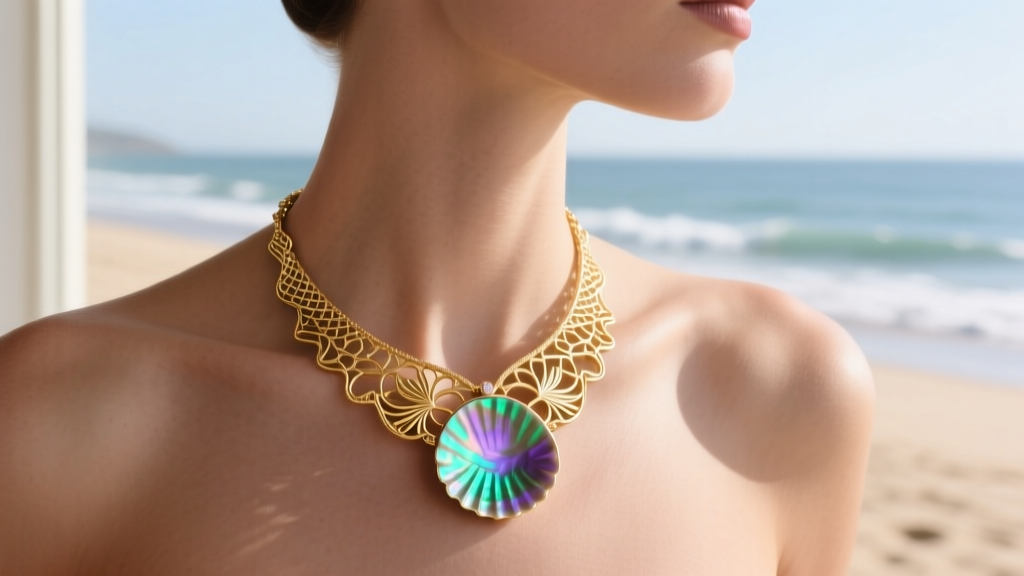
The coastal aesthetic has permanently cemented itself in modern jewelry wardrobes. By 2026, the mermaid seashell necklace has evolved from a fleeting summer trend into a year-round staple, bridging the gap between relaxed beachwear and elevated demi-fine elegance. However, the market is flooded with everything from $10 plastic knockoffs to $1,500 solid gold and diamond-encrusted marine treasures. Understanding the nuances of shell biology, metal reactivity, and structural integrity is essential for making a purchase that lasts.
This comprehensive buying guide will decode the materials, metallurgy, and styling frameworks you need to invest in a high-quality seashell pendant that withstands both saltwater and the test of time.
Decoding Shell Materials: Nacre, Abalone, and Resin
Not all shells are created equal. The optical phenomenon that gives genuine shells their mesmerizing glow is called iridescence, caused by the microscopic layering of aragonite platelets in nacre. According to Encyclopedia Britannica, this layered structure interferes with light waves, creating the signature shimmer. When shopping, you will primarily encounter three material categories:
1. Mother of Pearl (Pinctada Maxima)
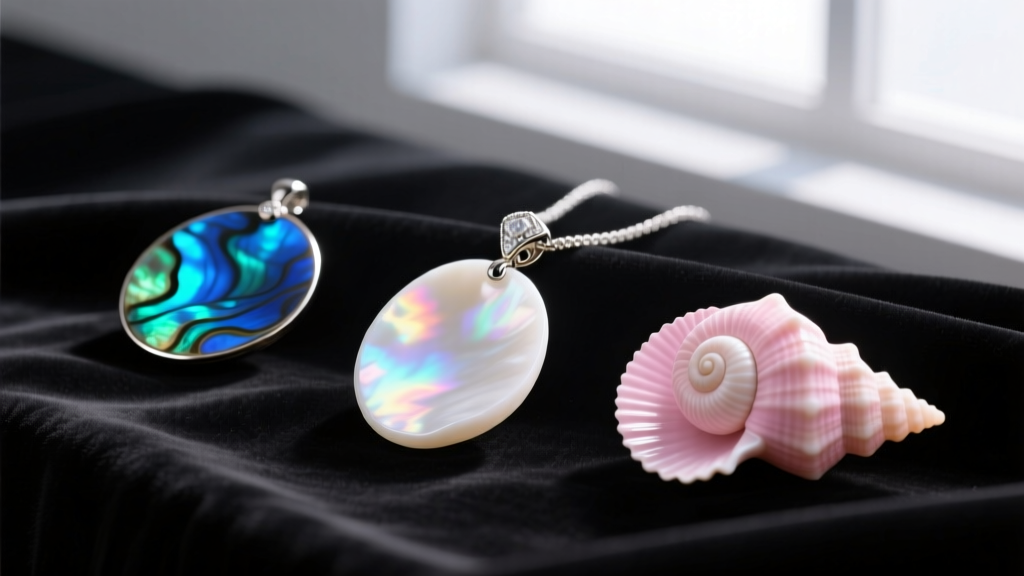
Sourced primarily from the inner lining of pearl oysters, Mother of Pearl offers a creamy, sophisticated white-to-silver iridescence. It is the most traditional choice for a mermaid seashell necklace. Ethical brands in 2026 exclusively use shells harvested as a byproduct of the pearl farming and food industries, ensuring marine ecosystems are not depleted for jewelry alone.
2. Paua Shell (New Zealand Abalone)
For those seeking vibrant, electric blues, greens, and purples, Paua shell is the undisputed king. Endemic to the coasts of New Zealand, Paua is heavily regulated to prevent overharvesting. Its intense coloration makes it a striking alternative to traditional white shells, particularly when set in yellow or rose gold.
3. Conch Shell (Queen Conch)
Rare and highly prized, the Queen Conch yields a stunning, non-iridescent pink porcelain-like finish. Because the Queen Conch is listed under CITES (Convention on International Trade in Endangered Species), genuine pink conch shell jewelry is exceptionally rare, heavily regulated, and commands a premium price point.
Authenticity Tests: Genuine Shell vs. Glass and Resin
Mass-market retailers frequently pass off molded resin or pearlescent glass as genuine shell. Use these two expert verification methods before purchasing:
- The Temperature Test: Genuine nacre and abalone feel distinctly cool to the touch and take several seconds to warm up against your skin. Resin and plastic warm up almost instantly.
- The Tap Test: Gently tap the shell against your tooth or a piece of glass. Genuine shell produces a sharp, high-pitched 'clink' due to its calcium carbonate density, whereas resin yields a dull, muted thud.
Metallurgy: Choosing the Right Chain for Saltwater
A mermaid seashell necklace is often worn to the beach, meaning the chain must withstand highly corrosive saltwater environments. The metal you choose dictates the lifespan of your jewelry.
316L Surgical Stainless Steel
If you plan to swim in the ocean while wearing your necklace, 316L stainless steel is mandatory. Unlike standard 304 steel, 316L contains molybdenum, an alloy that specifically prevents pitting and corrosion from chlorides (salt). It is hypoallergenic, highly durable, and budget-friendly.
925 Sterling Silver
While beautiful, sterling silver contains 7.5% copper. When exposed to saltwater, sulfur, and humidity, the copper reacts and causes rapid tarnishing. If you choose a silver mermaid seashell necklace, you must rinse it in fresh water immediately after ocean exposure and store it with anti-tarnish silica strips.
14k and 18k Solid Gold
Solid gold is entirely impervious to saltwater corrosion. A 14k gold chain paired with a genuine Paua shell is an heirloom-grade investment. Avoid 'gold vermeil' or 'gold plated' brass for beachwear; the microscopic gold layer will wear off within a single season of saltwater exposure, leaving you with a green-stained neck and a ruined chain.
Material Comparison & Pricing Matrix
| Material Combination | Durability (Water) | Maintenance Level | Average Price Range |
|---|---|---|---|
| Resin Shell + Gold-Plated Brass | Poor (Tarnishes/Paint chips) | High (Keep dry) | $15 - $35 |
| Mother of Pearl + 925 Sterling Silver | Moderate (Silver tarnishes) | Moderate (Polish needed) | $45 - $120 |
| Paua Shell + 316L Stainless Steel | Excellent (Salt-safe) | Low (Rinse with water) | $40 - $85 |
| Carved Shell + 14k Solid Gold | Excellent (Heirloom grade) | Very Low | $350 - $850+ |
Proportions, Sizing, and Layering Techniques
The visual impact of your necklace relies heavily on the scale of the shell pendant relative to your neckline and layering strategy.
The Micro-Shell Trend (8mm - 12mm)
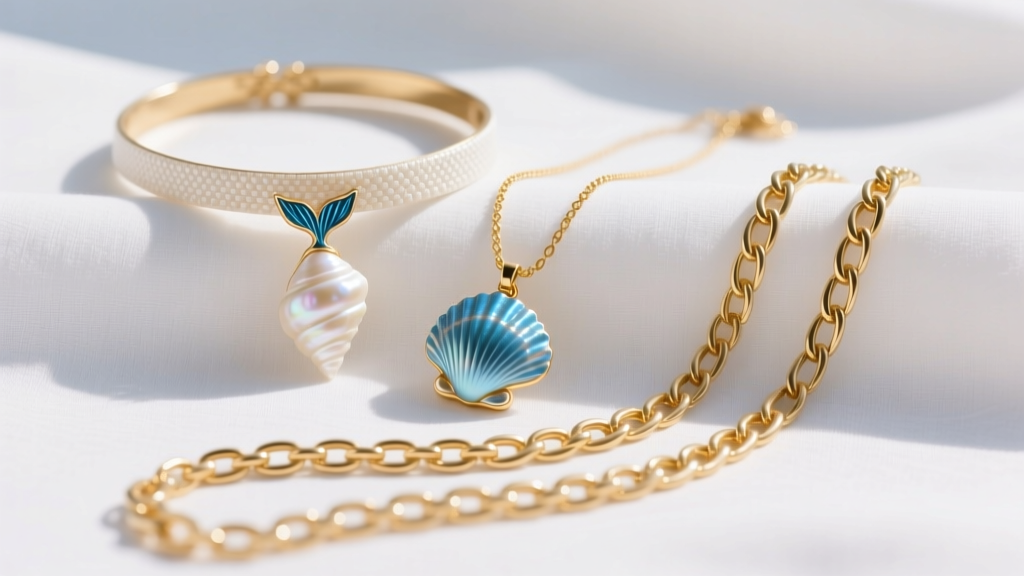
Micro-carved shells are designed for delicate, barely-there layering. These are best worn on 14-inch choker chains or 15-inch princess chains. They pair flawlessly with a secondary 16-inch freshwater pearl strand and a 18-inch gold paperclip chain, creating a textured, multi-dimensional coastal stack.
The Statement Conch (30mm - 50mm)
Larger, anatomically accurate conch or scallop shells serve as the focal point of an outfit. These should be hung on thicker chains, such as a 3mm rope chain or a 4mm Cuban link, to support the physical weight of the dense calcium carbonate shell. Wear these solo against a deep V-neck or an open linen button-down.
Care and Maintenance: Protecting the Nacre
Genuine shells are organic gemstones. The Gemological Institute of America (GIA) notes that nacre and shell materials rank between 2.5 and 4.5 on the Mohs scale of hardness, making them highly susceptible to scratching and chemical erosion.
- Avoid Acids: Sunscreen, citrus juices, vinegar, and perfumes contain mild acids that will literally dissolve the calcium carbonate surface of the shell over time, leaving it dull and chalky. Always apply sunscreen and perfume 15 minutes before putting on your necklace.
- Never Use Ultrasonic Cleaners: The high-frequency vibrations in ultrasonic jewelry baths can cause microscopic fractures in the aragonite layers, leading to catastrophic shell delamination.
- Proper Storage: Store your mermaid seashell necklace in a soft microfiber pouch separate from diamond or sapphire jewelry, which will easily scratch the shell's surface.
Final Verdict: Investing in Coastal Elegance
A high-quality mermaid seashell necklace is an exercise in balancing organic fragility with metallurgical resilience. For everyday beachgoers, a Paua shell set in 316L surgical steel offers the best intersection of vibrant color, saltwater durability, and accessible pricing. For fine jewelry collectors, a hand-carved Mother of Pearl pendant on a solid 14k gold chain remains an unparalleled, timeless investment that captures the enduring magic of the ocean.


