How to Choose the Best Metal for a Cross in Necklace
Discover the best metals for a cross in necklace. Compare gold, platinum, silver, and titanium for durability, allergies, and everyday wear.

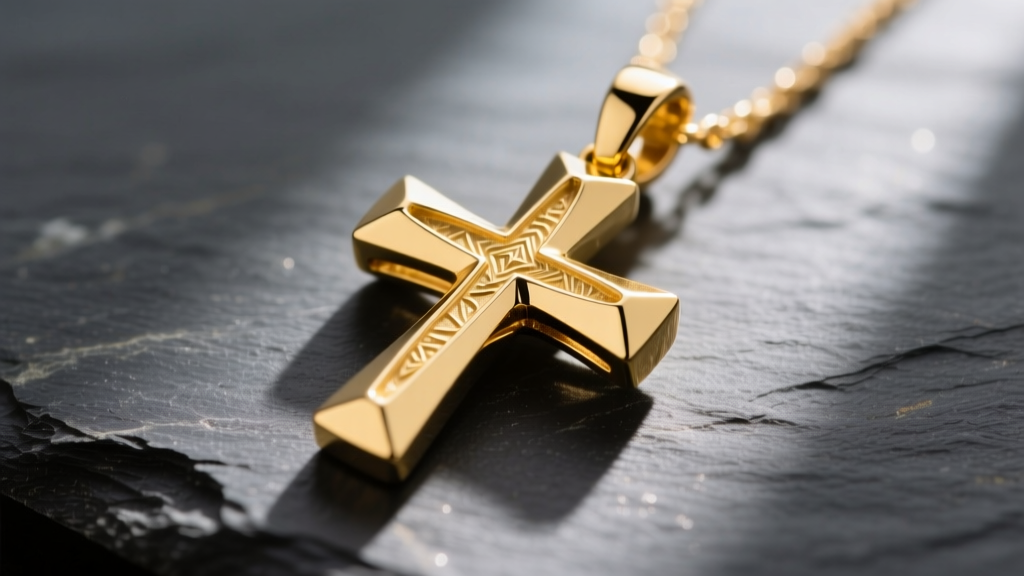
The Metallurgy of Faith: Why Material Matters
When selecting a cross in necklace form, buyers often focus entirely on the design, the thickness of the arms, or the presence of gemstones. However, the foundational metallurgy of the piece dictates its longevity, comfort, and how it reacts to human skin. A pendant rests directly against the sternum, an area prone to perspiration and friction. This means the metal you choose must withstand a highly corrosive micro-environment composed of salt, water, and sebum.
As a jewelry metallurgist and style analyst, I evaluate cross pendants not just as symbols of faith or fashion, but as engineered objects. The wrong alloy can lead to contact dermatitis, rapid tarnishing, or structural failure at the bail (the loop that connects the pendant to the chain). In this comprehensive guide, we will dissect the material properties of the most common metals used in cross necklaces, providing you with actionable data to make an informed purchase.
The Metallurgy of Faith: Comparing Top Cross Necklace Materials
14k and 18k Gold: The Classic Standard
Gold remains the most popular choice for a cross in necklace designs due to its cultural significance and inherent resistance to oxidation. However, pure 24k gold is far too soft (Vickers Hardness of ~60 HV) for daily wear. Therefore, it is alloyed with other metals to increase its tensile strength.
- 18k Gold (75% Gold): With a hardness of roughly 120-140 HV, 18k gold offers a rich, deep color and excellent hypoallergenic properties, provided it is alloyed with silver or palladium rather than nickel. It is heavy, luxurious, and resists tarnishing, making it ideal for heirloom-quality crosses.
- 14k Gold (58.5% Gold): Harder (140-160 HV) and more affordable, 14k gold is the workhorse of everyday jewelry. The higher copper content in yellow and rose gold variants provides a warm hue but can occasionally cause reactions in individuals with extreme copper sensitivities.
According to the World Gold Council, the specific alloy mix not only changes the color but also the metal's galvanic nobility. White gold crosses are almost always plated with rhodium to achieve a bright white finish; this plating will eventually wear off the high-friction edges of the cross, requiring periodic re-plating.
925 Sterling Silver: Affordable but Demanding
Sterling silver (92.5% pure silver, 7.5% copper) is highly accessible and offers a brilliant, reflective luster that complements both modern and vintage cross designs. The primary drawback of sterling silver is its susceptibility to tarnishing. The copper in the alloy reacts with hydrogen sulfide in the air and sulfur compounds in human sweat to form silver sulfide ($Ag_2S$), a black layer on the surface.
To combat this, many manufacturers apply a flash plating of rhodium or e-coating. While effective initially, these barriers are measured in mere microns (usually 0.1 to 0.5 microns thick) and will wear away on the back of the cross pendant where it rubs against the skin. For a low-maintenance silver cross, look for Argentium silver, an alloy that replaces some copper with germanium, drastically increasing tarnish resistance.
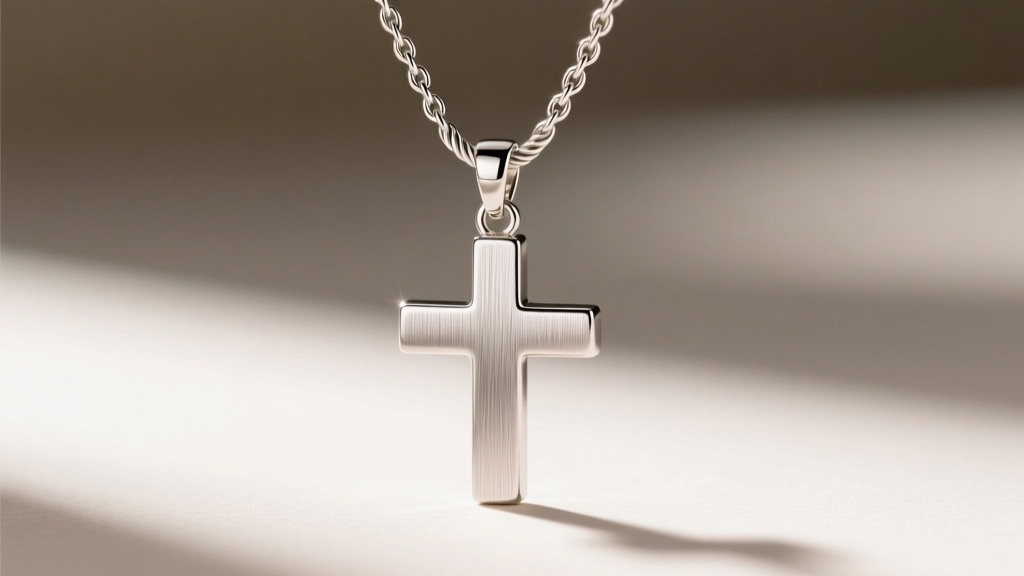
Platinum (950Pt): The Heavyweight Champion
For those seeking the ultimate expression of permanence, platinum is unparalleled. Standard jewelry platinum is 95% pure, usually alloyed with 5% ruthenium or iridium. With a density of approximately 21.45 g/cm³, a solid platinum cross will feel noticeably heavier on the chest than a gold or silver equivalent.
Unlike gold, which loses microscopic particles of metal when scratched, platinum merely displaces. This means a platinum cross will develop a soft, satiny patina over time rather than wearing thin. The Gemological Institute of America (GIA) notes that platinum's natural white color will never fade or require rhodium plating, making it the most chemically stable and hypoallergenic precious metal available for sensitive skin.
316L Stainless Steel & Titanium: Modern Alternatives
For industrial, minimalist, or highly active lifestyles, alternative metals offer exceptional durability at a fraction of the cost.
- 316L Surgical Steel: Highly resistant to corrosion and incredibly hard, steel crosses maintain sharp, polished edges indefinitely. However, 316L contains trace amounts of nickel (around 10-14%). While the nickel is tightly bound within the crystalline structure, prolonged exposure to acidic sweat can cause leaching, triggering allergic contact dermatitis in highly sensitive individuals.
- Grade 23 Titanium (Ti-6Al-4V ELI): This is the gold standard for biocompatibility. Used in medical implants, Grade 23 titanium is completely nickel-free, feather-light, and impervious to saltwater corrosion. It can also be anodized to create vibrant colors (like deep purples or blues) without the use of dyes or plating.
Material Properties Matrix: Hardness, Weight, and Wear
To visualize how these metals compare in a real-world scenario, refer to the data table below. This matrix highlights the trade-offs between hardness (scratch resistance), density (weight on the neck), and market pricing for a standard 1-inch solid cross pendant.
| Metal / Alloy | Composition | Hardness (Vickers HV) | Density (g/cm³) | Avg. Price (1" Solid Pendant) |
|---|---|---|---|---|
| 925 Sterling Silver | 92.5% Ag, 7.5% Cu | 65 - 75 HV | 10.36 | $40 - $120 |
| 14k Yellow Gold | 58.5% Au, Ag, Cu | 140 - 160 HV | 13.50 | $350 - $600 |
| 18k Yellow Gold | 75.0% Au, Ag, Cu | 120 - 140 HV | 15.50 | $550 - $950 |
| 950 Platinum | 95% Pt, 5% Ru | 130 - 150 HV | 21.45 | $800 - $1,400 |
| 316L Steel | Fe, Cr, Ni, Mo | 150 - 190 HV | 8.00 | $20 - $60 |
| Grade 23 Titanium | Ti, Al, V | 300 - 330 HV | 4.43 | $45 - $150 |
The Galvanic Effect: Why Chain and Pendant Metals Must Match
One of the most critical, yet frequently overlooked, principles in jewelry wear is galvanic corrosion. When you pair a cross in necklace configurations with a chain made of a dissimilar metal, you create a basic galvanic cell. Human sweat acts as the electrolyte, facilitating the flow of electrons between the two metals.
The less 'noble' metal (the one lower on the galvanic series) becomes the anode and will corrode at an accelerated rate. For example, if you hang a sterling silver cross on a white gold or platinum chain, the silver will rapidly degrade, oxidize, and leave a black residue on your skin and clothing. Conversely, hanging a soft 18k gold cross on a hardened steel chain will result in the steel physically grinding away the gold at the bail due to the vast difference in surface hardness.
Actionable Rule: Always ensure the pendant bail and the chain are made of the exact same metal, or at least metals with identical galvanic nobility (e.g., 14k gold and 18k gold are generally safe to mix, but silver and gold are not).
Hallmark Verification: Avoiding Counterfeit Crosses
Because cross pendants are highly symbolic and frequently gifted, the market is saturated with counterfeit pieces stamped with fake hallmarks. Knowing where and how to inspect your jewelry is essential for verifying material claims.
- Location: Genuine hallmarks are typically stamped on the back of the bail, the inner edge of the bail ring, or discreetly on the lower left arm of the cross.
- Precious Metal Marks: Look for 750 or 18k (18k Gold), 585 or 14k (14k Gold), 925 (Sterling Silver), and 950Pt or PLAT (Platinum).
- The Magnet Test: Gold, silver, platinum, and titanium are entirely non-magnetic. If your cross pendant is attracted to a neodymium magnet, it contains a ferrous core (like iron or steel) and is merely heavily plated.
- The Ice Test (Silver): Silver has the highest thermal conductivity of any common metal. If you place an ice cube on a solid silver cross, it should begin melting almost instantly, significantly faster than on steel or white gold.
Final Verdict: Matching Material to Lifestyle
Choosing the right metal for your cross pendant is a balance of budget, skin chemistry, and aesthetic preference. For an heirloom piece meant to be worn in the shower, the ocean, and the gym without a second thought, Grade 23 Titanium or 950 Platinum are the undisputed champions of durability and biocompatibility. If you prefer the traditional warmth and prestige of precious metals, 14k or 18k solid gold offers an excellent compromise between scratch resistance and timeless beauty.
Whatever you choose, remember to match your chain to your pendant, verify the hallmarks with a loupe, and respect the metallurgy of the piece. A well-chosen cross necklace is not just an accessory; it is a durable artifact engineered to last a lifetime.


