Material Guide: Choosing the Best Metal for a New York Necklace
Compare tensile strength, tarnish resistance, and weight of metals used in a New York necklace. Find the perfect material for your link chain.

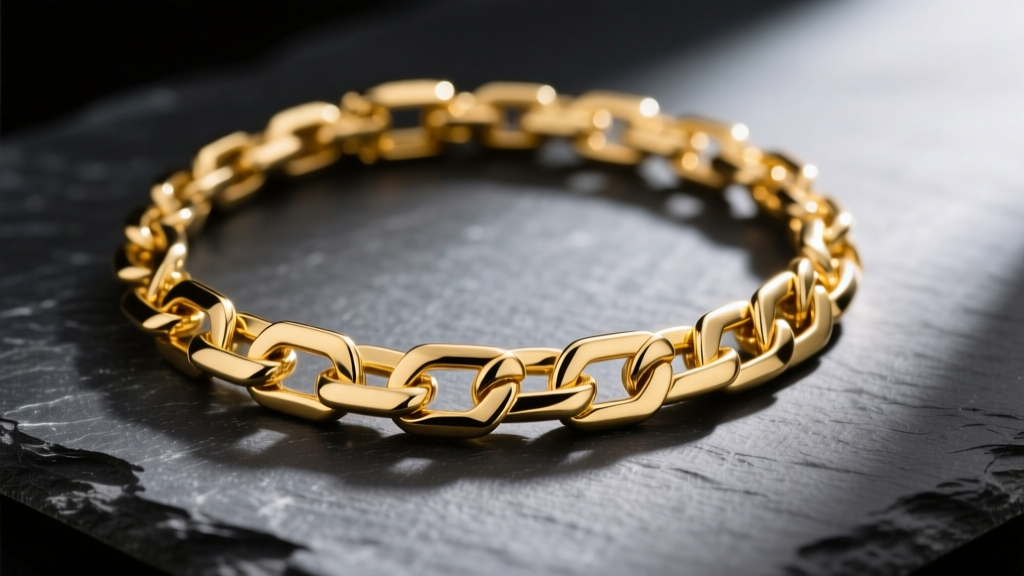
The Anatomy of a New York Link Chain
When collectors and streetwear enthusiasts refer to a New York necklace, they are typically talking about a specific, bold variation of the interlocking link chain. Characterized by its tightly woven, geometric links that lay remarkably flat while retaining significant volume and weight, this style is a staple of urban luxury. However, because the New York link profile requires a substantial amount of raw metal to achieve its signature drape, the metallurgical properties of the chosen material dictate not just the price, but the structural integrity, skin feel, and longevity of the piece.
Choosing the right metal for a heavy link chain is an exercise in balancing tensile strength, specific gravity (density), and oxidation resistance. In this comprehensive material guide, we break down the exact properties of the most common metals used to forge New York necklaces, providing you with the data needed to make an informed investment.
Metallurgical Breakdown: Metals Used in Heavy Links
14k vs. 18k Gold: The Karat Conundrum
Gold remains the premier choice for luxury chains, but the karat weight drastically alters how a heavy New York necklace wears over time. Pure 24k gold is far too soft (Vickers hardness ~25 HV) for interlocking links; it would stretch and deform under its own weight. Therefore, jewelers rely on alloys.
- 14k Gold (58.5% Gold): With a Vickers hardness of roughly 120-140 HV, 14k gold offers superior tensile strength. The higher copper and zinc content provides the rigidity needed to keep thick links from warping at the friction points. However, the copper can cause skin oxidation (the dreaded 'green neck') for wearers with highly acidic sweat.
- 18k Gold (75% Gold): Softer (approx. 130-150 HV depending on the exact alloy mix) but significantly denser (~15.5 g/cm³ compared to 14k's ~13.5 g/cm³). An 18k New York chain will feel noticeably heavier and warmer to the touch, offering a richer yellow hue, but the links are more prone to micro-scratching and require a heavier-duty clasp to support the increased mass.
Platinum: The Ultimate Tensile Workhorse
For those seeking the ultimate in durability, 950 Platinum (typically alloyed with 5% ruthenium or cobalt) is unmatched. Platinum boasts a density of ~21.4 g/cm³, making a solid platinum New York necklace incredibly heavy and substantial. According to the Gemological Institute of America (GIA), platinum's unique molecular structure means that when it scratches, the metal is displaced rather than lost. Furthermore, its high tensile strength makes it ideal for securing heavy pendants to the chain, though the extreme weight of a solid platinum link chain mandates a custom-machined box clasp.
316L Surgical Stainless Steel: The Budget Alternative
For a fraction of the cost, 316L marine-grade stainless steel offers a Vickers hardness of 150-190 HV, making it highly scratch-resistant. It is completely impervious to tarnish and sweat. The primary drawback, as noted by master jewelers at Rio Grande, is that stainless steel cannot be easily soldered or resized using traditional jewelry torches. If a link breaks or the clasp fails, the chain often cannot be repaired by a standard bench jeweler.
Sterling Silver (925): The Tarnish Trade-Off
Sterling silver is the most affordable precious metal option, but its low hardness (~60-70 HV) makes it risky for heavy New York links. If the wire gauge of the individual links is too thin, the sheer weight of the necklace will cause the links to stretch into ovals over time. To combat this, reputable manufacturers use rhodium plating to prevent tarnishing, though this plating will eventually wear off at the high-friction interlocking joints.
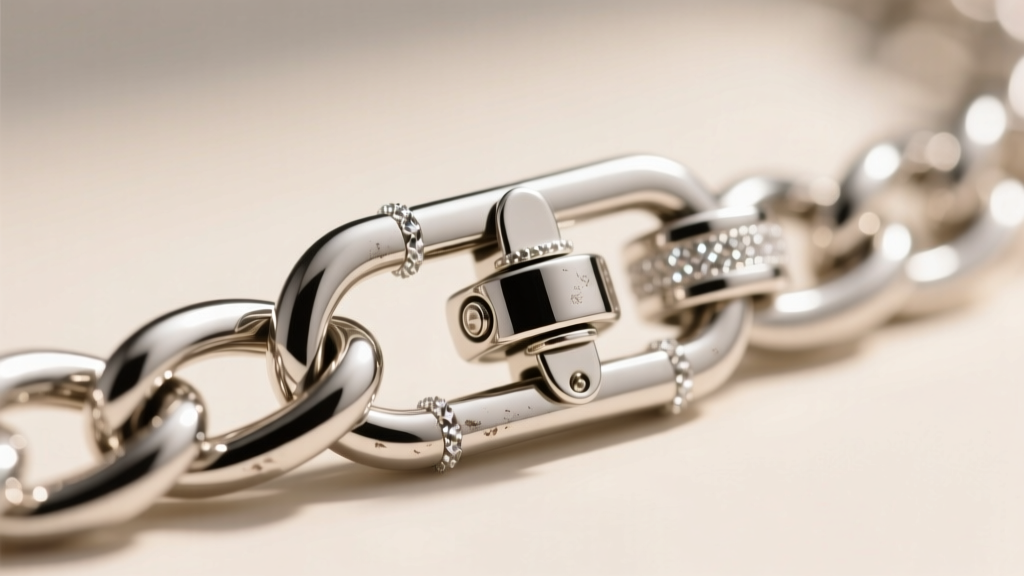
Material Comparison Matrix
Use the following data table to compare the physical properties of metals commonly used in New York necklaces. Specific gravity directly impacts the 'drape' and neck fatigue, while hardness dictates scratch resistance.
| Metal Alloy | Density (g/cm³) | Vickers Hardness (HV) | Tarnish Resistance | Repairability |
|---|---|---|---|---|
| 14k Yellow Gold | 13.5 | 120 - 140 | High | Excellent (Torch/Laser) |
| 18k Yellow Gold | 15.5 | 130 - 150 | High | Excellent (Torch/Laser) |
| 950 Platinum | 21.4 | 135 - 160 | Very High | Excellent (Laser preferred) |
| 925 Sterling Silver | 10.4 | 60 - 70 | Low | Good |
| 316L Stainless Steel | 8.0 | 150 - 190 | Very High | Poor (Cannot solder easily) |
Clasp Mechanics and Solder Point Integrity
The weakest point of any New York necklace is not the metal itself, but the solder joints and the clasp mechanism. Because these chains are heavy, the tension placed on the clasp jump ring is immense.
Expert Insight: Never rely on a standard spring-ring or lightweight lobster clasp for a solid gold New York chain weighing over 40 grams. The lateral torque will eventually bend the clasp lever, leading to catastrophic failure and loss of the piece.
For heavy chains, a box clasp with dual figure-8 safety latches is mandatory. Furthermore, the jump rings connecting the clasp to the chain must be soldered shut using hard solder (which melts at approximately 780°C). If a jeweler uses 'easy' solder (melting at ~690°C) to close the jump rings, the friction and body heat combined with the weight of the chain can cause the solder to weaken and the ring to pull apart.
Modern bench jewelers increasingly use laser welding to close these joints. Laser welding allows for precise, localized heat application without annealing (softening) the surrounding work-hardened links, preserving the structural rigidity of the New York chain profile.
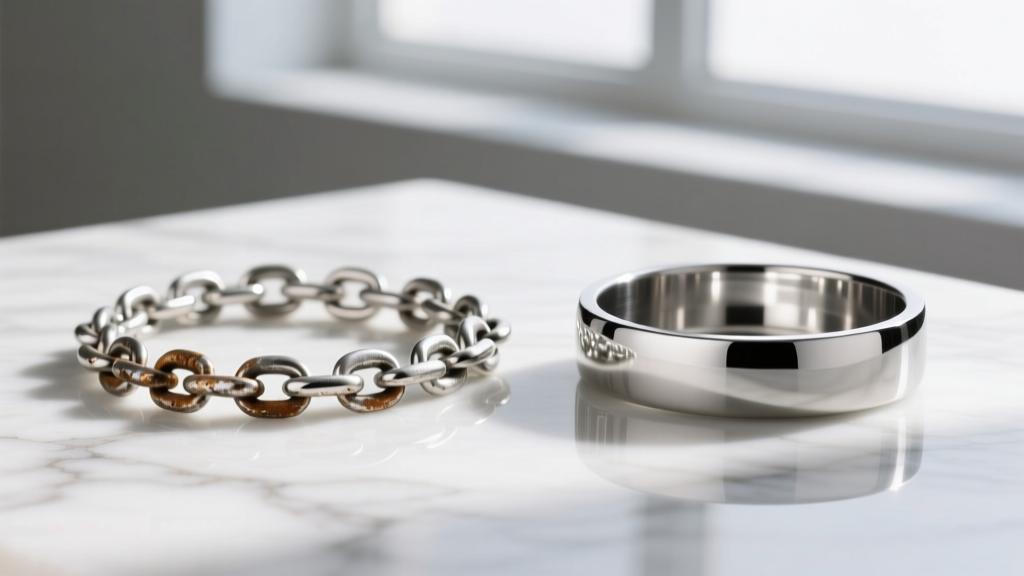
Real-World Wearability and Maintenance Protocols
Maintaining the geometric precision and shine of a New York necklace requires specific care protocols tailored to the metal:
Ultrasonic Cleaning Warnings
While ultrasonic cleaners are excellent for removing trapped sebum and dead skin cells from the tight crevices of interlocking links, they must be used with caution. According to Jewelers of America, ultrasonic vibrations can loosen gemstone settings if your New York chain features diamond accents. Furthermore, ultrasonic cleaning will strip rhodium plating off sterling silver chains prematurely, exposing the soft silver to rapid oxidation.
Polishing and Metal Loss
When a gold or platinum New York necklace loses its high-polish finish due to micro-scratches, it requires professional buffing. However, traditional buffing wheels remove a microscopic layer of metal. Over-polishing a chain over a decade can actually thin the links, compromising their tensile strength. Platinum is the exception here; because it displaces rather than sheds, it can be polished repeatedly without significant structural degradation.
Daily Wear Best Practices
- Shower Protocol: Remove 14k and 18k gold chains before showering. The stearic acid and sulfates in modern body washes can create a dull, soapy film in the tight link joints that is difficult to remove without professional steam cleaning.
- Sleeping: Never sleep in a heavy New York link chain. The torsional twisting that occurs during sleep puts uneven stress on individual links, leading to permanent stretching and a 'kinked' appearance that is nearly impossible to fix without reshaping the links on a mandrel.
- Storage: Store the necklace laid flat or draped over a wide, padded jewelry bust. Hanging a heavy chain on a thin hook for months will cause gravity-induced stretching at the top links near the clasp.
Conclusion
Selecting the right material for a New York necklace is about matching the metallurgical properties of the metal to your lifestyle and budget. 14k gold remains the undisputed champion for daily wear, offering the perfect equilibrium of tensile strength, rich color, and repairability. Platinum is the ultimate heirloom choice for those who prioritize density and longevity, while 316L stainless steel serves as an indestructible, budget-friendly alternative for streetwear styling. By understanding the Vickers hardness, specific gravity, and soldering requirements of your chosen metal, you ensure that your chain remains a structurally sound and visually striking statement piece for decades to come.


