Authentic Mexican Beaded Necklace Materials: A Deep Comparison
Compare traditional and modern materials in a Mexican beaded necklace. Discover durability, weight, and care tips for seed, glass, and clay beads.

The Anatomy of a Traditional Mexican Beaded Necklace
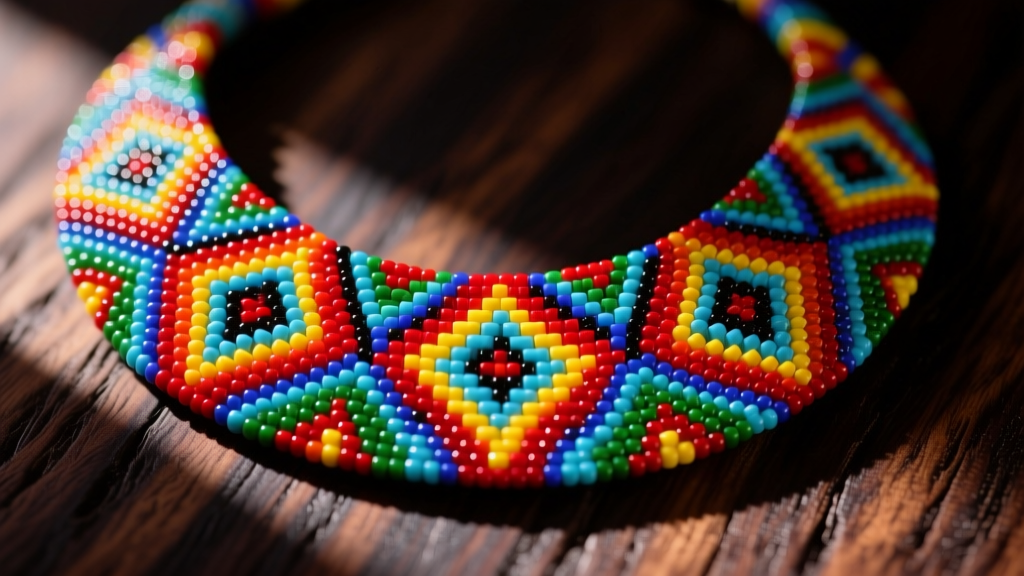
A genuine Mexican beaded necklace is far more than a simple accessory; it is a wearable textile constructed from glass, earth, and fiber. Rooted in the rich indigenous traditions of regions like Jalisco, Nayarit, and Oaxaca, these pieces often utilize complex peyote stitch, loom weaving, or right-angle weave techniques. For collectors, stylists, and jewelry makers, understanding the specific material properties of these necklaces is crucial for authentication, valuation, and long-term care. The structural integrity and visual impact of a Mexican beaded necklace rely entirely on the interplay between the bead composition and the stringing medium.
According to ethnographic archives at the National Museum of the American Indian, the transition from natural materials (bone, shell, and stone) to European-introduced glass beads fundamentally shifted indigenous jewelry making. Today, the market is flooded with both master-crafted artisan pieces and mass-produced synthetic imitations. To navigate this, we must break down the core materials used in authentic craftsmanship.
Material Breakdown: Seed Beads vs. Glass vs. Clay
The foundation of any Mexican beaded necklace lies in its primary bead material. Each material dictates the drape, weight, and colorfastness of the final piece.
Czech and Japanese Seed Beads (The Huichol Standard)
The Wixárika (Huichol) people are globally renowned for their intricate beadwork, and their material of choice is the glass seed bead. Authentic artisans predominantly use size 11/0 (approximately 2.1mm x 1.3mm) and 15/0 Czech glass seed beads, specifically from manufacturers like Preciosa Ornela. These beads are favored for their uniform donut shape, which allows for the tight, tension-heavy peyote stitch required for the stiff, collar-like necklaces typical of the region.
- Colorfastness: High-quality opaque Czech beads offer exceptional UV resistance. However, galvanized or dyed finishes can degrade when exposed to the acidic pH of human sweat over time.
- Weight: A standard multi-strand Huichol collar necklace using 11/0 beads can weigh between 80 and 140 grams, requiring a robust stringing foundation.
Recycled and Artisan Glass Beads
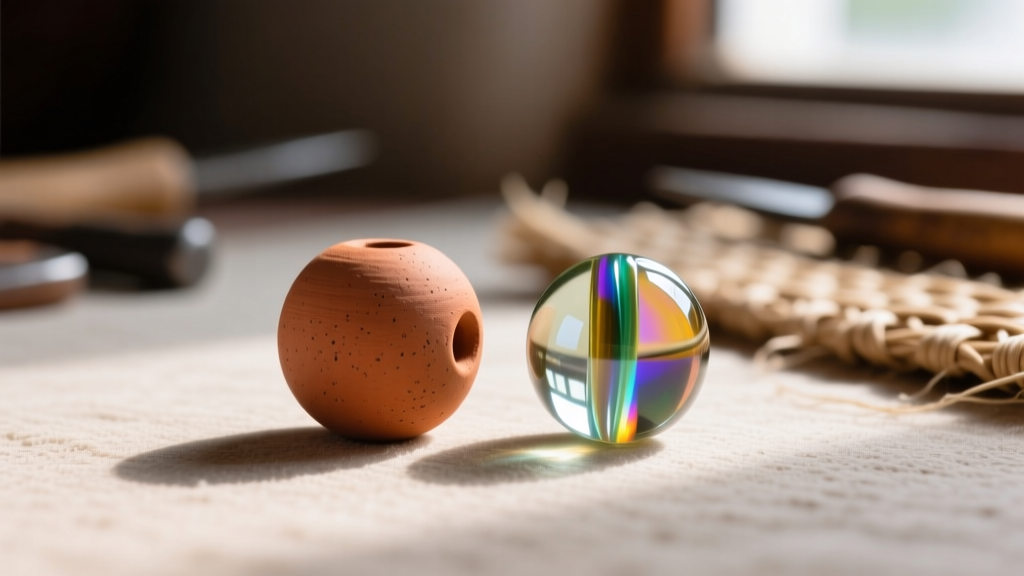
In regions outside the strict Huichol tradition, such as Taxco and Mexico City, artisans frequently incorporate larger lampwork or recycled glass beads. These beads possess a higher specific gravity (approx. 2.5) and introduce a fluid, heavy drape to the necklace. Recycled glass beads often feature internal micro-bubbles and slight asymmetries, which are hallmarks of authentic, hand-pulled artisan glass rather than factory-molded uniformity.
Terracotta and Ceramic Clay Beads
Oaxacan clay beads offer an earthy, matte aesthetic that contrasts sharply with the high-gloss finish of glass. Fired at relatively low temperatures, these beads are highly porous. While they significantly reduce the overall weight of a large statement necklace, their porosity makes them vulnerable to moisture absorption, cosmetic oils, and structural cracking if subjected to sudden temperature changes.
Comparative Properties Table: Weight, Durability, and Fade Resistance
When selecting or restoring a Mexican beaded necklace, referencing the physical properties of the materials will dictate your maintenance strategy. The table below synthesizes the core metrics for the three primary bead types.
| Material Type | Average Size | Specific Gravity (Weight) | UV & Sweat Resistance | Primary Failure Mode |
|---|---|---|---|---|
| Czech Seed Bead (11/0) | 2.1mm x 1.3mm | 2.50 (Moderate) | Excellent (Opaque) | Thread abrasion at bead hole |
| Artisan Recycled Glass | 8mm - 14mm | 2.60 (Heavy) | Superior | Chipping upon impact |
| Oaxacan Terracotta Clay | 6mm - 12mm | 1.80 (Light) | Poor (Absorbs oils) | Moisture swelling / Cracking |
| Modern Acrylic (Knockoff) | Varies | 1.18 (Very Light) | Poor (Yellows in UV) | Melting / Warping in heat |
Stringing Materials: What Holds the Beads Together?
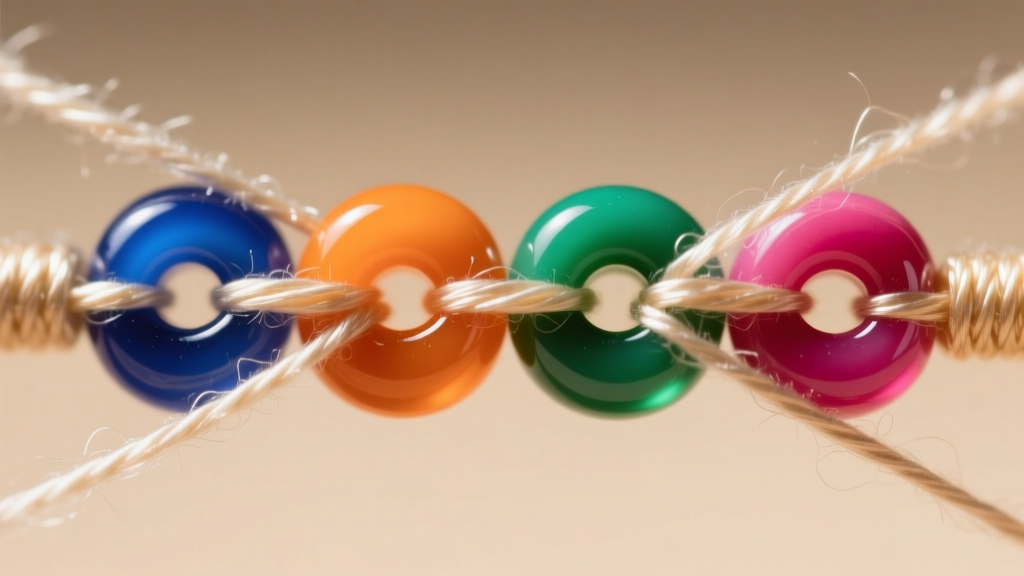
A Mexican beaded necklace is only as strong as its stringing material. The friction between glass beads and thread is a critical engineering factor in jewelry design. As documented in technical reviews by Ornament Magazine, the evolution of synthetic threads has dramatically increased the lifespan of indigenous beadwork.
Nylon and Polyester Threads (C-Lon and Nymo)
For intricate seed bead collars, artisans rely on bonded nylon threads like C-Lon (Size D, 0.11mm diameter). Nylon offers high tensile strength and slight elasticity, which is vital for peyote stitch. If the thread is too rigid, the necklace will buckle; if it is too elastic, the tension will warp the geometric patterns. Nymo thread is also popular but requires pre-stretching to prevent the necklace from sagging after a few wears.
Braided Polyethylene (Fireline)
When working with recycled artisan glass beads that may have sharp, unpolished internal holes, standard nylon will eventually fray and snap. In these cases, 6lb or 8lb test Fireline braided bead thread is the industry standard. Its gel-spun polyethylene composition is virtually impervious to abrasion, though its lack of stretch makes it unsuitable for tight loom-work or peyote stitch.
Waxed Cotton and Linen
For heavy clay beads or rustic, bohemian-style Mexican necklaces, waxed cotton or linen cord (typically 1.0mm to 1.5mm gauge) is preferred. The wax coating fills the porous gaps of the clay beads, preventing moisture ingress while providing a stiff, macramé-friendly foundation.
Identifying Authenticity and Avoiding Synthetic Knockoffs
The global market is saturated with machine-made acrylic and resin necklaces masquerading as authentic Mexican artisan craft. Distinguishing between genuine glass/clay and synthetic polymers requires a multi-sensory approach:
- The Acoustic Test: Gently tap the beads together. Genuine glass produces a sharp, high-pitched 'clink', while acrylic and resin emit a dull, hollow 'click'.
- Thermal Conductivity: Press the beads against your lower lip or inner wrist. Glass and clay will feel noticeably cool to the touch and take several seconds to warm to your body temperature. Acrylic will feel room-temperature and warm almost instantly.
- Visual Inspection of the Hole: Use a jeweler's loupe to inspect the drill hole. Molded acrylic beads often have a raised 'lip' or burr around the hole where the mold separated. Genuine glass beads are tumbled, resulting in smooth, slightly rounded hole edges.
Care and Maintenance by Material Type
Proper maintenance of a Mexican beaded necklace requires tailoring your cleaning protocol to the specific materials involved. A one-size-fits-all approach will result in irreversible damage.
- Seed Bead Collars: Never submerge a tightly woven seed bead collar in water. The thread will absorb moisture, swell, and eventually rot, leading to catastrophic structural failure. Instead, lay the necklace flat on a microfiber cloth and gently wipe the surface with a slightly damp cloth. Allow it to air dry completely before storage.
- Glass Bead Strands: Glass beads can be safely cleaned using a mild, ammonia-free glass cleaner sprayed onto a cloth (never directly onto the necklace, to protect the stringing material). Avoid ultrasonic cleaners if the glass beads feature internal fractures or foil backing.
- Clay and Terracotta: Keep clay beads strictly away from perfumes, lotions, and body oils. The porous nature of low-fire terracotta will absorb these substances, leading to permanent dark staining. If cleaning is necessary, use a soft, dry brush (like a clean makeup brush) to dislodge dust from the crevices.
Expert Storage Tip: Always store heavy Mexican glass bead necklaces flat in a padded drawer. Hanging them on a standard jewelry tree places continuous gravitational stress on the stringing thread and the clasp loop, accelerating metal fatigue and thread stretching over time.
Conclusion
Investing in an authentic Mexican beaded necklace means acquiring a piece of living history and master-level engineering. By understanding the distinct properties of Czech seed beads, artisan glass, and Oaxacan clay—as well as the critical role of modern stringing threads—you can accurately assess quality, avoid synthetic counterfeits, and preserve these vibrant cultural artifacts for decades to come.


