The Ultimate Military Cross Necklace Gift Guide for 2026
Find the perfect military cross necklace for any occasion. Our 2026 gift guide covers materials, chain styles, and meaning for veterans and active duty.

The Symbolism and Significance of the Military Cross
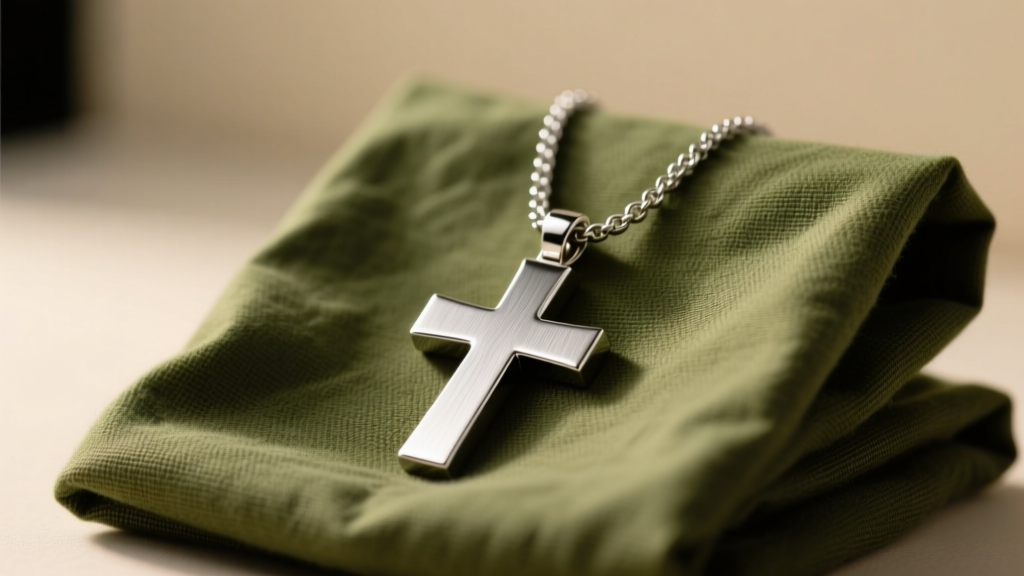
Gifting jewelry to a service member or veteran requires a nuanced understanding of military culture, durability requirements, and personal symbolism. The military cross necklace stands out as one of the most deeply meaningful pieces of jewelry you can offer. It bridges the gap between spiritual faith and the stark realities of armed service. According to the American Legion, symbols of faith, protection, and service often intertwine in military culture, providing comfort during deployments and serving as a grounding reminder during the transition to civilian life. Whether you are shopping for an active-duty soldier deploying overseas, a veteran retiring after decades of service, or honoring a fallen hero, this 2026 guide provides the exact specifications, material grades, and occasion-matching frameworks you need to make the right choice.
Material Matters: Choosing the Right Metal for Daily Wear
Active duty personnel and veterans subject their jewelry to harsh environments, including extreme sweat, saltwater, sand, and heavy physical labor. Choosing the correct metal is not just an aesthetic decision; it is a matter of practicality and skin safety.
316L Surgical Stainless Steel vs. Grade 5 Titanium
For everyday field wear, 316L Surgical Stainless Steel is the undisputed workhorse. Unlike standard 304 steel, 316L contains 2-3% molybdenum, which drastically increases its resistance to pitting and corrosion from chlorides (like sweat and seawater). It is highly affordable, typically ranging from $25 to $60, and requires virtually zero maintenance.
However, Grade 5 Titanium (Ti-6Al-4V) is the premium choice for tactical environments. Titanium is 45% lighter than steel and completely hypoallergenic. More importantly, it is non-magnetic and non-conductive, making it the safest option for Explosive Ordnance Disposal (EOD) technicians or personnel working around sensitive radar and communications equipment. Expect to pay between $40 and $95 for high-quality titanium pendants.
Sterling Silver and Solid Gold Options
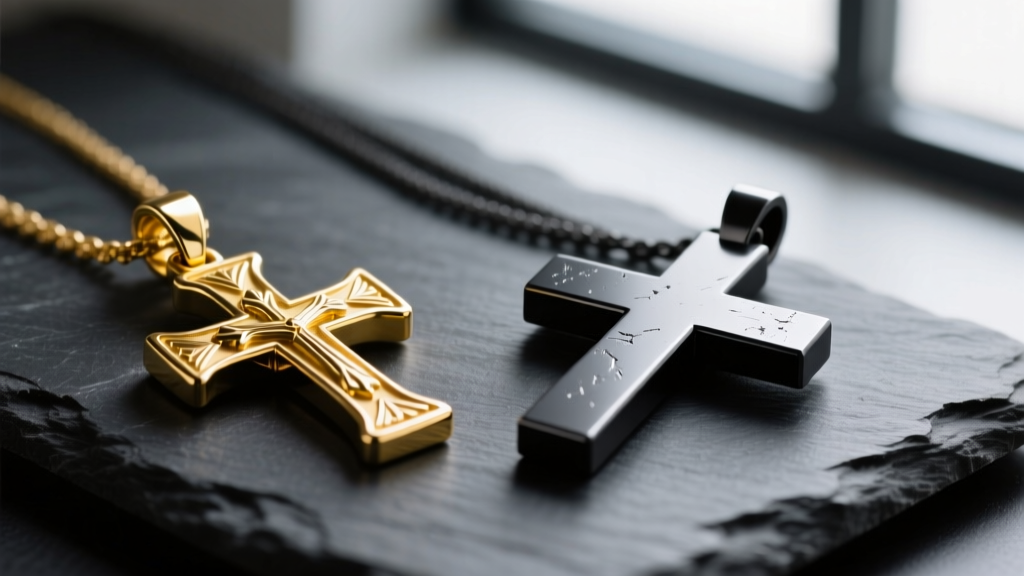
For dress uniforms, retirement ceremonies, or civilian formal wear, precious metals are the standard. The Gemological Institute of America (GIA) notes that 14k gold (58.5% pure gold) is often preferred over 18k gold for men's military jewelry because the higher alloy content provides superior scratch and dent resistance. A solid 14k yellow or white gold military cross will range from $600 to $1,800+. Sterling silver (925) is a beautiful, budget-friendly alternative ($50–$150), but it is prone to sulfide tarnishing and is not recommended for active field deployment.
Chain Styles and Lengths: A Tactical Approach
The chain is just as critical as the pendant. A heavy steel cross on a flimsy chain will result in breakage and loss. When selecting a chain, you must consider the pendant's weight, the wearer's neck size, and uniform regulations. Below is a tactical breakdown of chain styles suitable for military crosses.
| Chain Style | Link Gauge (Thickness) | Durability Rating | Best Use Case |
|---|---|---|---|
| Rolo Chain | 2.5mm - 3.0mm | High | Everyday wear; balances strength with comfort under a t-shirt or uniform. |
| Curb Chain | 3.0mm - 4.5mm | Very High | Heavy, oversized steel or titanium pendants; highly resistant to snapping. |
| Ball Chain (Bead) | 2.4mm - 3.0mm | Low | Traditional dog tag pairing; nostalgic, but weak at the clasp connector. |
| Box Chain | 1.5mm - 2.5mm | Medium | Dress uniforms and precious metal crosses; offers a refined, geometric look. |
Pro Tip: For active-duty personnel, always opt for a chain with a lobster clasp rather than a spring ring, and ensure the chain length allows the pendant to rest at the sternum (usually 22 to 24 inches for men) so it remains hidden beneath the standard issue undershirt.
Occasion Matching: When to Gift a Military Cross
Understanding the specific milestone will dictate the design, material, and engraving of the necklace. The Department of Veterans Affairs frequently highlights the importance of recognizing service transitions, making jewelry a profound marker of time served.
- Boot Camp or AIT Graduation: This marks the transition from civilian to service member. Gift a rugged, unadorned 316L stainless steel or matte titanium cross. Keep it simple, lightweight, and durable enough to survive their first field exercises.
- Deployment Send-offs: Safety and comfort are paramount. Choose a Grade 5 Titanium cross with a PVD black coating to eliminate glare. Pair it with a 24-inch black Rolo chain. Avoid precious metals, as they can be easily lost or damaged in combat zones.
- Retirement & Transition: After 20+ years of service, the occasion calls for heritage and prestige. A solid 14k gold or high-polish sterling silver cross, perhaps featuring a subtle mil-spec motif (like an anchor or eagle integrated into the cross arms), is highly appropriate. Pair it with a 20-inch Box chain for a refined, civilian-ready look.
- Memorial & Remembrance: For honoring a fallen service member, a reliquary cross (which opens to hold a small photo or memento) or a sterling silver cross deeply engraved with their name, rank, and dates of service is a deeply moving tribute.

Sizing, Engraving, and Personalization Tips
Getting the physical dimensions right is crucial for the necklace to look proportional. For men, the standard military cross pendant should measure between 1.5 inches and 2.25 inches in height, with a width of about 1 to 1.5 inches. For women in the armed forces, a more scaled-down pendant measuring 0.8 to 1.25 inches is generally preferred, especially to comply with strict uniform grooming and appearance regulations regarding visible jewelry.
Personalization elevates a standard piece of jewelry into a family heirloom, but you must choose the right engraving method based on the metal:
- Laser Engraving: Mandatory for Titanium, Tungsten, and hardened 316L Steel. Laser engraving burns the design into the metal, ensuring it will not fade or scratch off during field operations.
- Rotary (Diamond Drag) Engraving: Best for 14k Gold and Sterling Silver. It carves into the soft metal, creating a beautiful, tactile depth that catches the light.
OPSEC Warning: While it is common to engrave dog tags with a DoD ID number and blood type, Operational Security (OPSEC) guidelines advise against placing full identification numbers on external jewelry that could be lost or captured. Instead, opt for engraving a meaningful scripture (such as Psalm 91:4), a branch motto (e.g., Semper Fi or De Oppresso Liber), or the coordinates of their first duty station.
Conclusion
A military cross necklace is far more than a simple accessory; it is a testament to sacrifice, faith, and resilience. By carefully selecting the appropriate material—whether it is aerospace-grade titanium for the trenches or 14k gold for the retirement gala—and matching the chain gauge to the pendant's weight, you ensure your gift will endure just like the service member wearing it. Use this guide to navigate the nuances of military jewelry, and you will present a piece that will be cherished for generations.


