Wind Waker Skull Necklace: Metal & Material Guide
Discover the best metals for your Wind Waker skull necklace. Compare silver, bronze, and pewter for durability, detail, and Great Sea aesthetics.

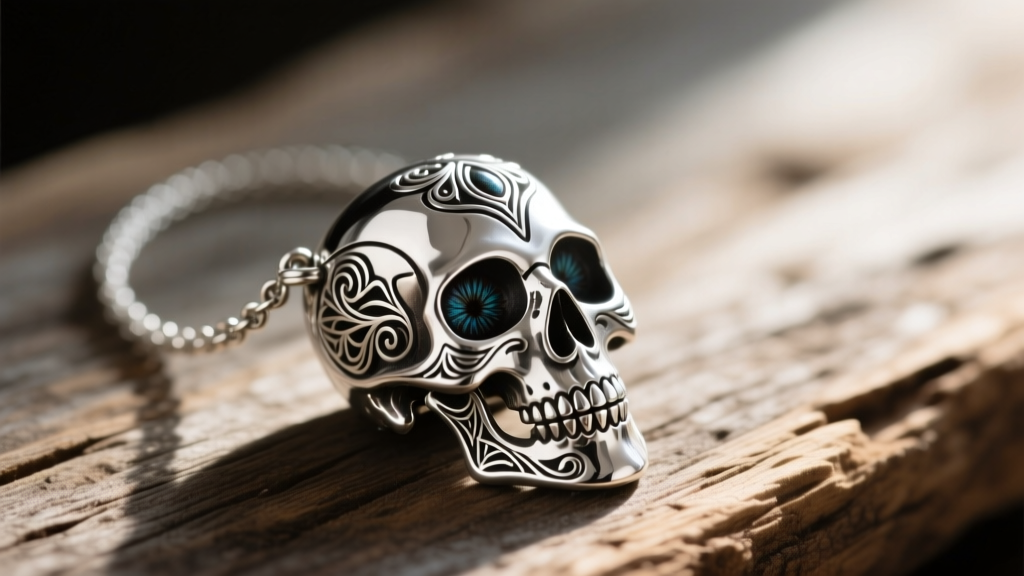
Few pieces of gaming-inspired jewelry capture the nautical, adventurous spirit of the Great Sea quite like a custom wind waker skull necklace. Whether the design pays homage to the Helmaroc King, the pirate motifs of the Forsaken Fortress, or simply the cel-shaded charm of early 2000s fantasy, the material you choose dictates everything from the pendant's weight to its ability to hold microscopic details in the bone texture. In 2026, indie jewelers and custom casters have access to a wider array of specialized alloys than ever before, but not every metal is suited for the deep undercuts and fragile teeth of a skull motif.
This guide breaks down the exact metallurgical properties, casting methods, and failure modes of the most common materials used for thematic skull pendants, helping you choose the perfect alloy for your daily wear.
The Metallurgical Challenge of Skull Pendants
Designing and casting a skull necklace presents unique structural challenges. Unlike smooth gemstone bezels or geometric pendants, a realistic or stylized skull features deep undercuts (like the nasal cavity and eye sockets), thin protruding elements (the teeth and zygomatic arches), and intricate surface textures (cranial sutures and weathering marks).
To capture these details, the molten metal must have high fluidity and low shrinkage rates. According to metallurgical standards outlined by the Gemological Institute of America (GIA) and jewelry manufacturing hubs like Rio Grande, the choice of alloy directly impacts whether those tiny bone textures survive the casting and finishing process. Furthermore, a heavy skull pendant requires a robust bail and a chain capable of supporting dynamic movement without snapping.
Sterling Silver & Argentium: The Premium Standard
Standard 925 Sterling Silver remains the baseline for high-quality gaming jewelry. Composed of 92.5% silver and 7.5% copper, it offers excellent fluidity during lost-wax casting, meaning the intricate cracks and pores of a Wind Waker-inspired skull will be perfectly replicated. However, the copper content makes standard sterling prone to rapid tarnishing, especially in the deep crevices of a skull design where sulfur from the air and skin oils accumulate.
The Argentium Advantage
For a premium upgrade, modern jewelers are increasingly turning to Argentium Silver (935 or 960). By replacing some of the copper with germanium, Argentium becomes highly tarnish-resistant. For a skull necklace, this is a massive functional benefit: you won't have to aggressively scrub the eye sockets and teeth with a polishing cloth, which can inadvertently remove the intentional black antiquing (oxidation) that gives the skull its 3D depth.
- Hardness: 2.5 - 3 on the Mohs scale (annealed).
- Casting Method: Investment (lost-wax) casting.
- Price Range (2026): $140 - $280 for custom indie pieces.
- Failure Mode: Prongs or thin teeth bending under heavy impact; surface scratching.
Marine & Silicon Bronze: The Great Sea Aesthetic
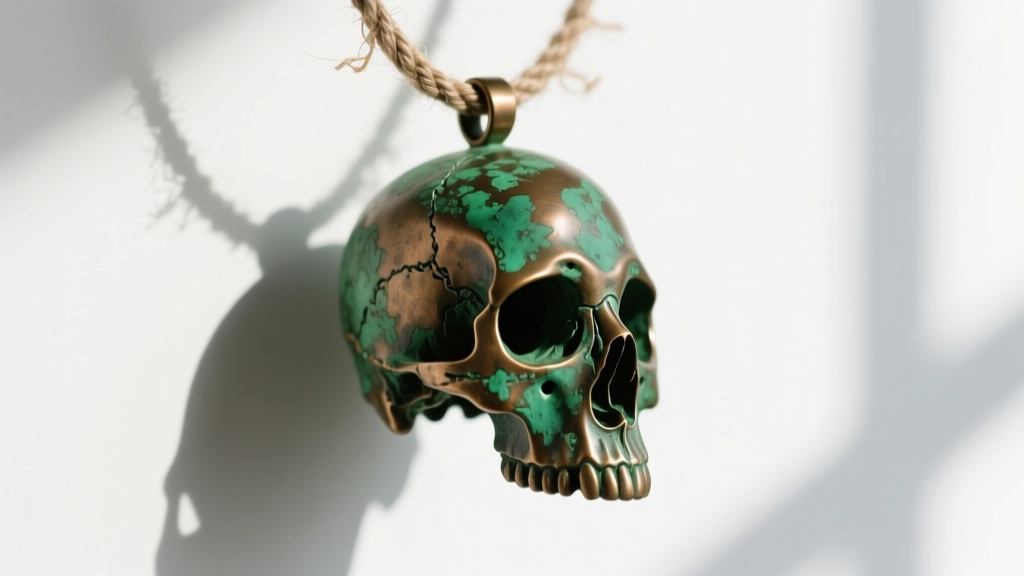
If you want your wind waker skull necklace to look like it was pulled straight from the ocean floor, bronze is the undisputed champion. Bronze is an alloy of copper and tin, and when exposed to moisture and air, it develops a natural patina (verdigris) that mimics ancient, sunken treasure.
Silicon Bronze vs. Standard Jewelry Bronze
Standard jewelry bronze (often a mix of copper, tin, and sometimes zinc) can cause contact dermatitis in wearers with nickel or zinc sensitivities. For skin safety and superior corrosion resistance, look for Silicon Bronze (C65500). Originally a marine hardware alloy, silicon bronze is virtually nickel-free, highly resistant to saltwater corrosion, and casts with a beautiful, warm golden-brown hue that darkens richly over time.
- Hardness: 3 - 4 on the Mohs scale (harder and more durable than silver).
- Weight: Noticeably heavier than silver, giving the skull a premium, substantial feel on the chest.
- Price Range (2026): $85 - $160.
- Failure Mode: Green skin staining if the patina is not sealed with a micro-crystalline wax; requires occasional re-waxing.
Lead-Free Pewter & Britannia Metal: The Budget Caster
For mass-produced or budget-friendly gaming merch, pewter is the industry standard. Modern, lead-free pewter (often meeting ASTM F2923 safety standards) is primarily tin (92%), alloyed with antimony and copper for strength. Britannia Metal is a specific, high-grade variant of pewter that polishes to a bright, silvery finish, making it a popular silver alternative for intricate skull pendants.
The primary advantage of pewter is its incredibly low melting point (around 230°C to 260°C), which allows for spin-casting in rubber molds rather than expensive ceramic investment molds. This keeps the cost of highly detailed Wind Waker skull replicas very low.
Expert Warning: Pewter has very low shear strength. If your skull design features thin, protruding lower teeth or delicate horn-like extensions, pewter will easily snap if the pendant is dropped on a hard floor or caught on a heavy winter coat.
Material Properties & Failure Modes Comparison
| Material | Mohs Hardness | Detail Retention | Tarnish / Patina | Est. 2026 Price |
|---|---|---|---|---|
| Argentium 935 | 2.5 - 3.0 | Exceptional | Highly Resistant | $140 - $280 |
| 925 Sterling | 2.5 | Exceptional | Prone to Sulfur Tarnish | $120 - $220 |
| Silicon Bronze | 3.0 - 4.0 | Very Good | Develops Green/Brown Patina | $85 - $160 |
| Britannia Pewter | 1.5 - 2.0 | Good (Soft Edges) | Dulls Over Time | $35 - $75 |
| Grade 5 Titanium | 6.0 | Sharp (CNC Milled) | None (Inert) | $200 - $450+ |
Chain Mechanics & Bail Sizing for Heavy Pendants
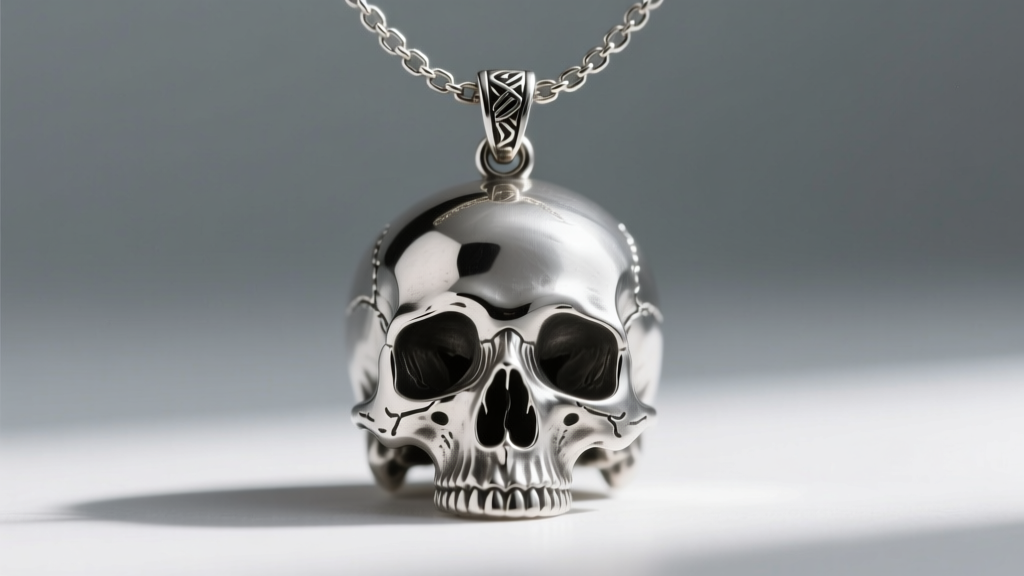
A common mistake when buying or designing a wind waker skull necklace is pairing a heavy, solid-metal skull with an inadequate chain. Skull pendants, particularly those cast in bronze or solid silver, frequently weigh between 25 and 45 grams. A standard 20-gauge (0.8mm) cable chain will eventually suffer from link deformation and snap under the dynamic stress of walking and bending over.
The Right Chain Gauges
For a pendant weighing over 20 grams, you must upgrade to a 14-gauge (1.6mm) or 12-gauge (2.0mm) chain. The best structural weaves for heavy skulls include:
- Wheat (Spiga) Chain: The woven, braided structure distributes weight evenly and resists kinking, making it ideal for heavy, bottom-weighted pendants.
- Rope Chain: Offers excellent tensile strength and a twisting light-reflection that complements the matte or antiqued finish of a skull.
- Box Chain: While strong, box chains can sometimes catch on the sharp edges of a skull's hidden bail. Ensure the bail is smoothly polished if using this weave.
Bail Engineering
Avoid standard glue-on bails or thin wire-wrapping for heavy skulls. The bail should be cast as a single, integrated piece with the cranium (a 'hidden bail' emerging from the top or back of the skull) or soldered using high-temperature silver solder. The inner diameter of the bail must be at least 4mm to 5mm to accommodate thicker, structural chains without causing friction wear.
Maintenance: Cleaning Crevices Without Ruining Antiquing
The visual impact of a skull necklace relies heavily on oxidation—the intentional blackening of the recessed areas (eye sockets, nasal cavity, teeth gaps) to create contrast against the polished high points.
Never use liquid silver dips or ultrasonic cleaners on an antiqued skull pendant. These methods will strip the oxidation, leaving you with a flat, lifeless white-gray skull. Instead, use a soft-bristled baby toothbrush with a mild dish soap and warm water to gently agitate dirt out of the cranial sutures. For polished areas, use a treated polishing cloth, carefully folding the edge of the cloth to buff the high points of the cheekbones and brow ridge without touching the darkened crevices. If you opt for a bronze skull, apply a thin layer of Renaissance Wax every six months to seal the patina and prevent it from transferring onto your clothing.


