How to Style a Mini Seashell Necklace: Beginner Guide
Discover how to choose, style, and care for a mini seashell necklace. Learn about shell types, stringing materials, and layering techniques for any outfit.

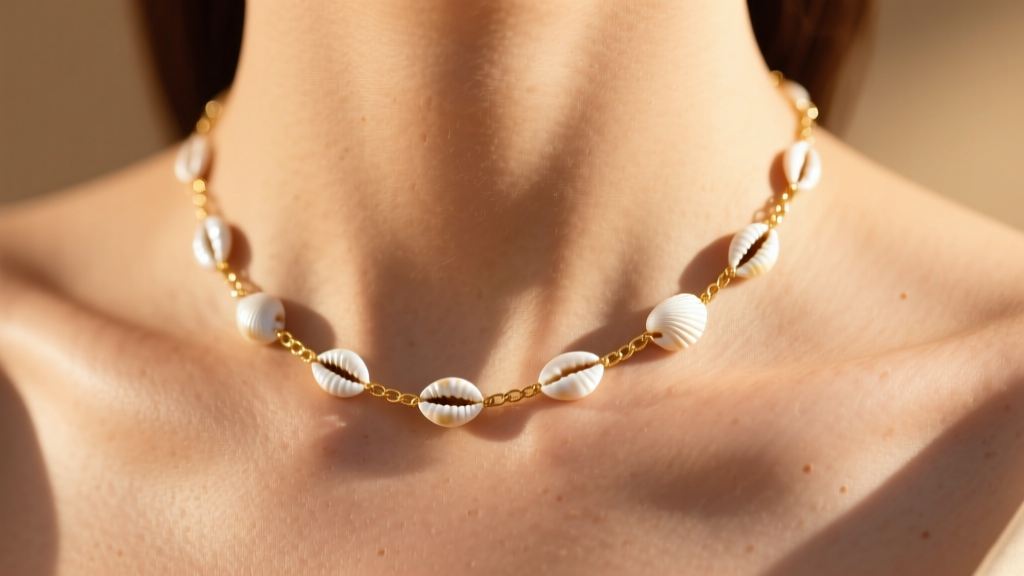
The mini seashell necklace has transcended its origins as a casual beach souvenir to become a refined, versatile staple in modern jewelry wardrobes. Whether you are drawn to the organic textures of natural puka shells or the delicate pastel hues of tellin shells, mastering the art of selecting, styling, and caring for these coastal gems requires a bit of specialized knowledge. As organic materials, seashells behave very differently from traditional minerals and metals. This beginner-friendly explainer will walk you through the exact specifications, material grades, and styling frameworks you need to build a durable and aesthetically pleasing mini seashell necklace collection.
The Anatomy of a Mini Seashell Necklace
When jewelers refer to a 'mini' seashell necklace, they are generally describing shells that measure between 4mm and 8mm in diameter or length. This small scale allows the necklace to sit delicately on the collarbone without overwhelming your neckline. However, not all shells are created equal. Understanding the specific species used in jewelry making is the first step in evaluating quality and price.
Common Shell Varieties Used in Miniature Jewelry
- Natural Puka (Conus miliaris): Authentic Hawaiian puka shells are naturally tumbled by the ocean, resulting in their signature center holes and smooth, asymmetrical edges. Genuine mini puka (4mm-5mm) is increasingly rare and commands a premium price. Beware of mass-produced 'faux puka,' which are simply punched out of larger, cheaper shells and lack the natural curvature of the ocean-tumbled originals.
- Tellin Shells: Prized for their flat, delicate profiles and natural pastel coloration (ranging from soft peach to lavender), tellin shells are usually strung side-by-side. Because they are incredibly thin (often less than 1mm thick), they require careful handling and protective knotting between each shell.
- Mini Cowrie: While traditional cowrie shells are large and glossy, mini cowrie varieties (like the Eratoidae family) offer a high-shine, porcelain-like finish at just 8mm to 10mm. They are usually strung with the flat ventral side facing outward.
- Mother-of-Pearl (Nacre) Inlays: Rather than whole shells, many luxury mini necklaces feature 3mm to 5mm geometric cuts of iridescent nacre, offering the oceanic vibe of a shell with the structural durability of a polished gemstone.
Stringing Materials and Chain Types
The longevity of your mini seashell necklace depends heavily on what holds it together. Shells have sharp, microscopic edges around their drill holes that can fray weak threads over time. Furthermore, if you plan to wear your necklace in saltwater or chlorinated pools, your stringing material must be completely impervious to moisture degradation.
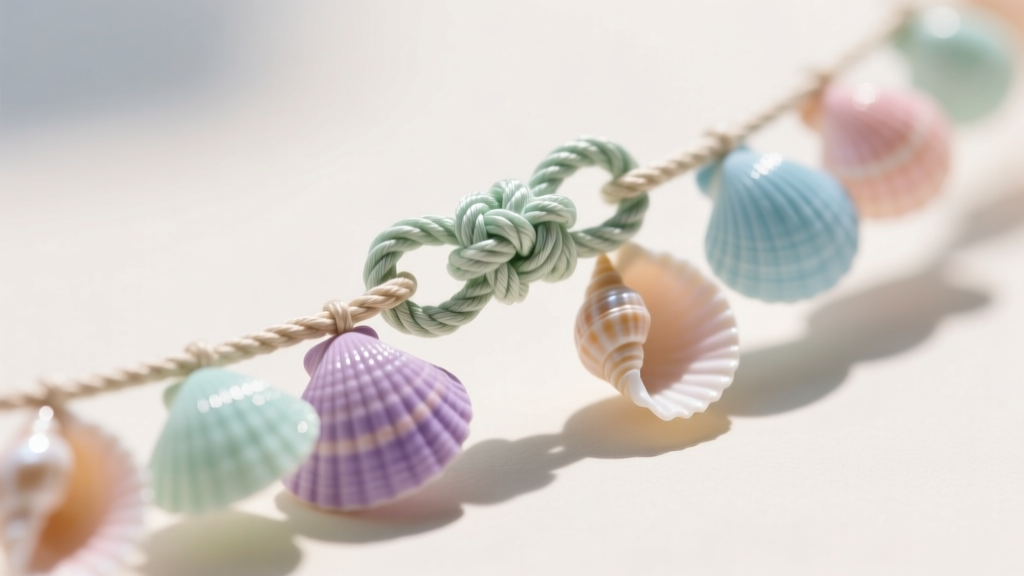
Below is a comparative breakdown of the most common stringing materials and chains used for mini shell jewelry, including their durability profiles and ideal use cases.
| Material | Durability & Water Resistance | Best Use Case | Average Price Range |
|---|---|---|---|
| Waxed Nylon Cord | Extremely High (Waterproof, fray-resistant) | Beachwear, swimming, daily casual | $15 - $45 |
| Silk Thread | Low (Degrades and stretches in water) | Formal events, indoor wear only | $30 - $70 |
| 14k Solid Gold Chain | High (Tarnish and water-resistant) | Everyday luxury, fine jewelry layering | $180 - $500+ |
| 14k Gold-Filled Wire | Medium-High (Good water resistance, can wear over years) | Budget-friendly luxury, occasional water exposure | $60 - $120 |
| Sterling Silver Chain | Medium (Prone to tarnish from salt/sulfur) | Casual wear, requires regular polishing | $45 - $110 |
For beginners, a waxed nylon cord with a macrame sliding knot is the most forgiving and practical choice. It eliminates the need for a metal clasp (which can tarnish or break) and allows you to adjust the length on the fly. If you prefer a metal chain, ensure the jump rings connecting the shells are soldered shut so the sharp edges of the shells do not eventually saw through the wire.
Sizing and Length Guide for Beginners
Because mini seashells are lightweight, they do not drape with the same heavy 'V' shape as gemstone or metal chain necklaces. Instead, they tend to sit in a wider, softer arc. To achieve the perfect look, you must select the right base length for your neck size and desired style.
- 14 Inches (Choker): Sits snugly against the base of the neck. Ideal for a single strand of mini puka shells or a minimalist gold chain with a solitary 6mm cowrie pendant. This length is perfect for pairing with V-necklines or off-the-shoulder tops.
- 16 Inches (Collarbone): The most versatile and universally flattering length. A 16-inch mini tellin shell necklace will rest exactly on the collarbone, making it the perfect anchor piece for a layered necklace stack.
- 18 Inches (Princess): Sits just below the collarbone. This length is best reserved for heavier mini shell strands or when you are wearing high-necked garments like turtlenecks or crew-neck sweaters.
How to Layer Your Mini Seashell Necklace
Layering is where the mini seashell necklace truly shines. Because the shells are small and organic, they provide an excellent textural contrast to polished metals and smooth gemstones. To avoid a tangled, cluttered look, follow the Two-Inch Rule: ensure there is at least a two-inch difference in length between each necklace in your stack.
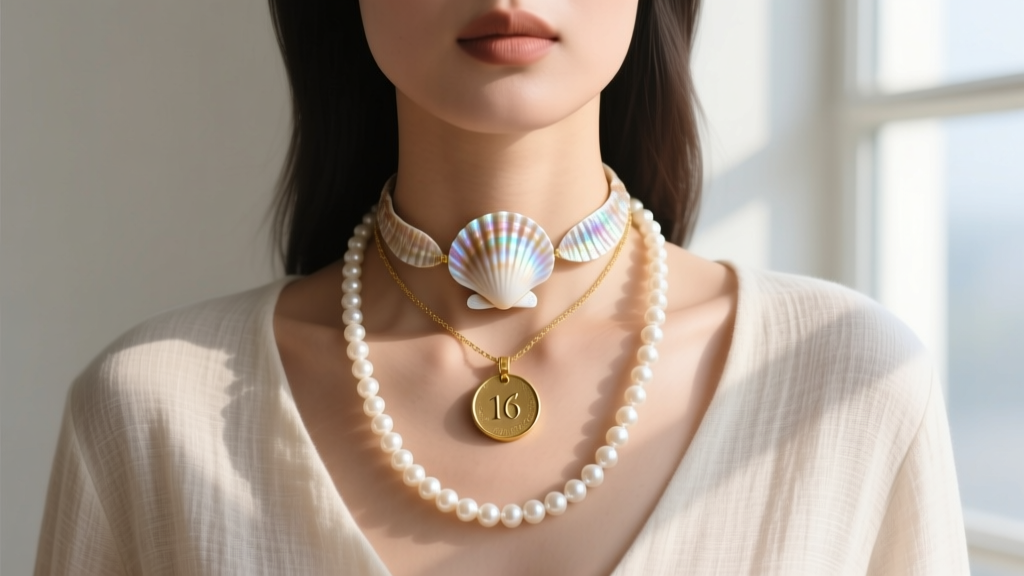
A Foolproof 3-Piece Layering Formula
- The Base (14 inches): Start with a delicate mini seashell choker on a waxed nylon cord. The organic, matte texture of the shells will sit closest to your skin and frame your face.
- The Focal Point (16 inches): Add a 14k gold or sterling silver coin pendant (10mm to 15mm in diameter). The high-shine metal will contrast beautifully with the matte finish of the seashells.
- The Anchor (18 inches): Finish with a smooth, round freshwater pearl strand or a simple, polished mother-of-pearl bar pendant. This bridges the gap between the organic shells and the polished metal coin, tying the whole stack together.
Care and Maintenance: Protecting Organic Gems
Treating a seashell necklace like a standard gold or diamond piece is the fastest way to ruin it. Seashells are classified as organic gemstones, composed primarily of calcium carbonate (CaCO3). On the Mohs scale of mineral hardness, shells rank between 2.5 and 3.0, making them exceptionally soft and vulnerable to scratching, chemical erosion, and heat.
According to the Gemological Institute of America (GIA), organic gems like pearls and shells are highly susceptible to damage from everyday chemicals. The acids found in human perspiration, perfumes, hairsprays, and sunscreens can slowly dissolve the calcium carbonate, leading to a dull, chalky appearance and structural weakening over time.
Essential Care Rules for Shell Jewelry
- The 'Last On, First Off' Rule: Always put your seashell necklace on after applying sunscreen, perfume, and makeup. Remove it immediately upon returning home before changing clothes or applying skincare.
- Avoid Ultrasonic Cleaners: Never use ultrasonic jewelry cleaners or harsh chemical dips. The high-frequency vibrations can shatter fragile mini shells like tellin, and the chemicals will strip their natural luster.
- Proper Storage: Because shells are soft (Mohs 2.5), storing them in a communal jewelry box alongside steel clasps or diamond rings will result in severe scratching. The Victoria and Albert Museum recommends storing organic jewelry in separate, soft cloth pouches to prevent friction damage.
- Saltwater Rinsing: If you wear your nylon-strung shell necklace in the ocean, rinse it thoroughly in fresh, lukewarm water afterward. While the shells themselves can handle brief saltwater exposure, the salt crystals can dry into the drill holes and act like sandpaper against the stringing material.
Price Guide: What Should You Expect to Pay?
The pricing for mini seashell necklaces varies wildly based on the authenticity of the shells, the rarity of the species, and the quality of the hardware. Here is a realistic pricing framework to help you shop with confidence:
- Budget Tier ($10 - $30): Expect faux-puka (punched shells), mass-produced dyed tellin shells, and stringing on basic cotton or elastic cords with glue-knot closures. Hardware is usually plated brass, which will tarnish quickly.
- Mid-Tier ($40 - $90): Genuine, naturally sourced mini shells strung on high-quality waxed nylon or silk. You will find secure macrame closures or basic 925 sterling silver spring-ring clasps. This is the sweet spot for durable, authentic beachwear jewelry.
- Fine Jewelry Tier ($150 - $600+): Ethically sourced, rare mini shells (like authentic Hawaiian puka or naturally colored mini cowrie) set on solid 14k or 18k gold chains with soldered jump rings and secure lobster clasps. These pieces are designed for lifelong daily wear and hold intrinsic metal value.
By understanding the specific materials, lengths, and care requirements outlined above, you can confidently select a mini seashell necklace that not only elevates your personal style but also stands the test of time. Whether you opt for a rugged nylon-strung choker for your next coastal vacation or a delicate gold-chain layering piece for everyday elegance, the key lies in respecting the organic beauty of the shell.


