Mjolnir Necklace Meaning: Troubleshooting Authenticity & Style
Explore the true Mjolnir necklace meaning while troubleshooting common buying mistakes, material failures, and cultural misconceptions.

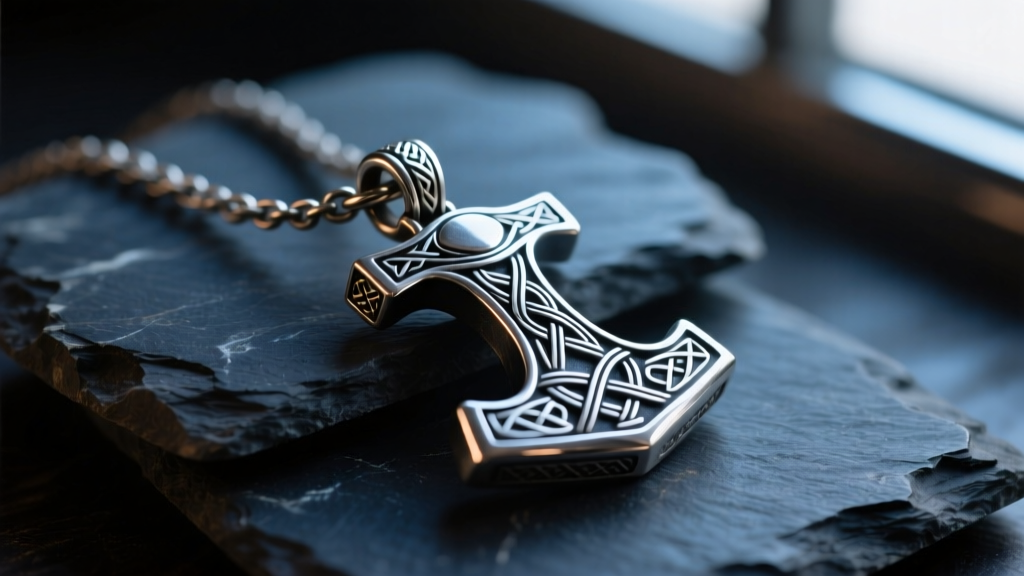
Decoding the Mjolnir Necklace Meaning: Beyond Pop Culture
When researching the mjolnir necklace meaning, many buyers are surprised to discover the vast chasm between Hollywood interpretations and historical reality. Mjolnir, the legendary hammer of Thor, is far more than a superhero accessory or a generic symbol of aggression. In historical Norse society and modern Asatru (Norse paganism), Mjolnir is fundamentally a symbol of protection, consecration, and the hallowing of boundaries. According to mythological records detailed by Britannica, Thor used his hammer not just to strike giants, but to bless marriages, sanctify land, and protect the mortal realm of Midgard.
The primary "problem" modern buyers face is navigating the cultural stigma and misconceptions surrounding the pendant. While some fringe groups have unfortunately attempted to co-opt Norse symbols, the vast majority of Mjolnir wearers are either practicing Heathens, individuals honoring their Scandinavian heritage, or history enthusiasts. Troubleshooting this social friction starts with choosing a design that reflects historical authenticity rather than aggressive, modern fantasy tropes. Opting for historically grounded designs signals a deep respect for the culture, effectively neutralizing ignorant assumptions about the wearer's intent.
The Weight Problem: Troubleshooting Material Failures
A Mjolnir pendant is inherently top-heavy and dense. The most common troubleshooting issue buyers encounter within the first six months of wear is structural failure—specifically, the bending of the bail (the loop the chain passes through) or the warping of the hammer's handle. This happens when buyers prioritize cheap aesthetics over metallurgical reality.
To solve this, you must understand the tensile strength and density of the metals used in jewelry casting. Below is a diagnostic table to help you select the right material grade for a heavy hammer pendant.
| Material Grade | Tensile Strength | Weight Profile | Best Use Case & Troubleshooting Notes |
|---|---|---|---|
| 925 Sterling Silver | Moderate | Heavy | Ideal for intricate knotwork. Ensure the bail is cast thick (min 2mm wire) to prevent bending under the pendant's weight. |
| Silicon Bronze (Everdur) | High | Medium-Heavy | Best for historical accuracy and patina lovers. Highly resistant to deformation and saltwater corrosion. |
| Grade 5 Titanium (Ti-6Al-4V) | Very High | Ultra-Light | Perfect for active lifestyles and sensitive skin. Eliminates the 'guillotine effect' of heavy pendants hitting the sternum. |
| Zinc Alloy (Pewter) | Low | Medium | Avoid for heavy hammers. Pewter is brittle and will snap at the handle junction if dropped or snagged. |
If you already own a sterling silver Mjolnir with a thin bail that keeps bending, the immediate fix is to take it to a local jeweler to have a heavy-duty soldered jump ring added as a secondary bail reinforcement.
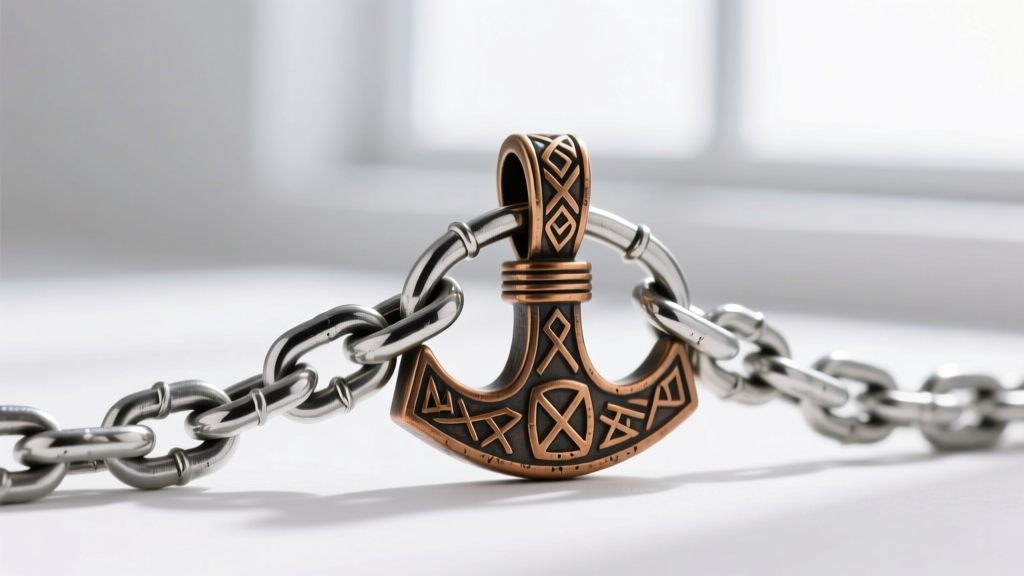
Chain Gauge and Bail Sizing: Preventing the 'Guillotine Effect'
Because Mjolnir pendants are dense, they act as a plumb bob on a weak chain. This creates what jewelers call the 'guillotine effect'—the pendant slides rapidly down the V-shape of the chain and strikes the wearer's collarbone or sternum, causing bruising and eventually snapping the chain's clasp.
Troubleshooting Chain Selection
- Avoid Hollow Cable Chains: Standard 1.5mm to 2mm cable chains look fine on a display bust but will stretch and snap under a 30-gram bronze hammer.
- Opt for Interlocking Weaves: Choose a Curb, Figaro, or Rope chain with a minimum width of 3.5mm to 4.5mm. These weaves distribute the kinetic energy of the swinging pendant across multiple interlocking links rather than stressing a single solder point.
- Clasp Upgrades: The weakest point of any necklace is the clasp. Discard the standard spring-ring clasp that comes with most chains. Upgrade to a 5mm+ Toggle clasp or a heavy-duty locking carabiner clasp, which can withstand the sudden shock-load of a heavy pendant swinging.
The Bail Diameter Mismatch
A frequent purchasing error involves buying a robust 4mm rope chain, only to discover the Mjolnir pendant's bail has an inner diameter of just 2.5mm. The Fix: Never try to force a thick chain through a small bail, as this will grind away the interior of the bail, weakening it. Instead, use a 3mm soldered stainless steel jump ring as an adapter. Thread the jump ring through the bail, and then thread your thick chain through the jump ring. This preserves the pendant and allows the chain to move fluidly.
Historical Accuracy vs. Fantasy Knockoffs
If the mjolnir necklace meaning is rooted in heritage and historical reverence, wearing a Marvel Studios replica or a 19th-century romanticized fantasy piece defeats the purpose. Troubleshooting the 'fake Viking' market requires knowing what actual archaeological finds look like.
According to the National Museum of Denmark, Viking Age hammer amulets were rarely the highly detailed, rune-carved weapons seen in modern media. They were largely simple, stylized T-shapes or inverted T-shapes. The famous Købelev pendant, discovered in Denmark, even features a runic inscription that translates simply to "This is a hammer" (Hmar x is), proving that even in the Viking Age, people needed to clarify the symbol's intent against early Christian crosses.
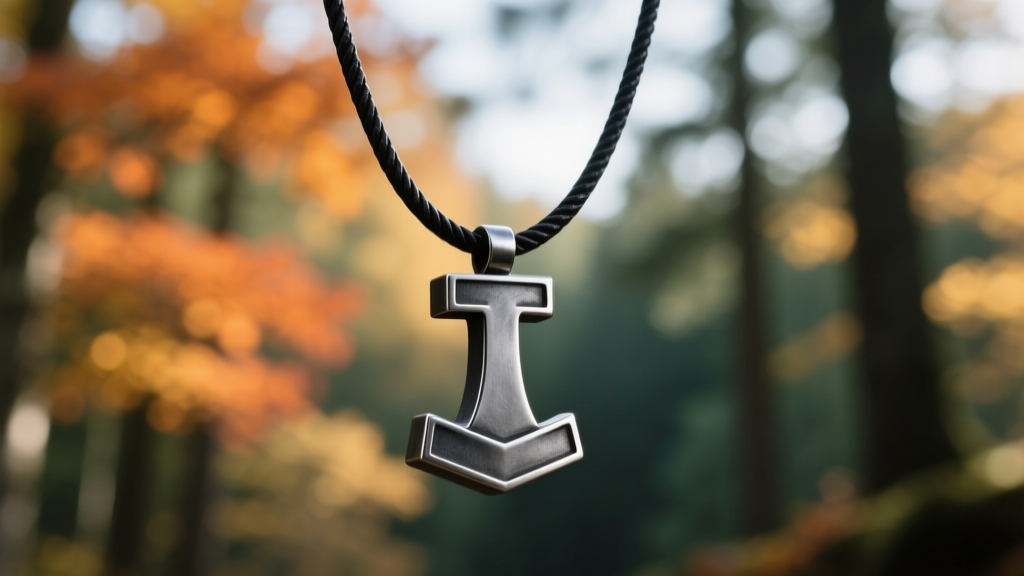
How to Spot an Authentic Design
- Look for the Wolf-Head Motif: Many historical hammers (like the Skåne hammer) feature the top of the handle shaped like a wolf's or eagle's head, not a leather wrap.
- Avoid Over-Runicization: If a pendant is covered in dozens of runes that spell out modern English phrases transliterated into Elder Futhark, it is a modern novelty item, not a historically grounded piece.
- Embrace Imperfection: Cast bronze or hand-forged iron pieces should show slight asymmetries and filing marks, mimicking the lost-wax casting methods of the 10th century.
Maintenance: Solving Tarnish and Patina Issues
Heavy Mjolnir pendants sit against the chest, accumulating sweat, sebum, and dead skin cells in the intricate knotwork crevices. This leads to rapid, uneven tarnishing, particularly in 925 sterling silver and bronze.
The Problem: Using standard silver dip polishes will strip the intentional 'antiquing' (black oxidation) that jewelers apply to the crevices to make the Norse knotwork pop, leaving the pendant looking flat and artificially white.
The Troubleshooting Protocol:
- Daily Care: Wipe the pendant with a dry, lint-free microfiber cloth after wearing it to remove acidic sweat.
- Deep Cleaning: Mix a few drops of mild dish soap (like Dawn) in warm water. Use an extra-soft baby toothbrush to gently agitate the dirt out of the crevices. Do not use baking soda or toothpaste, as these are abrasive and will scratch high-polish surfaces.
- Restoring Contrast: If the high-polish areas of the hammer face have dulled, use a specialized silver polishing cloth (impregnated with jeweler's rouge) only on the raised, flat surfaces. Avoid rubbing the cloth into the deep grooves to preserve the dark patina that gives the Mjolnir its three-dimensional depth.
By understanding the profound mjolnir necklace meaning and applying these practical troubleshooting techniques, you ensure your pendant remains a durable, respectful, and historically grounded talisman for decades to come.


