Moissanite Necklace Value: 2026 Budget & Buying Guide
Discover if a moissanite necklace is worth the investment in 2026. Compare prices, grading scales, and diamond alternatives for maximum brilliance.

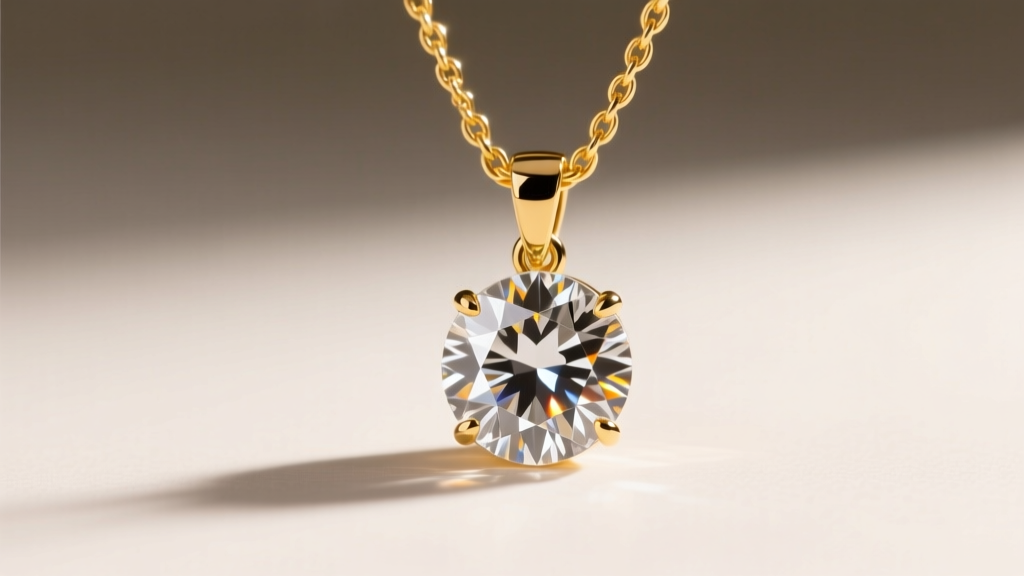
The Real Cost of a Moissanite Necklace in 2026
When evaluating the true value of a moissanite necklace, we must first look past the marketing and examine the material science. Moissanite is composed of silicon carbide (SiC), a compound that occurs naturally in minute quantities but is exclusively lab-created for jewelry purposes. With a refractive index of 2.65 (compared to a diamond’s 2.42) and a dispersion rate of 0.104 (more than double that of a diamond), moissanite possesses an inherent optical superiority when it comes to "fire"—the rainbow-colored flashes of light that captivate the eye.
However, the budget landscape for a moissanite necklace has shifted dramatically. The original patents held by Charles & Colvard expired in 2015, opening the floodgates for global manufacturers. By 2026, the market is heavily bifurcated. Legacy brands continue to charge a premium for their heritage and packaging, often pricing a 1-carat pendant between $800 and $1,200. Conversely, direct-to-consumer lapidaries and specialized online jewelers source identical D-color, VVS1-clarity stones for $250 to $450. Understanding this arbitrage is the first step in maximizing your jewelry budget without sacrificing optical performance.
Decoding Moissanite Grades: Color, Clarity, and Cut
Unlike natural diamonds, where inclusions and color tints are geological accidents, lab-grown moissanite is produced in highly controlled environments. This means clarity is rarely an issue; virtually all high-quality moissanite on the market grades at VVS1 or IF (Internally Flawless). Therefore, your budget assessment should focus entirely on color and cut.
The Color Spectrum
Moissanite is generally categorized into two color tiers:
- Colorless (D-E-F): These stones exhibit no detectable warmth and perfectly mimic the highest-grade diamonds. They are essential if you are setting the pendant in platinum or white gold.
- Near Colorless (G-H-I): These stones carry a microscopic warmth that is virtually invisible to the untrained eye once set, especially in yellow or rose gold. Choosing a G-H-I stone can reduce your pendant cost by 20% to 30%.
The Critical Importance of Cut
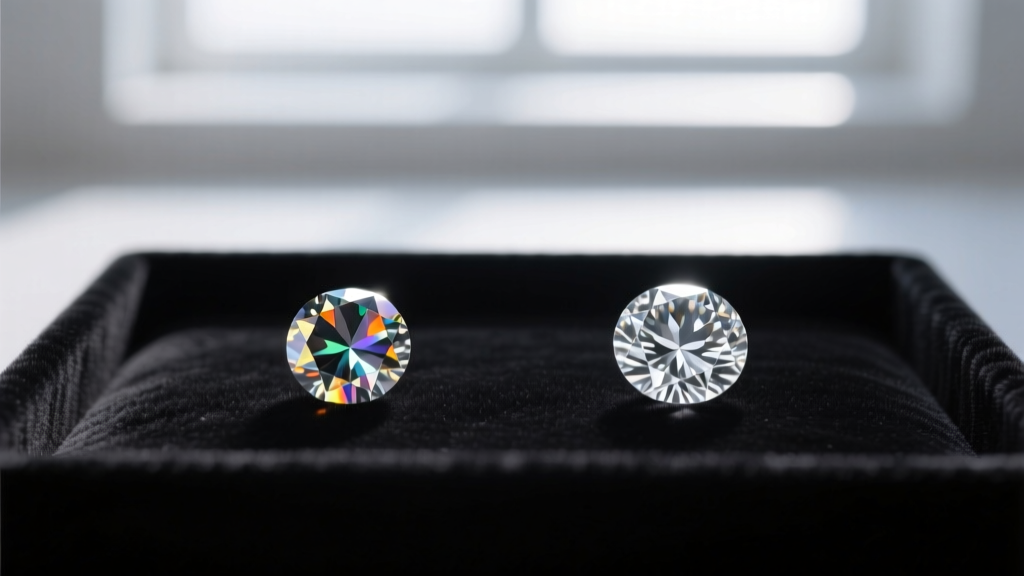
Cut is where budget buyers often make a fatal error. Because moissanite’s refractive index is higher than diamond, standard diamond proportions can sometimes lead to "windowing" (light leaking out the bottom) or an overly chaotic "disco ball" effect. According to gemological standards outlined by the Gemological Institute of America (GIA), precision cutting is required to harness moissanite's unique optical properties. Always seek out "Hearts and Arrows" (H&A) round brilliant cuts. Avoid "crushed ice" or modified cushion cuts in moissanite; the high dispersion turns the crushed ice facets into a blurry, indistinct sparkle, severely diminishing the stone's value and visual appeal.
Price Breakdown: Moissanite vs. Lab Diamond vs. Natural Diamond
To accurately assess value, we must benchmark the moissanite necklace against its closest competitors. The table below reflects average 2026 retail pricing for a solitaire pendant (stone only, excluding the chain and setting metal).
| Carat Weight (Equivalent) | Moissanite (Direct Lab) | Moissanite (Legacy Brand) | Lab-Grown Diamond | Natural Diamond |
|---|---|---|---|---|
| 0.50 ct | $120 - $180 | $350 - $450 | $300 - $450 | $1,200 - $1,800 |
| 1.00 ct | $250 - $350 | $700 - $900 | $600 - $900 | $3,500 - $5,500 |
| 2.00 ct | $400 - $550 | $1,200 - $1,600 | $1,100 - $1,600 | $12,000 - $18,000 |
| 3.00 ct | $600 - $800 | $1,800 - $2,400 | $1,800 - $2,500 | $25,000 - $40,000+ |
As the carat size increases, the value proposition of a moissanite necklace becomes undeniable. A 2-carat natural diamond pendant is a luxury asset requiring insurance and secure storage, whereas a 2-carat moissanite pendant offers identical visual impact and superior durability (9.25 on the Mohs scale) for the price of a mid-tier smartphone.
Chain Materials: Where Budgets Often Fail
The most common failure mode in budget jewelry is pairing a high-quality gemstone with a substandard chain. Many buyers will spend $400 on a flawless moissanite pendant and mount it on a $30 925 sterling silver chain to save money. This is a critical error.
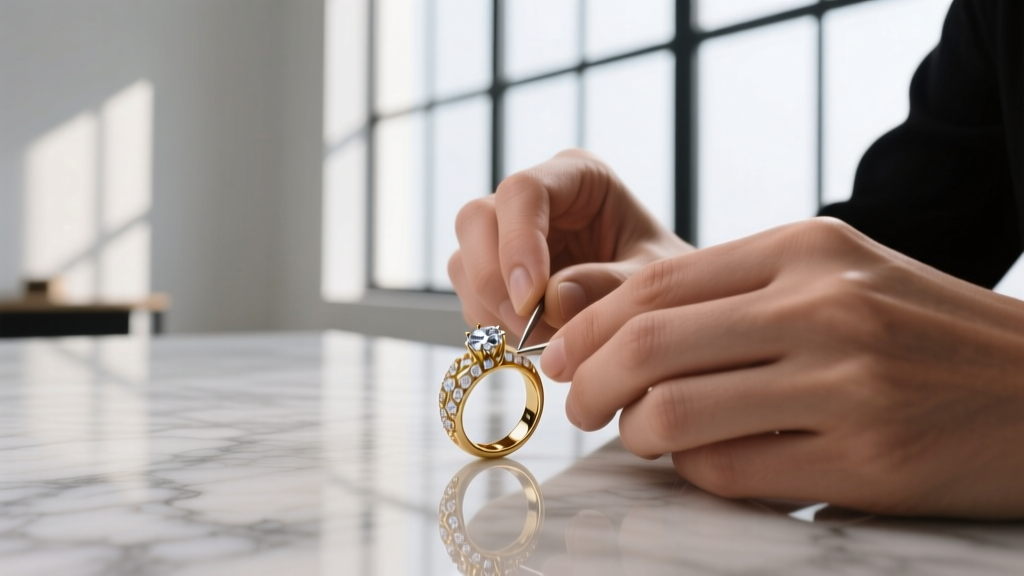
Sterling silver is an alloy containing 7.5% copper, making it prone to tarnishing and, more importantly, structural fatigue. The prongs holding your moissanite pendant are subject to micro-abrasions every time you wear the necklace. Silver prongs will wear down, bend, and eventually snap, leading to the loss of your stone. Furthermore, the spring-ring clasps on silver chains frequently fail at the solder joint.
The Smart Money Allocation
For a necklace intended for daily or frequent wear, you must allocate your budget toward 14k solid gold (yellow, rose, or white). A 14k gold cable or box chain will cost between $150 and $250, but it offers the tensile strength required to secure the pendant safely for decades. If you prefer the silvery look of white gold, remember that it requires rhodium plating every 12 to 18 months to maintain its bright white luster, adding a hidden maintenance cost to your budget. For a maintenance-free white metal, platinum is superior but will push the chain cost above $600.
How to Spot Overpriced and Misrepresented Moissanite
As the moissanite necklace market has expanded, so have deceptive marketing tactics. To protect your budget, be highly skeptical of the following red flags:
- "Branded" Moissanite Premiums: Some retailers trademark specific cutting patterns and charge a 50% premium. While precision cutting is vital, you are paying for a marketing trademark, not a fundamentally different material.
- Fake or Novelty Certificates: Unlike diamonds, which are rigorously graded by the GIA or AGS, moissanite does not have a universally standardized grading laboratory. Many cheap vendors include "GRA" or unverified certificates that are mass-printed and hold zero resale or appraisal value. Rely on the vendor’s return policy and independent reviews rather than a piece of paper.
- Coated Stones: In rare cases, low-quality moissanite or cubic zirconia is coated with a diamond-like carbon (DLC) layer to enhance brilliance temporarily. This coating will scratch and wear off within months. Always buy from reputable jewelers who guarantee uncoated, solid SiC stones.
Layering and Wear: Maximizing Versatility
A major component of value is versatility. A solitaire moissanite pendant is an exceptional layering piece. To integrate it into a modern necklace stack without causing structural damage, follow these parameters:
- Length Variance: Pair your 16-inch moissanite pendant with an 18-inch paperclip chain and a 20-inch snake chain. A minimum 2-inch gap prevents the metal links from grinding against the moissanite setting, which can cause premature wear to the gold prongs.
- Bezel vs. Prong: If you plan to layer heavily, consider a bezel-set moissanite pendant. While a bezel setting reduces light entry by approximately 15% (slightly dimming the stone), it completely protects the girdle from impacts against adjacent chains and eliminates the risk of a prong catching on clothing.
Expert Verdict: A moissanite necklace represents one of the highest value-to-brilliance ratios in the 2026 jewelry market. By bypassing legacy brand markups, insisting on Hearts and Arrows precision cuts, and investing the savings into a solid 14k gold chain, you secure a piece that offers uncompromising optical fire and lifelong durability.
For further reading on the physical and optical properties of silicon carbide gemstones, consult the GIA's comprehensive guide on Moissanite Value Factors. Understanding these metrics ensures you are paying for true gemological quality, not just clever packaging.


