How to Choose a Necklace to Wear With Off the Shoulder Dress
Learn how to choose the perfect necklace to wear with off the shoulder dress styles. Step-by-step guide on lengths, metals, and pendants.

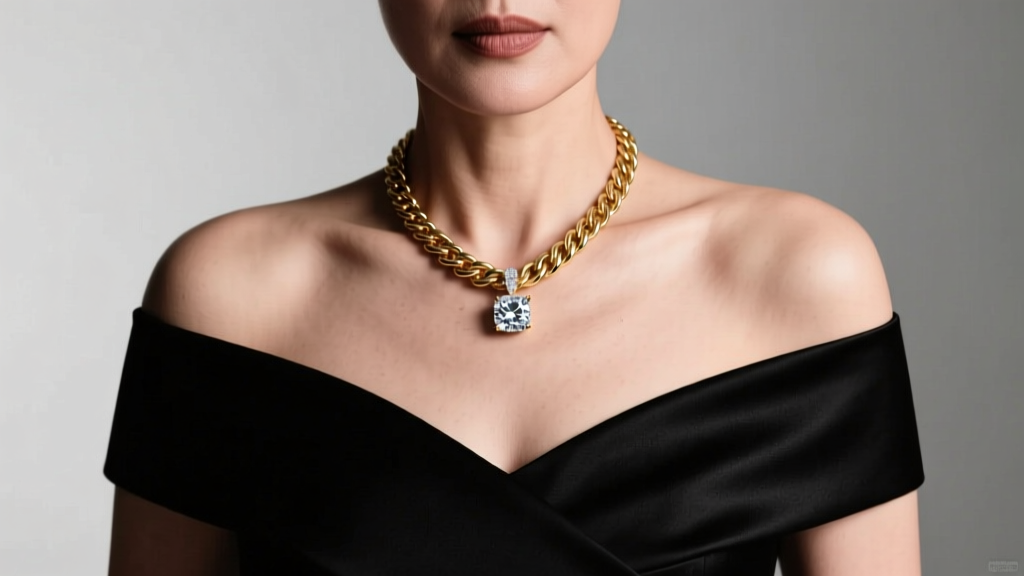
The Geometry of Off-the-Shoulder Necklines
The off-the-shoulder silhouette is a masterclass in framing the décolletage, drawing the eye horizontally across the collarbones and shoulders. However, finding the right necklace to wear with off the shoulder dress styles requires a strategic approach to proportion and material interaction. Unlike V-necks or scoop necks, which provide a vertical canvas for pendants, off-the-shoulder garments create a strict horizontal boundary. If a necklace is too long, it visually cuts the bodice in half; if it is too short, it crowds the neckline and competes with the dress's structural details.
Before selecting a piece, you must identify the specific geometry of your dress. According to standard fashion silhouette classifications, off-the-shoulder necklines generally fall into three categories:
- The Bardot (Straight-Across): A clean, horizontal line that sits just below the collarbone. This style demands symmetry and minimalism.
- The Sweetheart Dip: Features a downward curve in the center, creating a natural focal point that perfectly accommodates a single, centered pendant.
- The Ruffled or Asymmetric: Highly textured or uneven hemlines that require careful metal selection to avoid snagging and visual clutter.
Step 1: Measure Your Clavicle Gap
The most critical metric in styling this neckline is the "clavicle gap"—the exact vertical distance between your suprasternal notch (the small dip at the base of your front neck) and the top hem of the dress. This measurement dictates your chain length with mathematical precision.
To measure accurately, stand in front of a mirror wearing the dress. Use a soft tailor's measuring tape and measure from the suprasternal notch straight down to the highest point of the fabric.

If your clavicle gap is less than 2 inches, the canvas is too small for a standard pendant necklace, and you should opt for a delicate choker or skip the necklace entirely in favor of statement earrings. If the gap is between 2 and 4 inches, you have the ideal space for a princess-length chain. Gaps larger than 5 inches open the door for matinee-length pieces or layered lariat styles.
Step 2: Select the Exact Chain Length
Once you have your measurement, use the framework below to select the precise chain length. This data-driven approach ensures the pendant rests perfectly on bare skin, never touching the fabric of the dress.
| Neckline Style | Clavicle Gap | Ideal Chain Length | Pendant Style |
|---|---|---|---|
| Straight Bardot | 2 - 3 inches | 16" (Princess) | Small solitaire or horizontal bar |
| Sweetheart Dip | 4 - 6 inches | 18" (Matinee) | Teardrop or Y-chain lariat |
| Ruffled / Textured | < 2 inches | 14" (Choker) or None | Minimalist micro-pavé or bare |
| Asymmetric | Varies | 16" Asymmetric Lariat | Off-center drape or sliding knot |
Pro Tip: Always purchase a chain with a 2-inch extender. This allows you to micro-adjust the drop based on the exact heel height you are wearing, which subtly shifts your posture and the dress's drape.
Step 3: Match Metal Alloys and Chain Weaves to Fabric
The interaction between your jewelry and the dress fabric is a frequently overlooked point of failure. Off-the-shoulder dresses often feature delicate materials like lace, tulle, or silk, which are highly susceptible to snagging.
Metal Hardness and Fabric Interaction
When choosing gold, understand the alloy composition. According to the Gemological Institute of America (GIA), 18k gold is 75% pure gold, making it softer and more prone to micro-bending if it catches on a textured fabric. Conversely, 14k gold (58.5% pure gold) is alloyed with stronger metals like copper and zinc, providing superior structural rigidity. For heavily ruffled or lace off-the-shoulder dresses, 14k gold or platinum is vastly superior as it will not warp if accidentally pulled.
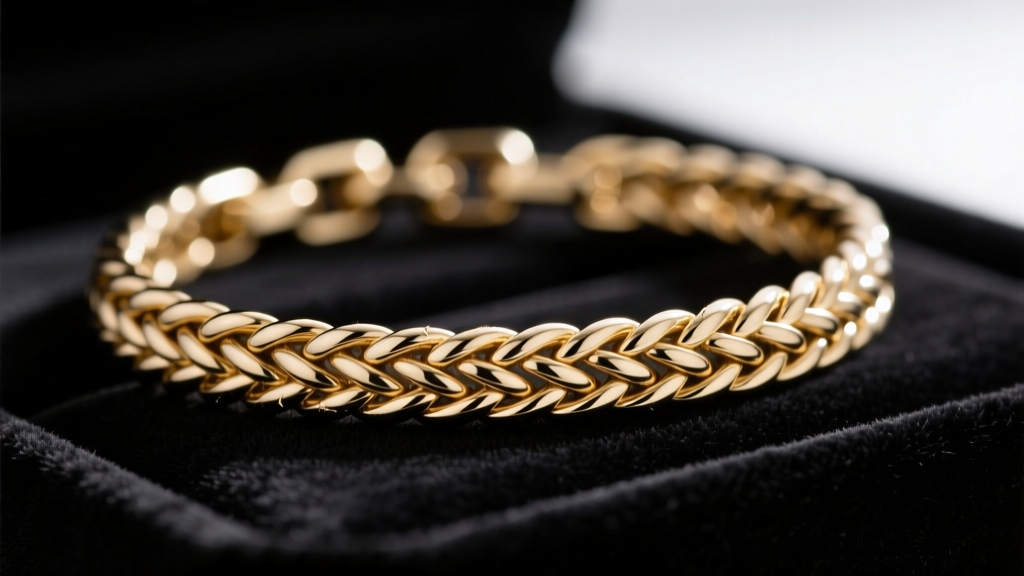
The Chain Weave Snag Test
Not all chains are created equal when it comes to fabric friction. Avoid flat chains like herringbone or snake chains. Their flat, interlocking plates act like microscopic velcro, easily catching loose threads from knits or lace. Instead, opt for rounded, tightly woven structures:
- Cable Chains: The classic round-link weave. Smooth, uniform, and glides effortlessly over delicate fabrics.
- Rope Chains: Twisted links that offer high tensile strength and a smooth exterior profile.
- Curb Chains: Flattened but rounded links that lay flat against the skin without exposing sharp edges to the dress hem.
Step 4: Choose Snag-Proof Pendants and Secure Clasps
The pendant setting and the clasp mechanism are the final variables in your styling equation.
Pendant Settings: Bezel vs. Prong
Prong-set gemstones (where small metal claws hold the stone) are notorious for catching on the loose threads of off-the-shoulder garments, especially when you move your arms and the fabric shifts upward. For any textured dress, strictly choose bezel-set pendants (where a smooth metal rim encircles the stone) or high-polish dome pendants. A 6mm to 8mm bezel-set diamond or sapphire provides maximum light return without any protruding hardware.
Clasp Mechanics
Because off-the-shoulder dresses expose the nape of the neck, the clasp is often visible when your hair is tied up. Avoid standard spring-ring clasps, which are difficult to operate blindly and prone to failing under tension. Upgrade to a 5mm or 7mm lobster clasp. Lobster clasps feature a secure internal spring mechanism that will not accidentally open if the chain is lightly tugged by a shifting dress hem. For a seamless look, you can also invest in a decorative box clasp that functions as a secondary design element at the back of the neck.
Common Styling Mistakes to Avoid
"The goal of jewelry with an off-the-shoulder silhouette is to accentuate the negative space, not to fill it completely. Restraint is the ultimate indicator of sophisticated styling."
To ensure your final look is polished, avoid these three critical errors:
- The Opera-Length Plunge: Wearing a 24-inch or 30-inch chain that dips below the neckline and rests directly on the dress bodice. This creates a harsh vertical line that disrupts the horizontal flow of the garment.
- Over-Layering: Stacking three or four chains creates a heavy, bohemian look that clashes with the inherent elegance of an off-the-shoulder cut. If you must layer, stick to two chains with a strict 2-inch length differential (e.g., a 14" choker and a 16" pendant chain).
- Ignoring Skin Undertones in Bright Lighting: Off-the-shoulder dresses expose a massive amount of chest and shoulder skin. If you are attending an outdoor daytime event, yellow gold can sometimes wash out cool undertones. Opt for white gold or platinum to provide a crisp, high-contrast frame against bare skin.
Final Fitting Checklist
Before heading out, perform this 30-second quality check:
- Does the pendant rest entirely on bare skin, at least half an inch above the fabric hem?
- Can you run your finger smoothly over the chain weave without feeling any sharp edges or catches?
- Is the clasp securely fastened, and does it sit flat against the nape of your neck without digging in?
By treating your jewelry selection as an exercise in precise measurement and material science, you elevate the off-the-shoulder dress from a simple garment to a masterfully curated look. The right necklace doesn't just sit on the skin; it acts as the final, illuminating brushstroke on the canvas of your décolletage.


