Expert Care Guide: Cleaning Your Pardon Crucifix Necklace
Learn how to safely clean, polish, and store your pardon crucifix necklace. Expert tips for preserving oxidized silver and vermeil.


Owning a finely crafted pardon crucifix necklace is an investment in both heritage and artistry. Characterized by intricate bas-relief detailing, historical motifs, and often a striking contrast between polished high points and darkened recesses, these pendants require a highly specific approach to maintenance. Unlike simple, high-polish chain necklaces, a pardon crucifix often features intentional oxidation, delicate enamel work, or gold vermeil overlays that can be permanently ruined by standard jewelry cleaning methods.
In this comprehensive guide, we break down the exact metallurgical and chemical considerations you must take to preserve the structural integrity and aesthetic depth of your pendant. From avoiding catastrophic ultrasonic damage to mastering the art of targeted polishing, here is your definitive care protocol.
The Anatomy of a Pardon Crucifix Pendant
Before applying any cleaning solution, you must identify the specific materials and finishes of your necklace. Most high-quality pardon crucifix pendants are cast in 925 sterling silver. To accentuate the deep crevices of the corpus, the INRI plaque, and the surrounding filigree, jewelers use a chemical process involving liver of sulfur (potassium sulfide) to create intentional oxidation, also known as patina.
Alternatively, your piece may be crafted in gold vermeil. By industry standards, true vermeil requires a base of sterling silver plated with at least 2.5 microns of 14k or 18k gold. Because this gold layer is relatively thin compared to solid gold, aggressive polishing will strip the plating entirely, exposing the silver core and leading to uneven, patchy wear. Understanding these material grades is the first step in preventing irreversible damage.
The Chemistry of Tarnish: Why Liquid Dips Are the Enemy
The most common mistake owners make when cleaning a pardon crucifix necklace is reaching for commercial liquid silver dips. These products rely on thiourea, a highly toxic organic compound that instantly strips silver sulfide (tarnish) from the metal's surface.
While the immediate result looks bright and clean, thiourea-based dips are catastrophic for intricate jewelry. According to conservation guidelines from the Victoria and Albert Museum, chemical dips strip away the intentional oxidation nestled in the deep relief carvings of the crucifix, leaving the piece looking flat and one-dimensional. Furthermore, these dips leave behind a micro-porous surface on the silver that actually accelerates future tarnishing, creating a vicious cycle of chemical dependency.
Step-by-Step Cleaning Protocol for Oxidized Silver
To clean your necklace without compromising the dark patina in the recesses, you must rely on mechanical action rather than harsh chemical reactions. Follow this precise, three-step protocol:
1. The Dry Dusting Phase
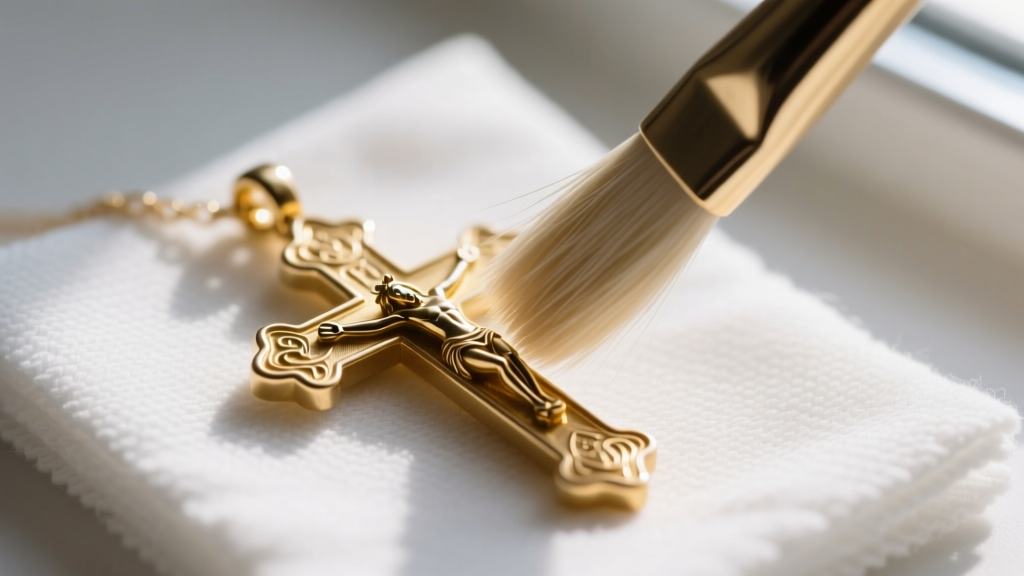
Never apply liquid to a dusty pendant, as this creates an abrasive slurry that causes micro-scratches. Use a clean, dry horsehair detail brush to gently sweep out dead skin cells, sebum, and lint from the intricate crevices of the crucifix and the bail.
2. The Surfactant Wash
Fill a glass bowl with lukewarm distilled water. Tap water contains chlorine and dissolved minerals that can cause stubborn water spots or react with the silver alloy. Add two drops of a pH-neutral, lotion-free dish surfactant (such as original Dawn). Submerge the necklace for exactly three minutes to loosen body oils.
3. Targeted Polishing and Drying
Remove the necklace and rinse briefly under a gentle stream of distilled water. Pat it dry with an untreated jeweler's microfiber cloth. To polish the raised, high-relief areas without touching the darkened crevices, wrap a silver polishing cloth (impregnated with mild jeweler's rouge) around your index finger and gently buff only the prominent edges of the crucifix. Use a cotton swab to carefully dry the tightest corners around the bail and clasp.
Comparison Chart: Cleaning Agents Evaluated
Not all cleaning solutions are created equal. Use this reference chart to ensure you are using safe compounds for your specific pendant finish.
| Cleaning Agent | Chemical Action | Safe for Oxidized Silver? | Safe for Gold Vermeil? |
|---|---|---|---|
| Thiourea Liquid Dips | Strips all sulfides instantly | No (Ruins Patina) | No (Causes Pitting) |
| Ultrasonic Cleaners | Cavitation bubbles | No (Loosens Stones) | No (Strips Plating) |
| Baking Soda Paste | Mild abrasive alkaline | No (Scratches Finish) | No (Removes Gold) |
| pH-Neutral Surfactant | Lifts oils and sebum | Yes | Yes |
| Treated Rouge Cloth | Micro-abrasive polishing | Yes (High points only) | No (Use untreated only) |
Special Considerations for Enamel and Mixed Metals
Some artisan pardon crucifix necklaces incorporate champlevé or cloisonné enamel to add color to the halo or the base of the cross. Enamel is essentially fused glass and is highly susceptible to thermal shock and chemical etching. Never use ammonia-based cleaners (like standard glass cleaners or some jewelry foams) on enameled pieces, as ammonia will permanently cloud the glass surface. If your crucifix features enamel, restrict your cleaning to the mild surfactant wash mentioned above, and avoid polishing cloths entirely near the colored sections.
Chain Maintenance and Clasp Integrity
The pendant is only half the equation; the chain holding your pardon crucifix requires equal attention. Cable and rolo chains are notorious for trapping lotions and perfumes between their individual links, leading to stiff, dull chains and accelerated wear.
- The Lobster Clasp: The internal spring mechanism of a lobster clasp is vulnerable to debris. Once a month, use a wooden toothpick to gently clear lint from the clasp's hinge, and apply a microscopic drop of synthetic watch oil to keep the spring action smooth.
- Jump Ring Inspection: The jump ring connecting the chain to the crucifix bail undergoes constant friction. Inspect the seam of the jump ring under a 10x jeweler's loupe every six months. If the seam has pulled apart by even a fraction of a millimeter, take it to a bench jeweler for laser welding before the pendant is lost.
Archival Storage: Preventing Sulfur Exposure
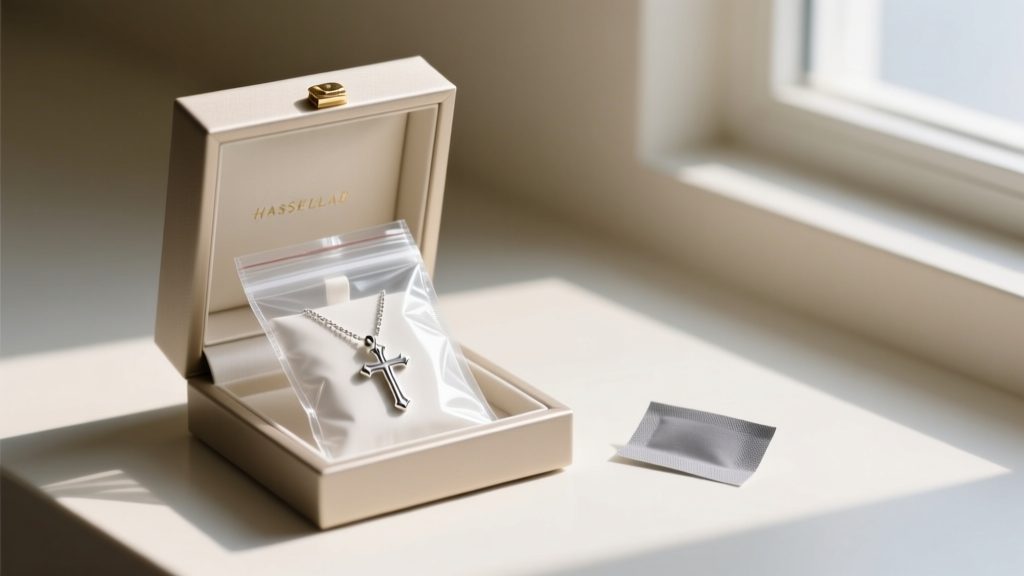
Proper storage is the most effective form of preventive maintenance. Silver tarnishes when it reacts with hydrogen sulfide in the ambient air. To halt this chemical reaction between wears, your pardon crucifix necklace must be stored in an environment that neutralizes sulfur gases.
Avoid storing your jewelry in cardboard boxes or wrapped in rubber bands, as both materials off-gas high levels of sulfur. Instead, place the necklace in an individual, airtight polyethylene ziplock bag. Insert a 3M anti-tarnish strip or a small piece of activated charcoal cloth into the bag before sealing. The Assay Office notes that controlling the micro-climate around precious metals is the most reliable way to preserve both hallmarks and delicate surface finishes without the need for constant, abrasive re-polishing.
When to Seek Professional Bench Jewelry Services
While routine maintenance can be handled at home, certain scenarios require a professional touch. If the gold vermeil on your crucifix has worn through to the brass or silver core, a jeweler can perform a specialized electroplating process to restore the 2.5-micron gold layer. Similarly, if the bail has worn thin from years of friction against the chain, a jeweler can solder a new, heavy-duty sterling silver bail to ensure your cherished pendant remains secure for generations to come.


