A Beginner's Guide to Buying a Gold Eagle Necklace
Discover everything you need to know about buying a gold eagle necklace. Learn about gold karats, chain pairings, pricing, and styling tips.

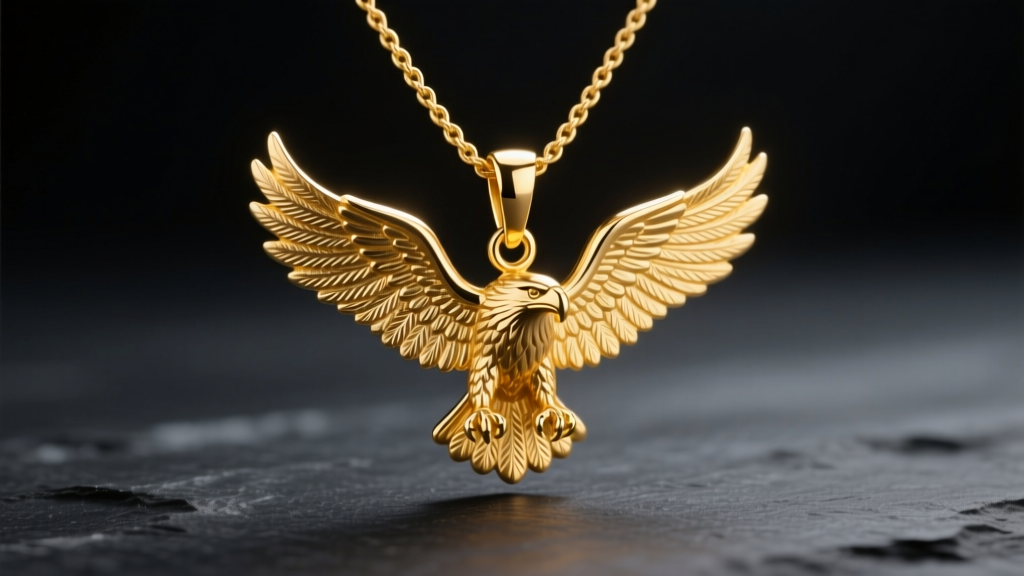
The Enduring Symbolism of the Eagle Motif
When it comes to statement jewelry, few motifs carry the historical weight and universal appeal of the eagle. A gold eagle necklace is more than just a decorative accessory; it is a powerful symbol of freedom, vision, and strength. From the Aquila standards of the Roman legions to the Great Seal of the United States and the sacred traditions of Native American cultures, the eagle has been revered for millennia. For beginners stepping into the world of fine jewelry, choosing an eagle pendant offers a versatile, timeless piece that bridges the gap between bold streetwear and refined, classic menswear or womenswear. However, navigating the complexities of gold purity, chain pairing, and manufacturing methods can be overwhelming. This guide breaks down everything you need to know to make an informed, confident purchase.
Decoding Gold Purity: Which Karat is Right for You?
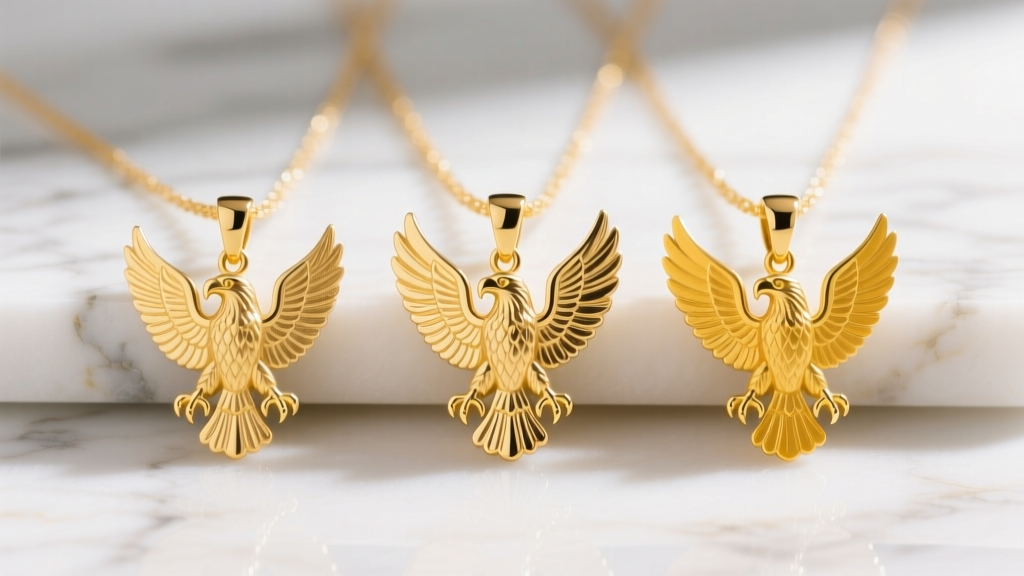
Gold purity is measured in karats (k), with 24k representing 100% pure gold. Because pure gold is too soft for everyday jewelry, it is alloyed with other metals like copper, silver, and zinc to increase durability. According to the World Gold Council, the specific alloy mix not only dictates the strength of the piece but also its color. Understanding these differences is crucial when selecting your gold eagle necklace.
| Karat | Gold Content | Durability | Color Profile | Avg. Price (1-inch Pendant) |
|---|---|---|---|---|
| 10k (417) | 41.7% | Excellent | Pale Yellow | $150 - $250 |
| 14k (585) | 58.3% | Very Good | Warm Yellow | $300 - $550 |
| 18k (750) | 75.0% | Good | Rich, Deep Yellow | $600 - $950 |
| 22k (916) | 91.6% | Fair (Soft) | Intense Orange-Yellow | $900 - $1,400+ |
For most beginners, 14k gold is the sweet spot. It offers a beautiful warm hue, excellent resistance to scratching and bending, and a more accessible price point. If you prefer a richer, more luxurious color and don't mind being slightly more careful with your jewelry, 18k is a superb choice. Avoid 22k or 24k for highly detailed, thin-winged eagle designs, as the soft metal can easily warp if snagged on clothing.
Manufacturing Methods: Solid Cast vs. Die Struck vs. Hollow
The way your eagle pendant is manufactured drastically affects its weight, durability, and price. Here is what you need to look out for:
- Lost-Wax Casting (Solid): This is the gold standard for detailed, 3D eagle pendants with spread wings. A wax model is carved, encased in plaster, melted out, and replaced with molten gold. These pieces are heavy (typically 5 to 12 grams for a 1-inch pendant), durable, and feel substantial on the chest.
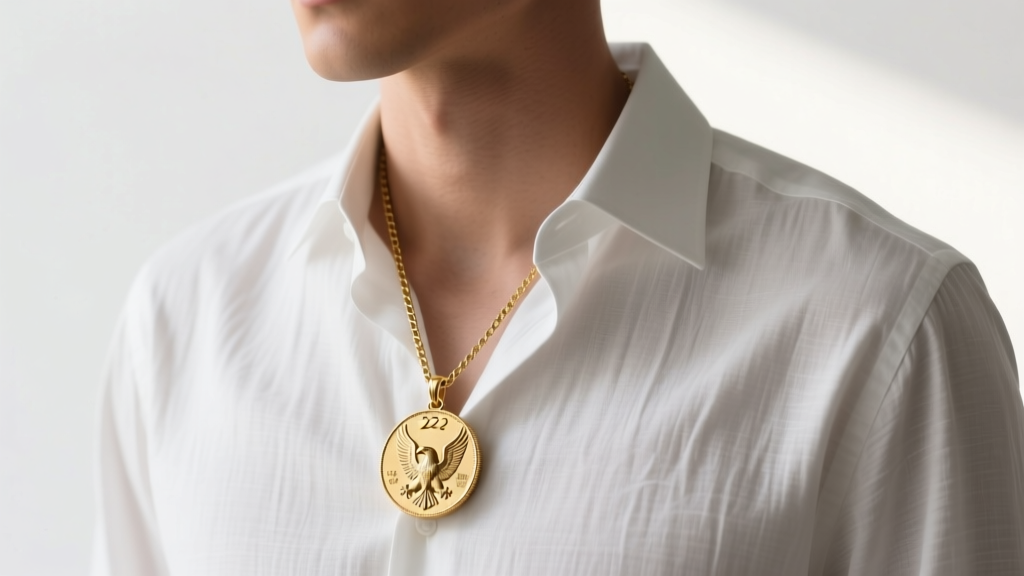
- Die Struck (Stamped): Commonly used for eagle coin pendants or flat, medallion-style pieces. A high-pressure press stamps the design into a sheet of gold. These are incredibly dense and durable but lack 3D depth.
- Hollow Form / Electroformed: These pendants look large but are hollow inside, making them very lightweight and cheap. Beginner Warning: Avoid hollow eagle pendants. If the thin gold shell dents or cracks, it is nearly impossible to repair, and the structural integrity is permanently compromised.
Chain Pairing and Bail Sizing
A common mistake beginners make is buying a heavy gold eagle pendant and pairing it with a flimsy chain. The 'bail' (the loop at the top of the pendant that the chain slides through) dictates your chain options. If your eagle pendant has a 6mm bail, you need a chain that is 4mm to 5mm thick to ensure it slides freely and hangs proportionally.
Top Chain Styles for Eagle Pendants
- Rope Chain (2mm - 4mm): The twisted links reflect light beautifully, complementing the intricate feathers of a cast eagle. It is also one of the strongest chain styles, capable of holding heavier pendants securely.
- Figaro Chain (3mm - 5mm): With its pattern of three short links and one long link, the Figaro offers a vintage, Italian-inspired look that pairs exceptionally well with eagle coin pendants or heraldic designs.
- Curb Chain (4mm - 6mm): Flat, interlocking links provide a modern, masculine aesthetic. A thick curb chain grounds a large, bold eagle pendant, making it a staple in streetwear and hip-hop jewelry.
Pricing, Hallmarks, and Avoiding Fakes
When shopping for a gold eagle necklace, pricing should closely track the 'melt value' of the gold weight, plus a craftsmanship premium. A solid 14k gold eagle pendant weighing 8 grams contains roughly 4.6 grams of pure gold. If the spot price of gold is $65 per gram, the raw material value is about $300. Expect to pay between $450 and $650 for the finished piece, accounting for the jeweler's casting, polishing, and retail overhead.
To avoid counterfeit jewelry, always inspect the hallmark. The Federal Trade Commission Jewelry Guides strictly regulate how gold is stamped in the United States. Look for '14K', '585', '18K', or '750' stamped near the bail. Beware of stamps like '14K HGE' (Heavy Gold Electroplate) or '14K GP' (Gold Plated). These are base metals (usually brass or copper) with a microscopic layer of gold that will eventually wear off, leaving you with a green-tinted necklace and zero resale value.
Long-Term Care and Maintenance
Gold is relatively low-maintenance, but eagle pendants with deep crevices and intricate feather detailing can trap skin oils, lotions, and environmental dust. To keep your necklace looking pristine, the Jewelers of America recommends a simple at-home cleaning routine.
Mix a few drops of mild, phosphate-free dish soap into a bowl of lukewarm water. Let the pendant soak for 15 minutes, then gently agitate the water. Use a brand-new, ultra-soft baby toothbrush to lightly sweep out the dirt from the eagle's feather grooves and the bail. Rinse thoroughly under warm running water and pat dry with a lint-free microfiber cloth. Never use bleach, chlorine, or abrasive toothpaste, as these chemicals can permanently discolor the copper alloys in 10k and 14k gold, leaving a dull, darkened patina on your jewelry.
By understanding gold purity, choosing the right manufacturing method, and pairing your pendant with a structurally sound chain, you can invest in a gold eagle necklace that will remain a powerful, stylish staple in your collection for decades to come.


