Expert Buying Guide: Choosing a Pearl Cross Gold Necklace
Discover how to choose the perfect pearl cross gold necklace. Learn about pearl grades, gold karats, chain types, and pricing in our expert guide.

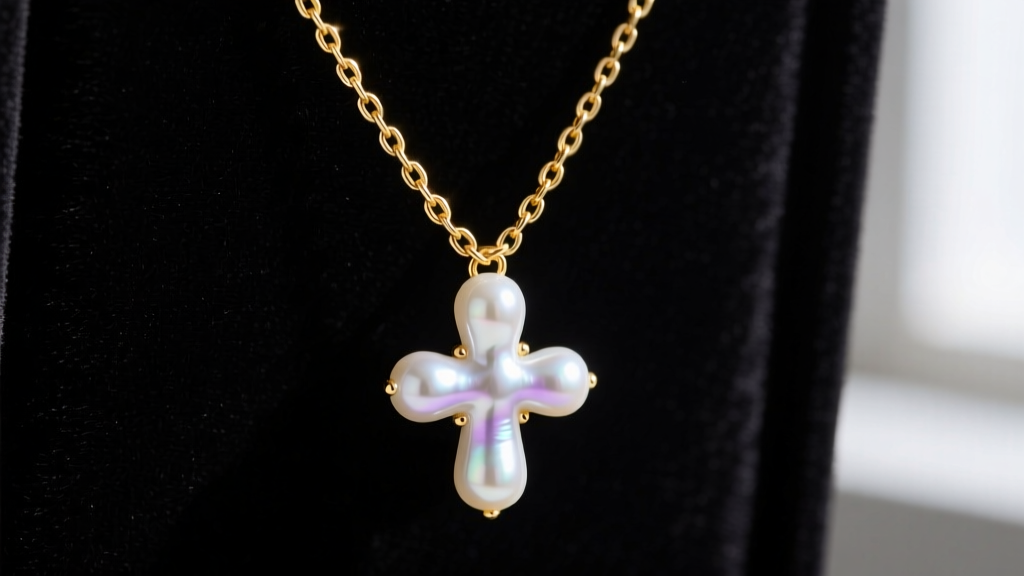
The Anatomy of a Pearl Cross Gold Necklace
A pearl cross gold necklace represents a unique intersection of timeless reverence and sophisticated fashion. Unlike standard metal crosses or single-pearl pendants, a pearl cross requires a complex assembly of multiple organic gemstones, precise metalwork, and careful weight distribution. Whether you are purchasing this piece as a religious sacrament, a milestone gift, or a personal style statement, understanding the structural and material nuances is critical. The market is flooded with mass-produced imitations and poorly constructed settings that compromise both the longevity of the gold and the integrity of the pearls. This comprehensive buying guide will equip you with the gemological and metallurgical knowledge required to invest in a piece that will last generations.
Decoding Pearl Quality: Beyond the Surface
When evaluating a pearl cross, you are not just looking at one gemstone, but typically five or seven. Matching these pearls in terms of size, color, overtone, and luster is a hallmark of high-end jewelry craftsmanship. According to the Gemological Institute of America (GIA), pearl value is determined by seven distinct factors, but for cross pendants, luster and nacre thickness are paramount.
Nacre Thickness and Luster
Luster is the sharp, mirror-like reflection of light off the pearl's surface, and it is entirely dependent on nacre quality. For a pearl cross necklace, demand a minimum nacre thickness of 0.4mm if you are looking at Akoya pearls. Thin-nacre pearls (often found in commercial-grade jewelry) will appear chalky, dull, and are highly susceptible to peeling when subjected to the friction of daily wear. Look for 'Hanadama' certification if purchasing Japanese Akoya pearls, as this guarantees the highest tier of luster and nacre density.
Pearl Types and Origin
- Akoya Pearls: The gold standard for pearl crosses. They offer the sharpest luster and are typically perfectly round, ranging from 6mm to 8mm in cross pendants.
- Freshwater Pearls: A more budget-friendly option. While modern 'Edison' freshwater pearls boast incredible luster, standard freshwater pearls may have slight off-round shapes that can make the cross look asymmetrical.
- South Sea Pearls: Rarely used for full crosses due to their large size (10mm+) and immense weight, but occasionally featured as a single center stone in a gold filigree cross.
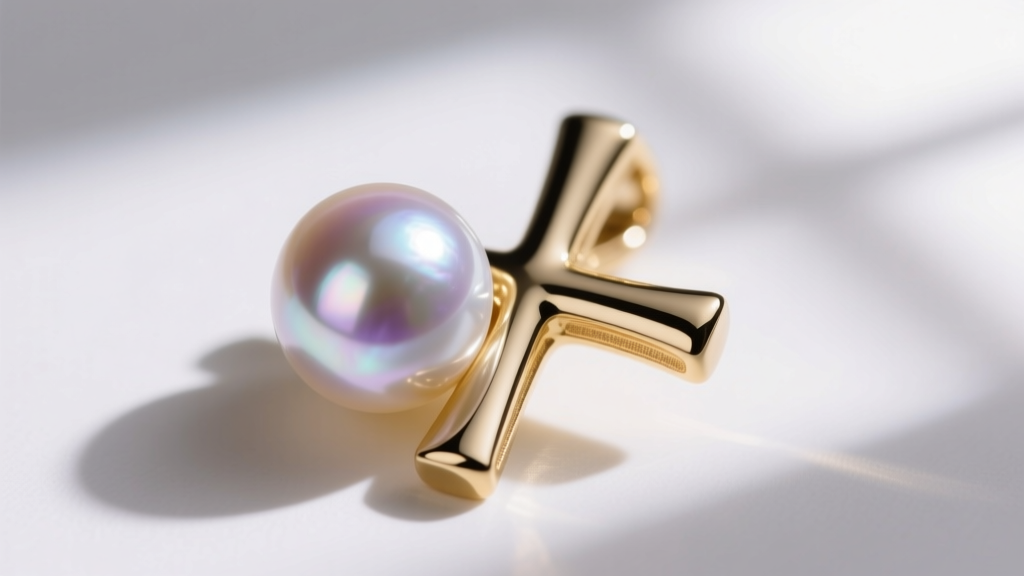
Gold Purity, Alloys, and Chain Engineering
The metalwork of a pearl cross gold necklace must balance luxurious color with tensile strength. Pure 24K gold is far too soft to secure pearls or support the weight of a multi-stone pendant. Therefore, alloying is essential.
14K vs. 18K Gold: Durability Meets Luxury
An 18K gold setting (75% pure gold) offers a rich, warm yellow hue that beautifully complements the creamy overtones of Akoya pearls. However, 18K gold is relatively soft. For the pendant setting itself, 18K is acceptable, but for the chain, 14K gold (58.3% pure gold) is vastly superior. The higher copper and zinc content in 14K gold provides the necessary tensile strength to prevent the chain links from stretching or snapping under the pendant's weight. If you prefer the look of 18K, ensure the chain is at least 1.2mm thick and features reinforced soldered links.
Chain Styles and Bail Mechanics
The bail (the loop connecting the cross to the chain) and the chain style dictate how the necklace drapes and wears over time. Avoid snake chains entirely; they are notorious for kinking and trapping hair, which can pull on the bail and loosen the pearl settings. Instead, opt for a Rolo chain or a Box chain. Rolo chains feature uniform, round links that are highly resistant to tangling and provide a classic, sturdy foundation for a pearl cross.
Pricing Tiers and Market Value
Understanding the pricing landscape prevents you from overpaying for commercial-grade materials or underestimating the value of heirloom-quality craftsmanship. Below is a breakdown of what to expect in the current market.
| Quality Tier | Pearl Type | Gold Purity | Estimated Price Range |
|---|---|---|---|
| Commercial / Fashion | Low-grade Freshwater (chalky, off-round) | 10K or Gold-Plated Brass | $80 - $250 |
| Fine Jewelry | AAA Freshwater or Standard Akoya | 14K Solid Gold | $400 - $900 |
| Heirloom / Luxury | Hanadama Akoya (matched, high luster) | 18K Solid Gold | $1,200 - $2,500+ |

Common Failure Modes and How to Avoid Them
Pearl crosses are inherently more fragile than solid metal pendants due to their multi-component construction. As a domain expert, I frequently see the following failure modes in appraisals and repairs:
The 'Drill-Through' Glue Degradation
Most pearl crosses are constructed by drilling a hole through the pearl and sliding it onto a gold pin. In mass-produced pieces, jewelers use cheap cyanoacrylate (super glue) to secure the pearl to the pin. This glue degrades rapidly when exposed to skin oils, perfumes, and heat, leading to pearls falling off and getting lost. The Fix: Ask the jeweler how the pearls are mounted. High-end pieces use a mechanical friction fit (a tiny threaded screw inside the pearl) or a two-part jeweler's epoxy that is impervious to cosmetics and body heat.
Bail Wear and Tear
If the bail is too thin, the friction from the gold chain will eventually saw through the metal loop, causing you to lose the entire cross pendant. Ensure the bail is cast in solid gold (not hollow) and has a minimum thickness of 1.5mm at the point where the chain rests.
The Final Pre-Purchase Checklist
Before finalizing your purchase, run the necklace through this rigorous quality assurance checklist:
- Pearl Matching: Lay the cross flat on a white surface. Do all 5 (or 7) pearls share the exact same body color and overtone? Are they identical in size?
- Surface Cleanliness: Inspect each pearl under a 10x jeweler's loupe. Minor blemishes are natural, but deep cracks or chalky spots indicate poor nacre.
- Link Integrity: Pull gently on the chain. The links should not gap or stretch. Ensure the jump ring connecting the chain to the clasp is soldered shut.
- Mounting Security: Gently tap the pearls. They should feel like a solid extension of the gold framework, with no rattling or wiggle.
- Cleaning Restrictions: Confirm with the seller that the piece is safe for your lifestyle. Remember that pearl crosses must never be cleaned in an ultrasonic machine, as the high-frequency vibrations will shatter the pearls or dissolve the mounting adhesive.
By prioritizing nacre thickness, structural mounting techniques, and appropriate gold alloys, your pearl cross gold necklace will remain a pristine, meaningful artifact for decades to come.


