2026 Stone Pendant Necklace Trends & Style Guide
Discover the top 2026 stone pendant necklace trends. Explore raw gemstones, bezel settings, chain gauges, and durability guides for everyday layering.

The 2026 Shift: From Flawless Facets to Raw Authenticity
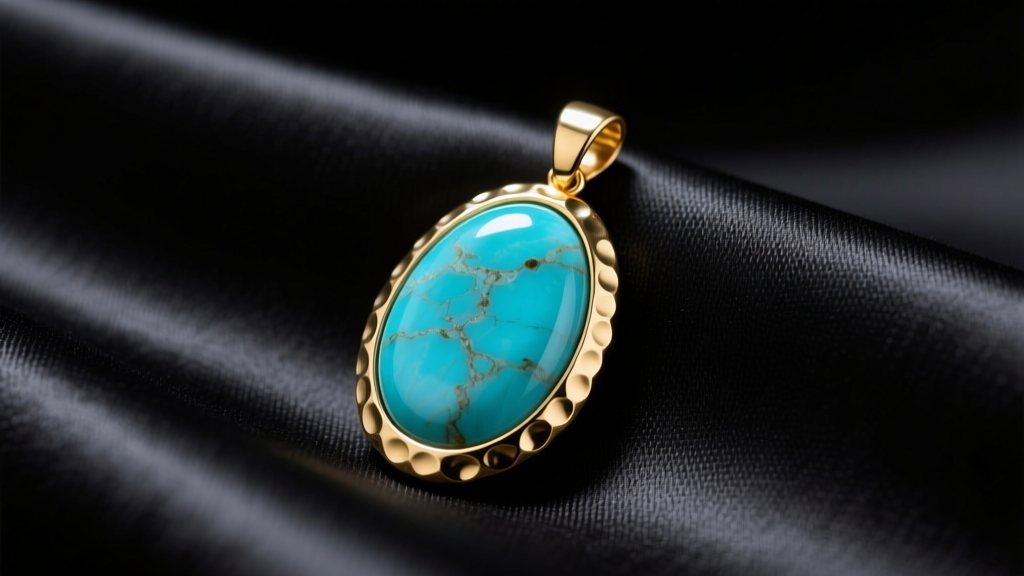
The landscape of fine jewelry has undergone a radical transformation as we navigate through 2026. The traditional dominance of perfectly calibrated, brilliant-cut gemstones has given way to a profound appreciation for raw, unpolished, and included minerals. Today, a stone pendant necklace is less about achieving optical perfection and more about celebrating geological authenticity. According to recent market analyses by the Gemological Institute of America (GIA), consumer demand for "character stones"—gems featuring prominent rutile needles, liquid inclusions, and natural color zoning—has surged by over 40% in the past eighteen months.
This "wabi-sabi" influence in high jewelry means that lapidaries are now favoring techniques that preserve the stone's natural morphology. Cabochon cuts, rose-cuts, and completely rough-hewn slices are the defining silhouettes of the year. A raw, uncut Zambian emerald pendant with its natural hexagonal crystal habit intact, set in an asymmetrical bezel of recycled 18k yellow gold, perfectly encapsulates the 2026 aesthetic. It is a deliberate rejection of mass-produced uniformity in favor of wearable, one-of-a-kind earth art.
Material & Durability Matrix: Choosing Your Stone
When investing in a stone pendant necklace, understanding the intersection of the Mohs hardness scale and crystal cleavage planes is non-negotiable. A common misconception is that hardness alone dictates durability. However, a stone can be incredibly hard but possess perfect cleavage, meaning it can split cleanly along specific structural planes if struck against a hard surface. For instance, while a diamond ranks at a 10 on the Mohs scale, its perfect octahedral cleavage makes it vulnerable to chipping if set improperly in a high-impact bezel.
Conversely, stones like jadeite (Mohs 6.5-7) possess exceptional toughness due to their interlocking fibrous crystal structure, making them ideal for daily-wear pendants that might swing against desks or countertops. For comprehensive mineralogical data, resources like Mindat.org provide indispensable databases on specific gravity and cleavage risks for thousands of gem species.
| Gemstone | Mohs Hardness | Cleavage Risk | Ideal 2026 Setting | Recommended Chain |
|---|---|---|---|---|
| Raw Opal | 5.5 - 6.5 | None (Brittle) | Full Bezel with padded backing | 1.5mm+ Cable |
| Rutile Quartz | 7.0 | None | Prong or Open-Back Bezel | 1.2mm Box Chain |
| Salt & Pepper Diamond | 10.0 | Perfect (High Risk) | Recessed Bezel / Halo Guard | 1.0mm Snake Chain |
| Carved Lapis Lazuli | 5.0 - 6.0 | None | Wrap Bail / Wire-Wrapped | 2.0mm Curb Chain |
Chain Gauges, Bails, and Weight Distribution
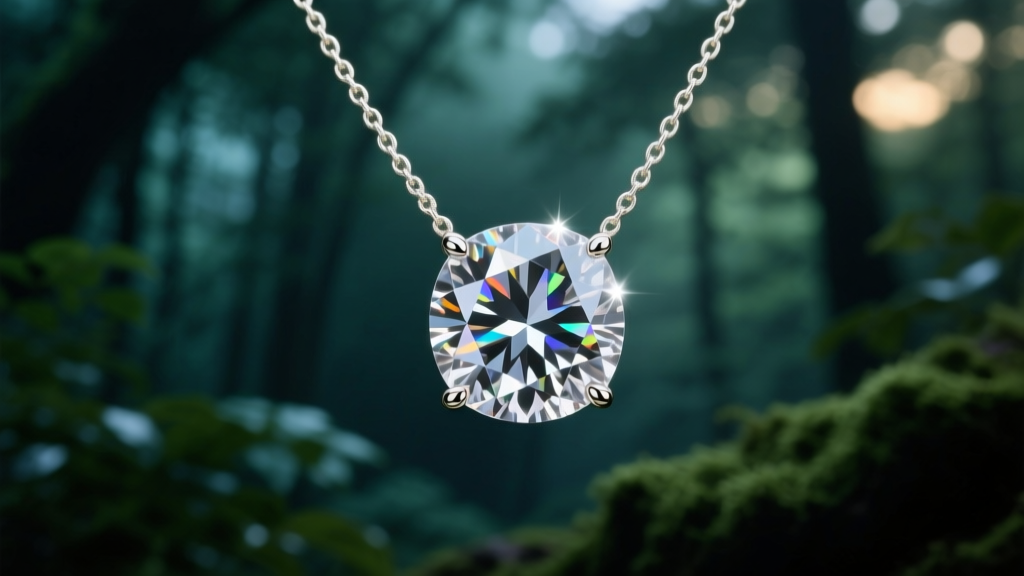
The engineering of a stone pendant necklace is just as critical as its aesthetic. A frequent failure point in contemporary jewelry design is the mismatch between pendant mass and chain tensile strength. When selecting a chain, you must account for both the static weight of the stone and the kinetic stress generated when the pendant swings.
As a foundational rule for 2026 styling, the chain's thickness in millimeters should correlate to the pendant's total gram weight. For lightweight rose-cut pendants weighing under 5 grams, a delicate 0.8mm to 1.0mm thread or snake chain provides an elegant, floating illusion. However, for heavy, raw cabochons exceeding 15 grams, a 0.9mm chain will not only snap under kinetic stress but will also create an uncomfortable, rigid "V" shape at the nape of the neck due to the high specific gravity of the stone.
The Mechanics of the Bail
The bail—the connector between the stone and the chain—must be chosen based on the stone's geometry. Standard pinch bails are suitable only for lightweight, pre-drilled beads. For heavy, undrilled raw stones, a custom-soldered V-bail or a tapered tube bail is mandatory. These designs distribute the kinetic energy of the stone's swing across a wider surface area of the chain, preventing premature wear on the metal links. Furthermore, hidden bails, where the chain threads directly through a channel carved into the back of the stone's setting, are trending heavily this year for their seamless, uninterrupted visual flow.
Styling the Stone Pendant: Necklines & Layering
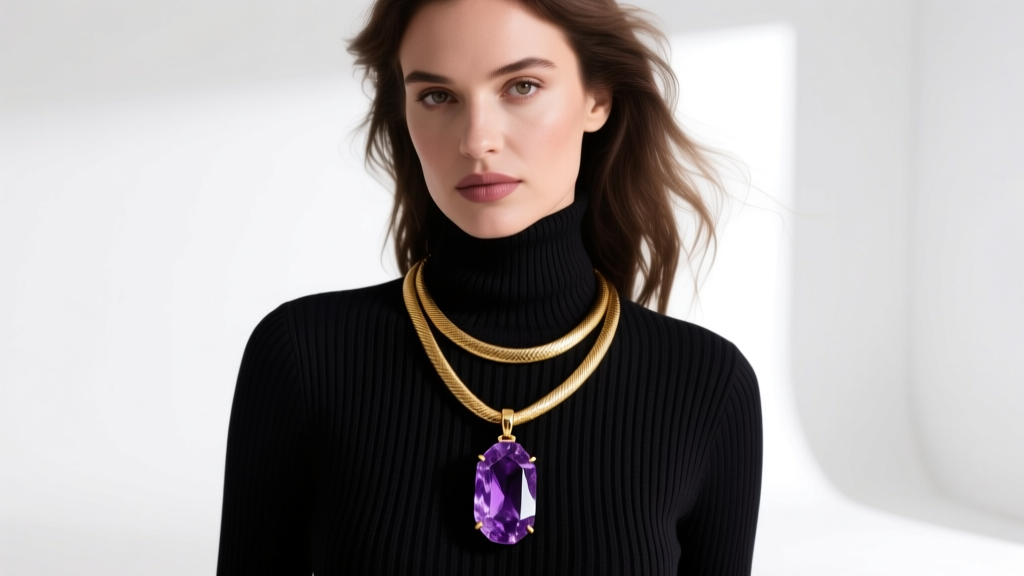
The 2026 approach to styling a stone pendant necklace relies on the "asymmetrical cascade" technique. Rather than centering a single stone, stylists are pairing a heavy, 24-inch raw amethyst or tourmaline pendant with a 16-inch or 18-inch metallic choker, such as a polished gold snake chain or a herringbone link. This creates a grounded, layered look that draws the eye vertically without overwhelming the collarbone.
When considering necklines, the geometry of the stone should contrast with the garment. A long, teardrop-shaped raw sapphire pendant pairs beautifully with the horizontal lines of a boat-neck sweater, breaking up the visual width. Conversely, a wide, geode-slice pendant set in an east-west orientation perfectly complements the plunging verticality of a deep V-neck blouse. The key is to ensure the stone's natural color palette interacts dynamically with the fabric; deep, saturated stones like malachite or lapis lazuli pop brilliantly against neutral tones like camel, charcoal, and ivory.
Lab-Grown vs. Earth-Mined: The 2026 Consumer Shift
Sustainability and traceability remain at the forefront of the 2026 jewelry conversation. While lab-grown diamonds and corundum (sapphires/rubies) have achieved market saturation, the stone pendant necklace category is seeing a unique bifurcation. Consumers are opting for lab-grown stones when seeking flawless, large-carat geometric cuts (like emerald or Asscher cuts) for modern, architectural pendant designs. However, for the raw, organic styles dominating the trend cycle, earth-mined stones remain supreme. Buyers are increasingly demanding blockchain-verified provenance, ensuring that their raw quartz, ethically sourced Montana sapphires, or fair-trade Colombian emeralds are mined with strict environmental and labor standards.
Pricing Tiers & Market Value
Navigating the pricing landscape for stone pendants requires an understanding of the "artistry premium." In 2026, you are paying less for the intrinsic carat weight of a raw stone and more for the lapidary artistry and custom metalwork required to secure it.
- Entry Tier ($150 - $400): Features semi-precious earth-mined stones (amethyst, garnet, turquoise) set in sterling silver or 10k gold vermeil. Often utilizes glue-on tube bails and standardized bezel cups.
- Mid Tier ($500 - $1,800): The sweet spot for contemporary designers. Includes rose-cut salt-and-pepper diamonds, raw sapphires, and included quartz, set in solid 14k gold with custom-fitted bezels and soldered V-bails.
- High Tier ($2,500+): Reserved for museum-grade mineral specimens, rare Paraíba tourmalines, or unheated Burmese rubies. These pieces feature hand-forged 18k or 22k gold settings, often incorporating micro-pavé diamond accents and hidden, engineered bail systems designed by master jewelers.
Ultimately, the modern stone pendant necklace is a testament to the beauty of imperfection. By prioritizing structural engineering, understanding mineral durability, and embracing the raw elegance of the earth's natural formations, you can curate a piece that is not only visually arresting but built to endure as a lifelong sartorial anchor.


