Money Chain Necklace Value Guide: 2026 Pricing & Materials
Discover the true cost of a money chain necklace in 2026. Compare gold weights, karat values, and retail markups to maximize your budget.

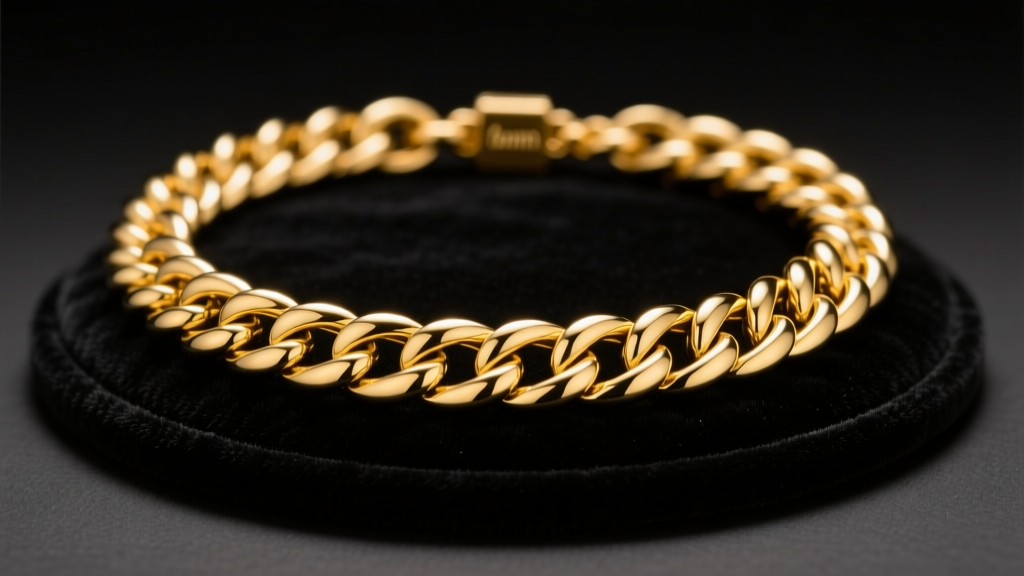
Defining the Money Chain: Status Meets Liquid Asset
In the lexicon of modern jewelry, the term money chain necklace does not merely refer to a chain with a dollar-sign pendant. It defines a specific tier of heavy, high-gram-weight chain jewelry—typically Miami Cuban links, Franco chains, or tightly woven Rope chains—that serves a dual purpose: projecting undeniable status while functioning as a wearable, liquid asset. As we navigate the 2026 precious metals market, where gold spot prices continue to experience aggressive fluctuations, understanding the intrinsic value versus the retail markup of these heavy chains is critical for any serious buyer.
Many consumers fall into the trap of buying based on millimeter width alone, completely ignoring the gram weight, karat purity, and fabrication premiums that dictate a chain's true financial footprint. This comprehensive value assessment will break down the exact metrics you need to evaluate a money chain, ensuring your budget translates directly into wearable wealth rather than inflated brand margins.
The Anatomy of Chain Pricing: Melt Value vs. Fabrication
To accurately assess the budget required for a genuine money chain, you must first understand how jewelers price heavy gold jewelry. The price is not arbitrary; it is built on a foundational formula:
(Current Gold Spot Price / 31.1035) × Karat Purity Multiplier × Gram Weight + Fabrication Premium = Base Wholesale Price
According to Kitco's live gold spot metrics, tracking the daily troy ounce price is step one. However, the fabrication premium is where budgets are often miscalculated. A simple rope chain might carry a 15% to 20% markup over its melt value due to relatively automated manufacturing. In contrast, a hand-finished, diamond-cut Miami Cuban link requires extensive labor to file, interlock, and polish each link flat, pushing the fabrication premium to 35% or even 50% above the raw gold value.
The Hollow Chain Trap: A Budget Buyer's Worst Enemy
If you are browsing for a money chain and find a 14mm wide, 22-inch chain priced suspiciously low (e.g., under $1,500 in 10K gold), you are likely looking at a hollow or semi-solid chain. Manufacturers use electroforming or thin gold tubing to create chains that look massive but weigh a fraction of their solid counterparts.
- Failure Rate: Hollow chains are notorious for denting upon minor impact. Once a hollow link is crushed, it cannot be soldered or repaired by a standard bench jeweler.
- Resale Value: Pawn shops and gold buyers routinely reject hollow chains or offer pennies on the dollar because the refining process is complicated by the non-gold core materials or trapped air pockets.
- The Verdict: True value in a money chain demands solid links. A 50-gram solid chain will always outlast and out-resell a 15-gram hollow chain of the exact same visual width.
Material Tiers and Value Retention Matrix
Not all gold is created equal when it comes to long-term value retention. The Gemological Institute of America (GIA) outlines strict standards for gold alloys, which directly impact both the durability and the secondary market value of your necklace. Below is a breakdown of the materials you will encounter in the 2026 market.
| Material Grade | Purity % | Durability | Resale Value % | Budget Verdict |
|---|---|---|---|---|
| 10K Solid Gold | 41.7% | Extremely High | 35% - 40% | Best for strict budgets & daily wear |
| 14K Solid Gold | 58.3% | High | 55% - 60% | The ultimate sweet spot for value |
| 18K Solid Gold | 75.0% | Moderate (Scratches) | 70% - 75% | Premium investment, higher upfront cost |
| Gold Vermeil | N/A (Sterling Base) | Low (Wears off) | 0% (Silver melt only) | Avoid for true 'money chain' status |
| Gold Plated (Brass) | N/A (Brass Base) | Very Low | 0% | Costume jewelry; zero intrinsic value |
Sizing, Weight, and Gauge: The Metrics of True Value
When budgeting for a money chain necklace, width (measured in millimeters) dictates the visual impact, but gram weight dictates the price and structural integrity. A common mistake is purchasing a chain that is too wide for its weight, indicating weak, elongated links.
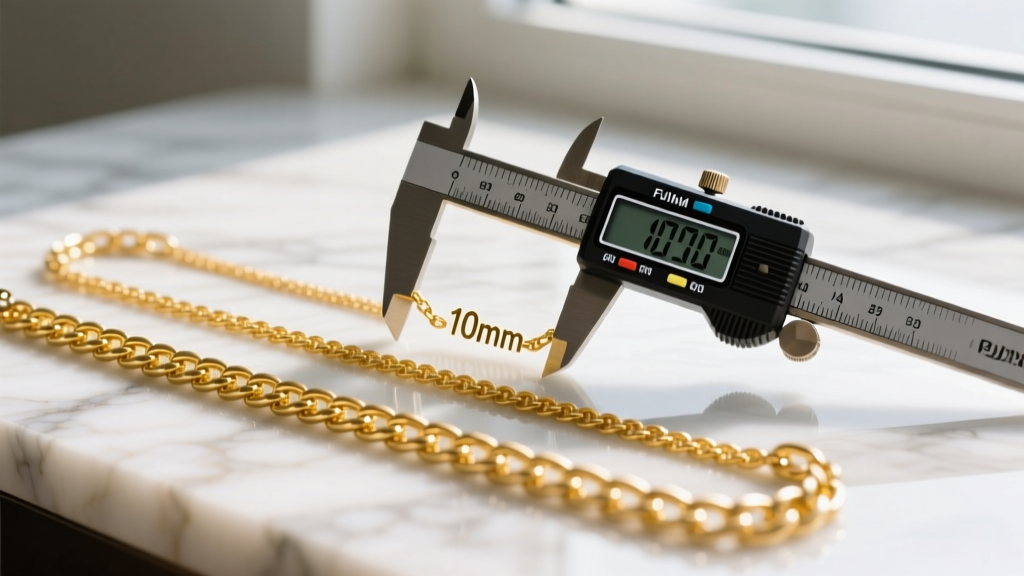
Here is a benchmark guide for a standard 20-inch solid Miami Cuban link chain to help you gauge if a jeweler's listing is legitimate or suspiciously underweight:
- 8mm Width: Should weigh between 28 to 35 grams. Ideal for a subtle, entry-level money chain.
- 10mm Width: Should weigh between 45 to 55 grams. The standard for everyday hip-hop and streetwear aesthetics.
- 12mm Width: Should weigh between 75 to 90 grams. A heavy, statement piece that requires a robust clasp.
- 14mm+ Width: Often exceeds 110 to 150+ grams. This is high-end investment territory, where the gold melt value alone commands thousands of dollars.
Pro Tip: Always ask the jeweler for the exact gram weight before purchasing. If a 12mm chain is listed at 40 grams, it is either hollow, heavily alloyed with dense non-precious metals, or mislabeled.
Spotting the Markups: Brand Boutiques vs. Bullion Jewelers
Where you buy your money chain is just as important as what you buy. Luxury streetwear brands and high-end mall jewelers often apply a 300% to 500% markup on heavy chains, charging for the logo engraved on the clasp rather than the gold itself. If your goal is pure budget optimization and value retention, you must pivot to bullion jewelers, specialized chain manufacturers, or direct-to-consumer precious metals dealers.
By utilizing the spot price formula mentioned earlier, you can calculate the "fair market ceiling." For example, if the spot price of gold is $2,100 per ounce, the raw gold value of a 50-gram 14K chain is roughly $1,970. A fair retail price from a specialized chain maker would be between $2,300 and $2,600 (accounting for a 15-30% fabrication and overhead premium). Paying $6,000 for that exact same chain at a luxury boutique represents a massive loss of intrinsic value the moment you walk out the door.
Clasp and Link Integrity: The Hidden Failure Points
A money chain is only as valuable as its weakest link—literally. Heavy chains exert immense kinetic stress on their clasps. Budgeting for a high-quality chain must include an assessment of the hardware.
The Clasp Hierarchy
- Standard Lobster Clasp: Acceptable only for chains under 30 grams. Beyond that weight, the internal spring mechanism will inevitably fail, leading to a lost asset.
- Heavy-Duty Lobster: A thicker, wider lobster clasp can handle up to 60 grams, but remains a risk for active daily wear.
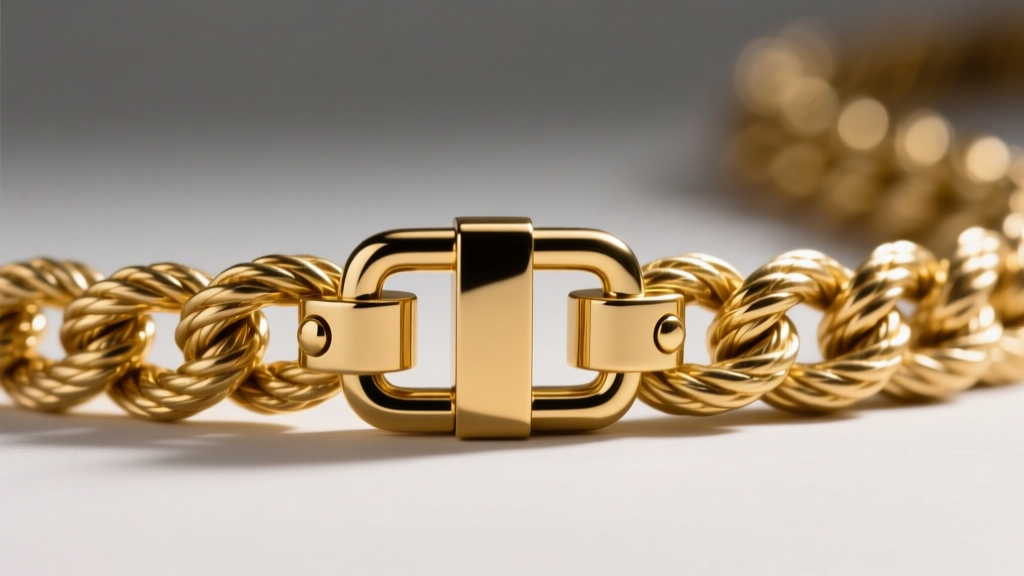
- Box Clasp with Figure-8 Safety Latch: The absolute gold standard for any money chain exceeding 50 grams. The box clasp distributes the tensile load across a wide metal tongue, while the figure-8 wire safety latch ensures that even if the primary clasp pops open, the chain remains secured around your neck.
Furthermore, inspect the end links. The jump rings connecting the chain to the clasp must be laser-soldered shut. Open jump rings on a heavy money chain will pull apart under the chain's own swinging momentum.
Final Verdict: Maximizing Your 2026 Chain Budget
Acquiring a true money chain necklace is a strategic financial decision disguised as a fashion choice. To maximize your budget, prioritize 14K solid gold for the perfect intersection of durability, rich color, and resale liquidity. Demand exact gram weights, reject hollow manufacturing techniques, and bypass luxury brand markups in favor of specialized chain fabricators. By treating your jewelry purchase with the same analytical rigor as a precious metals investment, you secure a piece that not only commands respect but holds its ground in the vault.


