Decoding the Colors of a Mood Necklace Meaning: A Technical Guide
Discover the real science behind the colors of a mood necklace meaning. Explore thermochromic liquid crystals, temperature charts, and failure modes.

The Marketing Myth vs. The Thermochromic Reality
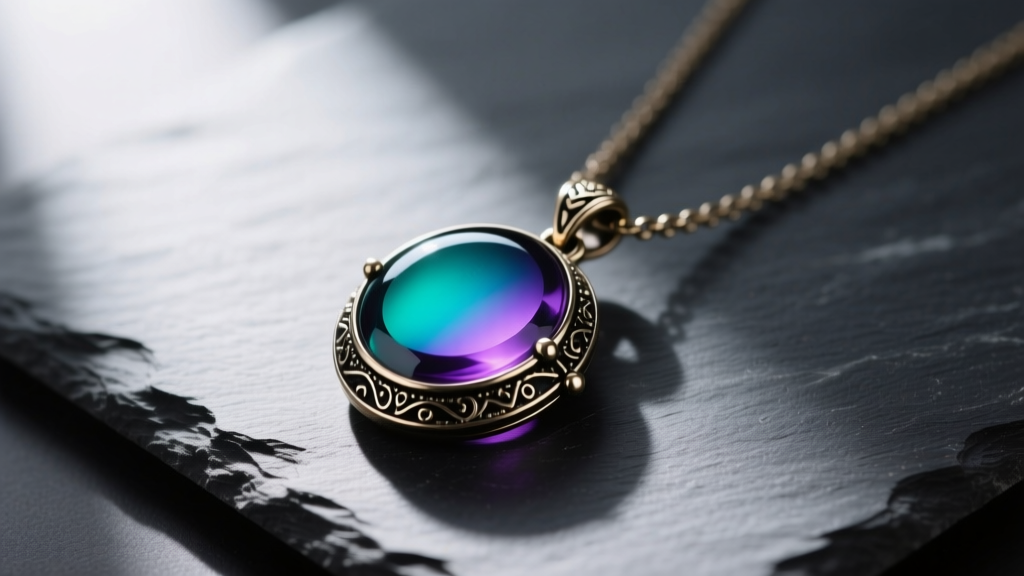
Since their explosive debut in the 1970s, mood necklaces have captivated wearers with the promise of emotional revelation. However, as jewelry material scientists and gemologists, we must separate nostalgic marketing from physical reality. The widely circulated chart detailing the colors of a mood necklace meaning—mapping deep blue to 'romance' or black to 'stressed'—is largely a commercial invention. In truth, these pendants do not measure neurotransmitters, heart rate variability, or emotional states. They are highly sensitive, wearable thermometers.
The color shifts are driven entirely by fluctuations in your skin's surface temperature. While emotions can influence skin temperature via the autonomic nervous system, ambient room temperature, recent physical activity, and the thermal conductivity of the pendant's base metal play equally significant roles. To truly understand these accessories, we must look past the novelty and examine the complex materials science of thermochromic liquid crystals (TLCs).
How Thermochromic Liquid Crystals Actually Work
The 'stone' in a mood necklace is not a gemstone at all. It is typically a hollow capsule made of glass or clear quartz, filled with a specialized organic compound known as cholesteric liquid crystals (CLCs). According to LiveScience, these molecules possess properties of both liquids and solids. They flow like a liquid but maintain a highly ordered, crystalline molecular structure.
The Physics of Bragg Diffraction
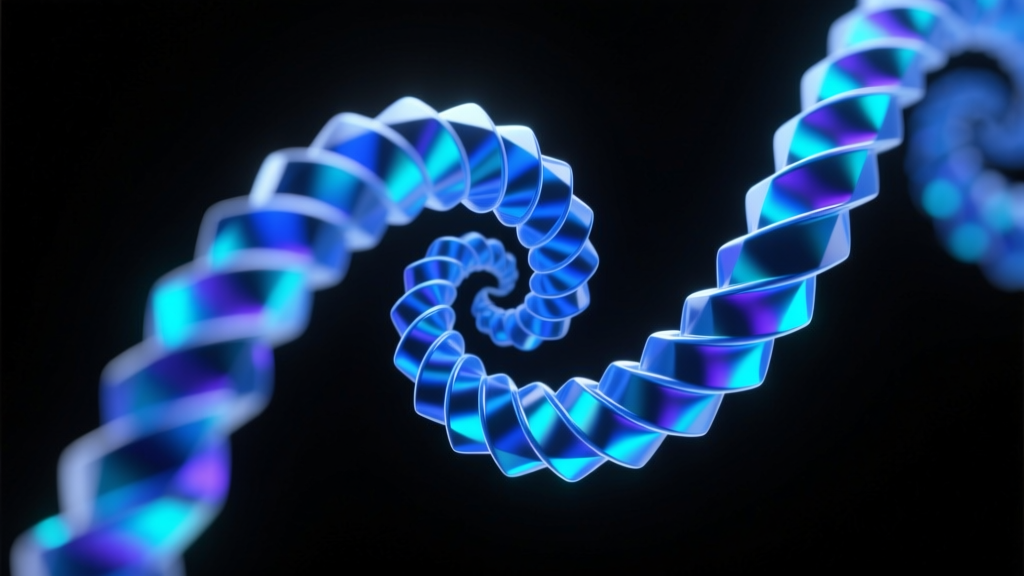
CLCs arrange themselves in a helical (spiral) structure. The distance required for the molecules to complete one full 360-degree twist is called the 'helical pitch.' This pitch is exquisitely sensitive to thermal energy. When the temperature of the pendant changes, the molecular bonds expand or contract, altering the pitch.
- Cooler Temperatures: The helical pitch lengthens. The crystals reflect longer wavelengths of visible light, appearing yellow, orange, or red. Often, the pitch shifts so far that it reflects infrared light, which is invisible to the human eye, allowing the dark backing of the pendant to show through as 'black'.
- Warmer Temperatures: The helical pitch tightens. The crystals reflect shorter wavelengths, shifting through green, teal, blue, and eventually violet.
This phenomenon is governed by Bragg diffraction. The specific wavelength of light reflected is directly proportional to the helical pitch and the refractive index of the liquid crystal matrix. It is a precise optical interference effect, not a chemical dye changing its hue.
Decoding the Colors of a Mood Necklace Meaning Chart
While the emotional correlations are pseudoscientific, the temperature mappings are rooted in human physiology. The skin surface temperature of the human neck typically ranges from 31°C to 35°C (88°F to 95°F), depending on blood flow. When you are anxious or stressed, your body triggers vasoconstriction—narrowing the blood vessels in your extremities and skin to redirect blood to vital organs. This drops your skin surface temperature. Conversely, relaxation causes vasodilation, increasing blood flow and warming the skin.
Below is a technical translation of the traditional colors of a mood necklace meaning chart, mapped against actual thermochromic thresholds and physiological triggers.
| Observed Color | Claimed Emotion | Approx. Surface Temp | Physiological / Environmental Trigger |
|---|---|---|---|
| Black / Brown | Stressed, Anxious | < 28°C (82°F) | Vasoconstriction, cold ambient environment, or poor peripheral circulation. |
| Amber / Orange | Nervous, Mixed | 28°C - 30°C (82°F - 86°F) | Slight vasoconstriction, transitioning from a cold environment to a warm one. |
| Yellow-Green | Alert, Active | 30°C - 32°C (86°F - 89°F) | Baseline resting skin temperature in a standard climate-controlled room. |
| Teal / Green | Calm, Average | 32°C - 33°C (89°F - 91°F) | Normal vasodilation, relaxed state, comfortable ambient temperature. |
| Blue / Violet | Happy, Romantic | 34°C - 36°C (93°F - 96°F) | Increased peripheral blood flow due to physical exertion, excitement, or high ambient heat. |
Expert Note: Because the neck is closer to the body's core than the fingers, a mood necklace will generally run 'warmer' (showing more greens and blues) than a mood ring worn on the hand, which is highly susceptible to cold drafts and vasoconstriction.
Material Composition and Base Metals
The longevity and accuracy of a mood pendant depend heavily on its housing. The liquid crystal fluid must be hermetically sealed. If the seal fails, the necklace is destroyed.
The Capsule
High-end vintage pieces from the 1970s often used blown glass capsules. Modern iterations predominantly use synthetic quartz or optical-grade polycarbonate. Quartz is superior due to its high thermal conductivity, allowing the crystals to react to skin temperature shifts within seconds. Polycarbonate is cheaper and more shatter-resistant but acts as a thermal insulator, resulting in sluggish color transitions.
The Base Metal Settings
The metal cradling the capsule affects both aesthetics and skin health. Sterling silver (925) and surgical-grade stainless steel (316L) are ideal. They are hypoallergenic and resist corrosion. Cheap brass or zinc alloy settings often contain nickel, which can cause contact dermatitis. Furthermore, the acidic nature of human sweat can corrode cheap alloys, leading to microscopic pitting that eventually compromises the adhesive seal holding the glass or quartz capsule intact.
Common Failure Modes and Troubleshooting
Mood necklaces are notoriously fragile. Understanding their failure modes is critical for collectors and wearers alike. If your pendant has become stuck on a single color, it has likely suffered one of the following material failures.
1. Moisture Ingress (The 'Black Death')
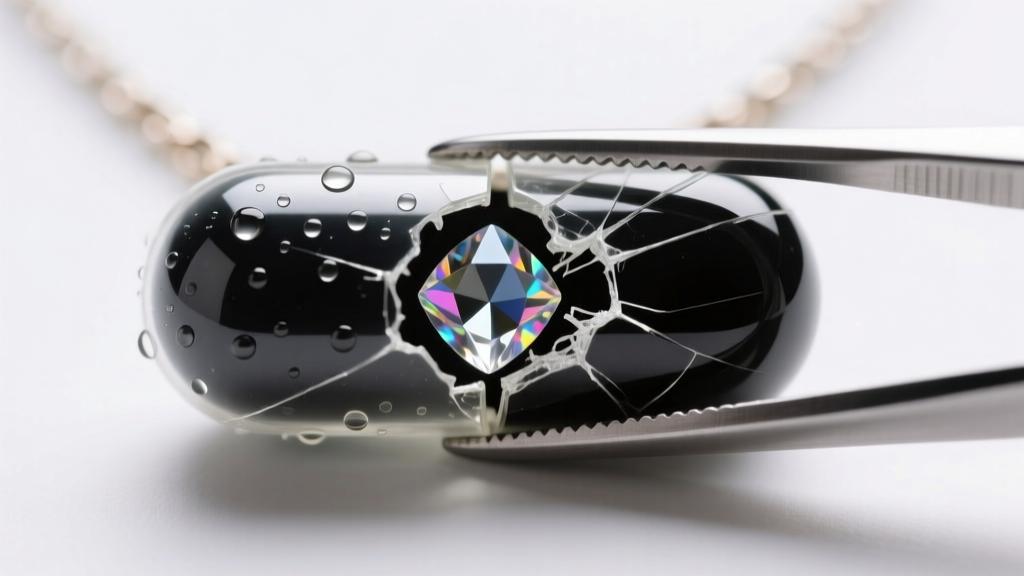
The most common cause of a permanently black mood necklace is moisture ingress. Cholesteric liquid crystals are highly sensitive to water. If the hermetic seal is compromised—even by a microscopic fracture caused by dropping the pendant—ambient humidity or sweat will infiltrate the capsule. Water molecules disrupt the delicate helical alignment of the CLCs, destroying their ability to diffract light. Once this happens, the pendant will remain permanently black or cloudy and cannot be repaired.
2. UV Photodegradation
The organic compounds used in TLCs are susceptible to ultraviolet radiation. Prolonged exposure to direct sunlight breaks down the molecular bonds of the liquid crystals, a process known as photodegradation. Over time, the color spectrum will narrow, eventually losing its ability to reflect the warmer red and yellow wavelengths, leaving the pendant stuck in a permanent state of blue or violet before fading to a milky white.
3. Thermal Shock
Exposing the pendant to extreme heat (such as leaving it on a car dashboard in summer) can cause the liquid crystal fluid to expand rapidly, shattering the glass or quartz capsule from the inside. Conversely, extreme cold can cause the fluid to contract and pull away from the capsule walls, creating air bubbles that ruin the optical clarity.
Care Instructions for Longevity
To preserve the thermochromic integrity of your jewelry, strict adherence to the following care protocols is required:
- Avoid Water Exposure: Never wear a mood necklace while swimming, showering, or exercising heavily. The combination of moisture, sweat acidity, and physical impact is the primary catalyst for seal failure.
- Store in the Dark: When not in use, store the pendant in an opaque jewelry box or a velvet pouch to prevent UV photodegradation from ambient sunlight.
- Protect from Chemicals: Apply perfumes, lotions, and hairsprays before putting on the necklace. The solvents in cosmetics can degrade the epoxy resins used to seal the capsule.
- Polish Metals Carefully: When cleaning the silver or steel setting, use a dry microfiber cloth. Avoid liquid jewelry dips or ultrasonic cleaners, as the chemical baths and high-frequency vibrations will easily breach the capsule's seal.
By understanding the precise materials science and physiological mechanisms at play, you can appreciate these unique accessories not as magical emotional barometers, but as fascinating, wearable applications of optical physics and thermodynamics.


