What Do the Colours on a Mood Necklace Mean? A Troubleshooting Guide
Discover what the colours on a mood necklace mean, how thermochromic crystals work, and troubleshoot common issues like stuck black stones or water damage.

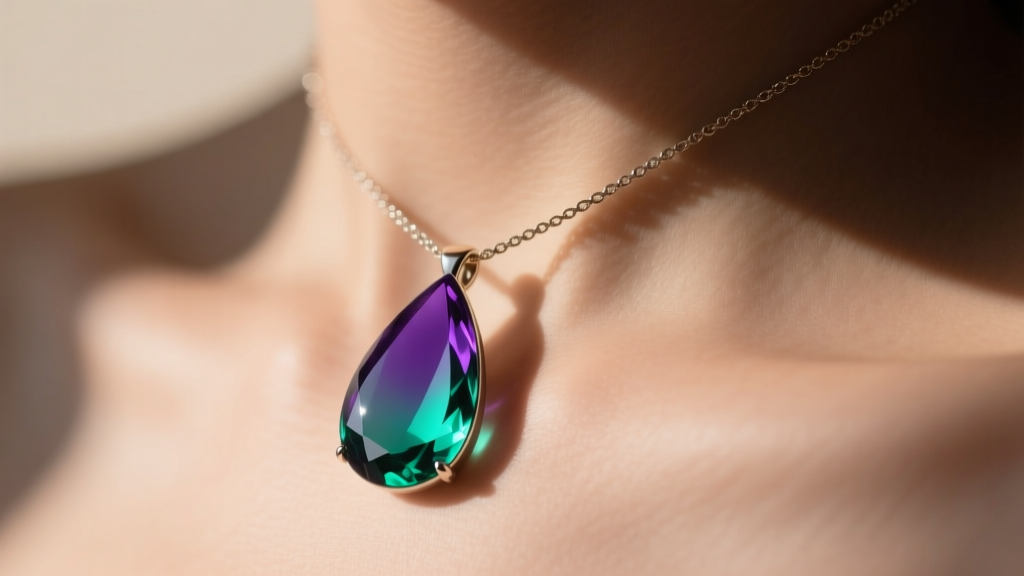
Since their explosion in popularity in the 1970s, thermochromic jewelry has captivated wearers with the promise of displaying their inner emotional state. But if you have ever found yourself asking, what do the colours on a mood necklace mean, you are not alone. More importantly, if your pendant is permanently stuck on black, looking cloudy, or failing to change at all, you are likely dealing with a material science issue rather than a lack of emotions. As a jewelry style and materials guide, we are going to look past the marketing myths and dive deep into the actual chemistry of mood necklaces, provide an accurate color-temperature chart, and offer a comprehensive troubleshooting guide to diagnose and fix your thermochromic pendants.
The Science: How Thermochromic Liquid Crystals Actually Work
To troubleshoot a mood necklace, you must first understand its construction. The 'stone' in your necklace is not a gemstone at all. It is typically a hollow glass or quartz dome, or a sealed capsule, containing a layer of cholesteric liquid crystals. According to Compound Interest, these molecules exist in a chiral nematic phase. This means they align in a spiral, twisted structure.
When the temperature of your skin changes, it alters the physical 'pitch' (the distance between the twists) of these liquid crystal molecules. This structural shift changes the wavelength of light that the crystals reflect. Cooler temperatures cause the molecules to twist tightly, absorbing most light and reflecting darker hues like black or brown. Warmer temperatures cause the molecular structure to expand and untwist, reflecting shorter wavelengths like blue, cyan, and violet. The 'mood' aspect is simply a byproduct of peripheral blood circulation; when you are stressed, blood retreats to your core, cooling your extremities and chest, turning the stone dark. When you are excited or warm, increased blood flow raises your skin temperature, turning the stone blue or violet.
The Official Mood Necklace Colour Chart & Meanings
While marketing materials often assign highly specific emotions to every shade, the reality is dictated by surface temperature ranges. Below is the scientifically grounded translation of what your pendant is reacting to.
| Colour Displayed | Temperature Range | Marketed 'Mood' | Scientific Reality (Skin Perfusion) |
|---|---|---|---|
| Black / Dark Grey | Below 15°C (59°F) | Stressed, Anxious, Cold | Poor peripheral circulation; crystals are tightly twisted, absorbing light. |
| Brown / Rust | 15°C - 22°C (59°F - 71°F) | Nervous, Restless, Uneasy | Slightly below average skin temperature; transitional molecular state. |
| Green / Teal | 22°C - 28°C (71°F - 82°F) | Average, Relaxed, Calm | Normal resting skin temperature; crystals reflect mid-spectrum wavelengths. |
| Blue / Cyan | 28°C - 32°C (82°F - 89°F) | Happy, Flirty, Warm | Increased blood flow; crystals expand, reflecting shorter blue wavelengths. |
| Violet / Pink | Above 32°C (89°F) | Passionate, Excited, Hot | High surface heat; maximum expansion of the liquid crystal pitch. |
Troubleshooting: Why Your Mood Necklace Isn't Working
Thermochromic materials are incredibly fragile. If your necklace is failing to perform, it is usually due to one of three specific material failures. Here is how to diagnose the problem.
Problem 1: The Stone is Permanently Stuck on Black or Brown
The Diagnosis: If the necklace feels warm to the touch but remains black, the liquid crystals have likely suffered from UV degradation or thermal shock. Prolonged exposure to direct sunlight breaks down the chiral dopants (the chemicals that force the liquid crystals into their spiral shape). Once these dopants degrade, the molecules lose their ability to untwist and reflect light, permanently locking the stone in its 'cold' black state.
The Fix: Unfortunately, chemical degradation is irreversible. If a UV-damaged mood necklace is left in the sun, the thermochromic layer is dead. The only solution is to replace the pendant. To prevent this, always store thermochromic jewelry in a dark jewelry box when not in use.
Problem 2: Water Damage, Cloudiness, and 'Milky' Spots
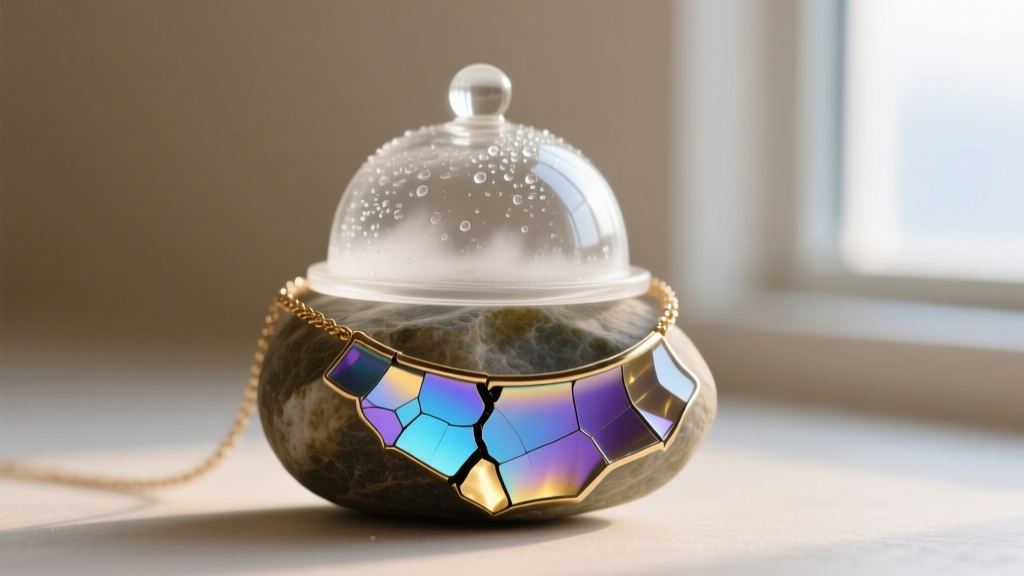
The Diagnosis: Mood necklaces are notoriously vulnerable to moisture. If your stone looks cloudy, has white milky spots, or looks like there is condensation trapped inside, the seal of the glass or quartz dome has been breached. Water has seeped into the capsule and caused the microscopically thin thermochromic film to delaminate (peel away) from the backing.
The Fix: There is no way to reverse water damage in a sealed thermochromic capsule. Baking it in the sun or using a hairdryer will only apply thermal shock and crack the glass dome entirely. You must remove the necklace before showering, swimming, or washing dishes.
Problem 3: The Stone Changes Colour, But Very Slowly or Weakly
The Diagnosis: If the necklace works but seems 'laggy' or only shows faint green instead of vibrant blue, you likely have a thermal conductivity barrier. Lotions, body oils, perfumes, and dead skin cells can build up a microscopic layer of grime on the outside of the glass dome. Because glass is already a relatively poor thermal conductor, this layer of oil acts as an insulator, preventing your body heat from reaching the liquid crystals efficiently.
The Fix: Gently clean the pendant. Do not use harsh chemical jewelry dips or ultrasonic cleaners, as these can eat away at the adhesive sealing the glass dome. Instead, use a microfiber cloth slightly dampened with warm water and a tiny drop of mild dish soap. Buff the stone dry immediately. You should notice a much faster, more vibrant color reaction.
How to Calibrate and Reset a Mood Pendant
If you suspect your necklace is broken but want to be absolutely sure before throwing it away, you can perform a safe thermal calibration test. This will tell you if the liquid crystals are still chemically viable.
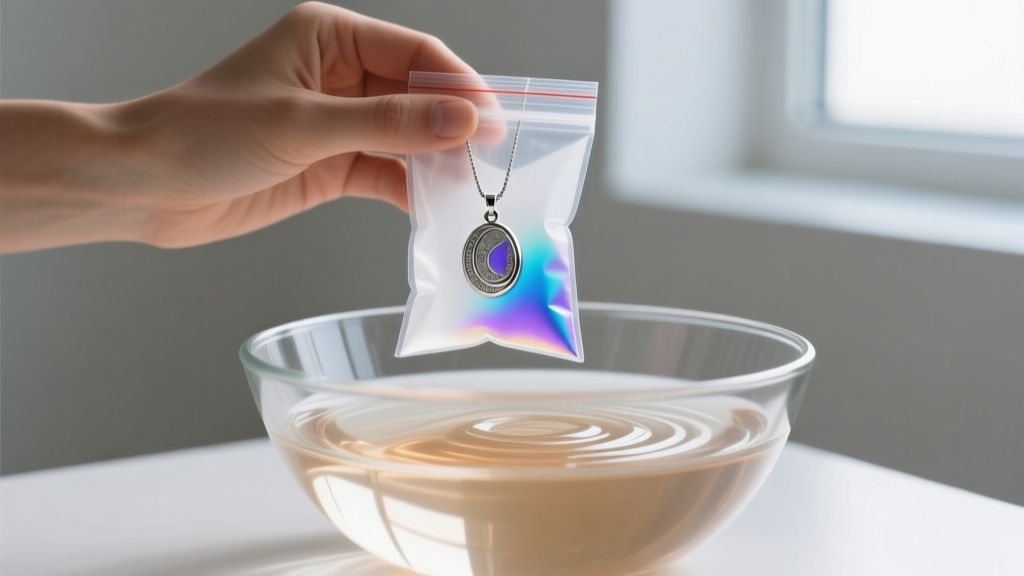
- Seal the Pendant: Place your mood necklace inside a high-quality, watertight ziplock plastic bag. Ensure all the air is pressed out and the seal is completely closed. (Water is the enemy of these stones, so do not skip this step).
- The Cold Test: Submerge the bagged pendant into a bowl of ice water for 60 seconds. The stone must turn completely black or dark grey. If it does, the cold-reaction is functioning.
- The Warm Test: Move the bagged pendant into a bowl of warm tap water (around 35°C / 95°F). Warning: Never use boiling or very hot water, as extreme heat will permanently destroy the liquid crystals and crack the glass. Watch the stone. Within 30 seconds, it should transition through green and into blue or violet.
- The Verdict: If the stone successfully transitions from black to blue during this test, your necklace is perfectly fine. If it isn't changing color while worn, it simply means your skin is currently cool, or you are wearing thick clothing/lotions blocking the heat transfer. If the stone stays black in the warm water, the crystals are chemically dead and the pendant must be replaced.
Longevity and Care for Thermochromic Jewelry
To ensure your mood necklace continues to accurately reflect temperature shifts, treat it as a delicate scientific instrument rather than standard fashion jewelry. According to material care guidelines outlined by ThoughtCo, the lifespan of a thermochromic pigment is highly dependent on environmental stressors.
- Avoid UV Exposure: Never leave your necklace on a sunny windowsill or the dashboard of your car. UV radiation is the number one killer of chiral nematic liquid crystals.
- Prevent Thermal Shock: Do not wear your necklace into saunas, hot tubs, or extremely cold environments. Rapid, extreme temperature swings can cause the glass dome to fracture, instantly letting in moisture and ruining the film.
- Chemical Avoidance: Apply all perfumes, hairsprays, and lotions before putting on your necklace. Alcohol and chemical solvents can degrade the adhesives used to seal the pendant casing.
Expert Insight: If you are purchasing a modern mood necklace in 2026, look for pendants that utilize advanced microencapsulated thermochromic pigments rather than raw liquid crystal films. While slightly more expensive (typically ranging from $25 to $60 for quality encapsulated pieces compared to $5 for vintage-style raw films), microencapsulation offers vastly superior resistance to UV fading and minor moisture exposure, extending the life of your jewelry from a few months to several years.
Understanding what the colours on a mood necklace mean requires looking at the intersection of human biology and organic chemistry. By treating the thermochromic elements with the care they demand, you can keep your pendant shifting through its vibrant spectrum of colors for years to come.


