What Does Green Mean on a Mood Necklace? Value & Science Guide
Discover what green means on a mood necklace, the science of thermochromic crystals, and how to assess budget vs. premium value before buying.

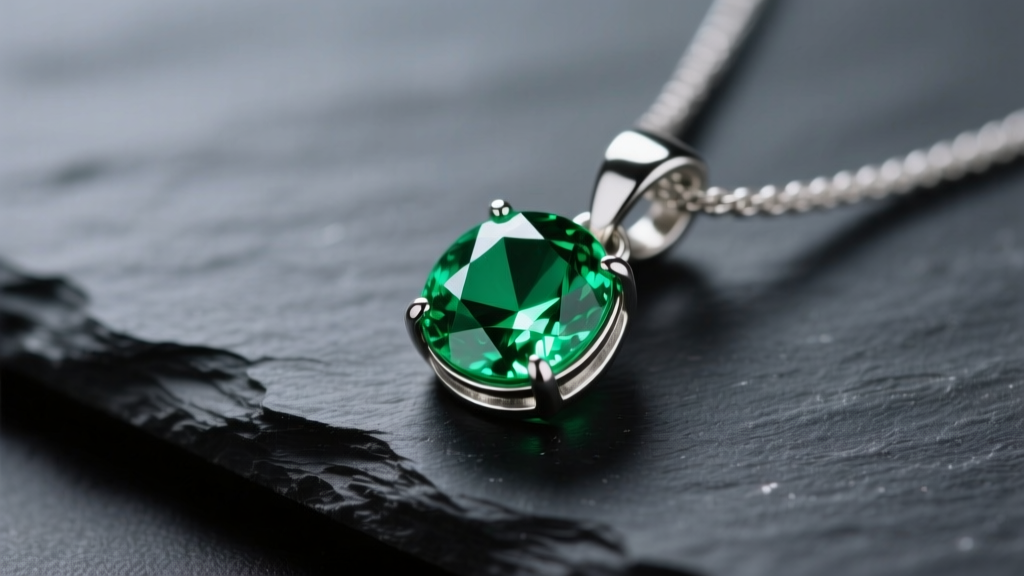
The Science of the Shift: What Does Green Mean on a Mood Necklace?
Since their invention in the 1970s, thermochromic jewelry has captivated wearers with the promise of emotional transparency. But when consumers ask what does green mean on a mood necklace, they are usually looking for a psychological answer to a purely physical phenomenon. The short answer? Green indicates that the surface temperature of your skin is resting at approximately 82°F (28°C). In the marketing lexicon of mood jewelry, this baseline temperature is translated to a state of being 'calm,' 'relaxed,' or 'average.'
To truly assess the value of a mood necklace in today's market, you must first understand the chemistry driving the color shift. Mood stones do not read brainwaves or heart rates; they react to peripheral blood flow. When you are stressed, blood is drawn away from the extremities (including the chest and neck) toward vital organs, cooling the skin. When you are active or flushed, capillaries dilate, raising the skin's surface temperature. The 'mood' is simply a biological byproduct of your autonomic nervous system.
The Thermochromic Mechanism
The magic inside the pendant relies on thermochromic liquid crystals, specifically cholesteric liquid crystals like cholesteryl oleyl carbonate. These molecules are arranged in a spiral structure. As the temperature changes, the pitch of this spiral twists or untwists, altering the wavelength of light it reflects. At 82°F, the molecular pitch perfectly reflects the green spectrum of visible light. As the temperature rises toward 86°F (30°C), the crystals twist tighter, reflecting shorter wavelengths like blue or violet. As the temperature drops below 78°F (25°C), they loosen, reflecting longer wavelengths like yellow, orange, and eventually black or brown when the crystals become inactive.
Temperature Mapping: The Reality Behind the 'Mood'
While brands use poetic terms to sell these pieces, a budget-conscious buyer should look at the raw data. Here is the actual thermal threshold chart that dictates the color of your necklace:
| Color Displayed | Surface Temperature | Crystal Pitch State | Marketed 'Mood' |
|---|---|---|---|
| Black / Brown | Below 75°F (24°C) | Loose / Inactive | Stressed, Anxious, Cold |
| Yellow / Orange | 78°F - 80°F (25°C - 26°C) | Slightly Expanded | Restless, Uneasy |
| Green | 82°F (28°C) | Neutral Baseline | Calm, Average, Relaxed |
| Blue / Teal | 84°F - 86°F (28°C - 30°C) | Compressed | Happy, Sociable, Warm |
| Violet / Red | 88°F+ (31°C+) | Tightly Compressed | Passionate, Excited, Hot |
Budget vs. Premium: Assessing the True Value of Mood Jewelry
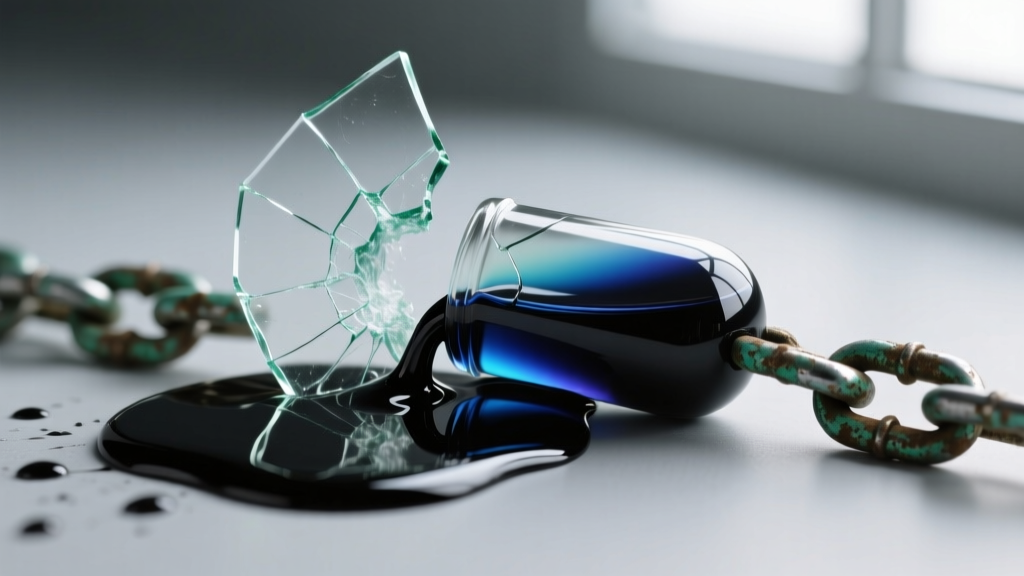
Because the underlying science is relatively inexpensive to replicate, the market is flooded with ultra-cheap novelty items. However, assessing the true value of a mood necklace requires looking past the liquid crystals and examining the casing, the protective dome, and the chain metallurgy. As of 2026, the gap between a $5 gas-station trinket and a $65 artisan-crafted pendant is defined by material longevity and hermetic sealing.
Material Grade Comparison Chart
- Tier 1: Mass-Market Novelty ($4 - $12)
The pendant casing is typically stamped zinc alloy or low-grade brass, which oxidizes and turns the skin green within weeks. The 'stone' is a fragile, hollow glass vial filled with raw liquid crystals. The chain is usually plated copper that flakes after minimal wear. - Tier 2: Mid-Tier Boutique ($15 - $35)
You will find stainless steel or heavily plated brass settings. The glass vial is slightly thicker, and the thermochromic liquid is often mixed with a basic resin to prevent sloshing. These offer decent short-term value but still succumb to UV degradation. - Tier 3: Artisan Premium ($45 - $120+)
Premium pieces utilize 925 sterling silver or 14k gold-filled bezels. Instead of a hollow glass vial, the thermochromic compounds are suspended in a UV-stable, hermetically sealed polymer matrix, topped with a domed synthetic quartz cabochon. This quartz layer acts as a physical shield against impacts and a UV filter, extending the life of the crystals from a few months to several years.
Why Cheap Mood Necklaces Fail (And How to Spot Them)
If you are investing in a mood necklace, you must understand the primary failure modes of thermochromic jewelry. According to gemological durability standards, organic and semi-organic compounds are highly susceptible to environmental degradation. The liquid crystals inside a mood stone are no exception.
The UV and Water Degradation Factor
The number one killer of cheap mood necklaces is moisture ingress. In low-tier manufacturing, the glass vial is sealed with a basic adhesive. When exposed to sweat, humidity, or accidental splashes, water breaches the seal. Water molecules disrupt the delicate alignment of the cholesteric liquid crystals, causing the stone to permanently 'freeze' in a murky brown or black state.
Furthermore, ultraviolet light breaks down the chemical bonds of the liquid crystals over time. A $10 necklace worn daily in the sun will lose its ability to change color entirely within 3 to 6 months. Premium jewelers combat this by using synthetic quartz domes, which naturally filter out a significant portion of UV radiation, and by utilizing advanced 2026 polymer encapsulation techniques that render the stone entirely waterproof.
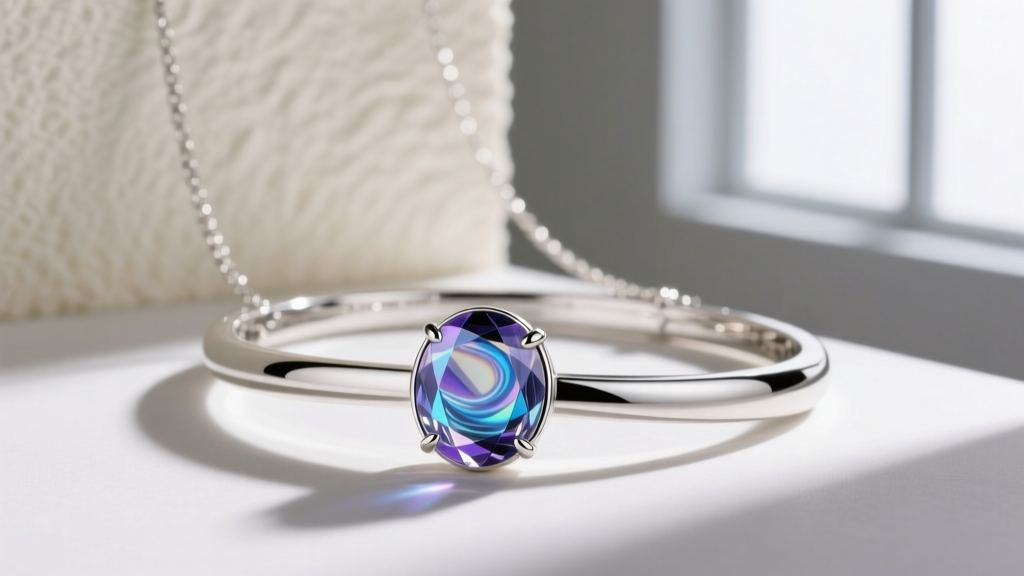
The Verdict: Is a Mood Necklace Worth Your Budget?
So, how should you allocate your jewelry budget when shopping for thermochromic pieces? If you are buying a mood necklace as a fleeting novelty gift for a child or a temporary festival accessory, the $8 to $15 tier is perfectly acceptable. You are paying for a few weeks of entertainment, and the inevitable failure of the glass vial is part of the product's planned obsolescence.
However, if you are an adult consumer looking for a unique, conversation-starting pendant that integrates into a daily wardrobe, the budget tier is a false economy. A cheap zinc-alloy necklace that ruins your shirts with oxidation and turns permanently black after a month of wear offers zero long-term value.
The Buyer's Framework: Before purchasing, perform the 'Tap and Warm' test. Hold the stone between your thumb and forefinger. It should shift to blue or violet within 10 seconds. Release it, and it should return to green or black as it cools. If the transition is sluggish or mottled, the liquid crystals have already begun to degrade on the shelf. Always opt for pendants featuring a quartz or sapphire-glass dome over bare glass vials.
Ultimately, understanding what does green mean on a mood necklace is about more than just decoding a color chart. It is about recognizing the intersection of materials science and jewelry design. By investing in a hermetically sealed, sterling silver piece with a protective quartz dome, you ensure that your necklace remains a vibrant, accurate reflection of your physiological state for years to come, rather than a discarded piece of broken glass.


