What Does the Color Purple Mean on a Mood Necklace?
Discover what the color purple means on a mood necklace, the science behind thermochromic crystals, and how to troubleshoot a stuck pendant.

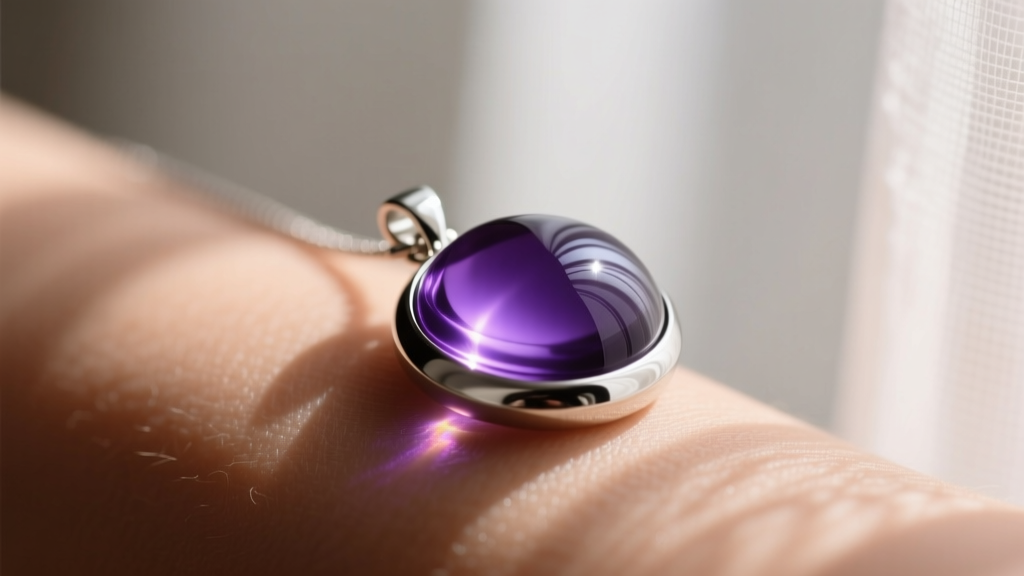
The Science: What Does the Color Purple Mean on a Mood Necklace?
When you look down and see your pendant shifting into a deep, vibrant violet, you might wonder: what does the color purple mean on a mood necklace? In the romanticized lore of mood jewelry, purple signifies passion, romance, or a state of deep relaxation and happiness. However, from a materials science perspective, the answer is rooted in thermodynamics and peripheral blood flow.
Mood necklaces rely on thermochromic liquid crystals (TLCs), specifically cholesteric liquid crystals. These organic molecules are highly sensitive to temperature fluctuations. As your body temperature changes—driven by the autonomic nervous system's dilation or constriction of capillaries near the skin's surface—the crystals physically twist. This twisting alters the wavelength of light they reflect. When your skin temperature rests in a specific warm band, the crystals twist to reflect wavelengths between 380 and 450 nanometers, which our eyes perceive as purple.
According to Smithsonian Magazine, this reaction is not measuring "emotion" directly, but rather the physiological byproduct of those emotions. When you are relaxed or feeling affectionate, your extremities warm up, pushing the pendant into the purple spectrum.
The Exact Temperature Range for Purple
To understand your necklace's behavior, it helps to map the exact temperature thresholds of the thermochromic layer. Most commercial mood pendants are calibrated to the following ranges:
| Color Display | Surface Temperature | Physiological / Emotional Association |
|---|---|---|
| Black / Dark Brown | Below 75°F (24°C) | Cold, stressed, poor circulation |
| Amber / Orange | 75°F - 80°F (24°C - 27°C) | Uneasy, mixed emotions, warming up |
| Yellow-Green | 80°F - 82°F (27°C - 28°C) | Calm, baseline, average resting state |
| Deep Purple / Blue | 82°F - 86°F (28°C - 30°C) | Relaxed, romantic, happy, warm |
| Violet / Pink | Above 86°F (30°C) | Passionate, excited, physically hot |
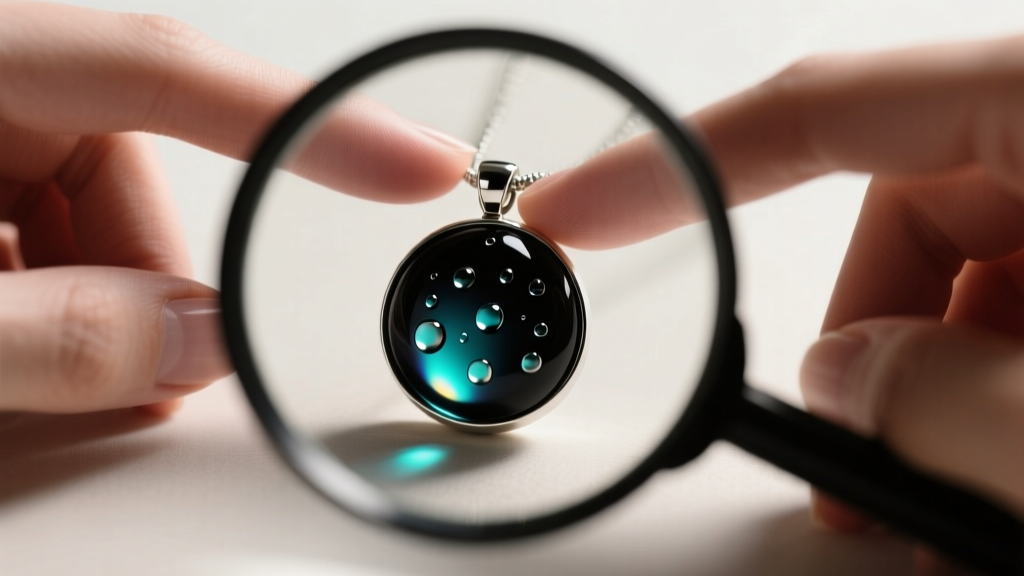
Troubleshooting: Why Is My Mood Necklace Stuck on Purple?
While a purple pendant usually indicates a relaxed state, a necklace that is permanently stuck on purple—or any single color—indicates a critical failure in the thermochromic layer. If your necklace hasn't changed color in days, you are dealing with a damaged cabochon. Here are the primary failure modes:
- Moisture Intrusion (The #1 Killer): The liquid crystal layer is sealed between a metal backing and a glass or quartz cabochon using jeweler's epoxy. If you shower, swim, or sweat heavily while wearing the necklace, microscopic amounts of water can breach the seal. Water disrupts the molecular alignment of the crystals, causing them to clump and freeze in a single color state (often purple or black).
- UV Degradation: Cholesteric liquid crystals are organic compounds. Prolonged exposure to direct ultraviolet sunlight breaks down their chemical bonds, stripping them of their thermochromic properties. If you leave your necklace on a sunny dashboard, it will permanently lock into its current color.
- Adhesive Delamination: Extreme temperature shocks (like jumping into a freezing pool on a hot day) can cause the metal base and glass top to expand and contract at different rates, breaking the epoxy seal and letting air pockets form.
The "Fridge Test" Diagnostic
If you suspect your necklace is broken, perform the Fridge Test to confirm the state of the liquid crystals. As detailed in materials guides like Explain That Stuff, liquid crystals must transition smoothly through their phase states to be considered functional.
- Place your mood pendant in the refrigerator (approx. 35°F) for exactly 5 minutes.
- Remove it. It should instantly appear black or very dark brown.
- Hold the metal backing tightly in your closed palm for 60 seconds.
- Watch the transition. A healthy pendant will shift from black, to amber, to green, and finally to blue/purple as it absorbs your body heat.
Diagnostic Result: If the pendant remains purple in the fridge, or if it turns black but features permanent "dead spots" (speckles of purple that won't fade), the thermochromic layer has been breached by moisture and is permanently damaged.
How to Fix or Salvage a "Dead" Mood Pendant
The hard truth of thermochromic jewelry is that you cannot repair dead liquid crystals. Once the organic molecules are exposed to water or UV degradation, their light-reflecting pitch is destroyed forever. However, as a jewelry troubleshooter, you can absolutely salvage the setting and repurpose the piece.
Step-by-Step Cabochon Replacement
If your pendant is stuck on purple and you want to upcycle the vintage or silver-plated setting, follow these steps to remove the dead glass stone:
- Soften the Epoxy: Submerge the pendant in a bowl of very hot (but not boiling) water—around 150°F to 170°F—for 10 minutes. This softens the industrial adhesive holding the glass cabochon.
- Pry Gently: Use a dull, flat-head jeweler's screwdriver or a wooden toothpick to gently pry the glass dome away from the metal bezel. Avoid metal-on-glass prying to prevent shattering.
- Clean the Base: Scrape away the old epoxy residue using a brass brush and isopropyl alcohol.
- Repurpose: You can now fill the empty metal bezel with custom UV resin mixed with purple mica powder to create a permanent, sparkling purple pendant, or glue in a faceted amethyst or charoite cabochon cut to the same millimeter dimensions.
Care Guide: Prolonging Your Thermochromic Pendant's Lifespan
To ensure your mood necklace continues to accurately reflect your temperature shifts—and to prevent it from getting stuck on purple prematurely—you must treat the thermochromic layer with extreme care.
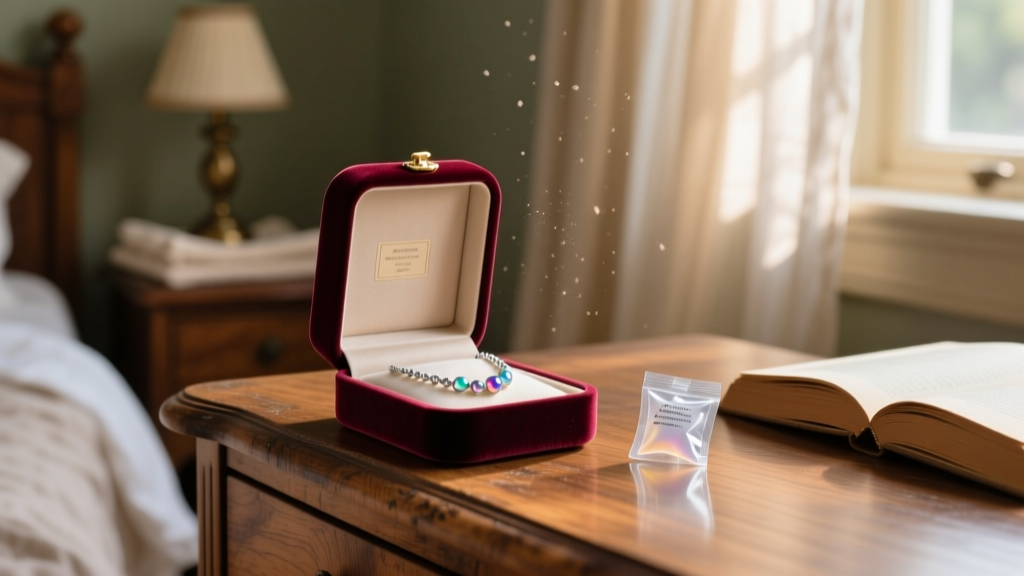
Expert Storage Tip: Always store your mood necklace in a sealed velvet pouch or a small jewelry box alongside a silica gel desiccant packet. This controls ambient humidity and prevents microscopic moisture from degrading the epoxy seal over time, especially if you live in a high-humidity climate.
- Zero Water Contact: Never wear your mood necklace in the shower, pool, or ocean. Chlorine and saltwater will rapidly eat through the adhesive seal.
- Avoid Lotions and Perfumes: The alcohol and essential oils in perfumes and body lotions can degrade the exterior polish of the glass cabochon and weaken the epoxy bonding.
- Keep it Cool in Storage: Do not store the necklace in direct sunlight or near heat sources like radiators. Room temperature (around 70°F) is the ideal resting state for the crystals.
Final Thoughts on Mood Jewelry Accuracy
Understanding what the color purple means on a mood necklace bridges the gap between nostalgic fashion and fascinating materials science. While a shifting purple stone is a beautiful indicator of warmth and relaxation, it is ultimately a delicate scientific instrument trapped inside a glass dome. By understanding the exact temperature thresholds, recognizing the signs of moisture intrusion, and performing the Fridge Test when things go wrong, you can troubleshoot your jewelry like a pro. If your pendant does succumb to the elements, remember that the metal setting holds immense upcycling potential, allowing you to transform a broken mood piece into a permanent, custom gemstone pendant.


