How to Train Your Dragon Necklace: Fix Tarnish & Breaks
Is your How to Train Your Dragon necklace turning green or breaking? Learn expert troubleshooting to fix tarnish, repair chains, and restore pendants.

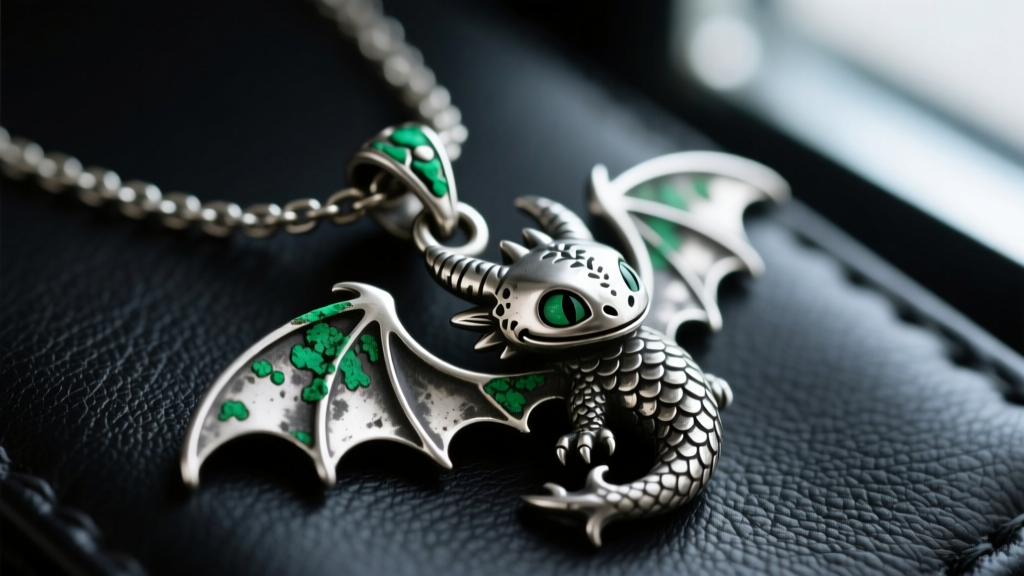
The Plight of Fandom Jewelry: Why HTTYD Pendants Fail
Fandom jewelry occupies a unique space in the accessories market. When fans search for the perfect how to train your dragon necklace, they are often met with a vast sea of options ranging from high-end artisan silversmiths to mass-produced, unlicensed novelty items. The core problem? The vast majority of budget-friendly HTTYD pendants—featuring iconic motifs like Toothless's head, Night Fury scales, or Berk Viking runes—are manufactured using low-grade pot metals. While these pieces look incredible straight out of the packaging, they are highly susceptible to rapid degradation when exposed to the natural oils, sweat, and friction of daily wear.
As a jewelry specialist, I frequently see fans heartbroken when their favorite Night Fury pendant turns their skin green, loses its black enamel detailing, or snaps off its chain during a convention. Troubleshooting these issues requires an understanding of basic metallurgy and jewelry mechanics. In this guide, we will dissect the most common failure modes of dragon-themed necklaces and provide actionable, professional-grade solutions to restore and protect your fandom jewelry.
Diagnosing the Damage: Material Breakdown
Before you can fix a damaged pendant, you must accurately identify the base metal. The structural integrity and chemical reactivity of your necklace depend entirely on its material grade. Most commercial fandom necklaces fall into three distinct categories, each with specific vulnerabilities.
| Material Grade | Common Pendant Type | Expected Lifespan | Primary Failure Mode | Average Price Range |
|---|---|---|---|---|
| Zamak (Zinc Alloy) | Budget Toothless Heads | 3-6 Months | Plating rub-off, structural snapping at the bail | $10 - $18 |
| Plated Brass | Viking Rune Discs | 1-2 Years | Brass bleed, chain clasp fatigue | $25 - $45 |
| 925 Sterling Silver | Custom Night Fury Scales | Lifetime | Sulfide tarnish, bail loop wear | $85 - $160 |
Zamak is a porous zinc alloy that requires a copper underplate and a thin flash of silver or rhodium plating to look presentable. Once that microscopically thin plating wears away from friction against your chest, the raw zinc reacts rapidly with oxygen and moisture, leading to a chalky white corrosion that cannot be polished away. Brass, while more durable, contains copper, which is the primary culprit behind the dreaded 'green skin' effect.
Troubleshooting Green Skin and Tarnish
If your how to train your dragon necklace is leaving a dark green or black ring around your neck, you are experiencing a galvanic reaction. The copper in the brass or the copper underplate in cheap alloys is reacting with the chlorides and fatty acids in your sweat. This is not an allergic reaction; it is simple chemistry.
The Clear Nail Polish Myth vs. Reality
A pervasive myth in fandom communities suggests painting the back of the pendant with clear nail polish will prevent tarnish and skin staining. While this works temporarily, standard nail polish contains solvents like ethyl acetate that can actually degrade cheap metallic platings over time. Furthermore, nail polish yellows, chips, and peels within weeks, leaving you with a messy pendant and exposed metal.
The Expert Solution: Use a jewelry-specific nano-coating or a professional micro-crystalline wax. Products like Renaissance Wax or specialized jewelry sealants (such as ProtectaClear) form a durable, invisible, and non-toxic barrier that blocks moisture and chlorides from reaching the copper base. Apply two thin coats to the back and edges of the pendant, allowing 24 hours of curing time before wearing.
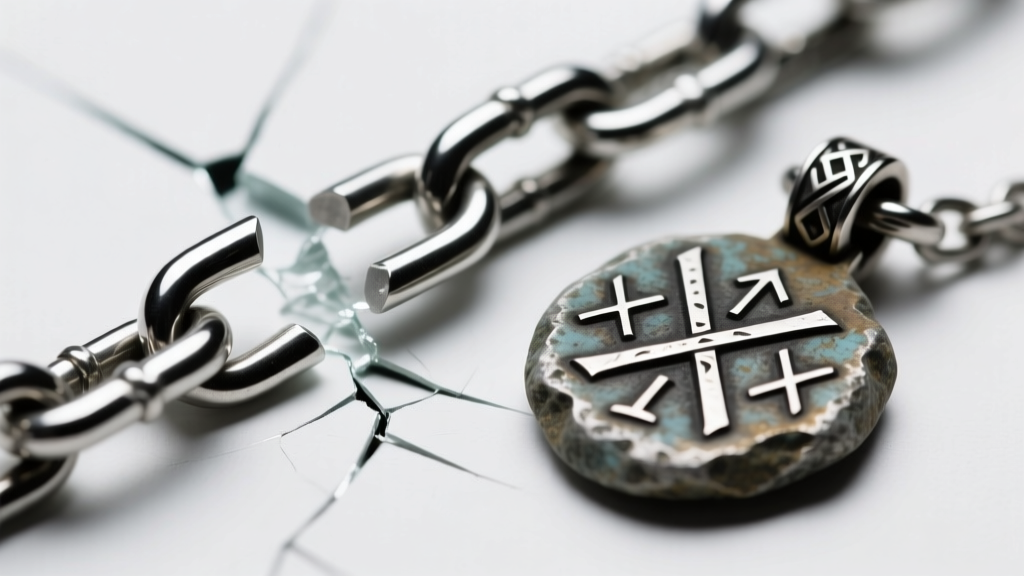
Fixing Broken Chains and Clasps on Viking Pendants
One of the most frequent complaints regarding HTTYD necklaces is chain breakage. A solid metal Toothless or Skull Crusher pendant can weigh anywhere from 15 to 30 grams. Mass-market necklaces are almost always paired with flimsy 0.8mm to 1.2mm cable or box chains that simply cannot handle the dynamic load of a heavy pendant swinging against the chest.
Understanding Chain Tensile Strength and Fatigue
Box chains, while attractive, have sharp internal angles that create stress concentrators. When a heavy dragon pendant swings, the repetitive micro-bending at the clasp loop and the bail causes metal fatigue, eventually snapping the link. According to metallurgical standards referenced by the Gemological Institute of America (GIA), dynamic stress on a jewelry clasp can reduce its effective tensile lifespan by up to 80% compared to static weight testing.
How to Upgrade Your Chain: Discard the original chain. For a pendant weighing over 15 grams, you must upgrade to a chain with interlocking structural integrity.
- Wheat Chains (Spiga): Woven in a continuous figure-eight pattern, a 1.5mm to 2.0mm stainless steel or sterling silver wheat chain distributes the pendant's weight across multiple links, virtually eliminating single-point fatigue.
- Rope Chains: The twisted links provide excellent tensile strength and a Viking-appropriate aesthetic that pairs perfectly with Berk-inspired rune pendants.
- Lobster Clasps: Always replace spring-ring clasps with solid cast lobster claws. Spring rings have hollow internal springs that fail under heavy loads.
Restoring Faded Enamel on Night Fury Scales
Many premium how to train your dragon necklace designs utilize black or deep crimson enamel to highlight the intricate scales of a Night Fury or the details of a Monstrous Nightmare horn. Over time, exposure to UV light, cosmetics, and skin oils causes 'cold enamel' (which is actually a hardened epoxy resin, not true vitreous glass enamel) to dull, scratch, or chip away entirely.
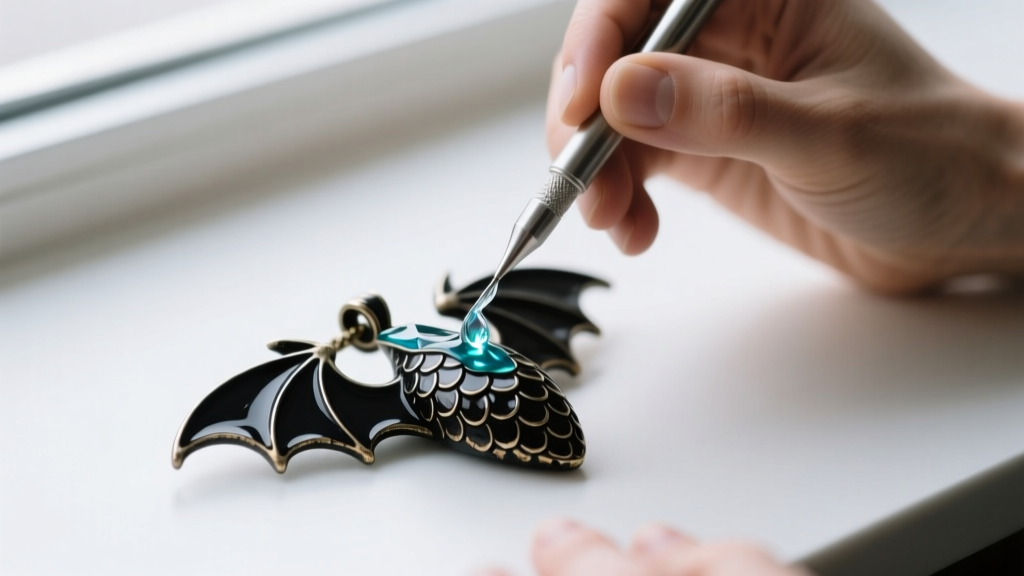
Step-by-Step Epoxy Restoration
Do not attempt to paint over faded enamel with acrylics or nail polish; the refractive index will be wrong, making the repair glaringly obvious. Instead, use a jewelry-grade optically clear adhesive. Rio Grande, a leading jewelry supply authority, recommends two-part epoxies like Epoxy 330 for filling and sealing jewelry cavities due to its high clarity and resistance to yellowing.
- Prep the Cavity: Use a wooden toothpick or a soft brass brush to gently remove any flaking enamel or debris from the pendant's recessed areas. Wipe with isopropyl alcohol to remove skin oils.
- Mix the Resin: Mix equal parts of the Epoxy 330 resin and hardener on a glass palette. Stir slowly to avoid introducing air bubbles.
- Application: Using a fine-tipped metal applicator or a toothpick, carefully drop the resin into the scale cavities. Surface tension will help it level out.
- Curing: Let the pendant cure flat in a dust-free environment for 24 hours. The result is a glass-like, durable finish that restores the deep, glossy black of the Night Fury scales.
Sourcing Authentic Replacements and Upgrades
If your current necklace is beyond repair—perhaps the Zamak alloy has suffered from 'zinc pest' and crumbled internally—it is time to source a replacement. When shopping for a new how to train your dragon necklace in 2026, bypass the algorithmic feeds of fast-fashion novelty sites. Instead, seek out licensed jewelers who work with DreamWorks or independent metalsmiths on platforms like Etsy who explicitly state their use of solid 925 sterling silver or 316L surgical stainless steel.
Expert Sourcing Tip: Always check the hallmark. A genuine sterling silver dragon pendant will be stamped with '925'. If the listing only says 'silver-toned' or 'Tibetan Silver,' you are purchasing a zinc alloy that will degrade within months. Invest in solid metals to ensure your fandom jewelry lasts as long as your love for the franchise.
By understanding the materials, upgrading your chain mechanics, and properly sealing your pendants, you can ensure your favorite dragon necklace remains a battle-ready staple in your daily wardrobe for years to come.


