Troubleshooting a Heavy Big Necklace: Fit & Clasp Fixes
Troubleshoot common heavy big necklace issues like neck strain, broken clasps, and sliding. Expert fixes for weight distribution and hardware.

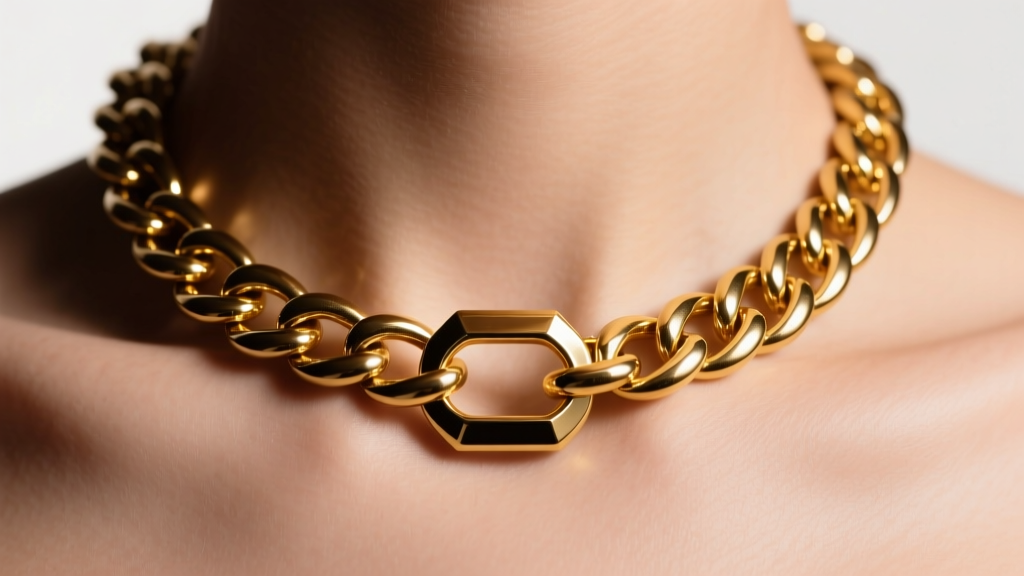
The Physics of Statement Jewelry: Why Your Big Necklace Fails
A beautifully crafted big necklace is the ultimate anchor for any wardrobe, but oversized pendants, thick curb chains, and layered statement pieces introduce unique structural challenges. When a necklace exceeds 80 grams, it stops behaving like a simple accessory and starts acting as a dynamic frontal load on your cervical spine. In 2026, jewelry ergonomics has become a critical talking point among bespoke jewelers, as consumers demand pieces that offer visual impact without physical fatigue.
The most common complaints regarding heavy necklaces include the 'pendulum effect' (where the pendant constantly swings and strikes the sternum), clasp failure under dynamic tension, and contact dermatitis caused by heavy friction against the skin. Troubleshooting these issues requires a fundamental understanding of weight distribution, metallurgy, and hardware load limits. Below, we break down the exact mechanical failures of oversized necklaces and provide actionable, professional-grade solutions to make your heavy pieces comfortable and secure.
Diagnostic Chart: Identifying Your Necklace Failure Point
Before attempting repairs or modifications, you must accurately diagnose why your big necklace is failing. Use the troubleshooting matrix below to pinpoint the exact mechanical or ergonomic flaw.
| Symptom | Primary Cause | Professional Fix |
|---|---|---|
| Clasp snaps open randomly | Dynamic pull exceeds spring ring tension limit (usually >40g) | Upgrade to a 15mm solid cast lobster or neodymium magnetic clasp |
| Pendant swings and hits chest | Chain length places center of gravity below the sternum notch | Shorten chain to 16-18 inches or add a hidden nape counterweight |
| Jump rings pull apart | Wire gauge is too thin for the pendant's static drop weight | Replace with 14-gauge (1.6mm) soldered jump rings |
| Neck fatigue and tension headaches | Front-loaded weight distribution without posterior balancing | Use a wider chain profile to distribute pressure across the trapezius |
| Skin turns green or develops rash | Heavy friction accelerating copper/nickel oxidation in base alloys | Replate with rhodium or swap to 316L stainless steel / Grade 5 titanium |
Troubleshooting Neck Strain and the 'Pendulum Effect'
The human neck is not engineered to support a concentrated, swinging weight on the anterior side. When you wear a big necklace on a 24-inch or 30-inch chain, the pendant acts as a plumb bob. Every time you move, the kinetic energy transfers directly to the nape of your neck, causing micro-strains in the cervical muscles.
Adjusting Chain Length and Center of Gravity
The most effective way to eliminate the pendulum effect is to raise the center of gravity. For heavy statement pendants (over 100 grams), the optimal chain length is between 16 and 18 inches. At this length, the pendant rests securely against the upper chest or sternum notch, where the skeletal structure can absorb the static weight, rather than relying entirely on the neck muscles to counteract the swing.
Adding a Hidden Counterweight
If your big necklace requires a longer drop for aesthetic reasons, you must introduce a counterweight at the nape. Professional jewelers often use a small, dense tungsten or 316L stainless steel bead (weighing roughly 15-20% of the pendant's total mass) threaded onto the chain right next to the clasp. This posterior weight anchors the necklace, keeping the clasp at the back of the neck and drastically reducing the forward pull on your cervical spine.
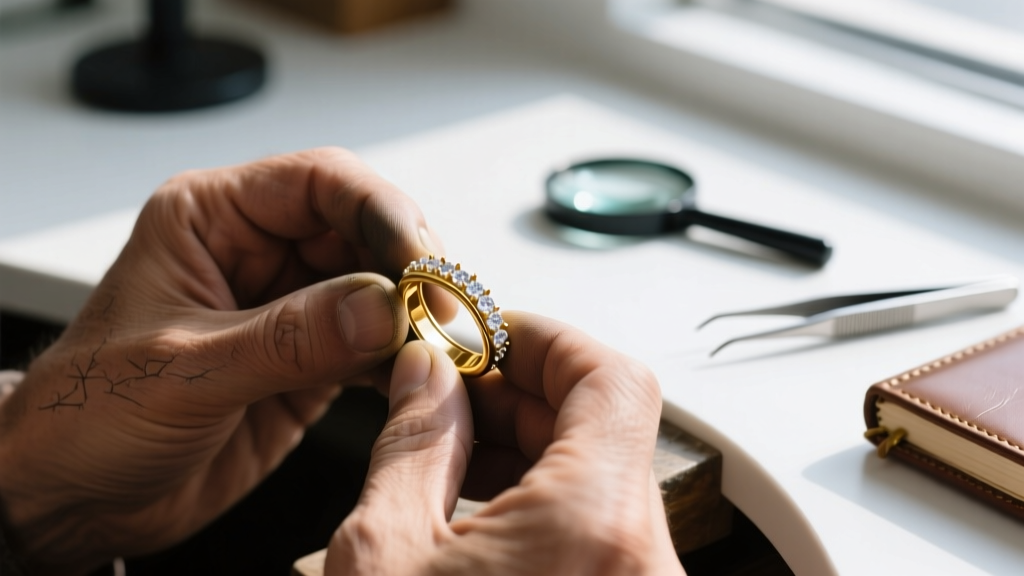
Upgrading Hardware: Clasps and Jump Rings for Heavy Loads
The hardware used on mass-market jewelry is universally designed for lightweight chains (under 30 grams). When you attach a heavy, oversized pendant or buy a thick 10mm Cuban link chain, the stock hardware becomes the single point of failure.
The Spring Ring Failure
Standard 5mm to 8mm spring ring clasps rely on a tiny internal steel spring. Under the dynamic load of a heavy big necklace, the internal mechanism fatigues, or the hollow outer casing warps, causing the clasp to pop open. According to stress tests by the Jewelers of America, spring rings should never be used on chains exceeding 40 grams.
Heavy-Duty Clasp Solutions
To secure a heavy piece, you must upgrade the termination hardware. Look for a solid cast lobster clasp measuring at least 12mm to 15mm in length. Solid cast clasps lack hollow voids and can withstand upwards of 15kg of tensile pull force. Alternatively, modern neodymium magnetic clasps encased in 316L stainless steel offer incredible security. Ensure the magnetic clasp features a physical locking groove or a secondary safety catch to prevent lateral sliding.
Jump Ring Integrity
The jump ring connecting the pendant to the chain is the most vulnerable link. For heavy pendants, standard open jump rings will slowly pull apart due to the constant downward drag. You must replace them with soldered jump rings or, at minimum, use heavy-gauge wire. A 16-gauge (1.2mm) or 14-gauge (1.6mm) wire thickness is mandatory for pendants exceeding 80 grams to prevent the metal from stretching and snapping.
Metallurgy and Skin Irritation Under Heavy Friction
Weight exacerbates metallurgical flaws. A lightweight brass or copper-alloy necklace might sit gently on the skin, causing no issues. However, a heavy big necklace presses firmly into the skin, creating constant friction and trapping moisture. This environment accelerates the oxidation of base metals and increases the leaching of nickel, leading to severe contact dermatitis.
According to the Gemological Institute of America (GIA), nickel allergies are among the most common jewelry-related skin conditions. If your heavy necklace is causing rashes or leaving green marks, the issue is the alloy reacting to sweat and friction. The permanent solution is to have the piece professionally replated with a thick layer of rhodium or palladium. If you are commissioning a custom big necklace, insist on hypoallergenic base materials such as Grade 5 titanium, 316L surgical stainless steel, or solid 14k/18k gold alloys that are explicitly certified nickel-free.
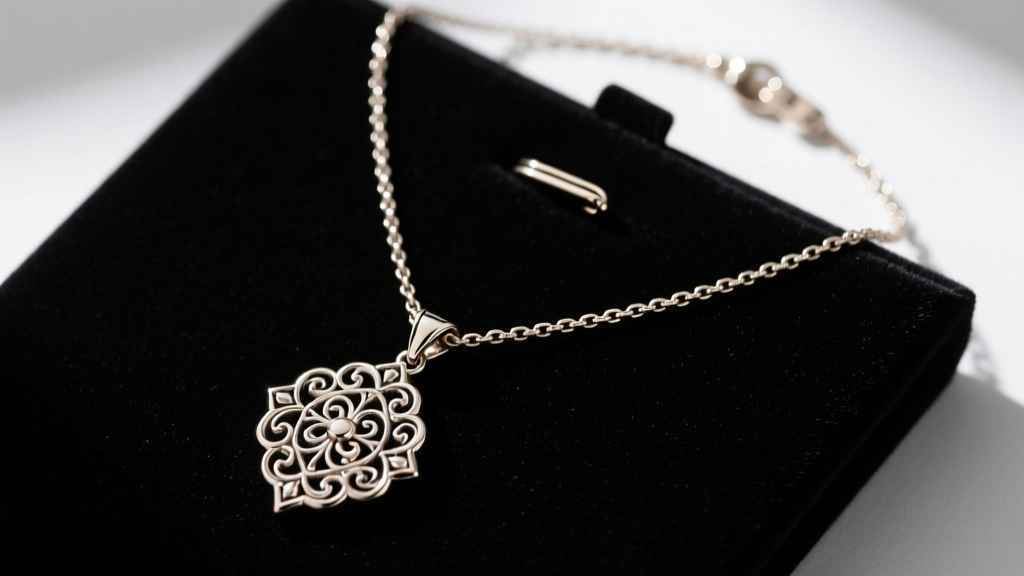
Wardrobe Integration: Anchoring Heavy Pieces
The fabric you wear fundamentally changes how a big necklace behaves. High-friction textiles like raw silk, heavy wool, or textured tweed can catch on intricate chain links (like rope or box chains), causing the necklace to ride up and choke the wearer. Conversely, slippery fabrics like charmeuse or lightweight rayon provide zero friction, allowing a heavy pendant to slide off-center constantly.
To anchor a heavy necklace, pair it with medium-weight, tightly woven fabrics like poplin cotton or fine-gauge merino knits. These materials provide enough surface friction to keep the chain seated on your shoulders without snagging the links. Furthermore, avoid wearing heavy chains over garments with delicate embroidery or beading, as the sheer mass of a 10mm chain will easily crush and tear delicate threadwork over the course of a day.
Summary Checklist for Heavy Chain Maintenance
To ensure your statement pieces remain comfortable and secure, perform this bi-annual maintenance checklist:
- Inspect the Clasp Mechanism: Test the tension on lobster clasps. If the lever feels loose or fails to snap back instantly, replace it immediately.
- Check Jump Ring Gaps: Run your fingernail across the seam of the jump rings. If you feel a gap or notice the ring is slightly oval-shaped, take it to a jeweler to be soldered shut.
- Clean the Chain Links: Heavy chains accumulate skin oils and lotions in the inner links, which acts as an abrasive paste, slowly wearing down the metal from the inside out. Ultrasonic clean every six months.
- Verify Counterweight Placement: Ensure the posterior counterweight is still securely seated and hasn't shifted past the chain stoppers.
By treating your big necklace as a piece of structural engineering rather than just an accessory, you can enjoy the bold aesthetic of oversized jewelry without sacrificing comfort or risking catastrophic hardware failure.


