Necklace Puppy Pendants: A Budget & Value Assessment
Discover the true value of necklace puppy pendants. We compare sterling silver, gold vermeil, and solid gold options to help you budget wisely.

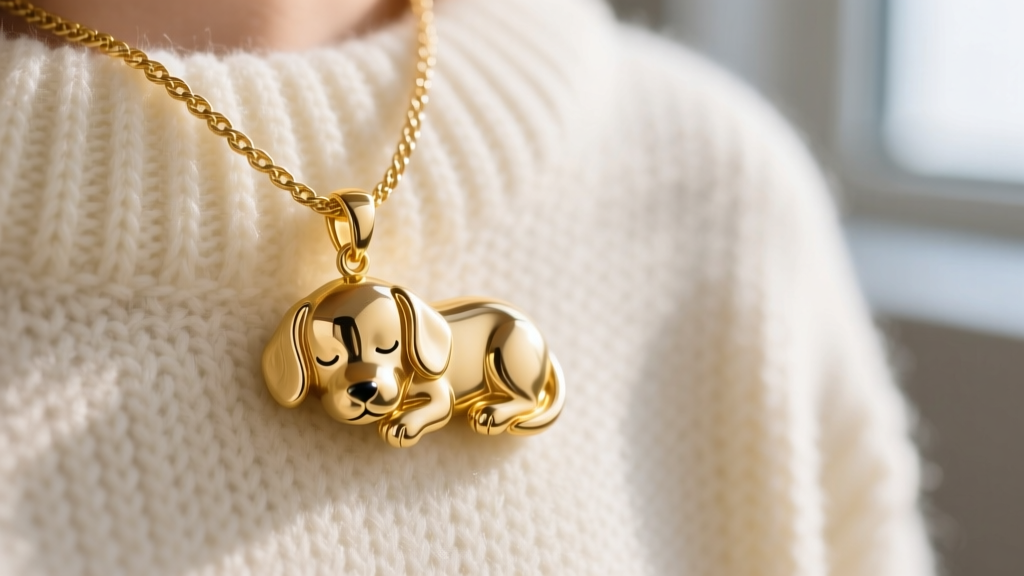
The sentimental jewelry market has experienced a profound evolution over the last decade, with pet-centric motifs moving from niche novelties to mainstream luxury staples. As we navigate the 2026 jewelry landscape, the demand for a well-crafted necklace puppy pendant continues to surge, driven by the deep emotional bonds between owners and their pets. However, this emotional premium often creates a murky pricing environment where fast-fashion brands and high-end boutiques alike capitalize on consumer sentiment. When shopping for a necklace puppy charm, it is incredibly easy to overpay for substandard metallurgy disguised by clever marketing and adorable aesthetics.
At Jewel Style Radar, we believe that sentimental value should never excuse poor craftsmanship. This comprehensive budget and value assessment breaks down the true cost of puppy-themed necklaces, analyzing material grades, structural failure modes, and cost-per-wear metrics to help you make an informed, financially sound investment in your jewelry box.
The 2026 Sentimental Jewelry Landscape
The modern necklace puppy trend is no longer limited to generic, mass-produced paw prints. Today’s consumers are seeking highly detailed, breed-specific silhouettes, custom-engraved collar tags, and even 3D-cast replicas of their own pets. This desire for hyper-personalization has given rise to a two-tiered market. On the bottom tier, drop-shipped brass alloys with flash plating flood social media feeds at the $30 price point. On the top tier, artisan jewelers are charging upwards of $800 for solid 18k gold custom castings. The vast middle ground—where most consumers shop—is rife with misleading terminology regarding gold vermeil, rhodium plating, and enamel durability. Understanding the intrinsic value of these materials is the only way to accurately assess whether a necklace puppy piece is a worthwhile investment or an overpriced trinket.
Material Breakdown: What Are You Actually Paying For?
The silhouette of a puppy—complete with protruding ears, delicate paws, and curled tails—presents unique metallurgical challenges. Fine silver (999 purity) has a Vickers hardness of roughly 25 HV, making it entirely unsuitable for these intricate, protruding elements, which will bend under minimal pressure. Therefore, the base metal and its alloys dictate both the durability and the price of the piece.
Sterling Silver vs. Flash Plating
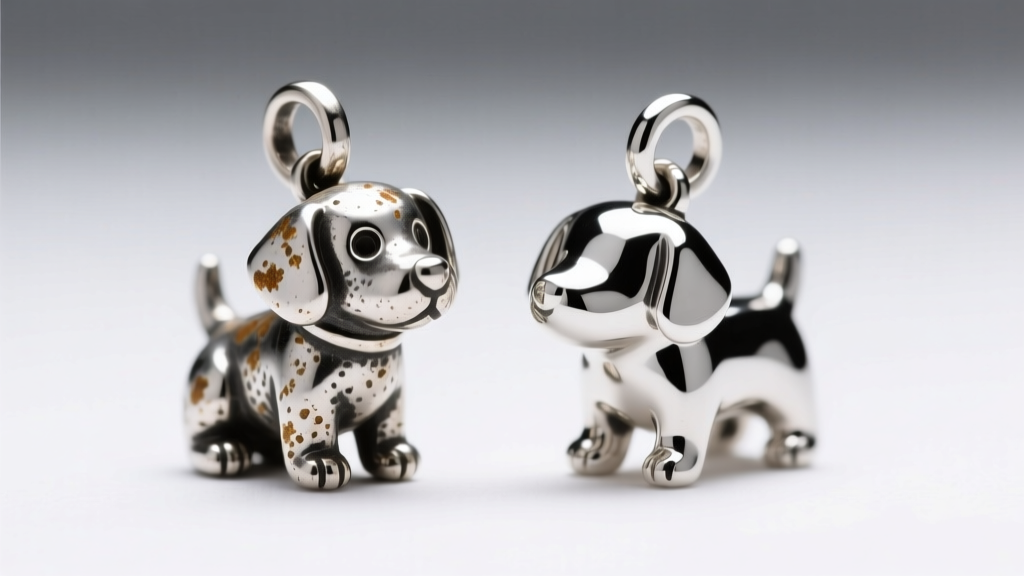
Genuine 925 sterling silver (alloyed with 7.5% copper for strength, raising hardness to ~65 HV) is the baseline for any respectable necklace puppy pendant. However, raw sterling silver is prone to sulfide tarnishing. High-quality pieces will feature a rhodium flash (0.05 to 0.1 microns) to prevent oxidation and provide a bright white finish. Conversely, ultra-budget options often use a zinc-brass base with a microscopic 0.1-micron gold flash. These pieces will oxidize rapidly, and the copper/zinc core will react with the wearer's skin acidity, leaving a green residue on the chest within three to six months of daily wear.
The Vermeil Standard and FTC Regulations
Gold vermeil is a popular choice for mid-tier puppy pendants, offering the look of gold at a fraction of the cost. However, the term is heavily abused. According to the Federal Trade Commission's Jewelry Guides, true gold vermeil must consist of a sterling silver base coated with at least 10k gold that is a minimum of 2.5 microns thick. Many brands sell "gold plated" puppy charms that fall far short of this standard. If a necklace puppy pendant is priced between $80 and $120 but does not explicitly guarantee a 2.5-micron thickness over a 925 base, you are likely paying a premium for standard gold plating that will wear through to the silver base within a year.
Solid Gold Alloys: The Durability Benchmark
For a lifetime piece, solid 14k gold is the optimal choice for a necklace puppy design. Alloyed with copper, silver, and zinc, 14k gold (58.5% pure gold) achieves a Vickers hardness of 120-140 HV. This tensile strength ensures that delicate features like a puppy’s ear or tail will not warp during daily activities, sleep, or accidental snags. While the upfront cost is significantly higher, the material will never tarnish, flake, or require replating.
Price vs. Longevity: The Cost-Per-Wear Matrix
To accurately assess the value of a necklace puppy pendant, we must look beyond the retail price tag and calculate the cost-per-year based on daily wear. The table below assumes an average pendant weight of 2.5 grams to 4 grams, excluding the chain.
| Material Specification | Average Retail Price | Expected Daily Lifespan | Cost-Per-Year | Value Rating |
|---|---|---|---|---|
| Brass with Flash Plating (0.5µm) | $25 - $45 | 3 - 6 Months | $50 - $180 | Poor |
| 925 Sterling Silver (Rhodium Plated) | $60 - $95 | 5 - 10 Years | $6 - $19 | Excellent |
| Gold Vermeil (2.5µm over 925) | $110 - $160 | 2 - 4 Years | $27 - $80 | Fair |
| Solid 14k Gold (Cast) | $350 - $550 | Lifetime (50+ Years) | $7 - $11 | Excellent |
As the data illustrates, a solid 14k gold puppy pendant actually offers a lower annual cost than vermeil or flash-plated alternatives when amortized over its lifespan. Sterling silver remains the undisputed champion of budget-friendly value, provided it is properly maintained and rhodium-plated.
Common Structural Failure Modes in Puppy Pendants
When evaluating the structural integrity of any necklace puppy design, the bail—the loop that connects the pendant to the chain—is the most critical point of failure. In many novelty animal pendants, designers attempt to integrate the bail into the puppy’s curled tail or a collar loop. While aesthetically pleasing, this often results in a cast wire thickness of less than 1.0mm. According to metallurgical stress tests on jewelry findings, a 1.0mm sterling silver loop will yield (permanently deform) under just 2.5 pounds of tensile force. If your necklace puppy pendant features an integrated bail, ensure the metal cross-section is at least 1.5mm thick, or opt for a traditional soldered jump ring attached to a sturdy part of the casting, such as the back of the puppy’s neck.
The Enamel Dilemma
Many mid-tier necklace puppy pieces utilize enamel to highlight the dog’s nose, eyes, or collar. It is vital to distinguish between cold enamel (epoxy resin) and hot vitreous enamel. Cold enamel is essentially painted and baked at low temperatures. It is highly susceptible to UV degradation and will yellow or chip within 12 to 18 months of daily wear, especially when exposed to the acids in human sweat and cosmetic lotions. Hot vitreous enamel, conversely, is glass fused to metal at approximately 1400°F. The Gemological Institute of America (GIA) notes that properly fired vitreous enamel is incredibly durable and colorfast. However, it requires a metal base that can withstand extreme heat without melting or warping, restricting its use primarily to high-karat gold or fine silver bases. If a brand charges over $150 for a vermeil puppy pendant with cold enamel, you are overpaying for a temporary finish.

How to Spot Overpriced "Boutique" Markup
The emotional resonance of pet jewelry makes consumers highly susceptible to boutique markups. A common tactic in 2026 is the "memorial" or "custom silhouette" upcharge. Some online retailers charge $250+ for a simple 2D laser-cut sterling silver puppy outline, marketing it as bespoke artistry. In reality, laser cutting a 2-gram sheet of 925 silver costs pennies in machine time and material. A fair market price for a custom laser-cut 925 silver pendant should not exceed $85 to $120, factoring in design labor and finishing.
"The emotional premium attached to pet-themed jewelry often masks severe compromises in metallurgical quality. Consumers must separate the sentimental value of the motif from the intrinsic value of the materials and the actual labor required to produce them."
— Independent Jewelry Appraisal Standards, 2025 Market Report
To avoid the boutique trap, always check the item's weight in grams and the exact metal purity. If the retailer refuses to disclose the gram weight or the specific micron thickness of the plating, walk away. Transparency is the hallmark of true value.
Final Verdict: Where to Allocate Your Budget
If your budget is under $100, bypass vermeil entirely and invest in a high-quality, rhodium-plated 925 sterling silver necklace puppy pendant. Ensure the bail is a separate, soldered component rather than a delicate cast tail, and avoid pieces with cold enamel accents. If your budget allows for $350 or more, bypass the "trend" brands and commission a solid 14k gold casting from an independent bench jeweler. Not only will a solid gold piece survive a lifetime of daily wear, but it also serves as a genuine heirloom, carrying the memory of your beloved companion with uncompromising material integrity.