2026 Molecule Necklace Value Guide: Is It Worth the Price?
Discover the true value of a molecule necklace in 2026. We break down pricing tiers, material grades, and craftsmanship to help you buy smart.

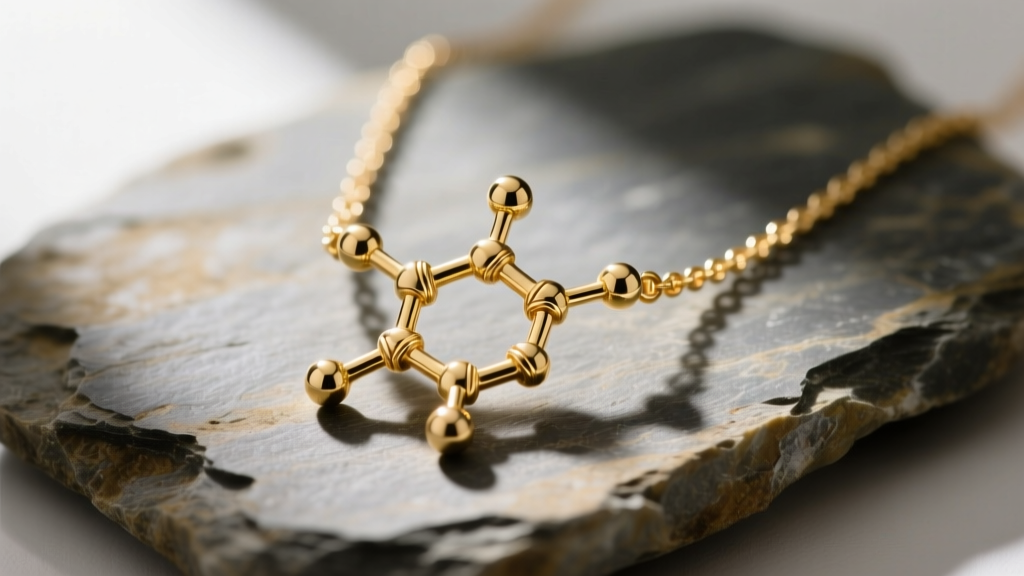
The jewelry market in 2026 has seen a massive resurgence in science-inspired motifs and structural cluster designs, collectively known as the molecule necklace trend. Whether you are looking at a literal chemical structure pendant—like serotonin, dopamine, or oxytocin—or a gemological 'molecule' cluster setting featuring a central stone orbited by smaller melee diamonds, determining the true value of these pieces can be daunting. Prices range anywhere from $25 for fast-fashion alloys to over $3,500 for fine jewelry interpretations. As a buyer, how do you separate genuine craftsmanship from overpriced novelty?
In this comprehensive budget and value assessment, we will deconstruct the molecule necklace market. We will examine material grades, plating thicknesses, structural failure modes, and stone sourcing to help you allocate your budget toward pieces that offer lasting value, structural integrity, and timeless wearability.
The Two Distinct Types of Molecule Necklaces
Before assessing value, it is critical to define what you are actually buying. The term 'molecule necklace' currently applies to two entirely different categories in the jewelry sector, each with its own pricing structure and value proposition.
1. The Science-Motif Pendant
These are literal representations of chemical compounds. The serotonin molecule (C10H12N2O) and dopamine molecule (C8H11NO2) are the most popular. Because these designs rely on precise geometric angles and intersecting lines, they require excellent casting or die-striking techniques to ensure the 'bonds' (the metal lines connecting the 'atoms') are uniform in thickness. A high-quality serotonin pendant typically measures around 25mm by 12mm. If the intersecting joints are bulky or asymmetrical, the piece loses its scientific elegance and looks like a cheap novelty item.
2. The Gemological Cluster Setting
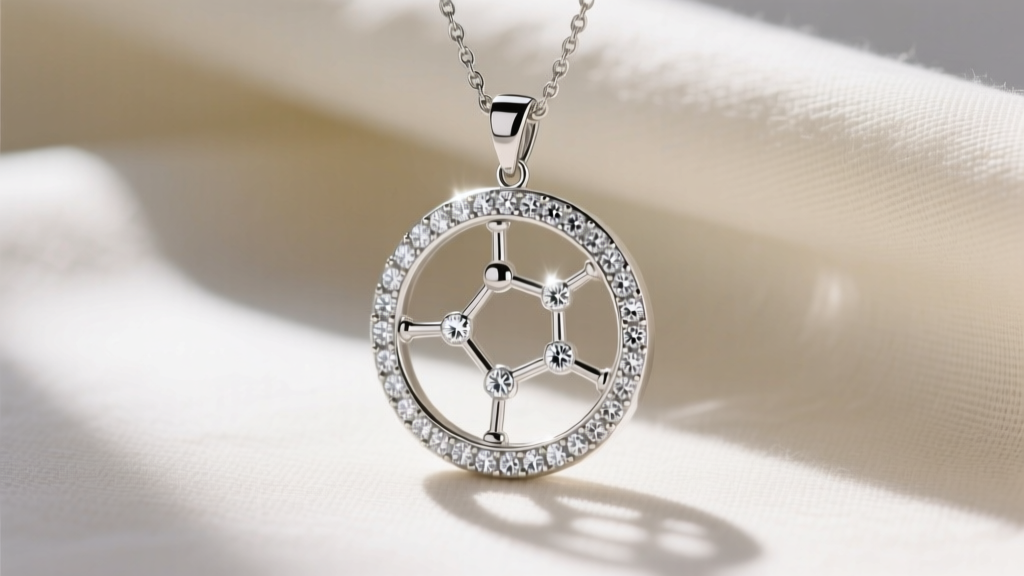
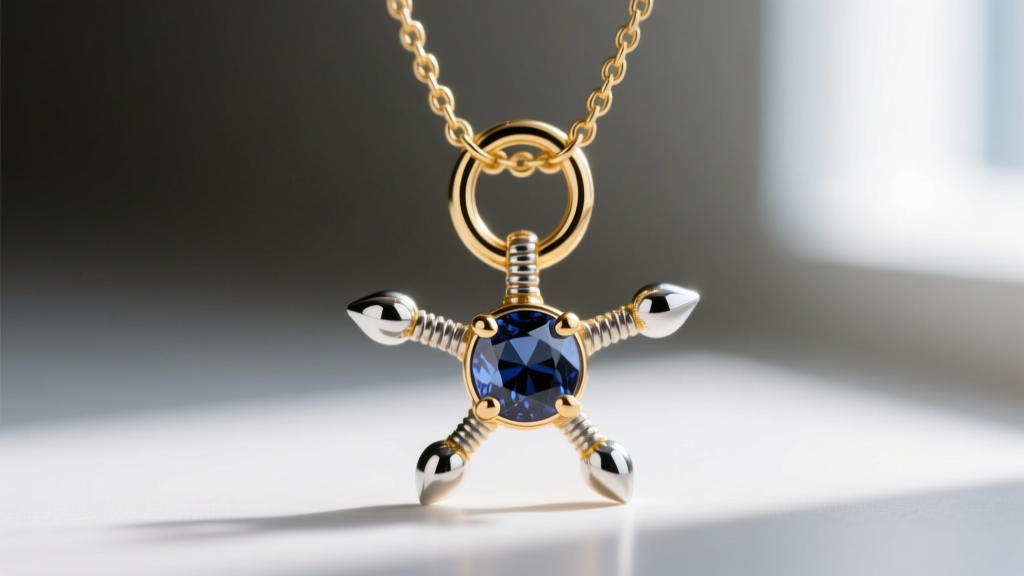
In fine jewelry, a 'molecule' setting refers to a structural design where a central gemstone (often a round brilliant or pear cut) is surrounded by a halo or orbiting cluster of smaller stones, mimicking an atomic structure. Unlike traditional halos, molecule settings often feature distinct metal 'arms' connecting the central stone to the outer stones, creating negative space. This requires advanced CAD (Computer-Aided Design) modeling and precise prong placement to ensure the structural integrity of the negative space.
Material Tiers and True Market Value
When evaluating a molecule necklace, the base metal dictates the floor of the price. Below is a breakdown of what you should expect to pay in 2026 based on material grades, assuming a standard 25mm science-motif pendant without heavy gemstone embellishments.
| Material Grade | Expected Price Range | Longevity & Value Assessment |
|---|---|---|
| Brass with Flash Plating | $20 - $45 | Poor. Plating wears off in 3-6 months. High risk of skin discoloration. |
| Sterling Silver (925) | $60 - $150 | Good. Solid metal that can be polished. Tarnishes but is easily restored. |
| Silver with Heavy Vermeil | $120 - $250 | Very Good. 2.5+ microns of gold over silver. Lasts years with proper care. |
| Solid 14k Gold (Nickel-Free) | $450 - $850 | Excellent. Heirloom quality. Will not tarnish. Holds intrinsic metal value. |
| Platinum (950) | $900 - $1,600 | Superior. Extremely durable, ideal for thin molecule 'bonds' that might bend in gold. |
If you are buying a sterling silver dopamine necklace for $250, you are overpaying unless it features significant gemstone accents or is from a heritage luxury house. Conversely, a solid 14k gold serotonin pendant priced at $150 should raise red flags regarding its actual gold purity or weight.
The Plating Trap: Flash Plated vs. Vermeil
For budget-conscious buyers, gold-plated molecule necklaces are highly tempting. However, the plating process is where most brands cut corners, leading to rapid degradation. According to the Federal Trade Commission (FTC) guidelines, there are strict definitions for gold plating, yet many fast-fashion brands exploit loopholes in marketing terminology.
Flash Plating (The Budget Trap)
Flash plating involves dipping the base metal (usually brass or cheap zinc alloy) into a gold bath for mere seconds, resulting in a gold layer of less than 0.1 microns. Because molecule necklaces feature sharp angles, corners, and protruding 'atoms,' these high-friction areas will rub against your skin and clothing. A flash-plated molecule pendant will typically show brass bleed-through at the edges and jump rings within 8 to 12 weeks of daily wear.
Gold Vermeil (The Smart Budget Choice)
If you want the look of gold without the solid gold price tag, insist on Gold Vermeil. True vermeil requires a base of solid sterling silver and a gold coating of at least 2.5 microns. The thicker plating, combined with the non-reactive silver base, means that even if the gold eventually wears down at the high-friction edges after a few years, the underlying silver will not turn your skin green or cause contact dermatitis.
Evaluating Craftsmanship: Solder Joints and Bail Security
The true test of a molecule necklace's value lies in its structural engineering. Science-motif pendants are essentially metal lattices. If they are cast poorly, the thin 'bonds' between the atoms become weak points that can easily snap if the chain catches on a sweater.
Inspecting the Solder Joints
In high-quality manufacturing, the intersecting points of the molecule are reinforced with laser welding or precise soldering. Run your fingernail lightly over the joints of the pendant. They should feel completely seamless. If you feel ridges, pitting, or excess solder blobs, the piece was mass-cast with poor quality control. These microscopic flaws act as stress concentrators, meaning the pendant is highly likely to snap at that exact joint under minimal tension.
The Bail and Jump Ring Connection
The bail is the loop that connects the pendant to the chain. Because molecule pendants are often asymmetrical (especially oxytocin and serotonin shapes), the bail must be perfectly calibrated to allow the pendant to hang straight. Furthermore, the jump ring connecting the bail to the chain must be soldered shut. An unsoldered jump ring on a complex pendant will inevitably catch on the delicate loops of the molecule design, pulling the chain through the gap and resulting in a lost pendant. Always inspect the jump ring under a loupe; if you see a seam, do not purchase the piece for daily wear.
Lab-Grown vs. Natural Stones in Cluster Settings
If you are purchasing a gemological molecule cluster necklace, the stones will represent the largest portion of the cost. In 2026, the price gap between natural and lab-grown diamonds continues to widen, fundamentally altering the value assessment of cluster settings.
According to the Gemological Institute of America (GIA), lab-grown diamonds possess the exact same chemical, physical, and optical properties as mined diamonds. In a molecule cluster setting, which often utilizes 15 to 30 small melee diamonds (ranging from 0.01 to 0.05 carats each) to represent the 'electrons' or outer atoms, using natural diamonds is often a poor allocation of budget.
The Value Proposition of Lab-Grown Melee
Natural melee diamonds are notoriously difficult to match perfectly in color and clarity, and their mining costs inflate the price of cluster settings. By opting for lab-grown melee diamonds, you can typically reduce the total cost of a gemological molecule necklace by 40% to 60%. More importantly, because lab-grown stones are produced in controlled environments, they are often available in higher color (D-F) and clarity (VS) grades at the melee size, resulting in a significantly brighter, more uniform 'glow' across the entire molecular structure.
If a jeweler attempts to charge a premium for 'natural' melee diamonds in a cluster setting, recognize that these tiny stones hold virtually zero resale value regardless of their origin. Allocate your budget toward a heavier, higher-purity gold chain and an excellent cut grade for the central stone, rather than paying for the origin of the microscopic accent stones.
Chain Pairing and Bail Proportions
A common mistake buyers make is purchasing a beautifully crafted molecule pendant and ruining its drape by pairing it with the wrong chain. The value of your necklace is heavily dependent on how it sits on the collarbone.
- For Lightweight Silver/Gold Motifs (Under 5 grams): Pair with a 1.0mm to 1.2mm Rolo or Cable chain. A thicker chain will overpower the delicate scientific lines of the pendant and cause the bail to sit awkwardly high on the neck.
- For Gemological Cluster Pendants (Over 10 grams): Use a 1.5mm to 2.0mm Wheat or Franco chain. These chains offer the tensile strength required to support the weight of the central stone and metal halo without kinking or snapping.
Ensure the internal dimensions of the bail are at least 1.5 times larger than the thickness of your chosen chain. If the chain is too thick for the bail, the pendant will not be able to slide freely, causing it to flip backward and constantly require adjustment.
Final Verdict: Where to Allocate Your Budget
The molecule necklace trend offers a unique intersection of intellectual symbolism and aesthetic beauty, but it requires a discerning eye to navigate the pricing tiers. For fashion-forward buyers who want to test the trend, a heavy gold vermeil piece over sterling silver ($120–$200) offers the best balance of visual impact and material safety. Avoid flash-plated brass entirely.
For those seeking an heirloom piece or a meaningful gift, invest in solid 14k or 18k gold ($500+). Demand laser-welded joints, soldered jump rings, and a perfectly balanced bail. If opting for a gemological cluster, embrace lab-grown diamonds to maximize brilliance and metal weight without overpaying for unrecyclable melee stones. By focusing on structural integrity and metallurgical honesty, you can secure a molecule necklace that holds its physical and sentimental value for decades to come.


