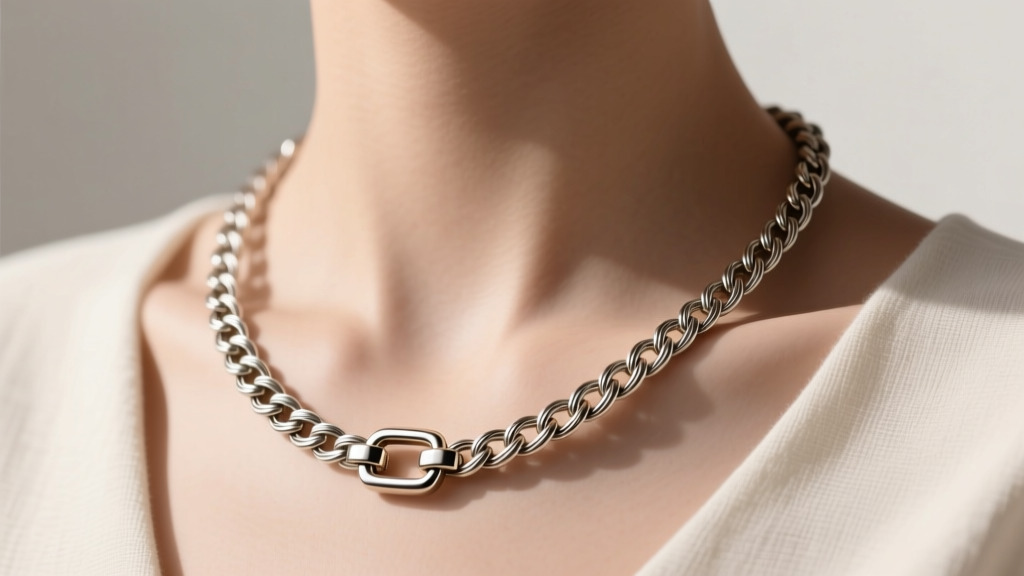
The Anatomy of a Sterling Silver Snake Necklace: An Expert Guide
Discover the metallurgy, articulation mechanics, and durability of sterling silver snake necklaces. An expert guide to 925 silver weaves and castings.

Introduction: Beyond the Aesthetic
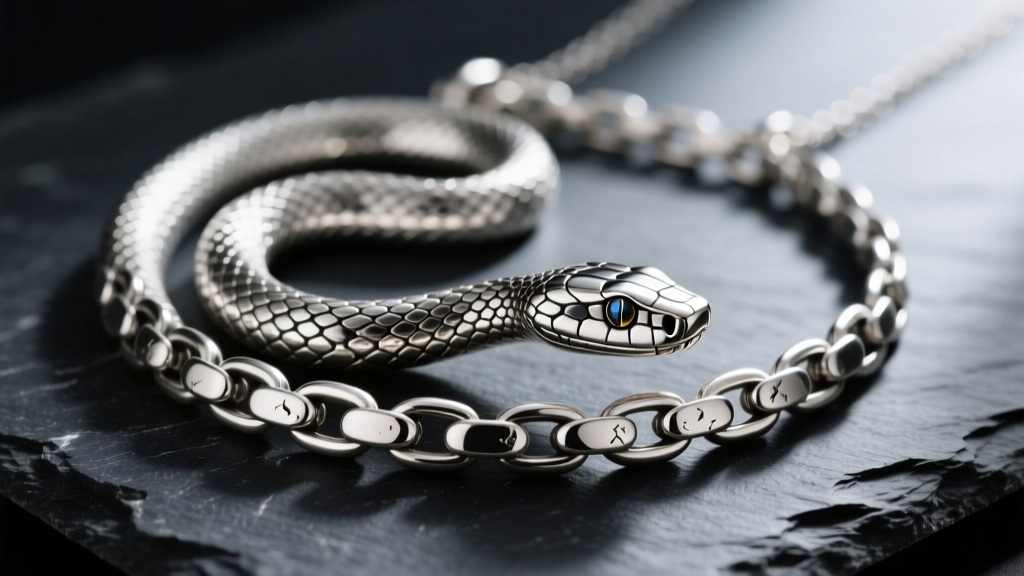
The sterling silver snake necklace is a masterclass in jewelry engineering, bridging the gap between ancient talismanic symbolism and modern metallurgical precision. Whether you are examining a fluid, tubular snake chain weave or a rigid, articulated snake bone casting, the structural integrity of these pieces relies on exact tolerances and specific alloy compositions. As a domain expert, I frequently see consumers purchase these necklaces based solely on visual appeal, only to encounter structural failures due to a misunderstanding of the metal's mechanical properties. This deep dive explores the exact material grades, manufacturing techniques, and failure modes inherent to sterling silver serpent designs.
Metallurgy of 925 Sterling Silver in Serpent Designs
Pure silver (999 fine) is far too malleable for the intricate hinges of an articulated snake spine or the high-tension drawing process of a snake chain. Therefore, the industry standard is 925 sterling silver, comprising 92.5% silver and 7.5% copper. According to The Silver Institute, this specific copper ratio increases the Vickers hardness (HV) from roughly 25 HV in pure silver to approximately 65-75 HV in standard sterling, providing the necessary shear strength for micro-components.
Copper Alloy Ratios and Tarnish Resistance
The 7.5% copper content is a double-edged sword. While it provides structural rigidity, copper is highly reactive to hydrogen sulfide and sulfur dioxide in the atmosphere, leading to silver sulfide tarnish. In snake necklaces, which feature deep crevices between scales or tightly packed chain links, tarnish accumulates rapidly and is notoriously difficult to polish out. For this reason, many high-end manufacturers are transitioning to Argentium silver (93.5% silver, 5.5% copper, and 1% germanium). The germanium forms a transparent oxide layer that drastically slows tarnish formation, a critical upgrade for the hard-to-reach vertebrae of a snake bone necklace.

Rhodium and E-Coating Finishes
To combat tarnish and enhance the brilliant white luster, premium sterling silver snake necklaces are electroplated with rhodium. A standard flash plating is merely 0.05 microns thick and will wear through in months. Expert-grade pieces utilize a 0.1 to 0.3-micron rhodium layer, often preceded by a palladium or nickel barrier coat to prevent copper migration. Alternatively, electrophoretic lacquer (e-coating) provides a highly durable, invisible polymer shield that conforms perfectly to the complex topography of snake scales without altering the metal's tactile feel.
Articulated vs. Snake Chain: Structural Engineering
The term "snake necklace" refers to two fundamentally different structural paradigms in jewelry manufacturing. Understanding the engineering differences is vital for assessing durability and drape.
The Articulated Snake Bone Necklace
Articulated designs mimic a serpent's skeleton or scaled body using dozens of individually cast segments. These segments are produced via lost-wax casting and connected using micro-hinge pins. Because 925 sterling silver lacks the ultimate tensile strength required for hinge pins that are often less than 0.8mm in diameter, expert manufacturers use stainless steel or grade 5 titanium for the internal pins. This prevents the hinges from shearing under the pendulum stress of daily wear. The segments are then hand-finished, with oxidized liver of sulfur applied to the recesses to create high-contrast, three-dimensional scale textures.
The Tubular Snake Chain Weave
Conversely, the snake chain is a specific weave characterized by slightly curved, cupped links that are packed tightly together to form a smooth, flexible, tubular surface. The manufacturing process involves drawing silver wire through tungsten carbide dies, stamping it into cupped rings, interlocking them, and compressing them under high pressure. According to the Gemological Institute of America (GIA), the structural integrity of a snake chain relies entirely on the friction and compression of these unsoldered links, or the precision of laser-soldered seams in higher-gauge variations.
| Feature | Articulated Snake Bone | Tubular Snake Chain |
|---|---|---|
| Manufacturing Method | Lost-wax casting with micro-hinges | Wire drawing, stamping, and compression |
| Flexibility Profile | Directional (bends side-to-side) | Omnidirectional (fluid drape) |
| Primary Failure Mode | Hinge pin shear or segment warping | Kinking and link separation |
| Typical Weight (18") | 25g - 45g | 8g - 20g |
| Pendant Compatibility | High (supports heavy pendants) | Low (bails can catch in links) |
Failure Modes and Maintenance Protocols
Despite their beauty, sterling silver snake necklaces are susceptible to specific mechanical failures. Recognizing these modes allows for proactive maintenance and informed purchasing decisions.
- Snake Chain Kinking: Because the cupped links in a snake chain rely on precise alignment, bending the chain past its minimum radius causes the links to crush into one another. Once a snake chain kinks, the structural memory of the silver is permanently altered, and it cannot be fully repaired.
- Hinge Seizure in Articulated Pieces: Lotions, dead skin cells, and environmental grit can infiltrate the micro-hinges of an articulated spine. Over time, this debris acts as an abrasive paste, grinding away the silver around the hinge pin and causing the segment to detach.
- Clasp Fatigue: The weight of a heavy articulated snake necklace puts immense strain on the clasp. Standard spring rings will fail. A robust lobster clasp with a hardened steel internal spring, or a custom-machined barrel clasp with a threaded interior, is mandatory for pieces exceeding 30 grams.
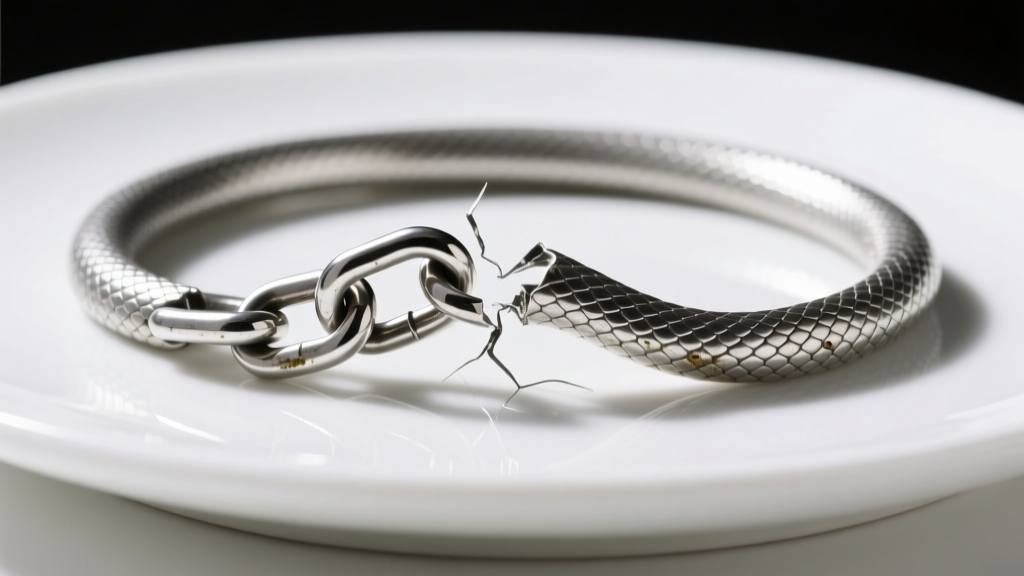
Maintenance requires specific protocols. Never use ultrasonic cleaners on articulated snake necklaces; the high-frequency cavitation can loosen micro-pave zirconia accents and force moisture into the hinge pins, leading to internal oxidation. Instead, use a mild phosphate-free dish soap and a soft-bristled brush to gently agitate debris from the scales, followed by immediate drying with compressed air.
Pricing Tiers and Manufacturing Origins
The pricing of a sterling silver snake necklace is directly correlated to its manufacturing origin and finishing techniques. Mass-produced chains from high-volume facilities typically range from $40 to $90. These pieces often feature thin rhodium flash plating and hollow-stamped links to save on silver weight. Conversely, artisan-cast articulated snake bone necklaces, featuring hand-applied oxidation, titanium hinge pins, and heavy 0.3-micron rhodium plating, command prices between $250 and $800. When evaluating a piece, always inspect the hallmark and request the exact gram weight; in the realm of sterling silver serpent jewelry, mass is a reliable proxy for structural longevity.
Expert Insight: Always inspect the bail (the loop that holds the pendant) on a snake chain. Because the surface of a snake chain is smooth but tightly ribbed, a standard jump ring can easily catch between the cupped links, prying them apart and causing irreversible damage to the chain's tubular structure. Always use a smooth, soldered bail designed specifically for micro-ribbed chains.